The Himachal Pradesh High Court has reaffirmed that contempt proceedings under Order 39 Rule 2-A of the Code of Civil Procedure (CPC) demand strict proof of willful disobedience, not merely a violation of court orders. The judgment underscores that allegations of contempt carry criminal liability and must be established beyond doubt, aligning with precedents set by the Supreme Court and the High Court itself.
Background & Facts
The Dispute
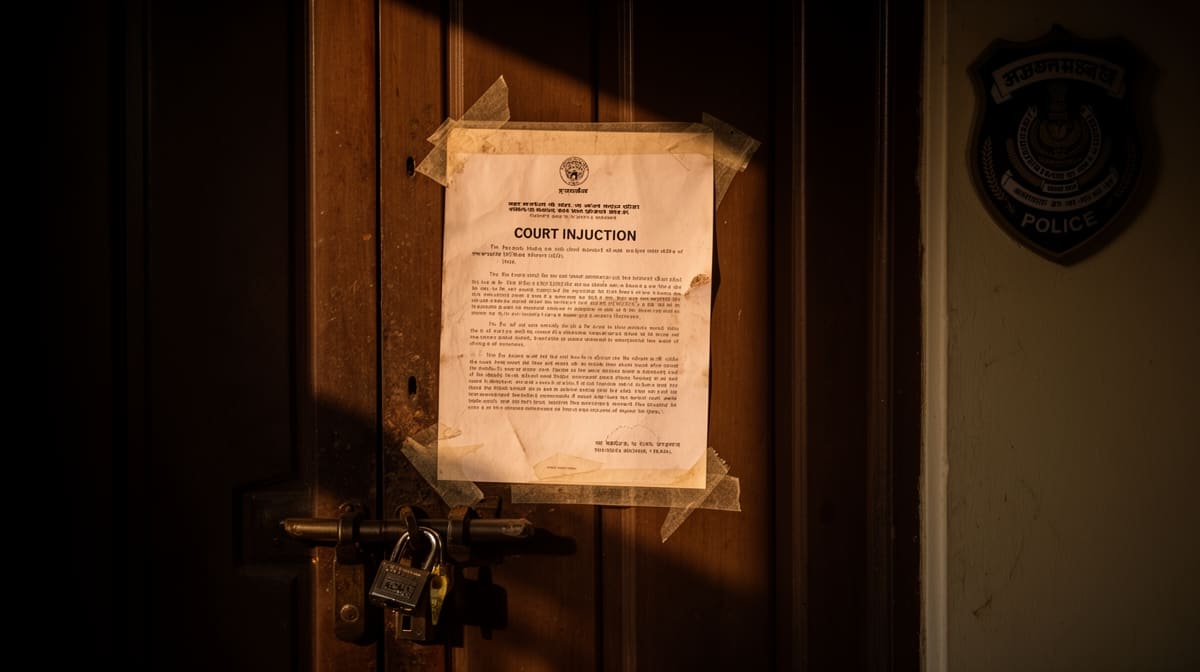
The petitioner, Deepa Kumari, filed a suit for possession and permanent injunction against Narain Dass and others, seeking interim relief under Order 39 Rules 1 and 2 CPC. The trial court granted an ad-interim injunction on 06.06.2006, restraining the respondents from raising constructions or obstructing the petitioner’s use of the suit land. A subsequent order on 26.09.2006 reinforced these restrictions.
Procedural History
The petitioner alleged contempt under Order 39 Rule 2-A CPC, claiming the respondents violated the injunction orders by digging the land and dismantling a retaining wall. Key procedural steps included:
- 04.03.2009: Contempt petition filed by the petitioner.
- 17.07.2018: Trial court allowed the contempt petition, attaching the respondents’ property.
- 29.11.2018: First Appellate Court reversed the trial court’s order, dismissing the contempt petition.
- Present Petition: Filed under Article 227 of the Constitution challenging the Appellate Court’s order.
Relief Sought
The petitioner sought reinstatement of the trial court’s order, arguing that the respondents’ actions constituted willful disobedience of the injunction orders.
The Legal Issue
The central question was whether the petitioner had established willful disobedience under Order 39 Rule 2-A CPC, sufficient to hold the respondents guilty of contempt. Specifically, the Court had to determine if the evidence met the strict proof standard required for contempt proceedings.
Arguments Presented
For the Petitioner
The petitioner’s counsel, Mr. Virbahadur Verma, contended:
- The respondents violated the injunction orders dated 06.06.2006 and 26.09.2006 by digging the land and dismantling a retaining wall.
- The trial court’s findings were based on cogent evidence, including witness testimonies and spot inspections.
- The Appellate Court erred in reversing the trial court’s order without appreciating the merits of the case.
For the Respondent
The respondents’ counsel, Mr. G.R. Palsra, argued:
- The petitioner failed to prove willful disobedience, as required under Order 39 Rule 2-A CPC.
- The witnesses examined by the petitioner were interested parties and their testimonies lacked credibility.
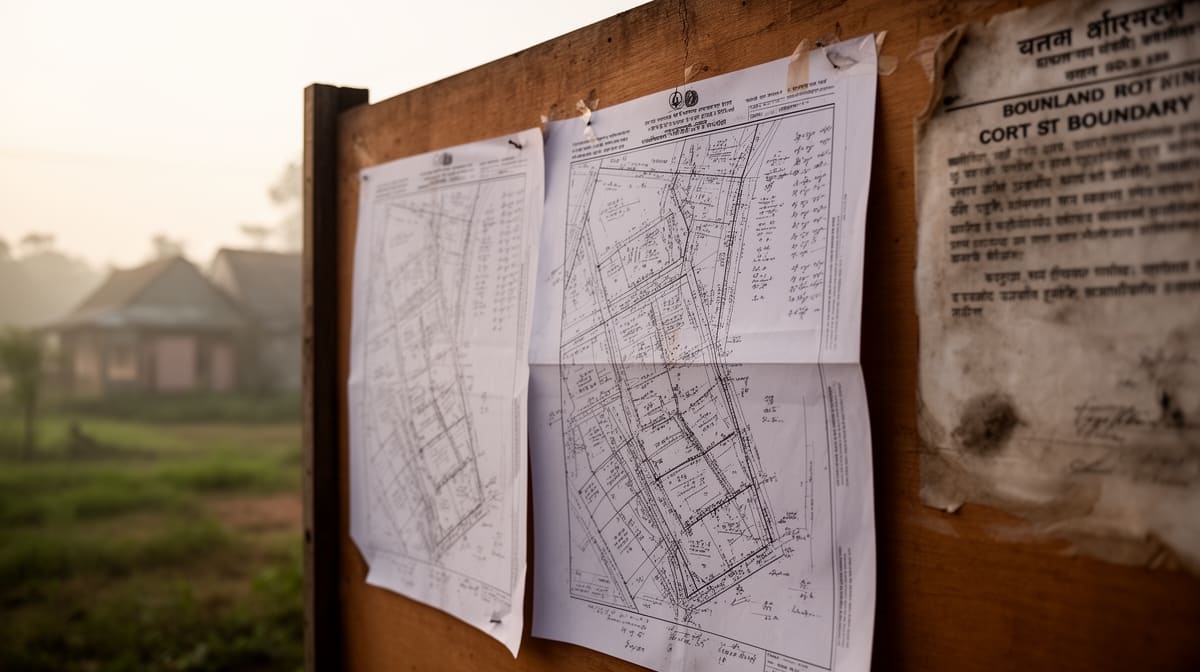
- The demarcation report relied upon by the petitioner was not conducted in accordance with legal procedures, rendering it inadmissible.
The Court's Analysis
The Court conducted a detailed examination of the evidence and legal principles governing contempt under Order 39 Rule 2-A CPC:
-
Standard of Proof: The Court emphasized that contempt proceedings are penal in nature and require strict proof of willful disobedience. Mere disobedience is insufficient; the petitioner must establish intentional defiance of court orders.
"For finding a person guilty of willful disobedience of the order under Order 39 Rule 2-A CPC, there has to be not mere 'disobedience' but it should be a 'willful disobedience'. The allegation of willful disobedience being in the nature of criminal liability, the same has to be proved to the satisfaction of the court."
-
Evidence Appreciation: The Court scrutinized the testimonies of the petitioner’s witnesses:
- AW-1 Parmanand: Admitted to inimical relations with the respondents, casting doubt on his impartiality.
- AW-3 Amar Singh: Admitted that the demarcation report was not conducted as per legal procedures, undermining its reliability.
- AW-5 Bhikham Ram: Failed to produce evidence corroborating the dismantling of the retaining wall. The Court concluded that the petitioner’s evidence was inadequate and unreliable, failing to meet the strict proof standard.
-
Precedents Applied: The Court relied on the following judgments to reinforce its reasoning:
- U.C. Surendranath v. Mambally’s Bakery (2019): Held that willful disobedience must be proved beyond doubt, akin to criminal liability.
- Raj Kumar Verma v. Smt. Shivani Verma (2009): Emphasized that the burden of proof lies heavily on the petitioner to establish contempt.
- Garment Craft v. Prakash Chand Goel (2022): Clarified the limited scope of supervisory jurisdiction under Article 227, stating that High Courts cannot reappreciate evidence as a court of first appeal.
-
Scope of Article 227: The Court reiterated that supervisory jurisdiction under Article 227 is correctional, not appellate. It is exercised sparingly to correct grave dereliction of duty or flagrant abuse of legal principles, not to reweigh evidence or substitute findings.
The Verdict
The petition was dismissed. The Court held that the petitioner failed to establish willful disobedience under Order 39 Rule 2-A CPC, as the evidence did not meet the strict proof standard required for contempt proceedings. The Appellate Court’s order dismissing the contempt petition was upheld.
What This Means For Similar Cases
Strict Proof Required for Contempt
- Contempt proceedings under Order 39 Rule 2-A CPC demand proof beyond doubt of willful disobedience.
- Mere violation of court orders is insufficient; the petitioner must demonstrate intentional defiance.
Evidence Must Be Unimpeachable
- Interested witnesses or procedurally flawed evidence (e.g., improper demarcation reports) will not suffice.
- Documentary or photographic evidence is crucial to corroborate allegations of contempt.
Limited Scope of Supervisory Jurisdiction
- High Courts under Article 227 will not reappreciate evidence or substitute findings unless there is a grave error or abuse of legal principles.
- Practitioners must ensure that prima facie evidence of contempt is strong and unassailable before invoking supervisory jurisdiction.