The Bombay High Court has reaffirmed that a landlord’s bonafide requirement for premises under the Bombay Rent Act is determined as of the date the eviction suit is filed, and the subsequent death of the landlord does not automatically extinguish the claim if the need was genuine and substantiated at inception. This judgment clarifies the legal position on how subsequent events, including death, affect the adjudication of eviction petitions under rent control statutes.
Background & Facts
The Dispute
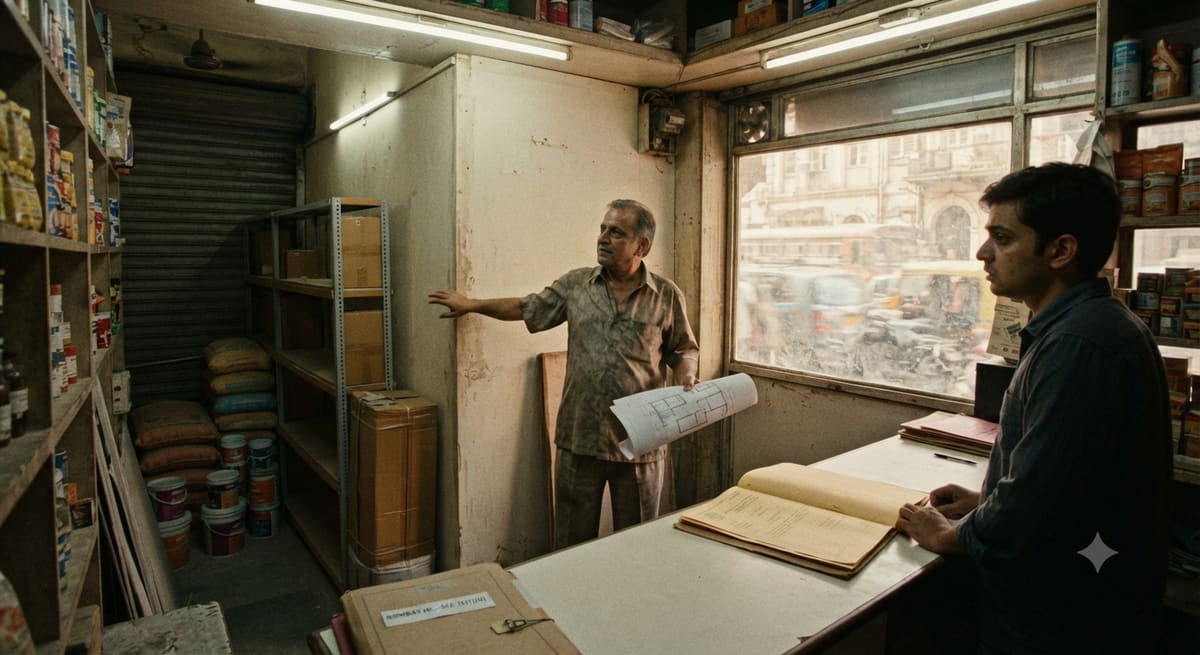
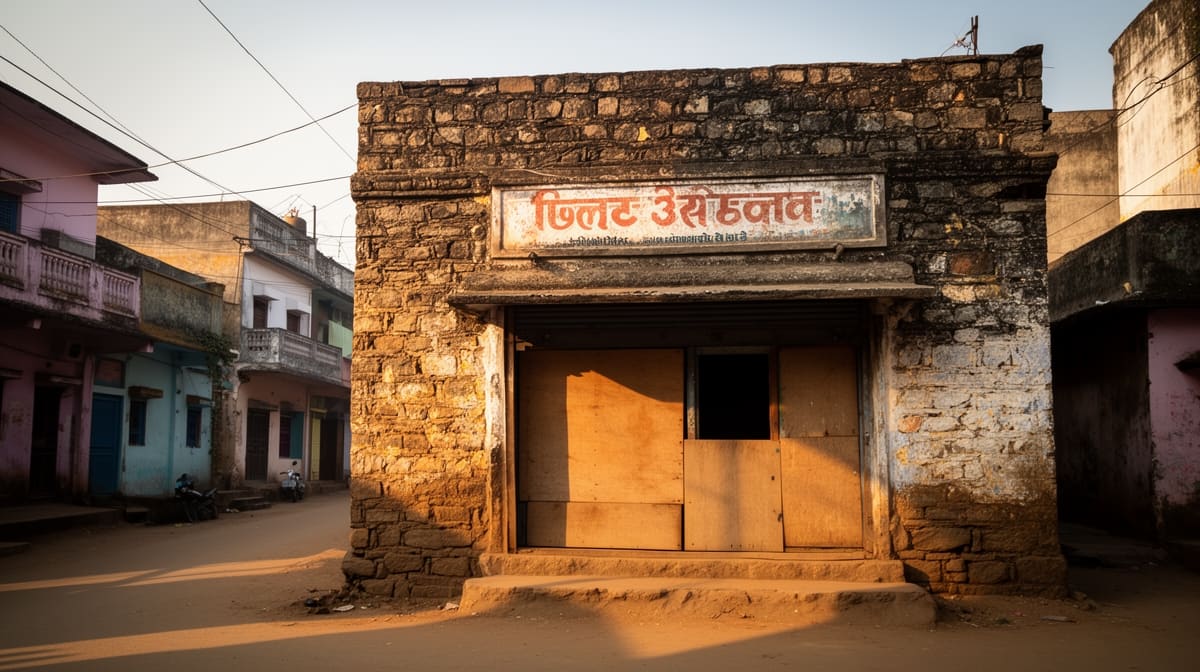
The dispute arose from a long-pending eviction suit filed by Dr. Sharadchandra Gopalrao Wadalkar, a medical practitioner, against Shri Bhagwan Ragho Vinchurkar, a tenant running a tailoring business in a 154 square foot shop premises located on City Survey No. 3102 in Nandurbar. The landlord sought possession to construct a maternity home. The tenancy dated back to 1970, and the notice terminating the lease was issued on 27.09.1982. The suit was filed under the Bombay Rent Act on the ground of bonafide requirement.
Key Facts
- The suit premises (CTS No. 3102) was a 154 sq.ft. shoplet, part of a cluster of four properties owned by the landlord.
- The landlord owned three other adjoining properties: CTS No. 666/B/2, 667, 667/A, 668/AA (1127 sq.ft. three-storied house), CTS No. 3005 (450 sq.ft. single-storied building), and CTS No. 3018 (112 sq.ft. open space).
- The landlord filed an application dated 22.02.1974 (Exh. 68) with the Collector seeking permission to purchase cement for construction, and submitted a map of proposed construction (Exh. 111).
- He also produced purchase receipts for cement bags (Exh. 69 and 70) as evidence of preparedness.
- The tenant contested the suit, alleging the requirement was fabricated, pointing to the landlord’s ownership of other properties and lucrative medical practice.
- The tenant was offered alternate premises (Exh. 98) but refused it on the ground that the entrance faced East, not West or North.
- The tenant had no other premises to relocate his tailoring business.
- The landlord died on 15.07.2017. His son, Dr. Purushottam Sharadchandra Wadalkar, was brought on record as legal representative.
- The tenant also passed away during pendency; his legal representatives were brought on record.
Procedural History
- 1982: Regular Civil Suit No. 179/1982 filed for eviction on bonafide requirement.
- 24.08.1993: Trial Court dismissed the suit.
- 1993: Civil Appeal No. 66/1993 filed by landlord.
- 28.08.2006: Trial Court, on remand, recorded findings in favor of tenant on additional issues.
- 12.06.2008: Appellate Court dismissed the appeal and cross-objection, upholding dismissal of suit.
- 2017: Landlord died on 15.07.2017.
- 2023: Civil Application No. 12854/2023 filed under Order XLI Rule 27 CPC seeking to file additional evidence (survey extracts and photographs).
- 06.03.2026: Case closed for judgment.
- 16.03.2026: Judgment pronounced by Bombay High Court.
The Parties' Positions
Applicant (Landlord’s LRs): Argued that the bonafide requirement was established at the time of filing in 1982 through documentary evidence (Exh. 68, 111, 69, 70), and the need was for constructing a maternity home. The death of the landlord did not nullify the claim, as the requirement was subsisting and the legal heirs were entitled to pursue it. The tenant’s refusal of alternate premises demonstrated bad faith.
Respondent (Tenant’s LRs): Contended that the requirement was concocted, as the landlord owned multiple properties and had a lucrative practice. The death of the landlord extinguished the need, and the proposed use (maternity home) could not be pursued by the heirs. The Courts below correctly found no genuine need.
Relief Sought
The applicant sought: (1) setting aside the orders of the Trial Court and Appellate Court dismissing the suit; (2) decree of eviction; (3) possession of the suit premises; and (4) rejection of the application for additional evidence.
The Legal Issue
The central question was whether the bonafide requirement of a landlord under the Bombay Rent Act is extinguished upon the death of the landlord after the suit is filed, and whether the courts may consider subsequent events, including death, to deny possession if the requirement was established and genuine at the time of filing.
Arguments Presented
For the Appellant/Petitioner
Counsel relied on Raghunath G. Panhale (Dead) by L.Rs. v. Chaganlal Sundarji and Co. (1999) 8 SCC 1, D. Sasi Kumar v. Soundarrajan (2019) 9 SCC 282, and Gaya Prasad v. Pradeep Shrivastava (2001) 2 SCC 604 to argue that the crucial date for determining bonafide requirement is the date of filing the suit. The landlord’s need was substantiated by documentary evidence and was not fanciful. The death of the landlord did not erase the original need, especially since the legal heirs were entitled to pursue the claim. The tenant’s refusal of alternate premises and the inordinate delay of 43 years in litigation weighed against him. The courts below erred in reappreciating evidence and imposing an impossible burden on the landlord.
For the Respondent/State
Counsel contended that the requirement was fabricated, as the landlord owned other properties and the proposed use (maternity home) was not feasible on the small shop premises. The death of the landlord in 2017 extinguished the personal need, and the heirs had no proven need for the premises. Reliance was placed on Sheshambal (Dead) v. Chelur Corporation (2010) 3 SCC 470 and Sulochana Divakar Parkar v. Shamrao Dinanath Bhatte (2025 AIR CC 806) to argue that subsequent events, including death, must be considered, and if the original need ceases, the decree cannot stand. The Courts below correctly found no genuine requirement.
The Court's Analysis
The Court undertook a comprehensive review of the legal principles governing bonafide requirement under the Bombay Rent Act, emphasizing that the landlord is the best judge of his own need. The Court held that the requirement must be real and genuine, but need not be absolute or urgent. The burden lies on the tenant to rebut the presumption of bonafides raised by the landlord’s assertion.
"The landlord is the best judge of his residential requirements, and he has complete freedom in that behalf. It is no concern of the Courts to dictate to the landlord as to how, in what manner, he should live or to prescribe for him a residential standard or their own."
The Court rejected the argument that the landlord’s ownership of other properties negated the need. It held that the landlord has the discretion to choose which property to use for a particular purpose, and the tenant cannot dictate this choice. The documents Exh. 68, 111, 69, and 70 collectively demonstrated preparedness and seriousness, and the Trial Court’s skepticism was unwarranted.
On the issue of death, the Court relied on D. Sasi Kumar v. Soundarrajan and Gaya Prasad v. Pradeep Shrivastava to hold that the crucial date for determining bonafide requirement is the date of filing the suit. The judicial delay of over four decades cannot be attributed to the landlord, and to penalize him for the system’s inefficiency would encourage tenants to prolong litigation. The Court observed:
"The entire delay cannot be attributed to the landlord and deny the relief. If as on the date of filing the petition the requirement subsists and it is proved, the same would be sufficient irrespective of the time lapse in the judicial process coming to an end."
The Court further held that the death of the landlord does not extinguish the claim if the need was genuine at the time of filing and the legal heirs are pursuing it. The heirs may use the premises for any lawful purpose, including commercial use, even if different from the original stated purpose.
The Court also dismissed the application under Order XLI Rule 27 CPC, holding that revision proceedings are not a continuation of appeal or suit, and documents could have been produced earlier.
The Verdict
The applicant succeeded. The Bombay High Court set aside the orders of the Trial Court dated 24.08.1993 and the Appellate Court dated 12.06.2008, and decreed the suit for eviction. The respondent is directed to hand over vacant possession of the 154 sq.ft. shop premises to the applicant’s legal representatives. The Civil Application No. 12854/2023 for additional evidence was rejected. The operation of the judgment is stayed for six weeks to allow the respondent to approach the Supreme Court, provided the tenant furnishes an undertaking within two weeks not to create third-party interests and to continue paying rent.
What This Means For Similar Cases
Bonafide Requirement Is Fixed at Filing Date
- Practitioners must argue that the landlord’s need is assessed as of the date the eviction suit is filed, not at the date of decree.
- Judicial delay cannot be used to defeat a landlord’s claim if the requirement was genuine at inception.
- Tenants cannot rely on the death of the landlord or passage of time to argue extinguishment unless the need was demonstrably non-existent at filing.
Death of Landlord Does Not Automatically Nullify Claim
- Legal heirs may continue the eviction suit even if the original purpose (e.g., maternity home) is no longer intended.
- The heirs may use the premises for any lawful purpose, including commercial or residential use, without needing to reprove the original motive.
- Courts must examine whether the original need was substantiated at filing, not whether the heirs have an identical need.
Documentary Evidence Suffices for Bonafide Need
- Applications for materials (e.g., cement), construction maps, and financial preparedness are sufficient to establish bonafide requirement.
- Courts must not demand proof of actual construction, permits, or capital investment.
- The burden shifts to the tenant to prove mala fides; mere ownership of other properties is not a valid rebuttal.