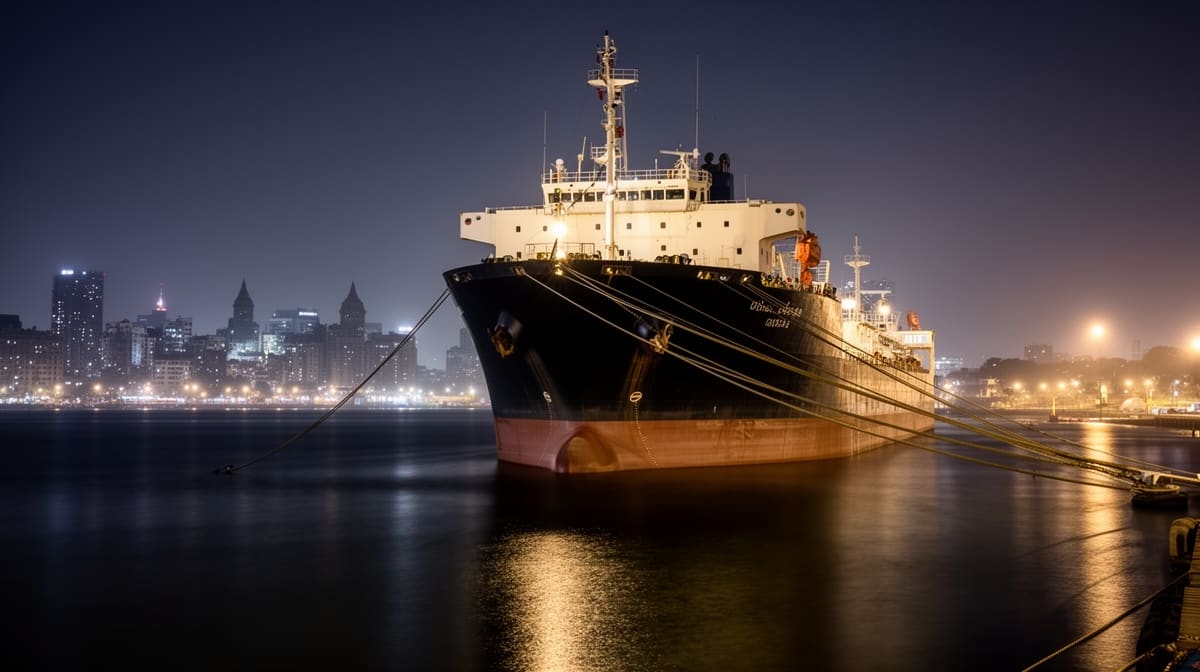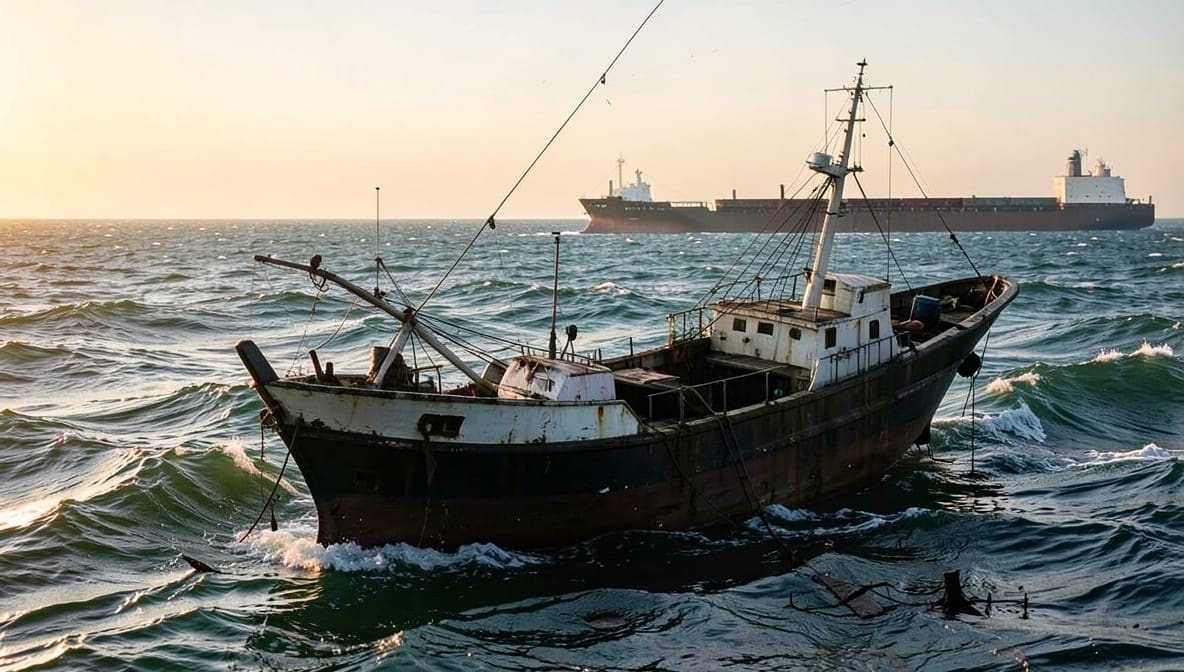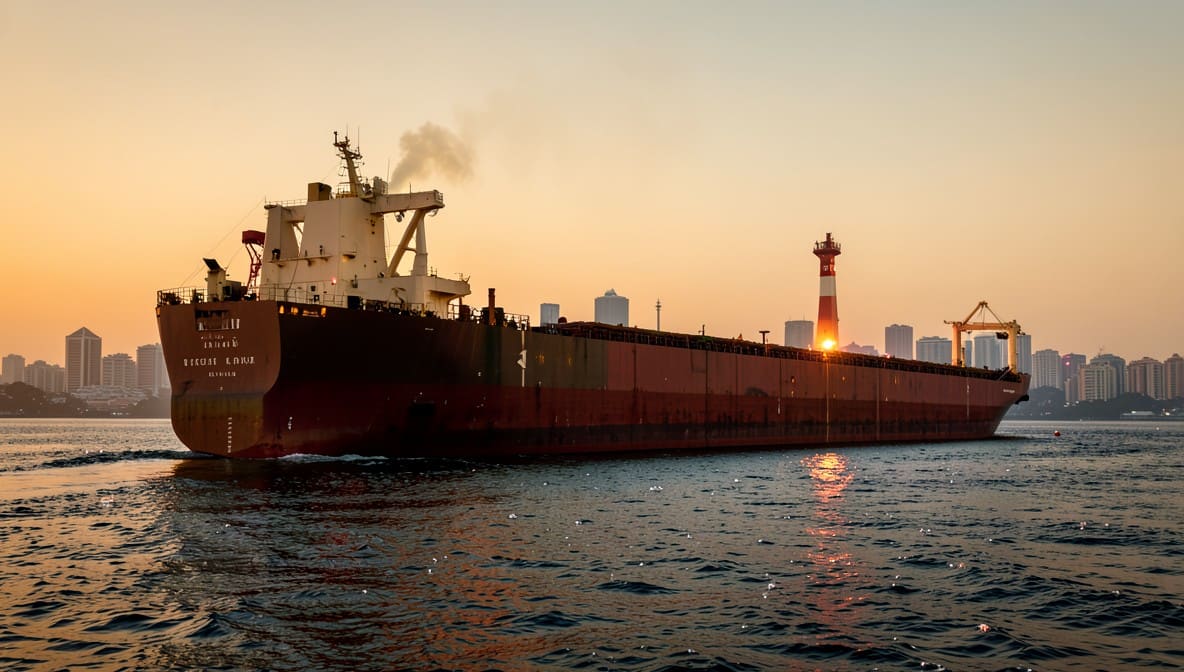
The Bombay High Court has clarified that under Section 14 of the Indian Ports Act, 1908, liability for removing a wrecked vessel rests exclusively with its legal owner, and cannot be extended to a cargo owner or charterer merely because of commercial involvement or prior communications. This ruling resolves a long-standing dispute over the scope of statutory liability in port operations.
Background & Facts
The Dispute
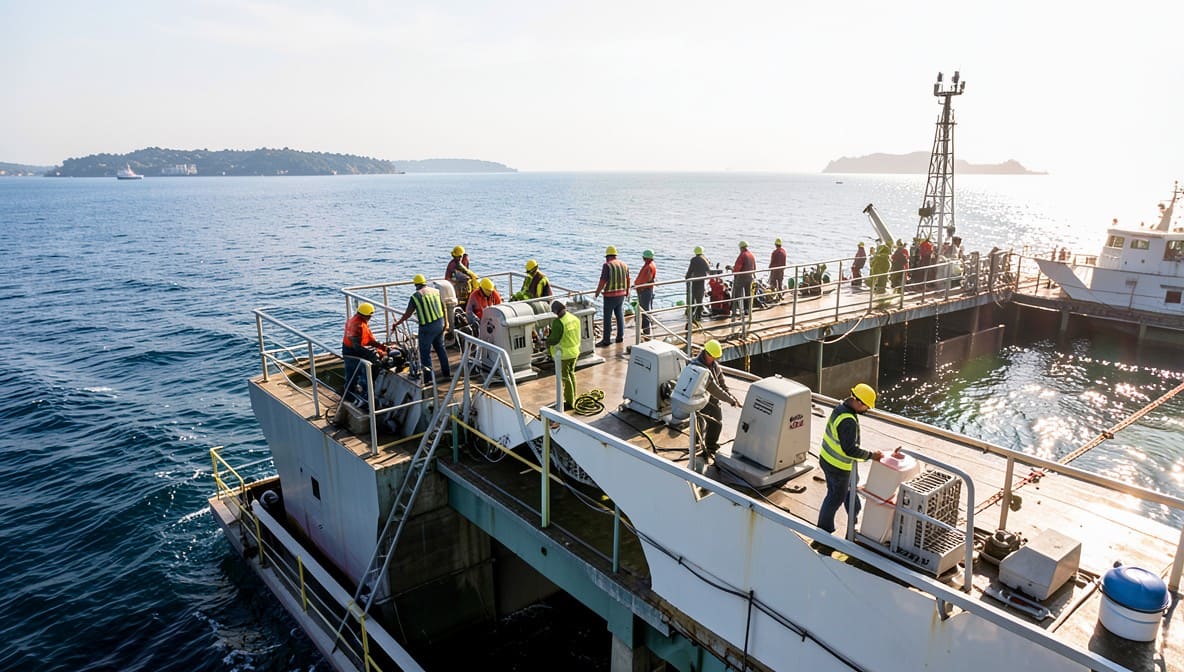
JSW Steel Limited (formerly ISPAT Industries Limited), the petitioner, imported large quantities of iron ore for its steel plant at Dolvi, Raigad. Due to the size of the vessels carrying the ore, cargo had to be discharged at anchorage outside the Mumbai Port Trust’s (MPT) limits and transported via smaller barges through port waters to the petitioner’s private jetty. The petitioner engaged N.S. Guzder & Co. (Respondent No. 2), a freight forwarder, to provide barges. Respondent No. 2, in turn, entered into a time charter agreement with Shivam Engineers (Respondent No. 3), the owner of the barge M.V. Satyam.
Key Facts
- The barge M.V. Satyam was owned by Respondent No. 3 and chartered to Respondent No. 2 on a time charter basis.
- On 09.01.1995, the Deputy Conservator of MPT granted permission to Respondent No. 2 to operate the M.V. Satyam in Mumbai port waters.
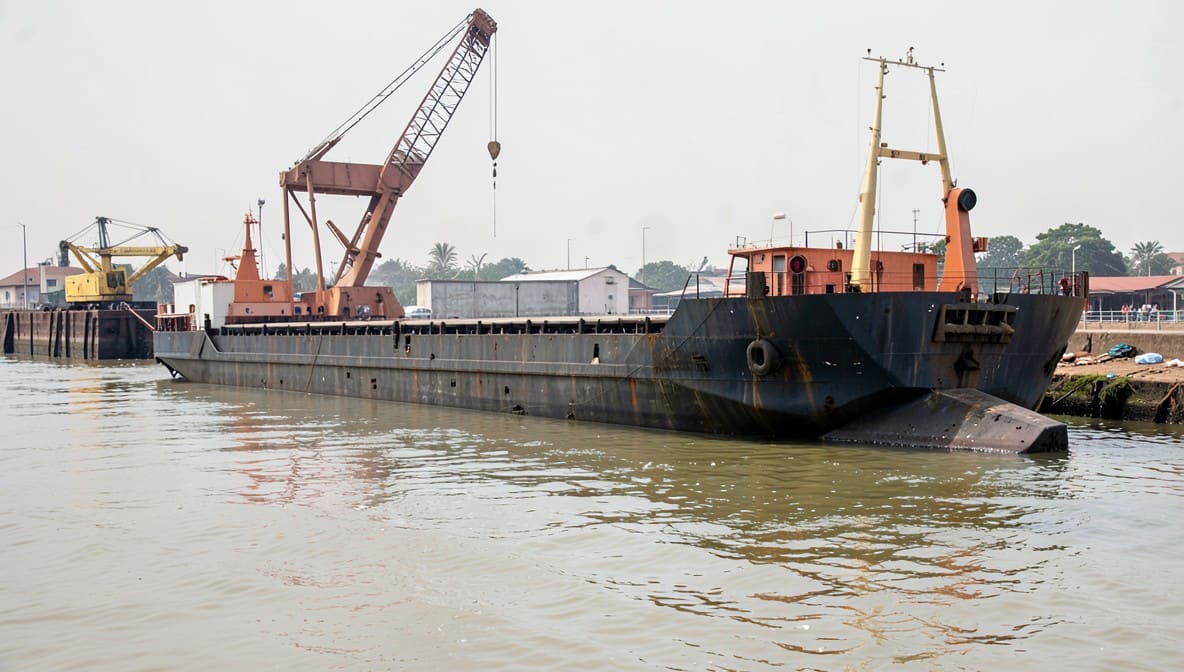
- On 11.04.1995, the M.V. Satyam, carrying iron ore from the vessel M.V. Aditya Gaurav, sank at anchorage W-1.
- On 19.04.1995, MPT issued a notice under Section 14 of the Indian Ports Act, 1908 to the petitioner, Respondent No. 2, and Respondent No. 3, demanding removal of the wreck within 30 days and deposit of ₹70 lakhs as security.
- The petitioner, in a communication dated 30.09.1996, denied liability, asserting it was not the owner of the barge.
- On 14.10.1996, MPT suspended the petitioner’s permission to use port waters for lighterage operations due to non-deposit of ₹70 lakhs.
- The petitioner filed Writ Petition No. 2127 of 1996 on 14.10.1996, seeking quashing of the suspension and prohibition of further demands.
- On 31.10.1996, the High Court granted ad-interim relief, staying the suspension order subject to the petitioner depositing ₹70 lakhs with the Court.
- Madgavkar Salvage was eventually awarded the salvage contract on a ‘no cure - no pay’ basis for ₹87 lakhs and completed operations on 29.01.1998.
- MPT paid the salvage company and later withdrew the ₹70 lakhs deposited by the petitioner, along with accrued interest of ₹4,09,25,764.
Procedural History
- 11.04.1995: Barge M.V. Satyam sinks at anchorage W-1.
- 19.04.1995: MPT issues notice under Section 14 of the Indian Ports Act to petitioner, Respondent No. 2, and Respondent No. 3.
- 30.09.1996: Petitioner denies liability in writing.
- 14.10.1996: MPT suspends petitioner’s port access.
- 14.10.1996: Writ Petition No. 2127 of 1996 filed before Bombay High Court.
- 31.10.1996: High Court grants interim stay, subject to deposit of ₹70 lakhs.
- 29.01.1998: Salvage operations completed by Madgavkar Salvage.
- 13.08.2021: Division Bench of Bombay High Court dismisses writ petition as infructuous, allowing MPT to withdraw ₹70 lakhs + interest.
- 14.02.2025: Supreme Court sets aside the 13.08.2021 order, holds that a pure question of law remains unresolved, and remands the matter.
- 17.02.2026: Case reserved for judgment.
- 10.04.2026: Judgment pronounced.
The Parties' Positions
Petitioner (JSW Steel): Argued it was neither the owner nor the disponent owner of the barge. Relied on the time charter agreement, permission letter issued to Respondent No. 2, and MPT’s own affidavits admitting Respondent No. 3 as owner. Contended that Section 14 applies only to the registered owner and that reliance on Sections 10 - 12 or the Merchant Shipping Act was impermissible as not pleaded.
Respondent No. 1 (MPT): Claimed the petitioner was the de facto owner or disponent owner due to its use of the barge, references to ‘our barges’ in correspondence, and acceptance of liability in meetings. Argued that even if Section 14 was misapplied, Sections 10 - 12 or the Merchant Shipping Act provided alternative powers. Invoked principles of Quantum Meruit and Polluter Pays.
Respondent No. 2 (N.S. Guzder & Co.): Denied liability, stating it was only a charterer.
Respondent No. 3 (Shivam Engineers): Affirmed ownership of the barge and stated MPT failed to follow the statutory procedure under Section 14 and Section 57.
Relief Sought
The petitioner sought:
- Quashing of the notice dated 19.04.1995 and the suspension order dated 14.10.1996.
- Restoration of its right to use port waters for lighterage.
- Refund of ₹70 lakhs deposited with the Court, plus accrued interest of ₹4,09,25,764.
- Costs of litigation.
The Legal Issue
The central question was whether Section 14 of the Indian Ports Act, 1908 imposes liability for wreck removal on a party that is neither the registered owner nor the disponent owner of the vessel, but merely the cargo owner or commercial user of the vessel.
Arguments Presented
For the Petitioner
The petitioner relied on the time charter agreement, the permission letter issued to Respondent No. 2, and MPT’s own affidavits acknowledging Respondent No. 3 as owner. It cited The Union of India v. Gosalia Shipping (Pvt.) Ltd. to establish that in a time charter, ownership and possession remain with the original owner. It argued that the term ‘owner’ in Section 14 must be interpreted literally and cannot be expanded to include disponent owners unless the vessel is under a demise charter. It further contended that reliance on Sections 10 - 12 or the Merchant Shipping Act was impermissible as these were not invoked in the notice or pleadings, and the statutory procedure under Section 57 was never followed.
For the Respondent
MPT argued that the petitioner’s use of the term ‘our barges’ and its participation in salvage discussions established de facto ownership or disponent ownership. It relied on judgments from this Court, Delhi High Court, and Karnataka High Court to assert that commercial control equated to disponent ownership. It further claimed that Sections 10 - 12 of the Indian Ports Act and Section 402 of the Merchant Shipping Act provided alternative bases for liability, and that the principles of Quantum Meruit and Polluter Pays justified recovery. It contended that technicalities in the notice should not vitiate the action when the underlying power existed.
The Court's Analysis
The Court began by affirming that Section 14 of the Indian Ports Act, 1908 explicitly uses the term ‘owner’ and does not define it. The Court held that in the absence of a statutory definition, the term must be given its ordinary legal meaning. The Court rejected MPT’s attempt to equate ‘commercial control’ with ownership, distinguishing between time charter and demise charter. Citing Epoch Enterprises v. M.V. Won FU, the Court emphasized that in a time charter, the owner retains possession and manning of the vessel, while the charterer merely directs its use. The petitioner had no control over the barge’s operation, crew, or maintenance.
"The word ‘owner’ has a specific connotation in law and reference to such letters/communications cannot take the case of the said respondent any further."
The Court further held that MPT’s own affidavits in earlier proceedings admitted Respondent No. 3 as the owner, making its subsequent argument inconsistent. The Court also rejected the contention that Sections 10 - 12 could be invoked retrospectively to justify an action taken under Section 14. The Court noted that Section 10 applies to floating obstructions like timber or rafts, not to a sunken vessel carrying cargo. The iron ore, having sunk with the barge, could not be classified as a floating obstruction.
Regarding the Merchant Shipping Act, the Court held that Section 402 requires a dispute resolution mechanism under Section 402(4), which was never initiated. The Court emphasized that statutory procedures are mandatory and cannot be bypassed by invoking alternative provisions at the final hearing.
"The respondent No.1 - MPT failed to proceed in the stepwise manner prescribed under the said statutory provisions... thereby showing the arbitrary and unsustainable approach adopted by the said respondent."
The Court also dismissed the invocation of Quantum Meruit and Polluter Pays, noting no services were rendered to the petitioner and no pollution was alleged or proven. The Court concluded that MPT’s actions were procedurally flawed and substantively incorrect.
The Verdict
The writ petition is allowed. The notice dated 19.04.1995 and the suspension order dated 14.10.1996 are set aside. The respondent No. 1 - Mumbai Port Trust is directed to pay the petitioner the sum of ₹4,09,25,764 (₹70 lakhs deposited plus accrued interest) within six weeks from the date of this judgment. All pending interim applications and notices of motion are disposed of. The rights of Respondent No. 3 to contest liability under Section 14, if pursued, are kept open.
What This Means For Similar Cases
Liability Under Section 14 Is Strictly Limited to the Vessel Owner
- Practitioners must now argue that Section 14 of the Indian Ports Act applies only to the registered or legal owner of the vessel, not to charterers, cargo owners, or commercial users.
- Any attempt to extend liability based on correspondence or commercial involvement will fail unless a demise charter is proven.
- Port authorities must strictly follow the statutory procedure under Section 14 and Section 57 before imposing liability.
Statutory Procedures Cannot Be Circumvented by Invoking Alternative Provisions
- Authorities cannot rely on unpleaded provisions (e.g., Sections 10 - 12 or the Merchant Shipping Act) to justify actions taken under a different statutory provision.
- Courts will not permit ‘retrospective justification’ of administrative action based on new legal theories raised only at final hearing.
- The doctrine of ‘wrong provision, right power’ does not apply where the statutory mechanism is mandatory and procedural compliance is required.
No Room for Equitable Doctrines Without Evidence
- Principles like Quantum Meruit and Polluter Pays cannot be invoked in the absence of pleadings, evidence of services rendered, or environmental harm.
- Port authorities must base their actions on clear statutory authority, not on broad equitable principles.
- Any claim for recovery must be tied to a specific statutory provision and follow its prescribed procedure.