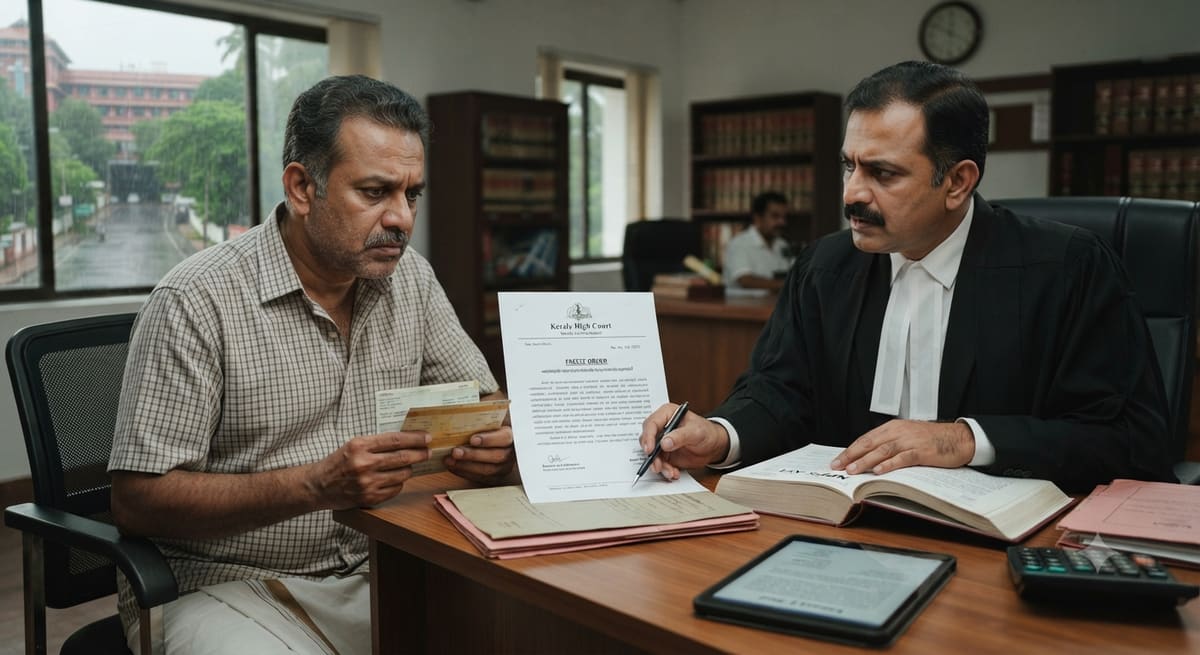
The Kerala High Court has reaffirmed the principle under the Narcotic Drugs and Psychotropic Substances Act, 1985 (NDPS Act) that the burden lies on the accused to prove that property allegedly acquired from illicit drug trade was purchased from legitimate sources. The judgment underscores the stringent evidentiary requirements under Chapter VA of the NDPS Act, particularly Section 68-J, which shifts the burden of proof to the accused once the authorities establish a prima facie case of illegal acquisition.
Background & Facts
The Dispute
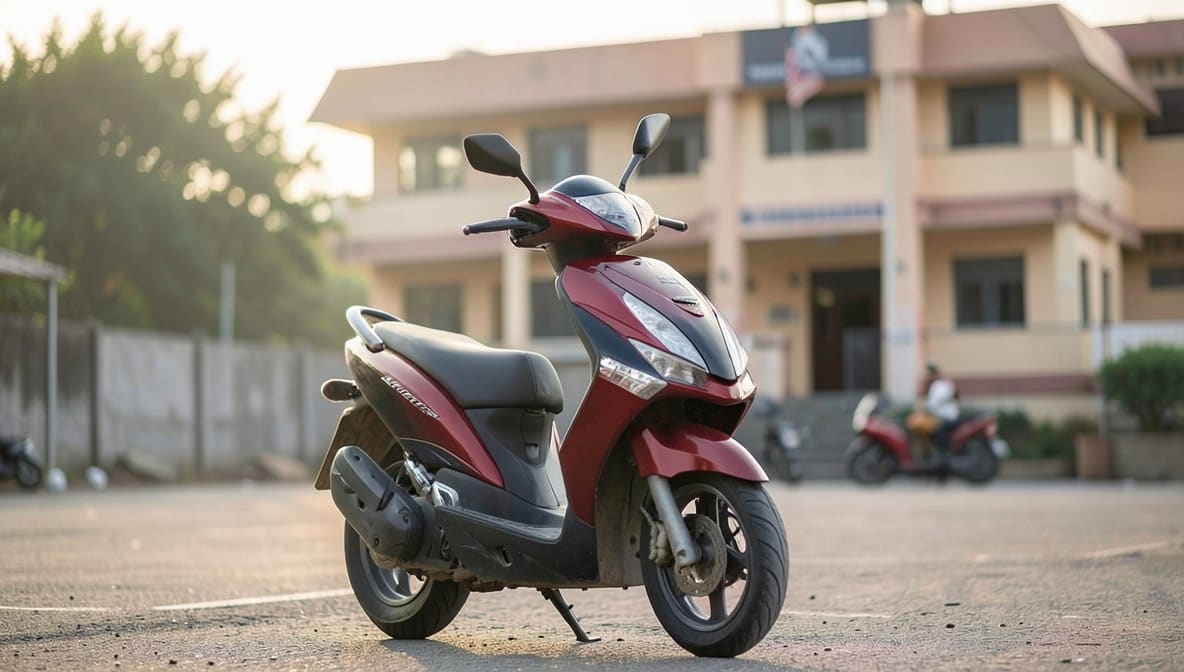
The petitioner, a 34-year-old resident of Palakkad district, Kerala, was accused of possessing 301.180 grams of MDMA during a search conducted by the police on 11.11.2023. During the search, an electronic weighing machine and a glass hookah were recovered from the petitioner’s motor car, which was parked within the premises of his house. The Investigating Officer alleged that the vehicle was purchased using proceeds from the petitioner’s illicit drug trade.
Key Facts
11.11.2023: Search conducted at the petitioner’s residence; 301.180 grams of MDMA, an electronic weighing machine, and a glass hookah recovered from his motor car.
The petitioner claimed that the vehicle was purchased using his salary earned during employment in Oman.
Enquiry under Section 68-E of the NDPS Act: The Investigating Officer concluded that the vehicle was purchased using proceeds from illicit drug trade.
12.03.2024: The Investigating Officer passed Ext.P4 order, freezing the petitioner’s motor car under Section 68-F of the NDPS Act.
09.04.2024: The Competent Authority confirmed the freezing order.
24.12.2025: The Appellate Tribunal upheld the freezing order (Ext.P5), rejecting the petitioner’s appeal.
Procedural History
12.03.2024: Freezing order (Ext.P4) passed by the Investigating Officer under Section 68-F of the NDPS Act.
09.04.2024: Competent Authority confirmed the freezing order.
24.12.2025: Appellate Tribunal dismissed the petitioner’s appeal (Ext.P5).
29.06.2026: Writ petition (WP(C) No. 18944/2026) filed before the Kerala High Court.
15.06.2026: Union of India impleaded as additional respondent (I.A. No. 1/2026).
13.07.2026: Writ petition dismissed by the Kerala High Court.
The Parties' Positions
Petitioner’s Contentions
The petitioner challenged the freezing orders on the following grounds:
The authorities passed the orders mechanically, without applying their mind.
The vehicle was purchased using his legitimate salary earned during employment in Oman.
The authorities failed to consider bank statements (Ext.P6 and Ext.P7) and other documents (Ext.P1 to Ext.P3) proving the legitimate source of funds.
Reliance was placed on the Supreme Court’s decision in Aslam Mohammed Merchant v. Competent Authority [(2008) 14 SCC 186], which mandates that the authority must record reasons for believing that the property was acquired illegally.
Respondents’ Contentions
The respondents, represented by the Senior Panel Counsel and the Senior Government Pleader, argued:
The Appellate Tribunal conducted a meticulous analysis of the petitioner’s bank statements (Ext.A6) and found unexplained and suspicious transactions.
The petitioner failed to produce bank statements of two other accounts from which funds were channeled into his account.
The petitioner’s claim of availing a bank loan for the vehicle purchase was unsubstantiated, as he did not produce the registration certificate, purchase invoice, insurance policy, or loan documents.
The petitioner’s contention about the bank loan was doubtful, given the large savings in his account.
The burden of proof under Section 68-J of the NDPS Act and Section 103 of the Evidence Act lay on the petitioner to prove that the property was not acquired from illicit sources.
The Legal Issue
The central question before the Court was whether the freezing of the petitioner’s motor car under Chapter VA of the NDPS Act was justified, given the petitioner’s claim that the vehicle was purchased using legitimate funds. Specifically, the Court had to determine:
Whether the authorities applied their mind while passing the freezing orders.
Whether the petitioner discharged the burden of proof under Section 68-J of the NDPS Act to establish that the property was acquired from legitimate sources.
Arguments Presented
For the Petitioner
The petitioner’s counsel argued:
The freezing orders (Ext.P4 and Ext.P5) were passed mechanically, without considering the evidence of legitimate income.
The petitioner’s salary certificates (Ext.P2) and bank statements (Ext.P6 and Ext.P7) proved that the vehicle was purchased using legitimate funds.
The authorities failed to comply with the mandate of Aslam Mohammed Merchant, which requires the recording of reasons for believing that the property was acquired illegally.
For the Respondents
The respondents contended:
The Appellate Tribunal’s order (Ext.P5) was a speaking order, detailing the reasons for upholding the freezing of the vehicle.
The petitioner’s bank statements (Ext.A6) contained unexplained and suspicious transactions, raising doubts about the legitimacy of the funds.
The petitioner failed to produce supporting documents (e.g., loan documents, purchase invoices) to substantiate his claim of availing a bank loan.
The burden of proof under Section 68-J of the NDPS Act and Section 103 of the Evidence Act lay on the petitioner, and he failed to discharge it.
The Court's Analysis
The Court examined the Appellate Tribunal’s order (Ext.P5) and found that it was a detailed and reasoned order, addressing the petitioner’s contentions comprehensively. The Court observed:
"The Appellate Tribunal took into account the contentions of the petitioner and resorted to a meticulous analysis of the documents relied on by him, particularly his bank account statements. The Tribunal observed that a large number of entries in the bank statements remained unexplained and suspicious. The petitioner failed to produce the bank statements of two other banks from which money was channeled to his account. The Tribunal also noted that the petitioner’s claim of availing a bank loan for the purchase of the vehicle was unsubstantiated, as he did not produce the registration certificate, purchase invoice, insurance policy, or loan documents. The Tribunal further observed that the petitioner’s contention about the bank loan was doubtful, given the large savings in his account."
The Court relied on Section 68-J of the NDPS Act and Section 103 of the Evidence Act, which place the burden of proof on the accused to establish that the property was not acquired from illicit sources. The Court held that the petitioner failed to discharge this burden, as he did not provide sufficient evidence to rebut the presumption that the vehicle was purchased using proceeds from drug trafficking.
The Court distinguished the petitioner’s reliance on Aslam Mohammed Merchant by noting that the Appellate Tribunal did record reasons for its decision, unlike the mechanical order challenged in that case. The Court emphasized that the Appellate Tribunal’s order was well-reasoned, leaving no scope for interference under Article 226 of the Constitution of India.
The Verdict
The Kerala High Court dismissed the writ petition (WP(C) No. 18944/2026), upholding the freezing of the petitioner’s motor car under Chapter VA of the NDPS Act. The Court held that the petitioner failed to discharge the burden of proof under Section 68-J of the NDPS Act to establish that the vehicle was purchased using legitimate funds. No costs were awarded.
What This Means For Similar Cases
Burden of Proof Lies on the Accused
This judgment reaffirms that under Section 68-J of the NDPS Act, the burden of proof lies squarely on the accused to establish that the property in question was acquired from legitimate sources. Practitioners must advise clients facing proceedings under Chapter VA of the NDPS Act to:
Maintain meticulous records of all financial transactions, including bank statements, salary slips, and loan documents.
Produce comprehensive evidence to rebut the presumption of illicit acquisition, including invoices, registration certificates, and insurance policies.
Avoid unexplained transactions in bank accounts, as these can be used to raise suspicions about the legitimacy of funds.
Authorities Must Record Reasons
While the Court dismissed the petitioner’s challenge, it emphasized that the authorities must record reasons for freezing property under the NDPS Act. This aligns with the Supreme Court’s decision in Aslam Mohammed Merchant, which mandates that orders under Chapter VA must not be mechanical. Practitioners should:
Scrutinize freezing orders for compliance with the requirement of recording reasons.
Challenge orders that fail to provide detailed reasoning, as such orders may be vulnerable to judicial review.
Evidentiary Requirements Are Stringent
The judgment highlights the stringent evidentiary requirements under the NDPS Act. The Appellate Tribunal’s order (Ext.P5) demonstrates that:
Bank statements alone may not suffice if they contain unexplained transactions.
Supporting documents (e.g., loan agreements, purchase invoices) are crucial to substantiate claims of legitimate acquisition.
Failure to produce evidence can lead to adverse inferences, as seen in this case.
Practitioners must ensure that clients facing proceedings under Chapter VA are prepared to meet these high evidentiary standards to avoid adverse outcomes.