The High Court of Jammu & Kashmir and Ladakh has delivered a landmark ruling that re-testing of narcotic samples under the Narcotic Drugs and Psychotropic Substances Act, 1985, is strictly prohibited unless exceptional circumstances are cogently recorded by the trial court. This judgment reinforces statutory limits on investigative overreach and sets a binding precedent for procedural compliance in drug cases.
Background & Facts
The Dispute
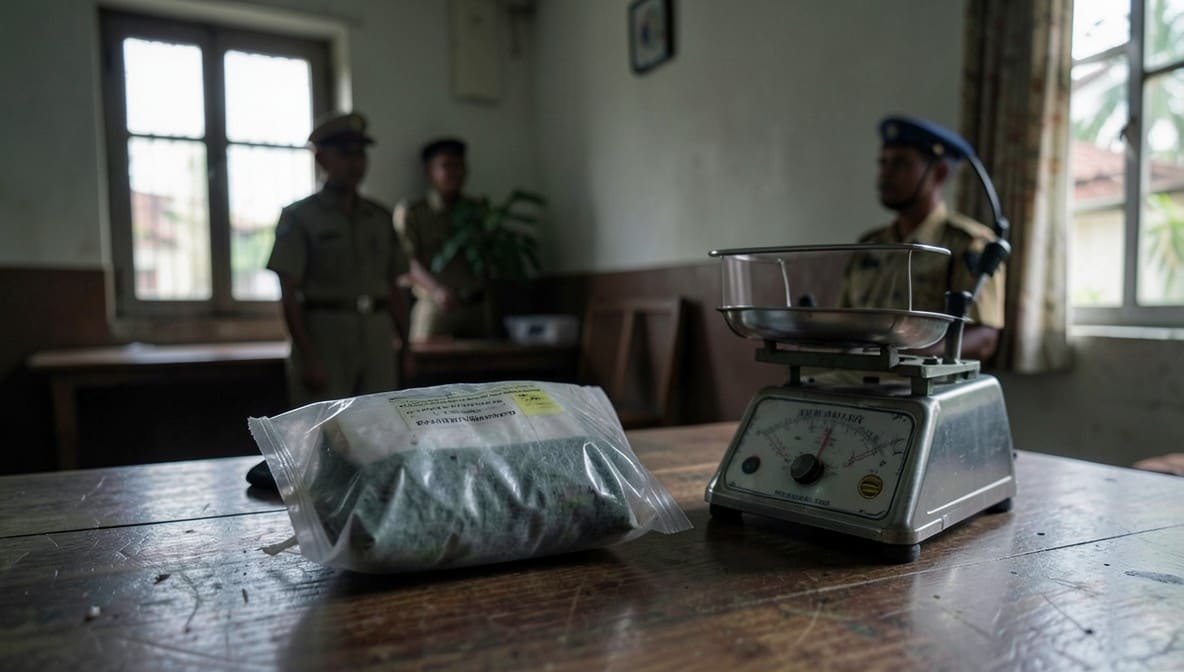
The case arose from the seizure of 0.870 kg of a substance suspected to be heroin from a vehicle driven by petitioners Mohd. Mansha and others on 17 April 2024. The Narcotics Control Bureau (NCB) recovered the contraband without independent witnesses and forwarded one sample to the Central Forensic Science Laboratory (CFSL) in Delhi. The initial lab report from CRCL Delhi on 20 May 2024 found no presence of heroin, amphetamine, cocaine, or other scheduled substances, but detected Viagra. Based on this, the trial court granted interim bail to the petitioners on 18 September 2024.
Procedural History
The prosecution, dissatisfied with the negative result, sought re-testing of the second sample without citing any exceptional circumstance:
- 19 April 2024: Two samples of the seized contraband were drawn in the presence of a Special Mobile Magistrate
- 21 April 2024: First sample sent to CRCL, Delhi
- 20 May 2024: CRCL report returned negative for all scheduled narcotics
- 30 May 2024: Prosecution applied for re-testing of the second sample
- 30 May 2024: Trial court allowed re-testing without recording any cogent reason
- 20 December 2024: CFSL Chandigarh reported presence of Tramadol, Caffeine, and Dextromethorphan
- 5 February 2025: Trial court recalled interim bail and remanded petitioners to judicial custody
- 28 January 2026: Bail petitions heard by High Court
Relief Sought
The petitioners sought quashing of the charge-sheet and restoration of bail, arguing that the re-testing violated the statutory framework of the NDPS Act and the binding precedent in Thana Singh v. Central Bureau of Narcotics.
The Legal Issue
The central question was whether Section 52A of the NDPS Act permits re-testing of a narcotic sample after an initial laboratory report has conclusively ruled out the presence of scheduled substances, and if so, under what conditions.
Arguments Presented
For the Petitioner
Counsel for the petitioners relied on Thana Singh v. Central Bureau of Narcotics and Jaswinder Singh @ Binder v. State of Punjab to argue that the NDPS Act contains no statutory provision for re-testing. They emphasized that the Supreme Court has explicitly prohibited re-testing as a matter of course, and that the prosecution failed to demonstrate any exceptional circumstance - such as sample loss, contamination, or laboratory error - to justify the second test. The petitioners contended that the trial court’s mechanical approval of the application violated the principle of audi alteram partem and rendered the charge-sheet legally unsustainable.
For the Respondent
The State, through the NCB, argued that the gravity of the alleged offence - possession of a commercial quantity of narcotics - justified further investigation. They claimed the initial report’s detection of Viagra raised doubts about the authenticity of the sample and that re-testing was necessary for accurate identification. They also invoked Section 37 of the NDPS Act to argue that bail should be denied due to the seriousness of the charge.
The Court's Analysis
The Court undertook a rigorous statutory interpretation of the NDPS Act, distinguishing it from other regulatory statutes like the Drugs and Cosmetics Act or the Prevention of Food Adulteration Act, which explicitly permit re-testing within defined timeframes. The Court held that the legislature’s deliberate omission of such a provision in the NDPS Act reflects a conscious intent to prevent procedural delays and abuse.
"Therefore, keeping in mind the array of factors discussed above, we direct that, after the completion of necessary tests by the concerned laboratories, results of the same must be furnished to all parties concerned with the matter. Any requests as to re-testing/re-sampling shall not be entertained under the NDPS Act as a matter of course. These may, however, be permitted, in extremely exceptional circumstances, for cogent reasons to be recorded by the Presiding Judge."
The Court found that the prosecution’s application for re-testing was based solely on the inconvenience of the first report’s outcome, not on any tangible risk of error. The trial court, in turn, granted the application without recording any reason whatsoever, thereby violating the Supreme Court’s directive in Thana Singh. The Court emphasized that the absence of compelling circumstances - such as sample degradation, loss, or contamination - renders re-testing unlawful. The detection of non-scheduled substances like Tramadol and Caffeine did not establish the commission of any offence under the NDPS Act, as these are not listed in the Schedules. Consequently, the charge-sheet, premised on an illegal re-testing process, failed to disclose a cognizable offence.
The Verdict
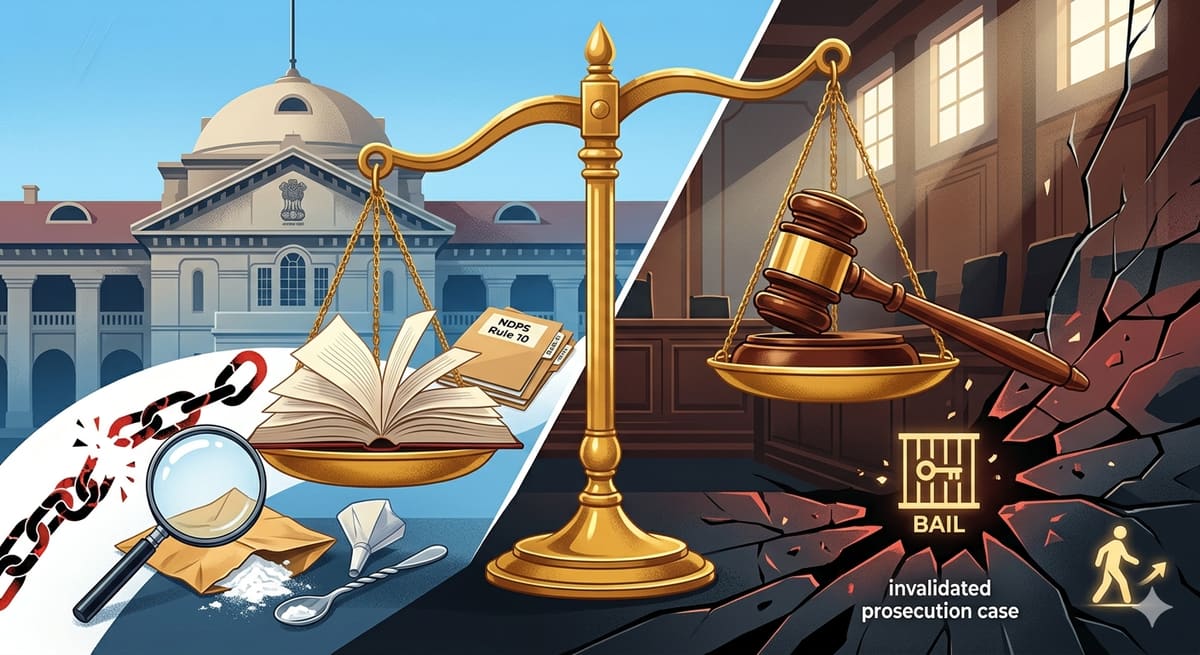
The petitioners won. The Court held that re-testing under the NDPS Act is impermissible absent extremely exceptional circumstances and cogent reasons recorded by the trial court. The charge-sheet and all consequential orders were quashed, and the petitioners’ interim bail was restored.
What This Means For Similar Cases
Re-testing Is Not a Routine Tool
- Practitioners must challenge any application for re-testing that lacks a specific, documented justification such as sample loss, contamination, or laboratory malfunction
- Prosecution cannot rely on mere dissatisfaction with a negative result to justify a second test
- Courts must record reasons in writing before permitting re-testing - oral or mechanical approvals are invalid
Charge-Sheets Based on Illegally Obtained Reports Are Void
- Any charge-sheet grounded on a re-tested sample without statutory compliance is liable to be quashed under Section 482 CrPC
- Defence counsel should move for quashing at the earliest opportunity, especially where initial reports are negative
- The presence of non-scheduled substances (e.g., Tramadol, Caffeine) does not constitute an offence under the NDPS Act
Bail Cannot Be Denied Solely on Gravity of Offence When Evidence Is Legally Defective
- Section 37 NDPS Act cannot be invoked to deny bail when the foundational evidence is legally unsustainable
- Courts must examine the legality of the investigation before applying stringent bail conditions
- The judgment reinforces that procedural integrity trumps punitive intent in drug prosecutions