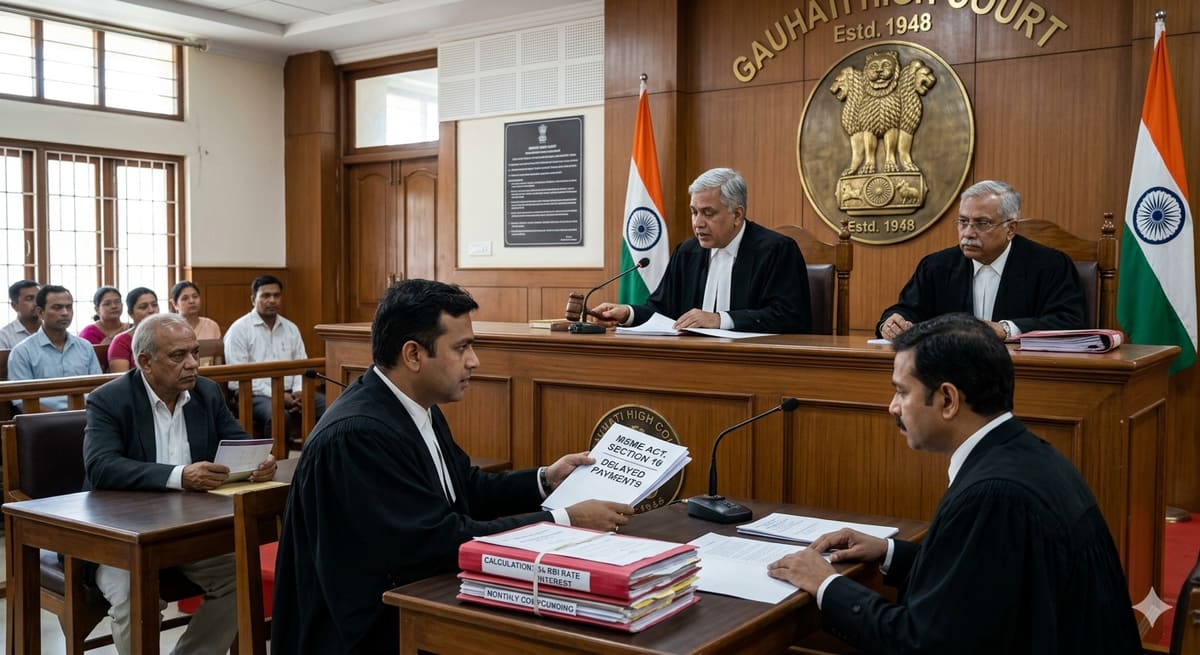
The High Court of Punjab and Haryana dismissed a writ petition challenging the State Bank of India’s classification of a loan account as ‘fraud’ under RBI Master Directions, holding that the bank had complied with the principle of audi alteram partem by issuing a show cause notice, providing the forensic audit report, considering the director’s reply, and passing a reasoned order. The judgment reinforces that natural justice requirements must be read into fraud classification proceedings.
Background & Facts
The Dispute
The petitioner, Rakesh Nayyar, was a director of Woolways India Limited, a company undergoing corporate insolvency resolution under the Insolvency and Bankruptcy Code, 2016. The State Bank of India (SBI), as a consortium lender, issued a show cause notice alleging fraud and subsequently classified the loan account as fraud, reporting the petitioner’s name to the Reserve Bank of India. The petitioner contended that this was done without affording a proper opportunity of hearing, violating natural justice.
Key Facts
- Woolways India Limited availed credit facilities from a consortium of banks, with Standard Chartered Bank and SBI as partners.
- On 10.05.2018, Standard Chartered Bank filed an application under Section 7 of the IBC before the NCLT, New Delhi Bench (CP No. IB-29/(ND)/2018).
- The NCLT accepted the petition and initiated the Corporate Insolvency Resolution Process (CIRP) vide order dated 10.05.2018 (Annexure P-1).
- On 18.05.2018, the entire management, assets, and operational records of the company were taken over by the Interim Resolution Professional (IRP), who was later appointed as Liquidator.
- A comprehensive repayment plan was prepared on 23.09.2025 and formally approved on 10.11.2025 (Annexure P-10).
- A Forensic Audit Report dated 25.03.2019 (Annexure P-6) was prepared by M/s Ravin Rajan & Co., Chartered Accountants, comprising 157 pages.
- SBI issued a show cause notice dated 02.12.2025 (Annexure P-5) to the petitioner, alleging five points of financial discrepancy based on the Forensic Audit Report.
- The petitioner filed a reply to the show cause notice on 18.12.2025 (Annexure P-7).
- The Review Committee for Identification of Account as Fraud met on 21.02.2026, considered the reply, dropped one allegation (multiple cash credit facility), and passed an order dated 21.02.2026 (Annexure P-8) classifying the loan account as fraud.
- The order was formally communicated by the Bank on 11.03.2026 (Annexure P-9).
- The petitioner filed the present writ petition, which was reserved on 13.07.2026 and pronounced on 24.09.2026.
Procedural History
- 10.05.2018: NCLT order initiating CIRP against Woolways India Limited (Annexure P-1).
- 18.05.2018: Takeover of management and assets by IRP/Liquidator.
- 23.09.2025: Preparation of comprehensive repayment plan.
- 10.11.2025: Formal approval of repayment plan (Annexure P-10).
- 02.12.2025: Issuance of show cause notice by SBI (Annexure P-5).
- 25.03.2019: Date of Forensic Audit Report (Annexure P-6).
- 18.12.2025: Petitioner’s reply to show cause notice (Annexure P-7).
- 21.02.2026: Review Committee meeting and order classifying account as fraud (Annexure P-8).
- 11.03.2026: Formal communication of fraud classification order (Annexure P-9).
- 13.07.2026: Reservation of writ petition.
- 24.09.2026: Pronouncement of judgment.
Relief Sought
The petitioner sought:
- Quashing of the impugned orders dated 21.02.2026 (Annexure P-8) and 11.03.2026 (Annexure P-9).
- A direction to SBI not to classify the loan account as fraud or report the petitioner’s name to RBI.
- Restoration of the status quo ante and costs of litigation.
The Legal Issue
The central question was whether the State Bank of India’s classification of the loan account as ‘fraud’ under the RBI Master Directions on Frauds, without providing an opportunity of hearing to the petitioner, violated the principles of natural justice, and whether the rule of audi alteram partem must be read into Clauses 8.9.4 and 8.9.5 of those Directions.
Arguments Presented
For the Petitioner
The petitioner argued that the impugned orders were passed without affording a proper opportunity of hearing, contravening the principle of audi alteram partem. He relied on the Supreme Court judgment in State Bank of India & Ors. v. Rajesh Aggarwal & Ors., 2023 (6) SCC 1, which held that natural justice requires notice, explanation of forensic audit conclusions, and a reasoned order before classifying an account as fraud. He contended that the show cause notice and forensic audit report were insufficient because he could not access the underlying records sequestered with the Liquidator, and his reply was merely theoretical. He further argued that the Bank’s actions were arbitrary and unsustainable in law, especially after the repayment plan had already been approved, rendering the fresh fraud classification untenable.
For the Respondent
SBI contended that the show cause notice dated 02.12.2025, accompanied by the Forensic Audit Report dated 25.03.2019, constituted adequate notice. The petitioner’s detailed reply dated 18.12.2025 was considered para-wise by the Review Committee, which dropped one allegation, demonstrating that the opportunity of hearing had been genuinely afforded. The Bank argued that its actions under the RBI Master Directions are independent statutory obligations to protect banking system integrity, and that completion of a resolution plan does not immunize directors from past frauds discovered in a forensic audit. It submitted that the principles of natural justice had been duly complied with, and therefore the petition lacked merit.
The Court's Analysis
The Court began by noting that the impugned orders were passed under the RBI Master Directions on Frauds issued in 2016. It referred to the Supreme Court’s observation in Rajesh Aggarwal’s case that the principles of natural justice would be read into Clauses 8.9.4 and 8.9.5 of those Directions. The Court quoted:
"In light of the legal position noted above, we hold that the rule of audi alteram partem ought to be read in Clauses 8.9.4 and 8.9.5 of the Master Directions on Fraud. Consistent with the principles of natural justice, the lender banks should provide an opportunity to a borrower by furnishing a copy of the audit reports and allow the borrower a reasonable opportunity to submit a representation before classifying the account as fraud."
After examining the record, the Court found that SBI had issued a comprehensive show cause notice, supplied the entire Forensic Audit Report, and considered the petitioner’s point-by-point reply. The Review Committee, after deliberation, dropped one allegation, indicating that the reply had been meticulously examined. The Court emphasized that the order classifying the account as fraud was a reasoned order, addressing the objections raised. It concluded that the Bank had not contravened the principles of natural justice; rather, it had adhered to the mandate of audi alteram partem as interpreted by the Apex Court. The Court further observed that there was no dispute regarding the underlying facts of the consortium lending, the IBC proceedings, or the timeline of events. Consequently, it held that the impugned orders were valid and sustainable in law, and that no interference was warranted.
The Verdict
The petitioner failed; the writ petition was dismissed. The High Court held that the State Bank of India’s classification of the loan account as ‘fraud’ under the RBI Master Directions did not violate natural justice, as the bank had afforded an opportunity of hearing by issuing a show cause notice, providing the forensic audit report, considering the reply, and passing a reasoned order. The impugned orders dated 21.02.2026 (Annexure P-8) and 11.03.2026 (Annexure P-9) were upheld, with no relief granted to the petitioner. No compensation, interest, or costs were awarded.
What This Means For Similar Cases
Opportunity of Hearing Is Mandatory Before Fraud Classification
Practitioners must ensure that banks issuing fraud classifications under RBI Master Directions provide a show cause notice, furnish the forensic audit report, and allow a reasonable opportunity for the borrower to respond before passing any order. Mere issuance of notice without considering the reply may render the order vulnerable to challenge.
Reasoned Order Required
The decision to classify an account as fraud must be a speaking order that addresses the borrower’s representations. Courts will look for evidence that the bank’s committee deliberated on the reply and made findings accordingly, as demonstrated by the dropping of an allegation in the present case.
Compliance with RBI Master Directions Is Statutory
Actions taken under the RBI Directions are independent statutory obligations; a prior settlement or repayment plan does not immunize a director from liability for past frauds uncovered in a forensic audit. Banks may proceed with fraud classification post-settlement, provided procedural fairness is observed.
Access to Records Does Not Vitiate Notice
Even if underlying records are sequestered with a liquidator or resolution professional, the borrower’s inability to access them does not automatically invalidate the notice, provided the bank has supplied the forensic audit report and given a chance to respond based on that report.