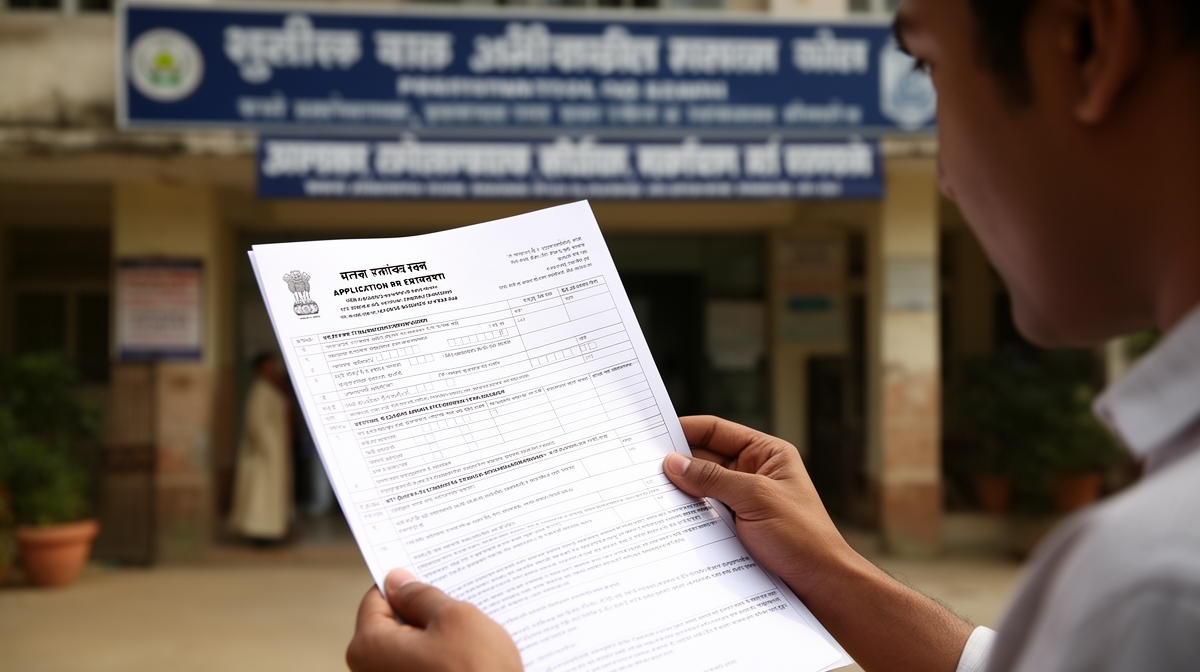

The Income Tax Appellate Tribunal has held that an assessment order passed without affording the assessee a meaningful opportunity to be heard is legally unsustainable. The Tribunal restored the matter to the Commissioner of Income Tax (Appeals) for fresh adjudication, emphasizing that procedural fairness under natural justice is non-negotiable even in tax proceedings.
The Verdict
The assessee won. The Income Tax Appellate Tribunal set aside the assessment order and remanded the matter to the Commissioner of Income Tax (Appeals) for fresh adjudication. The core legal holding is that an assessment order violating the principle of natural justice by denying the assessee a fair opportunity to be heard is invalid, regardless of the strength of the revenue’s case. The Tribunal directed the assessee to deposit Rs. 5,000 as cost but mandated that the matter be heard afresh with full opportunity to present evidence and submissions.
Background & Facts
The assessee filed his income tax return for Assessment Year 2013-14 declaring an income of Rs. 3,63,250. The Income Tax Department received an investigation report indicating credit entries of Rs. 66,58,713 in the assessee’s bank account, including Rs. 15 lakhs in cash deposits. Based on this, the department reopened the assessment under Section 148 and completed it under Section 143(3) read with Sections 147 and 144B, adding Rs. 1,59,61,134 as undisclosed income under Section 69A of the Income Tax Act.
The assessee appealed to the Commissioner of Income Tax (Appeals). Despite multiple notices, the assessee failed to appear or file a written submission. The Commissioner dismissed the appeal ex parte on August 7, 2025, without considering any of the assessee’s factual claims, including that the credits arose from land compensation and loans via cheque. The assessee then approached the Income Tax Appellate Tribunal.
Before the Tribunal, the assessee’s advocate argued that the ex parte order was unjust because the assessee had not been confronted with the material relied upon by the Assessing Officer, nor given a proper chance to explain the source of the credits. The Department did not dispute the procedural irregularity but noted the assessee’s non-compliance with notices.
The Legal Issue
Can an assessment order be sustained under the Income Tax Act if the assessee was not given a reasonable opportunity to be heard before adverse additions were made, particularly when the additions are based on unverified credit entries?
Arguments Presented
For the Petitioner
The petitioner argued that the Commissioner of Income Tax (Appeals) passed an ex parte order without considering any of the submissions made during the assessment stage, including evidence of land compensation and loan receipts. He contended that the Assessing Officer had not confronted the assessee with the investigation report or the basis for invoking Section 69A. Reliance was placed on the principle of audi alteram partem, which mandates that no one should be condemned unheard. The petitioner cited judicial precedents holding that procedural fairness is a constitutional imperative even in tax matters.
For the Respondent
The Department acknowledged that the assessee had not responded to notices but argued that the non-compliance justified the ex parte dismissal. It maintained that the credit entries were unexplained and therefore rightly treated as undisclosed income under Section 69A. The Department did not contest the procedural lapse but sought to uphold the assessment on substantive grounds.
The Court's Analysis
The Tribunal emphasized that the right to a fair hearing is not a mere procedural formality but a foundational element of natural justice. It observed that the Commissioner’s order was passed without any consideration of the assessee’s submissions or the nature of the credits claimed. The Tribunal noted that even if the assessee had been dilatory, the law does not permit the denial of a hearing as a punitive measure.
"The principle of natural justice is not a technicality but a safeguard against arbitrary state action. Denial of opportunity to be heard renders any order void ab initio, irrespective of the correctness of the outcome."
The Tribunal distinguished between procedural default and substantive guilt. It held that while the assessee’s failure to respond may be relevant for cost imposition, it cannot justify the abrogation of the right to be heard. The Tribunal further clarified that Section 69A cannot be applied mechanically without giving the assessee a chance to explain the source of funds, especially where the nature of the credits (such as land compensation or loans) suggests a legitimate origin.
The Tribunal also rejected the notion that the Assessing Officer’s internal notes or investigation reports could be used as undisclosed evidence against the assessee without disclosure. Such a practice violates the doctrine of fair play and undermines the integrity of the adjudicatory process.
What This Means For Similar Cases
This judgment reinforces that procedural compliance under the Income Tax Act is not optional. Practitioners must now treat any ex parte order passed by the Commissioner of Income Tax (Appeals) as vulnerable to challenge if the assessee can demonstrate that material evidence or allegations were not disclosed or addressed. The ruling provides a clear roadmap: even in cases of non-appearance, the appellate authority must either grant a fresh opportunity or record a reasoned finding that the assessee wilfully waived the right.
For revenue authorities, this means that reliance on unverified investigation reports or undisclosed documents to justify additions under Section 69A will no longer suffice. The burden is now on the department to formally confront the assessee with the basis of its allegations and allow a meaningful reply. This judgment also strengthens the position of taxpayers who claim legitimate sources for credit entries, particularly in rural or semi-urban areas where land compensation and informal loans are common.
The direction to deposit Rs. 5,000 as cost signals that while procedural rights are inviolable, deliberate non-cooperation will not go unpunished. This balanced approach ensures that neither side can abuse the system.