The Punjab and Haryana High Court has reaffirmed that the cancellation of a Scheduled Caste certificate without affording the holder a meaningful opportunity to be heard violates the foundational principle of natural justice. This judgment clarifies that even where preliminary inquiries suggest ineligibility, procedural fairness must precede revocation of a legally conferred status.
Background & Facts
The Dispute
The petitioners, Shiv Devi and another, challenged the cancellation of their Scheduled Caste (SC) certificates issued by the Tehsildar, Tarn Taran district. The certificates were revoked by an order dated 10.12.2025 passed by the Deputy Commissioner-cum-District Electoral Officer, on the ground that the petitioners were "migrated women" and therefore ineligible for SC status under Punjab’s criteria.
Key Facts
Petitioner No.1 was issued an SC certificate on 17.10.2018
Petitioner No.2 was issued an SC certificate on 04.10.2024
Petitioner No.1 was elected as Sarpanch in the Panchayat elections and Petitioner No.2 as Panch
Both petitioners participated in the functioning of the Gram Panchayat and issued notices for its first meeting
On 04.08.2025, Petitioner No.1 filed a representation regarding non-attendance of Panches and non-functioning of the Panchayat
She filed CWP No.23906 of 2025 seeking direction to the District Development and Panchayat Officer to decide her representation
This Court, by order dated 19.08.2025, directed the respondent to decide the representation within four weeks
Respondents Nos.3 to 5 filed a complaint challenging the validity of the petitioners’ SC certificates
This Court, by order dated 29.09.2025 in CWP No.26695 of 2025, directed the Deputy Commissioner to inquire into the complaint
The Deputy Commissioner appointed a Sub-Divisional Magistrate to conduct the inquiry
The Sub-Divisional Magistrate submitted a report concluding that the petitioners were ineligible for SC status in Punjab
The Deputy Commissioner, without affording the petitioners any opportunity to respond to the report, cancelled their certificates by order dated 10.12.2025
The Joint Sub-Registrar-cum-Naib Tehsildar subsequently directed the petitioners to surrender their certificates
The petitioners have resided in Punjab for over 40 years
Petitioner No.1’s in-laws belong to the SC category; Petitioner No.2 is her daughter
Procedural History
17.10.2018: SC Certificate issued to Petitioner No.1 by Tehsildar
04.10.2024: SC Certificate issued to Petitioner No.2 by Tehsildar
04.08.2025: Representation filed by Petitioner No.1 regarding Panchayat functioning
19.08.2025: High Court directed decision on representation within four weeks
29.09.2025: High Court directed Deputy Commissioner to inquire into complaint against SC certificates
10.12.2025: Deputy Commissioner cancelled both SC certificates without hearing petitioners
30.04.2026: Petition filed under Articles 226/227 of the Constitution
30.04.2026: Judgment delivered by the High Court
The Parties' Positions
Petitioners: Argued that they were never given an opportunity to present documentary or oral evidence, despite having lived in Punjab for over four decades and being recognized as SC candidates in electoral processes. They contended that the cancellation was mechanical, arbitrary, and violative of natural justice.
Respondents: Contended that a proper inquiry was conducted by the Sub-Divisional Magistrate, whose report concluded ineligibility. They argued that the Deputy Commissioner acted on the basis of this report and that the petitioners’ long residence did not automatically confer eligibility.
Relief Sought
The petitioners sought:
Setting aside of the order dated 10.12.2025 cancelling their SC certificates
Direction to the State to reinstate their certificates
A declaration that their right to contest elections as SC candidates cannot be denied without due process
The Legal Issue
The central question was whether the cancellation of a Scheduled Caste certificate by an administrative authority, based solely on an inquiry report, without affording the certificate holder an opportunity to be heard, violates the principles of natural justice.
Arguments Presented
For the Petitioner
Counsel argued that the right to hold a caste certificate is a significant legal status affecting electoral rights, access to reservations, and social identity. The petitioners had resided in Punjab for over 40 years and were recognized in electoral rolls. The Sub-Divisional Magistrate’s report was never shared with them, nor were they given a chance to rebut its findings. The cancellation amounted to a deprivation of rights without hearing, violating Article 14 and the rule against bias and audi alteram partem. Reliance was placed on State of U.P. v. Mohd. Noor and K. S. Puttaswamy v. Union of India to underscore the procedural safeguards required in matters affecting personal status.
For the Respondent
The State counsel submitted that the inquiry was conducted by a judicial officer (Sub-Divisional Magistrate) and the report was duly considered by the Deputy Commissioner. They argued that the State has the power to verify and revoke caste certificates to prevent misuse, and that the petitioners’ long residence did not override statutory eligibility criteria under Punjab’s rules. They contended that the petitioners were not denied all opportunity, as the inquiry was conducted in accordance with procedure.
The Court's Analysis
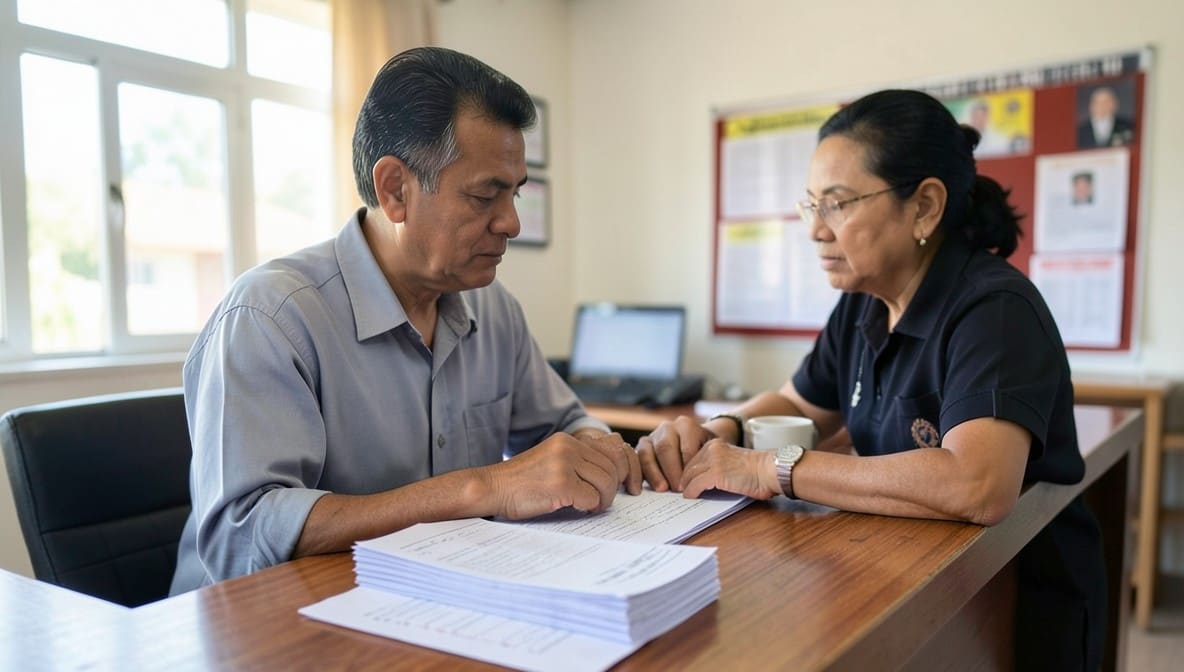
The Court examined the procedural sequence and found that while an inquiry was conducted, the petitioners were never provided with a copy of the Sub-Divisional Magistrate’s report, nor were they invited to make submissions or appear before the inquiry officer. The Deputy Commissioner acted on the report without any adversarial process.
"No prejudice would be caused to respondent-State if proper and fair opportunity is granted to petitioners to put forth their stand in the form of documentary as well as oral evidence."
The Court emphasized that the right to claim benefits under reservation is not absolute, but the procedure to revoke such a status must be fair. The principle of audi alteram partem is not a mere formality but a constitutional imperative under Article 14. The Court distinguished this case from those where certificates were obtained by fraud, noting that here, the petitioners had held the certificates for years and participated in public life under them.
The Court rejected the notion that an inquiry report alone suffices to cancel a legally issued certificate. It held that the State’s power to verify must be exercised with procedural fairness. The fact that the petitioners are women who migrated into Punjab does not, by itself, disqualify them - eligibility must be determined on the basis of evidence and opportunity to respond.
The Verdict
The petition succeeded. The Court set aside the order dated 10.12.2025 cancelling the SC certificates. The respondents were directed to conduct a fresh inquiry, granting the petitioners full opportunity to file written submissions and appear for personal hearing before the Inquiry Officer appointed by the Deputy Commissioner, Tarn Taran. The first hearing was fixed for 11.05.2026 at 11:00 AM, and the entire proceedings must be concluded within one month from that date. The petitioners’ SC certificates shall remain in force until the conclusion of the fresh inquiry.
What This Means For Similar Cases
Fair Hearing Is Non-Negotiable in Caste Certificate Matters
Practitioners must insist that any inquiry leading to cancellation of a caste certificate must include: (i) notice of allegations, (ii) disclosure of inquiry report, (iii) opportunity to submit documents, and (iv) personal hearing
Mechanical reliance on inquiry reports without adversarial process renders the order voidable
The burden of proving fraud or misrepresentation lies on the State; mere suspicion is insufficient
Long-Term Residence and Electoral Recognition Are Relevant Factors
Continuous residence in the state for decades, coupled with recognition in electoral rolls and participation in local governance, strengthens the claim to caste status
Denial of reservation benefits based on migration status without individualized assessment is arbitrary
Courts will scrutinize whether the State applied uniform standards or engaged in discriminatory exclusion
Administrative Action Must Align with Constitutional Norms
Caste certification is not a mere administrative formality but a status affecting fundamental rights under Articles 14, 15, and 16
Any revocation must be preceded by a quasi-judicial process
Failure to comply with natural justice renders the order liable to be set aside, regardless of the merits of the underlying claim