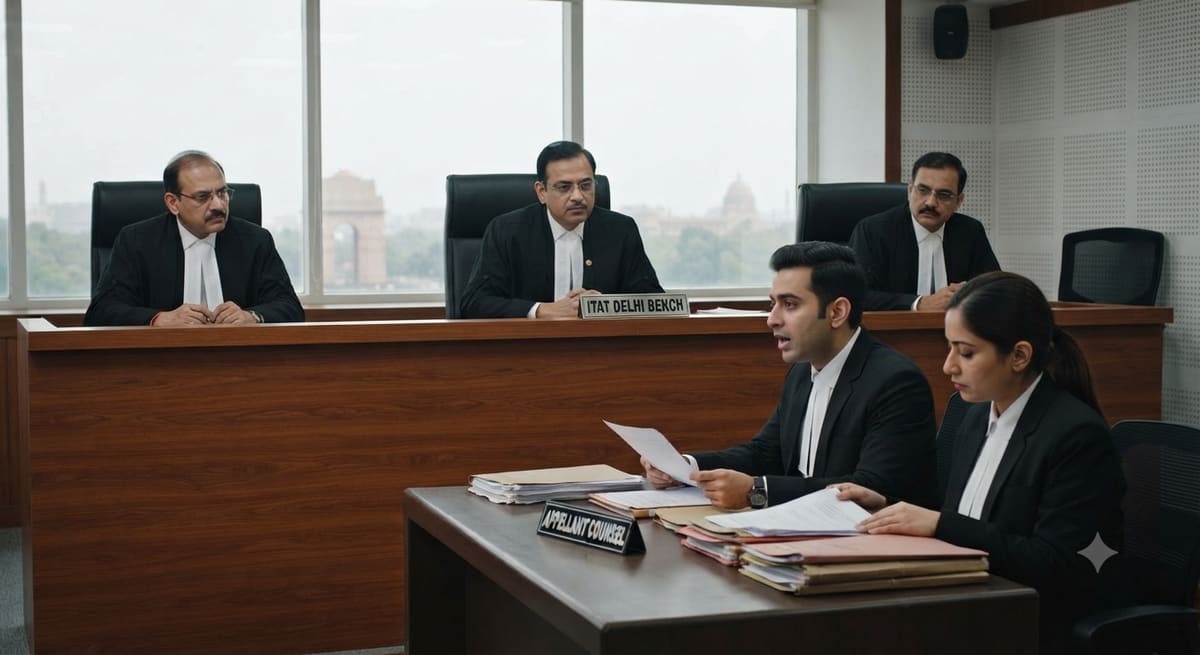
The Uttarakhand High Court has reaffirmed a foundational principle of administrative law: that an appellate authority must provide reasoned orders when dismissing an appeal. This judgment underscores that procedural fairness is not optional - it is mandatory under the doctrine of natural justice, especially in service matters where livelihoods are at stake.
Background & Facts
The Dispute
The petitioner was a Group-D employee serving as a Helper in the Electricity Wing of G.B. Pant University of Agriculture and Technology. He was dismissed from service on 15.04.2015 on charges of theft. He challenged this dismissal through Writ Petition No. 550 of 2015 (SS), which was dismissed by the lower court. He then filed Special Appeal No. 369 of 2017 before the High Court.
Key Facts
- The petitioner was employed on a contractual basis and later appointed as a permanent employee
- The dismissal order dated 15.04.2015 was based on allegations of theft
- The petitioner contested the dismissal on grounds of procedural irregularities and lack of proper inquiry
- The Special Appeal No. 369 of 2017 was disposed of on 05.03.2025, with the Court permitting the petitioner to file an appeal before the Board of Management
- The Board of Management was directed to decide the appeal within two months as per law
Procedural History
- 15.04.2015: Dismissal order passed against the petitioner
- 2015: Writ Petition No. 550 of 2015 filed and dismissed
- 05.03.2025: Special Appeal No. 369 of 2017 disposed of; petitioner permitted to approach Board of Management
- Post-05.03.2025: Petitioner filed appeal before the Board of Management
- 10.07.2025: Establishment Officer communicated dismissal of the appeal via order (Annexure-1)
- 29.04.2026: Matter listed before the Court; University failed to appear
- 05.05.2026: Final hearing; University could not produce reasoned order
The Parties' Positions
For the Petitioner
The petitioner contended that the order dated 10.07.2025 dismissing his appeal was non-speaking, devoid of any reasoning, and failed to address any of the substantive issues raised in his appeal. He argued that this violated the principles of natural justice and rendered the order legally unsustainable.
For the Respondent (University)
The University’s counsel admitted that despite diligent search, the reasoned order dismissing the appeal could not be located. Counsel conceded that no copy of the order had been communicated to the petitioner and that the order, if it existed, was likely passed without application of mind.
Relief Sought
The petitioner sought quashing of the order dated 10.07.2025 dismissing his appeal and a direction to the appellate authority to decide his appeal afresh with a reasoned order.
The Legal Issue
The central question was whether an appellate authority can lawfully dismiss an appeal without recording reasons or addressing the issues raised by the appellant, and whether such an order violates the principles of natural justice.
Arguments Presented
For the Petitioner
The petitioner relied on settled legal principles that an appellate authority must act judicially and provide reasons for its decision. He cited State of U.P. v. Mohd. Noor and K. S. Puttaswamy v. Union of India to argue that the right to a reasoned order is an essential component of fair hearing under Article 14 and Article 21 of the Constitution. He emphasized that failure to address submissions renders the appellate process a mere formality, defeating the very purpose of appeal.
For the Respondent
The University’s counsel did not dispute the legal principles but admitted the failure to produce the order. Counsel argued that the order may have been lost due to administrative lapse and that the dismissal was not intentional but inadvertent. However, no legal justification was offered for the absence of reasoning.
The Court's Analysis
The Court observed that the order dated 10.07.2025, which dismissed the petitioner’s appeal, contained no reasons whatsoever. It did not refer to any of the grounds raised by the petitioner, nor did it explain why the appellate authority found them unpersuasive. The Court noted that the University’s counsel, despite multiple opportunities, could not produce the order and admitted it could not be traced.
"Law is well settled that while deciding an appeal, the appellate authority is bound to deal with all the issues and has also to record reasons why those issues did not find favour with the appellate authority."
The Court held that the absence of reasoning is not a mere procedural irregularity - it strikes at the root of administrative fairness. An order without reasons is, in law, no order at all. The Court emphasized that the right to appeal is meaningless if the appellate authority is not required to engage with the substance of the appeal. The failure to apply mind and the non-communication of the order further compounded the violation of natural justice.
The Court rejected the argument that administrative negligence could excuse a fundamental breach of procedural fairness. It held that the burden of ensuring a reasoned decision lies squarely on the authority, not the appellant.
The Verdict
The writ petition was allowed. The order dated 10.07.2025 dismissing the petitioner’s appeal was quashed. The matter was remitted to the appellate authority to decide the appeal afresh by passing a reasoned order. The appellate authority was directed to complete the proceedings within three months from the date of presentation of the certified copy of this order.
What This Means For Similar Cases
Reasoned Orders Are Non-Negotiable
- Practitioners must challenge any appellate order that fails to address submissions, regardless of whether the outcome is favorable
- A non-speaking order is void ab initio and can be quashed even if the substantive decision appears correct
- In service matters, failure to record reasons invites judicial intervention under Article 14 and Article 21
Administrative Lapses Cannot Override Natural Justice
- Loss or non-availability of records does not validate an arbitrary decision
- Courts will not accept negligence as a defense for violating procedural fairness
- Institutions must maintain proper documentation and ensure communication of orders to affected parties
Remedy Is Not Limited to Quashing
- Courts are empowered to remand matters for fresh adjudication, not merely to set aside
- The direction to decide within a fixed timeframe (here, three months) ensures finality and prevents indefinite delay
- Practitioners should seek specific timelines in such petitions to prevent further stalling