The Income Tax Appellate Tribunal, Surat, has reaffirmed that procedural fairness cannot be sacrificed even in technical tax appeals when the appellant’s failure to appear stems from genuine medical hardship and bereavement. In a significant ruling, the Tribunal set aside two ex parte appellate orders and directed a fresh hearing, emphasizing that the right to be heard is non-negotiable under the principles of natural justice.
Background & Facts
The Dispute
The appeals arise from reassessment orders issued under Section 147 read with Section 144 of the Income Tax Act, 1961, for Assessment Year 2011-12. The original assessee, Late Shri Vikrambhai Chibubhai Patel, and his wife, Smt. Sangitaben Vikrambhai Patel, were jointly assessed for unexplained cash deposits and bank credits totaling over Rs. 45 lakh. The Assessing Officer treated these amounts as undisclosed income, leading to additions of Rs. 8,32,633 (cash deposits), Rs. 4,00,000 (cash credit), Rs. 20,70,000 (bank deposits), Rs. 2,84,932 (bank deposits), Rs. 1,31,543 (adhoc addition), and Rs. 7,60,000 (unsecured loans).
Key Facts
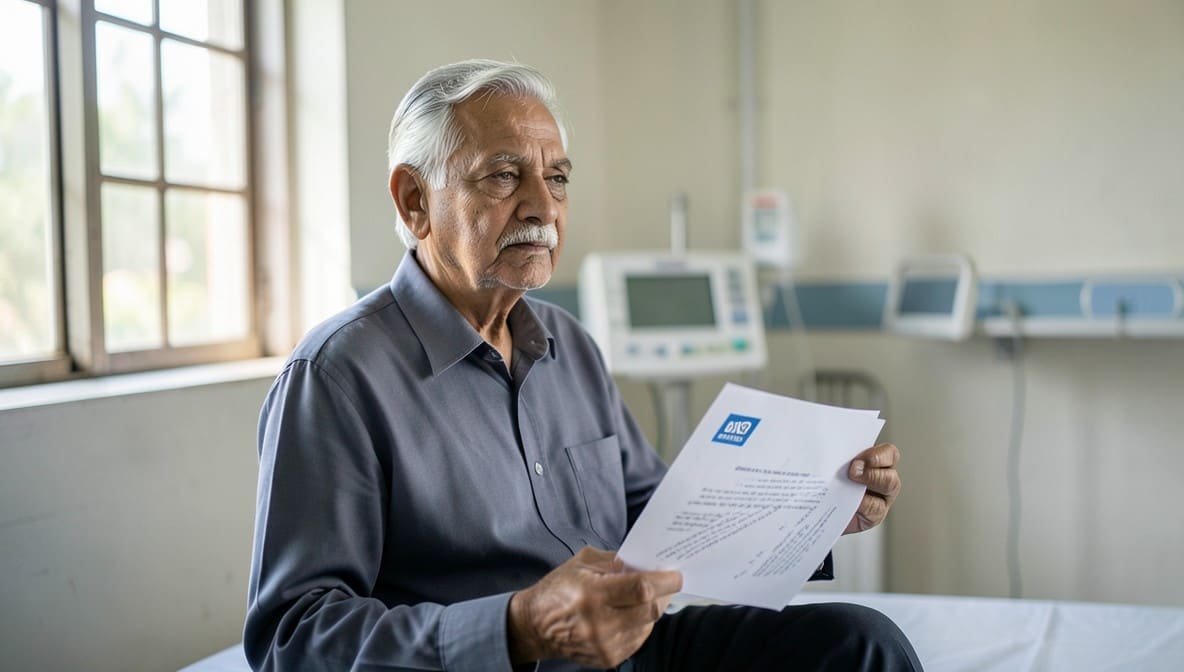
- Late Shri Vikrambhai Chibubhai Patel was diagnosed with chronic kidney disease and throat cancer in 2014
- He underwent major surgery for throat cancer in 2014
- From 2014 until his death, he underwent dialysis twice weekly
- He passed away on 08.04.2020 due to cardio-respiratory arrest during the COVID-19 pandemic
- His wife, Smt. Sangitaben Vikrambhai Patel, was his legal heir and co-assessee
- She relied on a part-time accountant for income tax filings and had no personal knowledge of tax proceedings
- The wife was emotionally and physically incapacitated due to prolonged caregiving and grief
Procedural History
- 04.01.2024: Ex parte order passed by Additional Commissioner of Income Tax (Appeals)-1, Delhi, in ITA No. 942/SRT/2024 (husband’s case)
- 09.03.2023: Ex parte order passed by Commissioner of Income Tax (Appeals), National Faceless Appeal Centre, Delhi, in ITA No. 943/SRT/2024 (wife’s case)
- 186 days delay: Appeal filed in ITA No. 942/SRT/2024 (filed on 08.07.2024)
- 487 days delay: Appeal filed in ITA No. 943/SRT/2024 (filed on 20.07.2024)
- 20.04.2026: Hearing before ITAT Surat
- 23.04.2026: Judgment pronounced
The Parties' Positions
The appellant, represented by Shri A. Gopalakrishnan, CA, contended that the delay in filing appeals was due to extraordinary personal circumstances: prolonged illness of the husband, his eventual death, and the wife’s consequent mental and physical distress. She was unaware of the ex parte orders until months after their issuance.
The Revenue, represented by Shri Ajay Uke, Sr. D.R., did not oppose the condonation of delay or setting aside of the ex parte orders, acknowledging the humanitarian grounds.
Relief Sought
The appellant sought:
- Condonation of delay in filing appeals
- Setting aside of the ex parte orders dated 04.01.2024 and 09.03.2023
- Fresh opportunity to present evidence and arguments before the Appellate Authorities
- Disposal of appeals on merits
The Legal Issue
The central question was whether the principle of natural justice permits an appellate authority to uphold an ex parte order when the appellant’s failure to appear is attributable to severe medical hardship and bereavement, and whether such delay warrants condonation under the circumstances.
Arguments Presented
For the Appellant
The counsel argued that the delay was not due to negligence or laches but arose from extraordinary personal trauma. The wife, a non-professional in tax matters, was rendered incapable of managing legal proceedings due to prolonged caregiving, grief, and lack of awareness. She relied on the doctrine of audi alteram partem and cited State of Haryana v. Bhagwan Das to emphasize that procedural fairness must prevail over technicalities. The notarized affidavit detailing the husband’s illness and death was submitted as conclusive evidence of the genuine reason for delay.
For the Respondent
The Revenue did not contest the request for condonation or setting aside of the ex parte orders. The Sr. D.R. acknowledged the humanitarian situation and expressed no objection to granting a fresh hearing, thereby implicitly accepting that the ex parte orders were not sustainable under the circumstances.
The Court's Analysis
The Tribunal emphasized that the right to a fair hearing is a foundational element of natural justice, which cannot be overridden by procedural technicalities, especially when the failure to appear is beyond the appellant’s control.
"The death of a spouse, coupled with prolonged illness and medical trauma, constitutes a compelling reason for delay which cannot be treated as mere negligence. The appellant was not merely absent; she was incapacitated."
The Tribunal noted that the Revenue did not raise any prejudice or argue that the delay had caused any irreparable harm to the department. It further observed that the additions made by the Assessing Officer were substantial and involved complex factual issues requiring proper evidence and cross-examination.
The Tribunal rejected the notion that technical compliance with limitation periods should prevail over substantive justice. It held that the ex parte orders, passed without affording the appellant any opportunity to be heard, were inherently flawed and could not stand.
The Tribunal also underscored that the appellant had acted promptly upon learning of the ex parte orders, filing the appeals within months of becoming aware of them.
The Verdict
The appeals were allowed for statistical purposes. The Tribunal set aside the ex parte orders dated 04.01.2024 and 09.03.2023. The matters were remanded to the respective Appellate Authorities for fresh adjudication on merits. The appellant was directed to file all relevant documents and evidence before the Appellate Authorities within 30 days of receiving the order. The Appellate Authorities were directed to afford a full and fair hearing, including opportunity for oral arguments and cross-examination, and to dispose of the appeals within 90 days of receipt of the documents.
What This Means For Similar Cases
Natural Justice Overrides Technical Limitation
- Practitioners must argue that delays caused by medical emergencies, death of a close family member, or mental incapacity are valid grounds for condonation under Section 249A(2) of the Income Tax Act
- Courts and tribunals are increasingly inclined to prioritize substantive fairness over procedural compliance in personal hardship cases
- A notarized affidavit detailing medical history and emotional impact is now a recognized form of credible evidence for condonation
Ex Parte Orders Are Not Final in Tax Appeals
- Ex parte orders passed without notice or hearing are vulnerable to being set aside, even if filed late
- Revenue authorities cannot rely on technical defaults when the appellant’s absence is due to demonstrable humanitarian grounds
- Tax practitioners should immediately file applications for condonation of delay alongside appeals in cases involving illness, death, or mental distress
Duty to Act Promptly After Awareness
- The appellant must demonstrate that the appeal was filed as soon as reasonably possible after becoming aware of the order
- Delay beyond a reasonable period after awareness may still be viewed unfavorably, even if initial delay was excusable
- Keeping records of medical treatment, death certificates, and communication gaps is critical for future applications