In a significant ruling on pedestrian rights under the Motor Vehicles Act, 1988, the Karnataka High Court rejected the Tribunal's finding of 20% contributory negligence against a claimant crossing a 30-ft one-way road. The Court enhanced compensation to Rs. 3,16,763 with 6% interest, emphasizing that absence of zebra crossing does not automatically impute negligence to pedestrians.
Background & Facts
The Dispute
The appellant, Sri Vijaya Kumara, a 61-year-old garment factory worker, was crossing a 30-ft one-way road near Kaveri Bar, Peenya Industrial Area, Bengaluru, on 20.12.2020 at 07:30 p.m. when a scooter (Reg. No. KA-01/JG-4178) dashed against him. The appellant sustained a fracture of the left femur, injuries to the left leg and great toe, and underwent surgery at Kanva Sri Sai Hospital. He claimed compensation under Section 166 of the Motor Vehicles Act, 1988, alleging rash and negligent riding by the scooter rider, whose vehicle was insured with The New India Assurance Co. Ltd. (Respondent No. 1).
Key Facts
- Accident Details: The appellant was crossing the road when the scooter rider, coming from TVS Cross Peenya towards FRI Circle, dashed against him.
- Injuries and Treatment: The appellant sustained two fractures and was hospitalized for 23 days. P.W.2 (doctor) assessed his disability at 21% of the whole body and recommended future surgery for implant removal, estimated at Rs. 20,000.
- Employment Impact: The appellant earned Rs. 20,000/month but was unable to attend work post-accident, rendering him dependent on others.
- Insurance Dispute: Respondent No. 1 denied liability, arguing that the scooter rider lacked a valid driving license and that the appellant contributed to the accident.
Procedural History
- 20.12.2020: Accident occurred.
- MVC No. 473/2021: Claim petition filed before the XXII Additional Senior Civil Judge and ACMM, MACT, Bengaluru.
- 30.11.2022: Tribunal awarded compensation of Rs. 2,72,263 but reduced it to Rs. 2,17,900 (20% contributory negligence) with 6% interest. The Tribunal held Respondent No. 1 liable.
- MFA No. 2431/2023: Appeal filed by the appellant seeking enhancement of compensation.
Relief Sought
The appellant sought:
- Full compensation without deduction for contributory negligence.
- Enhanced compensation under heads of pain and suffering, loss of income, medical expenses, and future medical costs.
- Interest at 6% per annum from the date of petition till realization.
The Legal Issue
The central question was whether the appellant, a pedestrian crossing a 30-ft one-way road without a zebra crossing, contributed to the accident by 20%, thereby reducing his compensation under Section 166 of the MV Act.
Arguments Presented
For the Appellant
- No Contributory Negligence: The appellant was crossing a 30-ft one-way road, and the absence of a zebra crossing does not impute negligence. The scooter rider could have avoided the accident by driving cautiously.
- Disability Assessment: P.W.2 (doctor) assessed the appellant’s disability at 21%, but the Tribunal erred in reducing it to 10%.
- Inadequate Compensation: The Tribunal undercompensated the appellant under heads of pain and suffering (Rs. 45,000), laid-up period loss (Rs. 29,000), and future medical expenses (Rs. 5,000).
- Future Medical Costs: P.W.2 estimated Rs. 20,000 for implant removal surgery, but the Tribunal awarded only Rs. 5,000.
For the Respondent (Insurer)
- Contributory Negligence: The appellant suddenly entered the road, and the accident occurred in the middle of the road, justifying the 20% contributory negligence finding.
- Disability Assessment: P.W.2 was not the treating doctor, and the wound certificate (Ex.P8) did not mention the second fracture. The Tribunal rightly assessed disability at 10%.
- Compensation Adequacy: The compensation awarded under other heads was just and proper.
The Court's Analysis
The Court examined the spot mahazar (Ex.P3) and spot sketch (Ex.P4), which revealed:
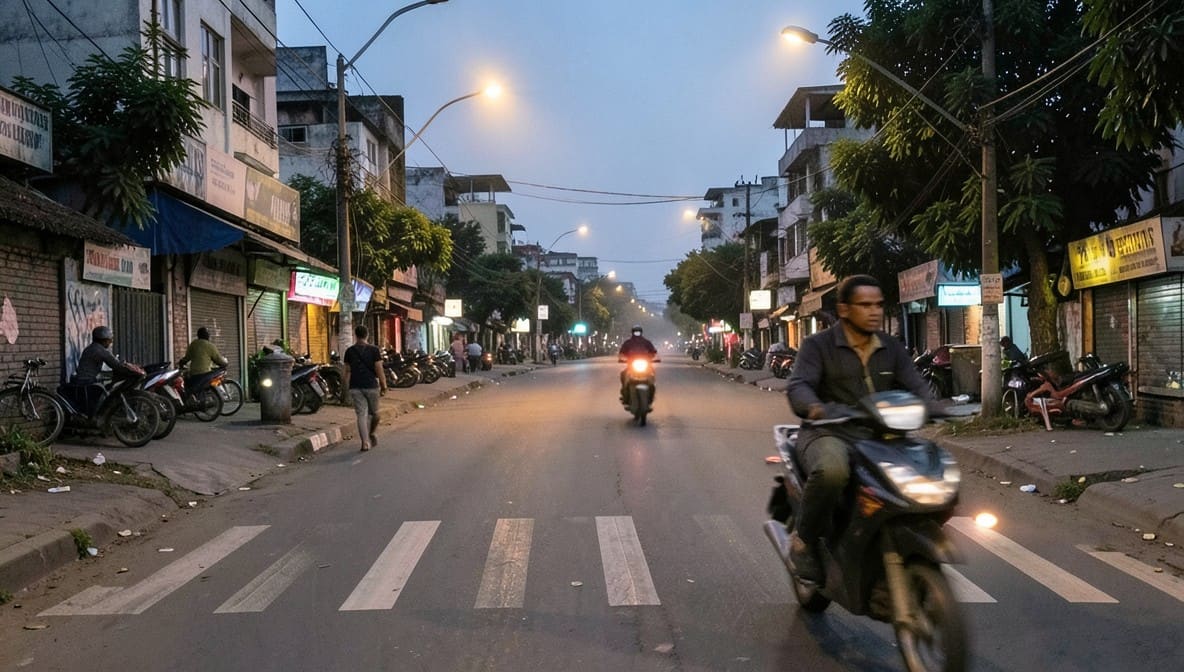
- The road was 30-ft wide and one-way, with no zebra crossing.
- There were no brake marks on the road, indicating the scooter rider did not attempt to avoid the accident.
- The appellant was a pedestrian crossing the road, and the absence of a zebra crossing does not automatically impute negligence.
"If the rider of the scooter was riding it in a slow and cautious manner, he would have applied the brake and avoided the accident. Considering the said aspect, the Tribunal has erred in holding that the appellant-claimant has contributed for accident to the extent of 20%."
The Court rejected the 20% contributory negligence finding, holding that the entire liability rests with the scooter rider and insurer. On disability assessment, the Court noted:
- P.W.2 (doctor) assessed disability at 20.66% based on two fractures.
- While the wound certificate (Ex.P8) did not mention the second fracture, the first fracture was united, and the appellant’s disability was not negligible.
- The Tribunal’s 10% disability assessment was upheld as a balanced finding.
The Court recalculated compensation under the following heads:
- Pain and Suffering: Enhanced from Rs. 45,000 to Rs. 60,000.
- Loss of Income During Laid-Up Period: Enhanced from Rs. 29,000 to Rs. 43,500 (3 months at Rs. 14,250/month).
- Future Medical Expenses: Enhanced from Rs. 5,000 to Rs. 20,000 based on P.W.2’s evidence.
The Verdict
The appeal was allowed in part. The Court:
- Set aside the 20% contributory negligence finding.
- Enhanced total compensation to Rs. 3,16,763 with 6% interest per annum from the date of petition till realization.
- Directed Respondent No. 1 (insurer) to deposit the enhanced amount (excluding already deposited sum) within 6 weeks, failing which 9% interest would apply from the judgment date.
What This Means For Similar Cases
Contributory Negligence Cannot Be Presumed for Pedestrians
- Absence of Zebra Crossing: Courts cannot impute negligence to pedestrians merely because a zebra crossing is absent. The onus is on vehicle riders to exercise caution.
- One-Way Roads: Even on one-way roads, riders must anticipate pedestrians and reduce speed to avoid accidents.
- Spot Evidence: Brake marks, road width, and accident location are critical in determining negligence. Absence of brake marks may indicate reckless riding.
Disability Assessment Must Be Evidence-Based
- Treating vs. Non-Treating Doctors: While non-treating doctors’ evidence is admissible, wound certificates and medical records must corroborate disability claims.
- Multiple Fractures: Even if one fracture is united, cumulative disability from multiple injuries must be considered.
- Future Medical Costs: Courts must award realistic future medical expenses based on expert evidence, not arbitrary amounts.
Compensation Heads Must Reflect Actual Losses
- Pain and Suffering: Courts should award higher compensation for severe injuries like fractures, considering long-term physical and mental trauma.
- Laid-Up Period: Loss of income should be calculated for the actual duration of hospitalization and recovery, not arbitrary periods.
- Future Medical Expenses: Implant removal surgeries and other future procedures must be fully compensated based on medical estimates.