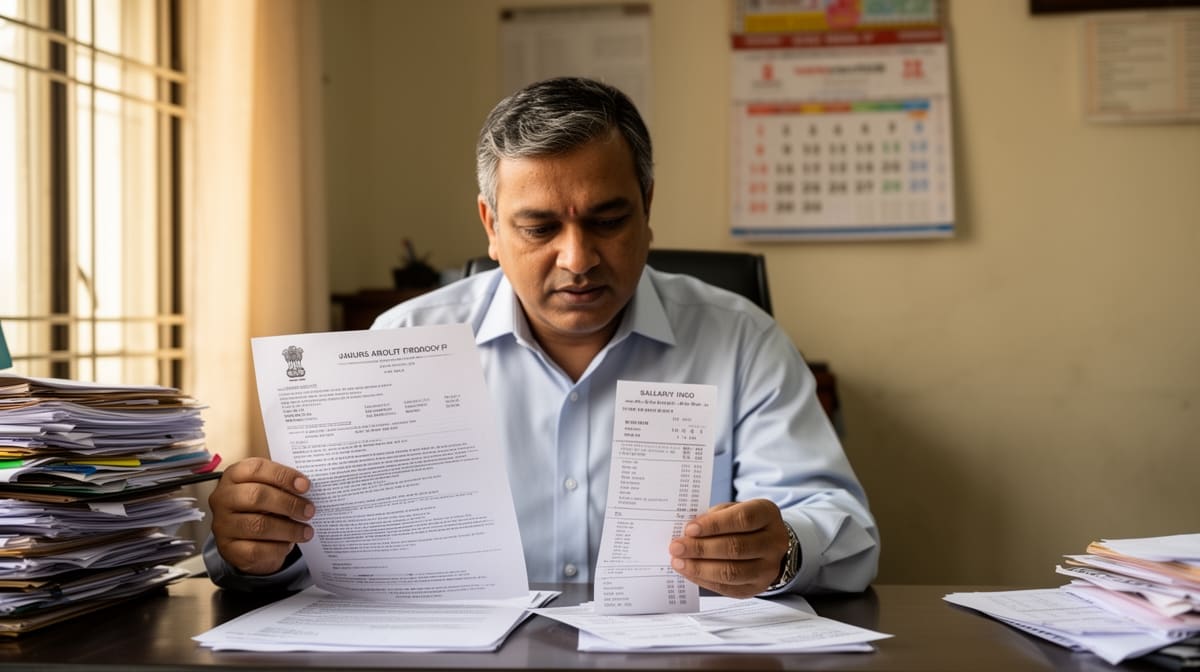
The Bombay High Court has affirmed a foundational principle in labour jurisprudence: when an employer unjustifiably withholds work from employees who are ready and willing to perform, the employer remains liable to pay full wages for the entire period of such withholding. This judgment clarifies that internal operational difficulties, such as power disconnection, cannot absolve an employer of this obligation, especially where the conduct amounts to an unfair labour practice under the MRTU and PULP Act, 1971.
Background & Facts
The Dispute
The dispute arose from a lease arrangement between M/s Jolly Steel Industries (Respondents 3 and 4) and M/s Gupta Steel Industries (Respondents 1 and 2). Under a lease deed dated 09.04.1980, the industrial establishment at Nagar Road, Pune, was leased to Gupta Steel Industries. As part of this arrangement, approximately 50 employees previously employed by Jolly Steel Industries were transferred to Gupta Steel Industries with continuity of service. The petitioner, Sarva Shramik Sanghatana, a trade union, represented these employees both before and after the transfer.
Key Facts
- The lease agreement was executed on 09.04.1980
- Approximately 50 employees were transferred to Respondent No.1 with uninterrupted service
- Respondent No.1 treated the transferred employees as its own workers, paying wages and managing daily operations
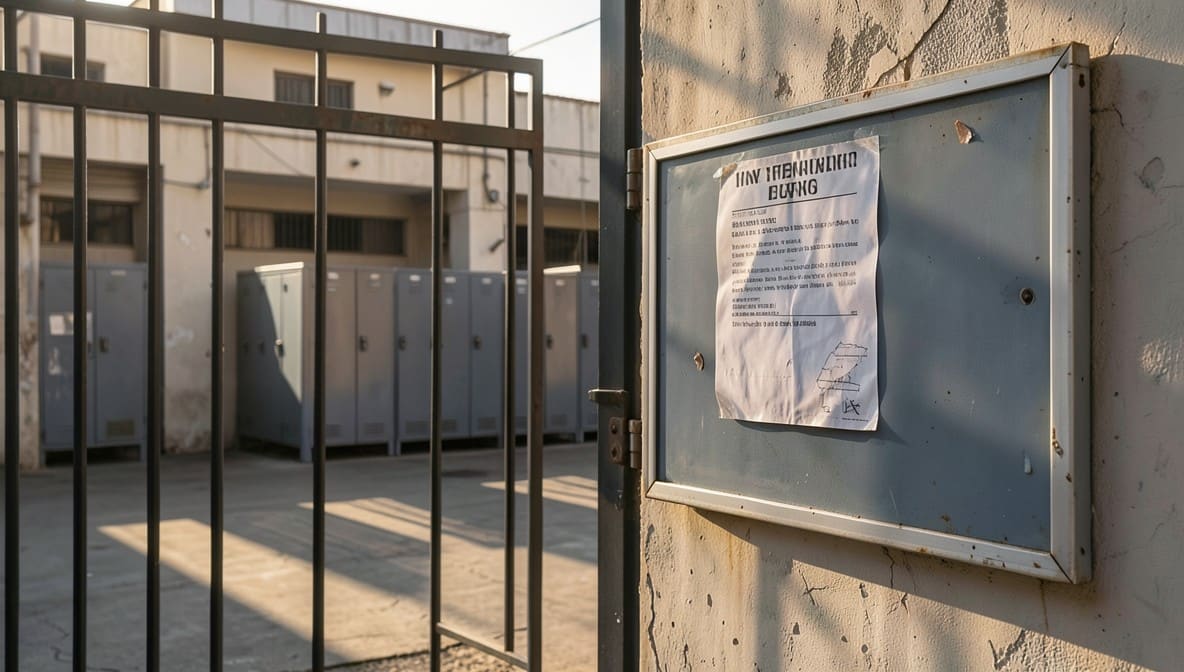
- On 06.03.1993, the employees were prevented from resuming duties without any notice or lawful justification
- The Maharashtra State Electricity Board disconnected electricity supply to the premises around this time
- Respondent No.1 did not declare a permanent closure but claimed efforts were underway to restart operations
- No formal notice of termination, retrenchment, or closure was issued to employees or the union
- The employees remained available for work throughout the period but were not permitted to resume duties
Procedural History
- 06.03.1993: Employees barred from entering workplace; wages discontinued
- 1993: Complaint (ULP) No.150 of 1993 filed before the Industrial Court, Pune, under Item 9 of Schedule IV of the MRTU and PULP Act, 1971
- 19.07.2000: Industrial Court rejected application to implead Respondents 3 and 4
- 27.07.2002: Industrial Court rejected claim for full wages for the period 06.03.1993 to 07.09.1996, citing disconnection of electricity and alleged closure
- 29.07.2002: Industrial Court partially allowed the complaint, holding that failure to provide work constituted unfair labour practice under Item 9, but denied wage claim
- 2004: Writ Petition No.1321 of 2004 filed before the Bombay High Court challenging the orders dated 19.07.2000 and 29.07.2002
- 25.07.2002: Civil Application No.2598 of 2005 filed seeking additional relief
- 09.04.2026: Judgment reserved
- 10.04.2026: Judgment pronounced
The Parties' Positions
The petitioner contended that Respondents 1 and 2, as the actual employers after the transfer, were solely responsible for providing work and paying wages. It argued that the disconnection of electricity did not constitute a lawful excuse for withholding work, and that the employees’ readiness to work created an absolute obligation on the employer to pay full wages. The petitioner further emphasized that Respondents 3 and 4 had no operational control after the transfer and could not be held liable for post-transfer obligations.
Respondents 1 and 2 did not appear before the High Court. Respondents 3 and 4, through counsel, argued that their liability ceased upon transfer of employees under the lease agreement and that subsequent obligations rested solely with Respondent No.1.
Relief Sought
The petitioner sought:
- Quashing of the Industrial Court’s orders dated 19.07.2000 and 29.07.2002
- Declaration that Respondents 1 and 2 committed unfair labour practice under Item 9 of Schedule IV of the MRTU and PULP Act, 1971
- Direction to pay full wages to employees for the period 06.03.1993 to 07.09.1996
- Payment of all consequential benefits as if service had continued uninterrupted
- Interest on unpaid wages at 9% per annum from the date of default
- Compliance within a specified timeframe
The Legal Issue
The central question was whether an employer who unjustifiably withholds work from employees who are ready and willing to perform is liable to pay full wages for the entire period of such withholding, even when the reason for non-provision of work is an internal operational difficulty such as disconnection of electricity, and whether such conduct constitutes an unfair labour practice under the MRTU and PULP Act, 1971.
Arguments Presented
For the Petitioner
The petitioner relied on the finding of the Industrial Court that failure to provide work amounted to an unfair labour practice under Item 9 of Schedule IV of the MRTU and PULP Act, 1971. It argued that once such a finding is established, the natural legal consequence is payment of full wages for the period of wrongful withholding. The petitioner cited the definition of "closure" under Section 2(cc) of the Industrial Disputes Act, 1947, to contend that temporary suspension due to power failure does not equate to permanent closure. It emphasized that the employer’s obligation to provide work is absolute under the contract of employment, and that employees cannot be penalized for circumstances beyond their control. The petitioner further argued that Respondents 3 and 4 had no role in the day-to-day management after the transfer and could not be held liable for obligations arising thereafter.
For the Respondent
Respondents 1 and 2 did not appear before the High Court. Respondents 3 and 4 contended that their liability ended upon the transfer of employees under the lease agreement. They relied on the terms of the lease and the subsequent conduct of Respondent No.1 to argue that the latter had assumed full responsibility as the new employer. They submitted that any liability for wages after the transfer rested solely with Respondent No.1.
The Court's Analysis
The Court undertook a detailed analysis of the contractual and statutory obligations of the employer. It held that the Industrial Court erred in denying full wages despite having found an unfair labour practice under Item 9 of Schedule IV of the MRTU and PULP Act, 1971. The Court observed that the finding of unfair labour practice was not merely a declaratory relief but carried with it an obligation to provide consequential remedies.
"The legal position is that where work is withheld by the employer and the employee is willing to work, wages normally follow. The respondents cannot escape this consequence by taking shelter under internal difficulty in running the factory."
The Court rejected the argument that disconnection of electricity by the Maharashtra State Electricity Board absolved the employer of liability. It held that such an event, even if unforeseen, does not extinguish the employer’s duty to provide work or to take lawful steps to mitigate the impact on employees. The Court emphasized that the obligation to restore utilities, manage operations, and protect employee rights lies squarely with the employer.
The Court further clarified that Respondents 3 and 4 could not be held liable for obligations arising after the transfer. It interpreted Clause 5(i) and 5(j) of the lease agreement together, concluding that Clause 5(i) clearly assigned wage payment and employment responsibility to Respondent No.1. To hold Respondents 3 and 4 liable for post-transfer liabilities would create an inequitable imbalance, allowing Respondent No.1 to enjoy the benefits of labour while shifting the burdens to a party with no control.
The Court also rejected the notion that the factory was "closed" within the meaning of Section 2(cc) of the Industrial Disputes Act, 1947. It noted that Respondent No.1 itself had stated in its written statement that efforts were being made to restart operations, which contradicted any claim of permanent closure. The Court held that temporary suspension due to operational difficulties does not constitute legal closure.
The Court underscored the principle that in labour law, when an employee is ready and willing to work but is kept out of employment by the employer’s fault, equity and justice demand that the employee be compensated for the loss of wages. The burden of proving misconduct or lawful justification lies with the employer, which was entirely absent in this case.
The Verdict
The writ petition succeeded. The Bombay High Court set aside the orders dated 19.07.2000 and 29.07.2002 of the Industrial Court to the extent they denied full wages. It declared that Respondents 1 and 2 committed an unfair labour practice under Item 9 of Schedule IV of the MRTU and PULP Act, 1971. Respondents 1 and 2 are jointly and severally directed to pay full wages to the employees for the period from 06.03.1993 to 07.09.1996, along with all consequential benefits as if service had continued uninterrupted. The amount shall be computed and paid within twelve weeks from the date of this order. If unpaid, the amount shall carry interest at 9 percent per annum from the date it became due until realization. No order as to costs.
What This Means For Similar Cases
Employer Liability Cannot Be Evaded by Operational Excuses
- Practitioners must argue that temporary operational disruptions, such as power cuts, water shortages, or supply chain issues, do not absolve employers of wage liability if employees are ready to work
- The burden shifts to the employer to prove lawful justification for withholding work
- Failure to issue notice of closure or retrenchment strengthens the employee’s claim for full wages
Unfair Labour Practice Demands Full Consequential Relief
- A finding of unfair labour practice under Item 9 of Schedule IV of the MRTU and PULP Act, 1971 is not merely declaratory - it mandates full monetary compensation
- Courts must not separate the finding of illegality from the remedy; denial of wages after such a finding is legally unsustainable
- Labour tribunals and courts must ensure that findings of unfair practices are followed by appropriate, enforceable relief
Transfer of Employees Does Not Transfer Liability
- When employees are transferred under a lease or outsourcing arrangement, the transferee employer assumes full responsibility for wages and service conditions
- Original employers cannot be held liable for post-transfer obligations unless they retain operational control or contractual obligations
- Lease agreements must be interpreted in light of actual conduct; mere contractual language cannot override the reality of employer-employee relationship