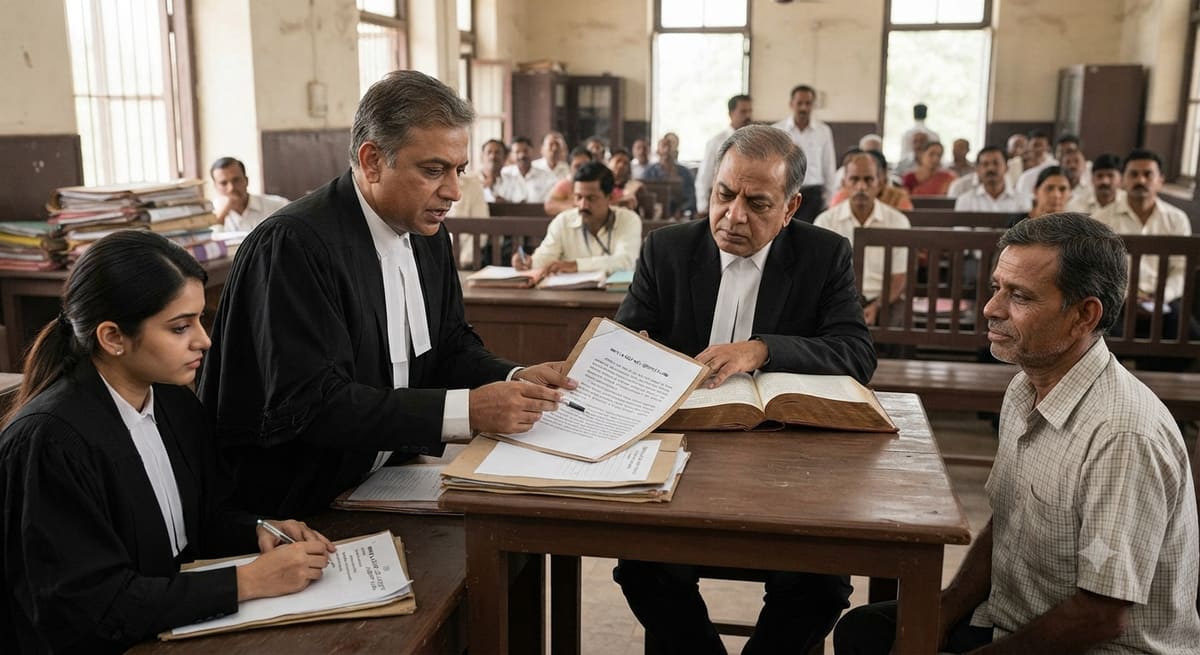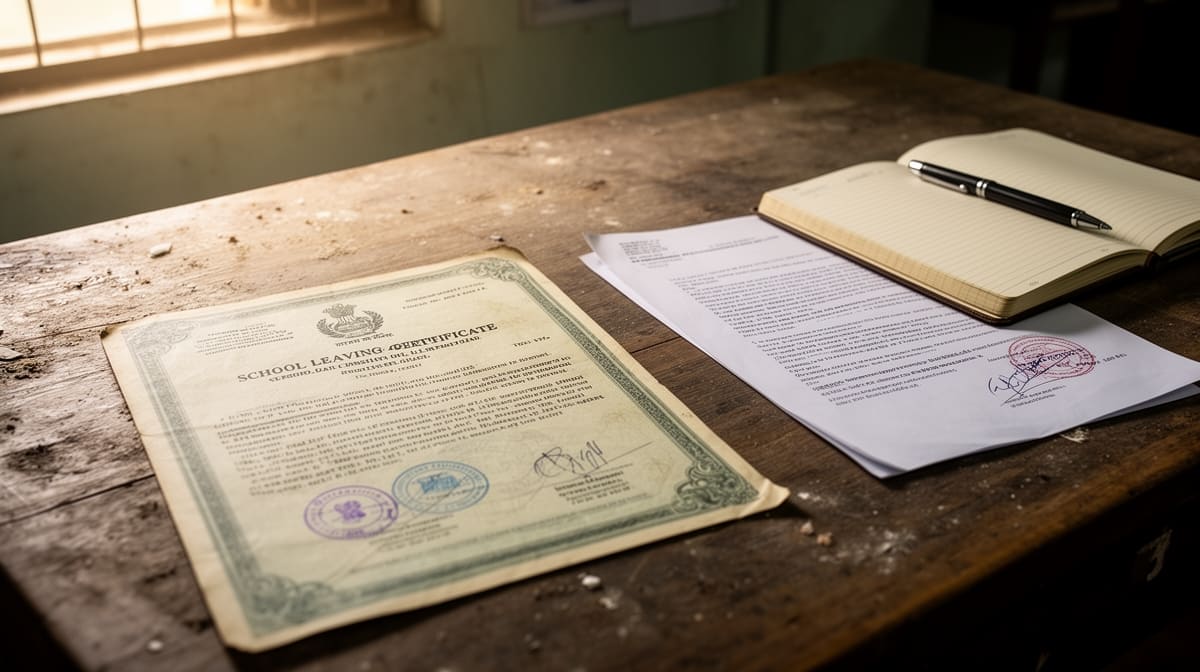
The Bombay High Court has delivered a nuanced judgment in Shree Vighnahar Sahakari Sakhar Karkhana Ltd. v. Vishwas Yeshwant Dhomse, addressing procedural fairness in disciplinary proceedings and the proportionality of penalties under the Maharashtra Recognition of Trade Unions and Prevention of Unfair Labour Practices Act, 1971 (MRTP & PULP Act). The Court set aside reinstatement orders, holding that the employer was denied an opportunity to justify its dismissal action, and instead awarded a lump sum compensation of Rs. 15,00,000, balancing the employee’s 16 years of service against proven misconduct.
Background & Facts
The Dispute
The petitioner, Shree Vighnahar Sahakari Sakhar Karkhana Ltd., a cooperative sugar factory registered under the Maharashtra Co-operative Societies Act, 1960, dismissed the respondent, Vishwas Yeshwant Dhomse, from service on 12 February 2002. The dismissal followed disciplinary proceedings initiated through two charge-sheets dated 19 November 1999 and 26 November 1999, alleging:
- Unauthorised absence for 240 days (from 17 November 1998 to 19 July 1999)
- Spreading false rumours, insubordination, and refusal to carry out lawful orders
- Tampering with the muster roll and leaving the workplace without permission
The respondent, appointed as a seasonal industrial worker in 1986 and confirmed as a Clerk in 1996, challenged the dismissal through multiple legal forums, culminating in this writ petition.
Key Facts
- The respondent did not dispute his absence for 240 days but claimed it was due to sickness, supported by three medical certificates dated 5 December 1998, 12 January 1999, and 28 January 1999 (submitted together on 30 July 1999).
- The Enquiry Officer held the charges proved, and the petitioner dismissed the respondent on 12 February 2002.
- The respondent had sufficient leave balance to cover part of the absence but had applied for ‘leave without pay’ for the remaining period.
- The petitioner did not communicate the rejection of leave applications to the respondent.
- The respondent admitted in cross-examination (12 December 2011) that he had suffered an accident two years prior, rendering him unfit for manual labour, and earned Rs. 10,000 - 12,000 annually from agricultural work.
Procedural History
The case traversed multiple forums, with key dates as follows:
- 19 November 1999: First charge-sheet issued
- 26 November 1999: Second charge-sheet issued
- 7 February 2002: Labour Court rejects interim stay on proposed punishment
- 12 February 2002: Respondent dismissed from service
- 2002: Respondent files Complaint (ULP) No. 128 of 2002 before Labour Court, Pune, challenging dismissal
- 24 August 2007: Labour Court holds enquiry fair and proper but finds unfair labour practices under Items 1(a), (b), (d), (f), and (g) of Schedule IV of the MRTP & PULP Act
- 18 July 2014: Labour Court directs reinstatement with 50% backwages
- 2014: Cross-revisions filed:
- Revision Application (ULP) No. 65 of 2014 by the petitioner (challenging reinstatement)
- Revision Application (ULP) No. 75 of 2014 by the respondent (challenging 50% backwages)
- 10 March 2016: Industrial Court dismisses the petitioner’s revision but enhances backwages to 100% in the respondent’s revision
- 2017: Present writ petition filed before Bombay High Court
Relief Sought
The petitioner sought:
- Quashing of the Industrial Court’s orders dated 10 March 2016 and the Labour Court’s order dated 18 July 2014
- Setting aside the direction for reinstatement and backwages
The respondent sought:
- Upholding of reinstatement with 100% backwages
- Alternatively, lump sum compensation (citing a precedent where Rs. 35,00,000 was awarded in a similar case)
The Legal Issue
The central questions before the Court were:
- Whether the Labour Court and Industrial Court erred in holding the petitioner guilty of unfair labour practices without framing an issue on the perversity of the Enquiry Officer’s findings and denying the petitioner an opportunity to justify its dismissal action?
- Whether the punishment of dismissal was disproportionate to the misconduct of unauthorised absence, given the respondent’s 16 years of service and the nature of the charges?
- Whether reinstatement with full backwages was justified, or whether lump sum compensation was a more appropriate relief?
Arguments Presented
For the Petitioner
- The Labour and Industrial Courts erred in holding unfair labour practices without framing an issue on the perversity of the Enquiry Officer’s findings. The enquiry was held fair and proper, and the petitioner was denied an opportunity to lead evidence to justify its action, violating principles of natural justice (Workmen of The Motipur Sugar Factory Private Limited v. The Motipur Sugar Factory, AIR 1965 SC 1803).
- The respondent’s absence for 240 days was unauthorised, as he failed to:
- Follow leave rules
- Submit medical certificates contemporaneously (instead submitting them 8 months later)
- Enquire about the status of his leave applications
- The medical certificates relied upon were insufficient to justify absence for 8 months, especially as the respondent was not hospitalised and the ailments (‘tennis elbow’ and ‘lower backache’) did not prevent him from working.
- Backwages were erroneously awarded without considering:
- The respondent’s agricultural income (North East Karnataka Road Transportation Corporation v. M. Nagangouda, (2007) 10 SCC 765)
- His admission of disability in cross-examination, rendering him unfit for work from 2009 onwards
For the Respondent
- The petitioner committed unfair labour practices by:
- Failing to communicate the rejection of leave applications
- Not informing the respondent about the outcome of his leave requests
- The respondent’s absence was justified as he was unwell and had sufficient leave balance to cover part of the period.
- The Labour and Industrial Courts rightly held the charges not proved, as the respondent’s sickness was supported by medical certificates.
- Full backwages were justified as a natural consequence of setting aside the dismissal (Deepali Gundu Surwase v. Kranti Junior Adhyapak Mahavidyalaya, (2013) 10 SCC 324). The respondent’s agricultural income (Rs. 10,000 - 12,000/annum) was insufficient to constitute gainful employment.
- Alternatively, lump sum compensation should be awarded, citing the precedent of Shree Vighnahar Sahakari Sakhar Karkhana Ltd. v. Jaisingh Barku Ghogare (WP No. 8503 of 2019), where Rs. 35,00,000 was awarded.
The Court's Analysis
The Court conducted a multi-pronged analysis, addressing procedural fairness, the merits of the charges, and the proportionality of relief.
Denial of Opportunity to Justify Dismissal
The Court held that the Labour Court erred procedurally by:
- Failing to frame an issue on the perversity of the Enquiry Officer’s findings, despite holding that the enquiry was fair and proper.
- Not granting the petitioner an opportunity to lead evidence to justify its dismissal action, as required by the Supreme Court in Workmen of The Motipur Sugar Factory Private Limited:
"If it is held that in cases where the employer dismisses his employee without holding an enquiry, the dismissal must be set aside by the Industrial Tribunal only on that ground, it would inevitably mean that the employer will immediately proceed to hold the enquiry and pass an order dismissing the employee once again. In that case, another industrial dispute would arise and the employer would be entitled to rely upon the enquiry which he had held in the meantime... On the other hand, if in such cases the employer is given an opportunity to justify the impugned dismissal on the merits, the employee has the advantage of having the merits of his case being considered by the tribunal for itself."
The Court emphasised that industrial adjudication prioritises substantive justice over technicalities, and denying the petitioner an opportunity to justify its action vitiated the proceedings.
Merits of the Charges
The Court rejected the Labour and Industrial Courts’ findings that the respondent’s absence was justified, holding:
- The respondent’s defence of sickness was not credible because:
- Medical certificates were submitted 8 months after the absence began
- The certificates were for minor ailments (‘tennis elbow’ and ‘lower backache’) that did not justify 8 months of absence
- The respondent was not hospitalised during the period
- The petitioner was not obligated to communicate the rejection of leave applications. It was the respondent’s duty to enquire about the status of his leave requests.
- Mere availability of leave balance did not entitle the respondent to avail it without sanction. The respondent’s negligence in remaining absent without confirmation constituted misconduct.
The Court concluded:
"The misconduct of absence from duties is clearly established... Even if it is assumed that Respondent was unwell, he ought to have followed leave rules and in any case, ought to have been diligent enough in submitting contemporaneous leave applications and producing contemporaneous medical certificates."
Proportionality of Punishment
While the Court upheld the misconduct of unauthorised absence, it held that the punishment of dismissal was disproportionate given:
- The respondent’s 16 years of service
- The limited nature of the misconduct (other charges were not pressed)
- The absence of mala fide intent
The Court observed:
"The punishment of dismissal from service is shockingly disproportionate to the misconduct of unauthorised absence for a period of 240 days... The Petitioner could have imposed some other penalty on the Respondent."
Nature of Relief
The Court rejected reinstatement with backwages, holding:
- Full backwages were unwarranted because:
- The respondent’s misconduct was established
- He had agricultural income and was unfit for work from 2009 onwards
- The precedent in Deepali Gundu Surwase was inapplicable, as it involved a case where the employee was exonerated of all charges
Instead, the Court awarded lump sum compensation of Rs. 15,00,000, considering:
- The respondent’s 16 years of service
- The 19 years remaining until retirement
- His agricultural income and disability
- The precedent in Jaisingh Barku Ghogare, where Rs. 35,00,000 was awarded, but distinguishing it on the grounds that:
- In Jaisingh Barku Ghogare, the employer failed to establish misconduct even after being granted an opportunity to lead evidence
- In the present case, misconduct was established, and the petitioner was denied an opportunity to justify its action
The Verdict
The Court partly allowed the writ petition, setting aside the orders of the Labour Court and Industrial Court, and substituting them with the following directions:
- The judgment dated 18 July 2014 (Labour Court) and orders dated 10 March 2016 (Industrial Court) are set aside and modified
- The petitioner shall pay the respondent lump sum compensation of Rs. 15,00,000 in lieu of reinstatement and backwages within 4 weeks
- The respondent is not entitled to any other service-related benefits beyond the compensation
- If the compensation is not paid within 4 weeks, it shall carry interest at 8% per annum from the expiry of the stipulated period
What This Means For Similar Cases
Procedural Fairness Is Non-Negotiable
- Opportunity to justify dismissal is sacrosanct: Courts and tribunals must frame an issue on the perversity of enquiry findings and grant the employer an opportunity to lead evidence if the enquiry is held unfair or its findings are challenged. Failure to do so vitiates the proceedings and may lead to setting aside of reinstatement orders.
- Industrial adjudication prioritises substantive justice: While technicalities should not unduly delay disputes, denial of a fair hearing - even to an employer - cannot be condoned. Practitioners should vigorously argue for procedural compliance under Section 30 of the MRTP & PULP Act and relevant rules.
Evidence Appreciation: Contemporaneity and Credibility
- Medical certificates must be submitted contemporaneously: Delayed submission of medical certificates (e.g., 8 months after the absence began) creates a presumption of falsity, especially if the ailments are minor and do not justify prolonged absence.
- Minor ailments do not justify long absences: Courts will scrutinise the nature of sickness and whether it aligns with the duration of absence. Hospitalisation or severe incapacity strengthens the employee’s defence.
- Employer’s duty to communicate leave rejection: While the Court held that the employer was not obligated to communicate leave rejection, employees cannot presume sanction. Employees must enquire about the status of leave applications to avoid unauthorised absence.
Proportionality of Punishment and Relief
- Dismissal is disproportionate for unauthorised absence alone: Even for 240 days of unauthorised absence, dismissal may be excessive if the employee has a long service record and the misconduct lacks mala fide intent. Courts may substitute dismissal with lesser penalties (e.g., suspension, demotion, or compensation).
- Lump sum compensation is a balanced relief: Where reinstatement is impractical or unjust, courts may award lump sum compensation considering:
- Length of service
- Years remaining until retirement
- Employee’s alternative income sources (e.g., agricultural work)
- Disability or unfitness for work
- Precedents in similar cases (though each case is fact-specific)
- Backwages are not automatic: Even if reinstatement is directed, full backwages may be denied if:
- Misconduct is partially established
- The employee has alternative income (North East Karnataka Road Transport Corporation)
- The employee is unfit for work during the backwages period
Strategic Takeaways for Practitioners
-
For employers:
- Ensure procedural fairness in disciplinary proceedings, especially when the enquiry’s findings are challenged
- Document all communications regarding leave applications and rejections
- Argue proportionality if dismissal is challenged, highlighting the employee’s service record and lack of mala fide intent
-
For employees:
- Submit medical certificates contemporaneously and ensure they justify prolonged absence
- Follow up on leave applications and do not presume sanction
- Plead alternative relief (e.g., lump sum compensation) if reinstatement is unlikely
-
For tribunals:
- Frame issues comprehensively, including perversity of enquiry findings
- Grant opportunities to lead evidence to avoid procedural infirmities
- Scrutinise evidence rigorously, especially in cases of prolonged absence without contemporaneous justification