The Punjab & Haryana High Court substantially increased the compensation awarded to a two-and-a-half-year-old victim of a 1999 road accident, applying Supreme Court principles on pecuniary and non-pecuniary loss and setting a benchmark for future motor-vehicular injury awards.
Background & Facts
The Dispute
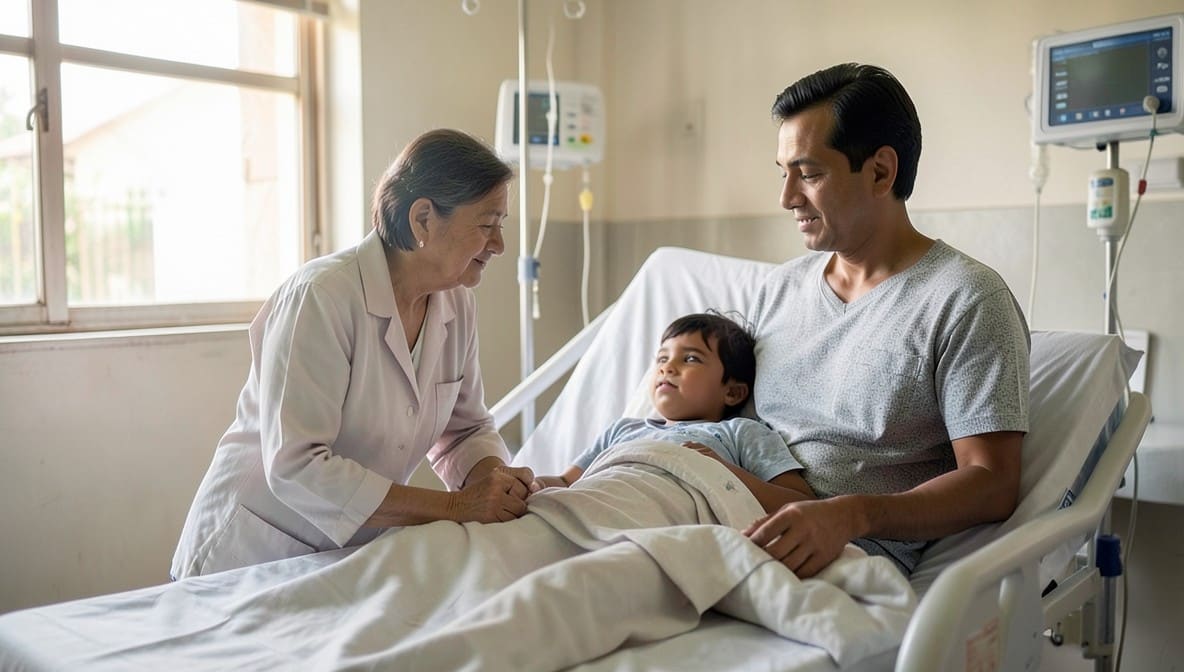
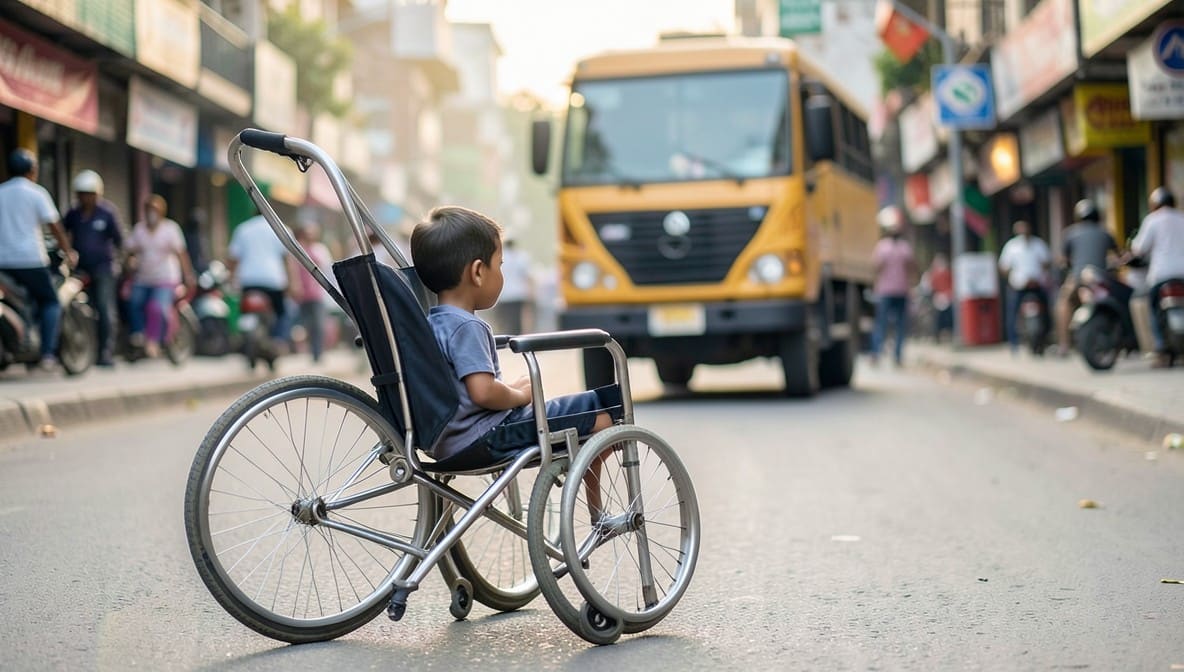
The appellant, Nilesh (minor claimant), suffered severe head injuries and 75% permanent disability when a truck (No.HRM-7785) driven by respondent No.1 Ramotar collided with his scooter on 27.02.1999 at about 2 p.m. in the Mahendergarh area, Police Station Mahendergarh. The truck was owned by respondent No.2 and insured by respondent No.3 (National Insurance Company). The Motor Accident Claims Tribunal (MACT), Narnaul, awarded Rs.1,75,000 compensation on 29.09.2000 under Section 166 and Section 140 of the Motor Vehicles Act, 1988.
Key Facts
- Accident date: 27.02.1999
- Claim petition filed: 11.05.1999
- Tribunal award date: 29.09.2000
- Minor’s age at accident: 2½ years
- Permanent disability: 75% (head injury, skull fracture)
- Medical expenses incurred immediately: Rs.75,000
- Minimum wages for a skilled worker (1999): Rs.3,500 per month
- Interest on original award: 12% per annum from filing date till realization
- Respondents: (1) Driver Ramotar, (2) Truck owner, (3) Insurance company
Procedural History
- 27.02.1999: Accident occurs.
- 11.05.1999: Claim petition filed before MACT.
- 29.09.2000: MACT awards Rs.1,75,000 compensation with 12% interest.
- Date not specified: Appeal filed by the claimant (appellant) before the High Court.
- 02.07.2026: Judgment reserved.
- 03.08.2026: Judgment pronounced and uploaded.
The Parties' Positions
- Appellant (through father Satender Singh) argued that the award was grossly inadequate, citing Supreme Court precedents and emphasizing loss of future earnings, attendant costs, loss of amenities and marriage prospects.
- Respondents contended that the Tribunal’s award was reasonable and based on a proper appreciation of the evidence.
Relief Sought
The appellant sought a comprehensive enhancement of compensation covering:
- Pain and suffering
- Loss of income (present and future)
- Present and future medical expenses
- Special diet and transportation costs
- Attendant fees for 18 years
- Loss of amenities and marriage prospects
- Interest at 9% per annum from 11.05.1999 till realization.
The Legal Issue
What quantum of compensation is appropriate under Section 166 and Section 140 of the Motor Vehicles Act, 1988 when a minor suffers 75% permanent disability, and how should pecuniary and non-pecuniary heads be calculated in accordance with Supreme Court jurisprudence?
Arguments Presented
For the Appellant
- Asserted that the Tribunal failed to consider future loss of earnings, attendant costs, loss of amenities and marriage prospects, contrary to Ravindranath v. Srinivas and Karuna Parmar v. Prakash Sinha.
- Relied on Sanjay Verma v. Haryana Roadways, Sarla Verma v. Delhi Transport Corporation, National Insurance Co. Ltd v. Pranay Sethi and Baby Sakshi Greola v. Manzoor Ahmad Simon for the methodology of calculating loss of income using minimum wages and a multiplier of 18.
- Emphasised that the claimant’s permanent disability warrants a 75% reduction in earning capacity and attendant fees of Rs.2,500 per month for 18 years.
For the Respondent
- Maintained that the Tribunal’s award of Rs.1,75,000 was based on the evidence and that the assessment was “well-reasoned and justified”.
- Argued that any increase would amount to a windfall and that the statutory ceiling for compensation had been respected.
The Court's Analysis
The Court began by reaffirming the settled principle that compensation in motor-vehicular injury cases must be just, fair and equitable, not a mere windfall. It quoted the Supreme Court’s articulation that compensation should aim to place the victim in the position he would have occupied but for the accident.
"The core objective is to put the injured/victim in the same position he would have been if the accident had not taken place, to the extent money can do so."
The Court then applied the heads of damages enumerated in Ravindranath v. Srinivas: special damages (treatment, hospitalization, diet, transport), loss of earnings (present and future), and general damages (pain, suffering, loss of amenities, loss of marriage prospects). It noted that for a minor with permanent disability, the Supreme Court permits inclusion of future loss of earnings, future medical expenses, loss of amenities and loss of expectancy of life.
Using the minimum wage of Rs.3,500 per month (1999) and adding a 40% uplift for future prospects (as per Sanjay Verma), the Court fixed the monthly earning potential at Rs.4,900. Applying the 75% disability factor yielded a monthly loss of Rs.3,675, or Rs.44,100 annually. Consistent with Karuna Parmar and Baby Sakshi Greola, a multiplier of 18 was applied, resulting in Rs.7,93,800 for loss of income.
The Court further awarded:
- Pain and suffering: Rs.2,00,000 (recognising the severity of head injury).
- Present and future medical expenses: Rs.75,000 (accounting for treatment and anticipated future care).
- Special diet and transportation: Rs.25,000.
- Attendant fees: Rs.2,500 per month for 18 years, totalling Rs.5,40,000.
- Loss of amenities: Rs.75,000.
- Loss of marriage prospects: Rs.1,00,000.
Summing these heads gave a total of Rs.18,08,800, rounded to Rs.18,09,000. The Court held that the respondents are jointly and severally liable for the entire amount, with interest at 9% per annum from the claim filing date (11.05.1999) until realization. It ordered that Rs.3,00,000 be paid immediately to the father (now the claimant’s guardian) and the balance be placed in a fixed deposit for five years, with accrued interest payable monthly to the guardian. The Court also directed compliance with Supreme Court directions in Bajaj Allianz General Insurance Co. v. Union of India regarding insurance company obligations.
The Verdict
The appeal is partly allowed. The High Court enhances the compensation to Rs.18,09,000 (rounded), an increase of Rs.16,34,000 over the Tribunal award. Respondents No.1-3 are jointly and severally liable, with interest at 9% per annum from 11 May 1999 until payment. Rs.3,00,000 is to be disbursed immediately to the claimant’s father; the balance is to be kept in a fixed deposit for five years, with monthly interest payable to the guardian. Attendant fees of Rs.2,500 per month for 18 years are included, and the Court orders the insurance company to comply with the Supreme Court’s Bajaj Allianz directions.
What This Means For Similar Cases
Comprehensive Head-by-Head Assessment Is Mandatory
- Practitioners must calculate loss of income using minimum wages plus a statutory uplift, apply the disability percentage, and then multiply by the appropriate multiplier (usually 18).
- All heads - pain, medical expenses, attendant fees, loss of amenities and marriage prospects - should be expressly pleaded and quantified.
Interest Rate and Commencement Date Are Critical
- Interest on compensation is now commonly set at 9% per annum from the date of filing of the claim petition, not from the date of the accident.
- Ensure that the interest clause is clearly drafted to avoid disputes.
Joint and Several Liability Extends to Insurers
- Insurance companies can be held jointly and severally liable with drivers and owners; compliance with Supreme Court insurance directives must be verified.
- Counsel should obtain certified copies of insurance policies and ensure that insurers are properly served.
Fixed-Deposit Mechanism for Future Funds
- Courts may order a portion of the award to be kept in a fixed deposit for a specified period, with interest payable to the guardian; this safeguards future medical or emergency needs.
- Draft appropriate escrow or deposit agreements in advance.
Documentation of Disability and Future Earnings
- Secure a disability certificate and income assessment based on contemporary minimum wages.
- Engage a medical expert to quantify permanent disability and an actuarial expert for future loss calculations.
These guidelines will help lawyers present robust compensation claims and anticipate judicial scrutiny in motor-vehicular injury litigation.