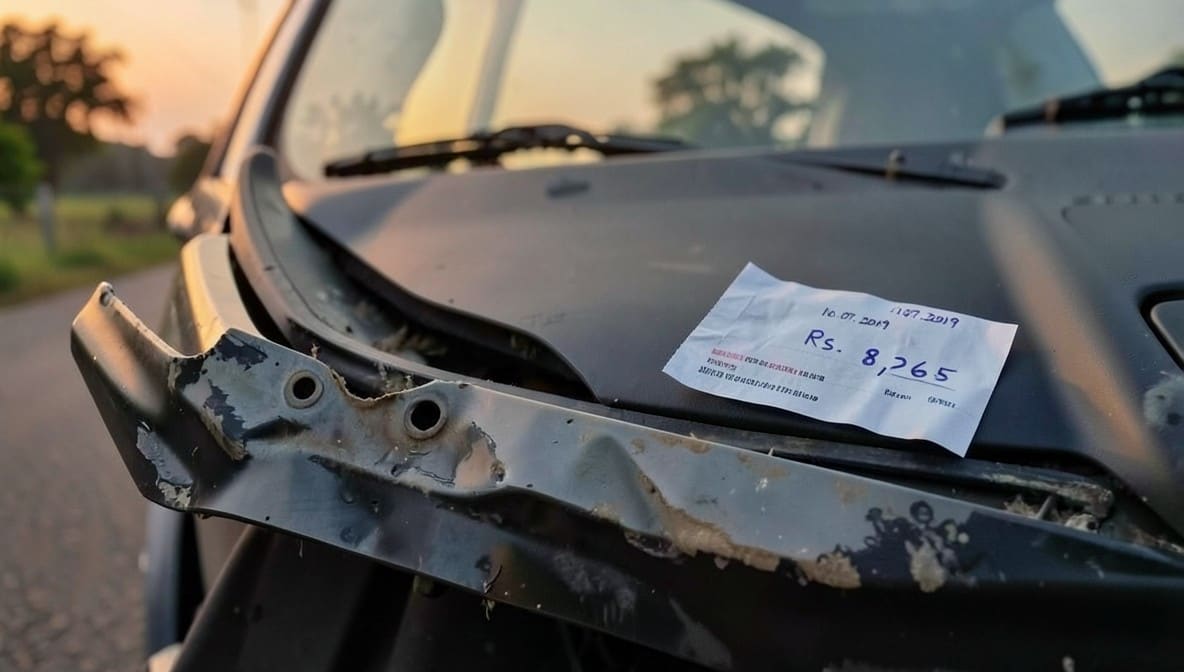
A critical clarification on the temporal requirement for motor insurance coverage has been issued by the Madhya Pradesh High Court at Gwalior, quashing a Lok Adalat award that erroneously imposed liability on an insurer whose policy commenced only after the accident occurred. The judgment underscores that no legal obligation arises under a motor insurance policy unless the incident occurs during the policy’s active period.
Background & Facts
The Dispute
The dispute arose from a motor accident that occurred on 25.04.2023 involving a vehicle insured by IFFCO-TOKIO General Insurance Company Ltd. The claimants, including Ramdas Sharma and others, filed a claim petition before the Third Motor Accident Claims Tribunal, Gwalior, seeking compensation for injuries and losses sustained in the accident. The matter was referred to a Lok Adalat, where a compromise award was passed on 09.12.2023, directing the insurer to pay compensation.
Key Facts
- The accident occurred on 25.04.2023 at approximately 14:30 hours near Gwalior.
- The policy issued by IFFCO-TOKIO (Annexure P/3) was purchased on 25.04.2023, but its effective date was explicitly stated as 26.04.2023.
- The policy document clearly indicated that coverage commenced at 00:01 hours on 26.04.2023 and expired at 23:59 hours on 25.04.2024.
- The insurer was not present during the Lok Adalat proceedings; its counsel appeared on behalf of the insurer but was not authorized to settle the claim on merits.
- The compromise was recorded based on the mistaken belief that the policy covered the accident, as the purchase date and accident date were both listed as 25.04.2023.
- Respondent No.1 (Ramdas Sharma) was the claimant; Respondents No.2 and 3 were other parties involved in the accident but were not parties to the compromise.
Procedural History
- 25.04.2023: Motor accident occurred.
- 25.04.2023: Insurance policy purchased, with effective date of 26.04.2023.
- 05.07.2023: Claim petition (No.1270/2023) filed before the Third Motor Accident Claims Tribunal, Gwalior.
- 09.12.2023: Lok Adalat conducted; compromise award passed without insurer’s knowledge of policy timing.
- 15.12.2023: Petitioner discovered policy effective date and filed objection to award.
- 20.01.2024: Petitioner filed application before the Tribunal seeking setting aside of award - dismissed on 10.02.2024.
- 10.03.2024: Petitioner filed writ petition under Article 226 before the High Court.
- 12.03.2026: Hearing concluded and judgment delivered.
The Parties' Positions
- The petitioner (IFFCO-TOKIO) contended that the compromise was vitiated by mutual mistake of fact, as the policy did not cover the accident.
- Respondent No.1 (Ramdas Sharma) did not dispute the factual position regarding policy timing, acknowledging the insurer’s position under instructions from his counsel.
- Respondents No.2 and 3 were not part of the compromise and were not bound by it.
Relief Sought
The petitioner sought quashing of the Lok Adalat award dated 09.12.2023, restoration of Claim Case No.1270/2023 for adjudication on merits, and a declaration that no liability arose under the policy due to non-coverage of the accident.
The Legal Issue
The central question was whether a compromise award passed by a Lok Adalat can bind an insurer when the insurance policy was not in force at the time of the accident, despite the parties’ mistaken belief that it was.
Arguments Presented
For the Petitioner
The petitioner argued that the Lok Adalat award was based on a fundamental factual error - that the policy covered the accident. Relying on the principle of uberrimae fidei (utmost good faith) in insurance contracts, counsel submitted that coverage is strictly time-bound and cannot be extended retroactively. The consent given by the insurer’s counsel was not informed consent, as it was based on a misapprehension of the policy’s effective date. The award, therefore, was void ab initio under Section 19 of the Indian Contract Act, 1872, which renders agreements void if based on mutual mistake of fact.
For the Respondent/State
Respondent No.1’s counsel, acting on instructions, did not contest the factual assertion that the policy became effective only on 26.04.2023. No counter-arguments were advanced on the legal validity of the award under these circumstances, effectively conceding the petitioner’s position.
The Court's Analysis
The Court examined the nature of motor insurance contracts and the legal effect of Lok Adalat awards. It held that while Lok Adalats are empowered to facilitate compromise, they cannot override the substantive terms of a contract or impose liability where none exists under law. The Court emphasized that insurance coverage is not a matter of consent alone but of contractual terms, which are binding on all parties.
"The policy document, being a contract of insurance, clearly stipulates that the coverage commenced on 26.04.2023. The accident occurred on 25.04.2023 - one day prior. No legal principle, equitable doctrine, or procedural convenience can retrospectively extend the policy’s operative period."
The Court further noted that the compromise award was not a judicial determination but a consensual settlement. Where consent is based on a material mistake of fact - particularly one that negates the very foundation of liability - the award cannot stand. The Court distinguished this from cases where parties knowingly waive rights; here, the insurer was unaware of the policy’s temporal limitation at the time of settlement.
The Court also observed that Respondents No.2 and 3 were not parties to the compromise, and thus the award could not bind them. The Tribunal’s failure to verify the policy’s effective date before recording the compromise was a procedural lapse that rendered the award unsustainable.
The Verdict
The writ petition is allowed. The Lok Adalat award dated 09.12.2023 in Claim Case No.1270/2023 is quashed. The claim case is restored to its original number for adjudication on merits. The insurer is not liable for compensation arising from the accident of 25.04.2023 under the policy in question. All pending applications are disposed of.
What This Means For Similar Cases
Insurance Coverage Is Strictly Temporal
- Practitioners must verify the exact effective date of insurance policies before advising on settlement or litigation strategy.
- A policy purchased on the same day as the accident does not imply coverage - the commencement time must be checked.
- Consent given in Lok Adalat based on incorrect policy information is not valid consent under contract law.
Lok Adalat Awards Are Not Immune to Substantive Defects
- Lok Adalats cannot validate claims that are legally unsustainable, even if parties agree.
- Tribunals and Lok Adalats must conduct minimal due diligence on documentary evidence, especially in insurance claims.
- Courts will set aside awards that violate the terms of a contract, even if they are labeled as "compromises."
Burden of Proof Lies with the Claimant to Establish Coverage
- Claimants must produce the policy document and prove the accident occurred within the policy period.
- Mere production of a policy with a purchase date matching the accident date is insufficient - the effective date controls.
- Failure to establish coverage at the outset renders any claim for compensation legally untenable.