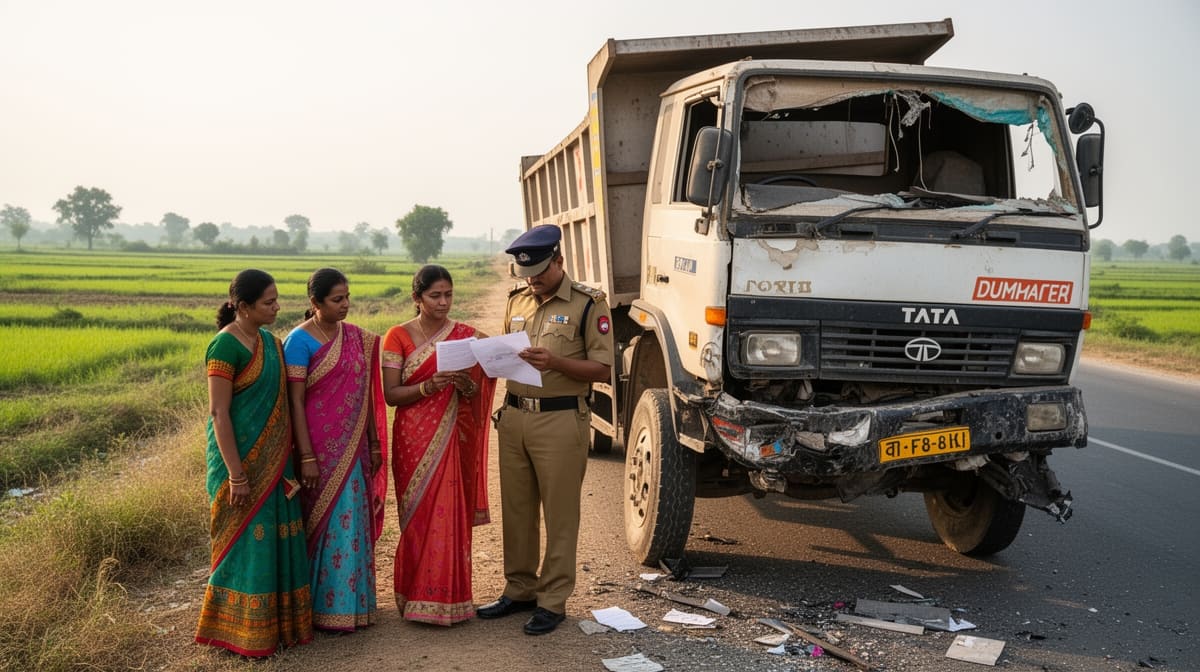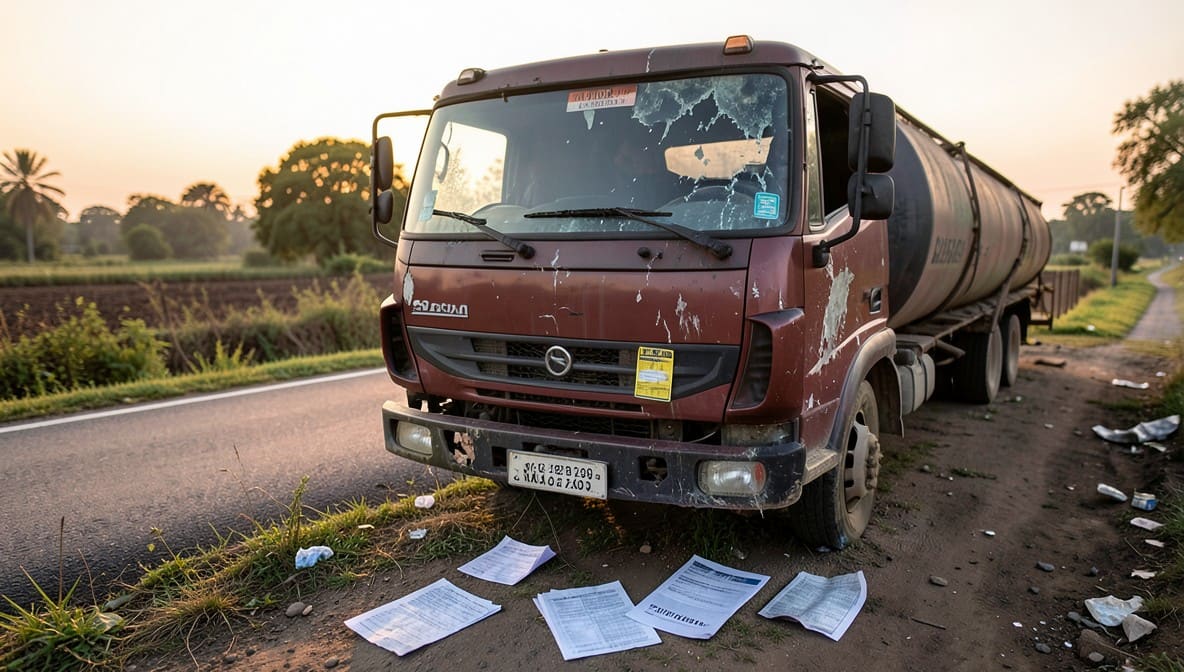
The Gauhati High Court has clarified that a motor insurance policy backdated to cover an accident already occurred constitutes fraud, rendering any compensation award against the insurer void. This judgment reinforces that judicial orders obtained through misrepresentation are nullities, and liability cannot be imposed on insurers for risks not in force at the time of the incident.
Background & Facts
The Dispute
The claimants, legal heirs of a deceased man killed in a motor vehicle accident on 22.01.2011, filed a claim before the Motor Accident Claims Tribunal (MACT-3, Kamrup) seeking compensation for loss of dependency. The vehicle involved, an oil tanker bearing registration AS-25 C/3037, was allegedly insured under Policy No. 322300/31/2011/7279, dated 21.01.2011, exhibited as Ext.II by the claimants. The MACT awarded Rs. 12,77,000 on 05.06.2015, holding the Oriental Insurance Company liable. When the insurer failed to deposit the amount, the claimants filed a miscellaneous application for recovery. The insurer objected, asserting the policy was forged and effective only from 27.01.2011 - five days after the accident.
Key Facts
- The fatal accident occurred on 22.01.2011 at Dudhnoi, Goalpara, Assam.
- The deceased was a third-party pedestrian.
- The vehicle was owned by M/s Dudhnoi Oil Service (Respondent No. 4), operated under a contractual arrangement with Robin Gayari, who claimed to be the registered owner.
- The claimants produced a printed insurance policy (Ext.II) showing coverage from 21.01.2011 to 20.01.2012.
- The insurer’s computer database showed the vehicle’s last valid policy expired on 26.01.2010.
- A new policy was issued on 27.01.2011, with validity until 26.01.2012, as per computer-generated record (Ext.C).
- The policy exhibited as Ext.II bore the same policy number but falsely listed the inception date as 21.01.2011.
- DW-2, Divisional Manager of Oriental Insurance, Bongaigaon, testified that manual policies ceased in 2008 and computer-generated policies were issued from 2009 onwards.
- The policy document exhibited by the claimants lacked a barcode, which became mandatory only in 2017.
- Robin Gayari, the witness produced by Respondent No. 4, admitted he was not the registered owner and not an employee of M/s Dudhnoi Oil Service.
- The owner of the vehicle, M/s Dudhnoi Oil Service, never appeared before the Tribunal.
- No proposal form, RC copy, or payment receipt from the insured was produced by the claimants or the insurer during trial.
Procedural History
- 22.01.2011: Motor vehicle accident resulting in death.
- 05.06.2015: MACT-3 Kamrup awarded Rs. 12,77,000 to claimants.
- 21.12.2015: Claimants filed Misc. Case No. 14/2015 for recovery of award.
- 21.12.2015: Insurer filed affidavit objecting to liability, alleging policy fraud.
- 17.07.2018: Gauhati HC ordered remand to MACT for additional evidence on policy validity.
- 2019 - 2020: Additional evidence adduced before MACT, including testimony of DW-2 and DW-3 (A.O. Legal, Guwahati Regional Office).
- 2021: MACT did not revisit its award; record sent back to High Court.
- 2017: Appeal filed under Section 173 of the Motor Vehicles Act, 1988.
- 30.04.2026: Judgment delivered by the Gauhati High Court.
The Parties' Positions
For the Petitioner (Oriental Insurance Company):
- The policy exhibited was manufactured with a false inception date.
- The insurer had no knowledge of fraud during trial; the issue was raised only in the recovery application.
- Computer records prove the policy was issued on 27.01.2011.
- No proposal form or payment proof was submitted by the insured.
- Fraud vitiates all proceedings; the award is a nullity.
For the Respondents (Claimants):
- The insurer failed to challenge the policy during trial.
- No FIR was filed despite alleged fraud.
- The insurer’s internal lapses caused the delay in policy issuance.
- The claimants relied on the policy in good faith.
- The insurer cannot shift liability to claimants after the award.
Relief Sought
The appellant sought setting aside of the MACT award dated 05.06.2015, declaring the insurer not liable. The respondents sought enforcement of the award and recovery from the insurer. In the alternative, respondents prayed that if the insurer is absolved, the amount be recovered from the vehicle owner.
The Legal Issue
Can an insurance company be held liable for compensation under the Motor Vehicles Act when the policy exhibited by the claimant is proven to be fraudulently backdated to cover an accident that occurred before the policy’s effective date?
Arguments Presented
For the Appellant/Petitioner
The insurer relied on United India Insurance Co. v. Rajendra Singh (2000) 3 SCC 581 and Oriental Insurance Co. v. Zaharulnisha (2008) 12 SCC 385 to argue that fraud nullifies judicial orders regardless of when it is discovered. Counsel emphasized that the burden lies on the claimant to prove the existence of a valid policy at the time of accident. The computer-generated records from the insurer’s database, corroborated by DW-2 and DW-3, conclusively proved the policy was issued on 27.01.2011. The manual policy format was obsolete since 2009, and the exhibited document lacked a barcode, confirming it was fabricated. The insurer’s failure to raise the issue during trial did not waive its right to challenge fraud at any stage.
For the Respondent/State
The respondents argued that the insurer’s silence during trial estopped it from raising fraud later. They relied on Balbir Kaur v. New India Assurance Co. (2009) 13 SCC 370, asserting that insurers cannot unilaterally backdate policies without consent. Counsel contended that internal lapses in policy issuance were the insurer’s fault, and the claimants acted in good faith. The insurer’s failure to file an FIR or produce the proposal form undermined its credibility. The claimants had already withdrawn Rs. 3,19,250, and justice required the insurer to pay the balance.
The Court's Analysis
The Court acknowledged the legislative intent behind the Motor Vehicles Act - to ensure victims are not left remediless. However, it held that this intent cannot override the foundational principle that fraud vitiates all proceedings. The Court observed:
"A judgment or decree obtained by fraud is a nullity and non est in the eye of law. The fact that the insurer did not raise the issue during trial does not preclude it from doing so on appeal, especially when the fraud is established through documentary evidence.
The Court distinguished between procedural default and substantive fraud. While insurers must act diligently during trial, the law permits challenges to fraud at any stage. The computer-generated policy records (Ext.C and Ext.D) were deemed reliable, as they were system-generated and corroborated by the insurer’s official. The claimant’s exhibited policy (Ext.II) was inconsistent with the insurer’s database, lacked security features, and bore a date that predated the system’s operational capability.
The Court further noted that the burden of proving a valid insurance policy at the time of accident rests on the claimant, not the insurer. The insurer cannot be expected to prove a negative - that no policy existed. The claimants failed to produce the proposal form, payment receipt, or RC copy, which are mandatory for policy issuance.
The Court also rejected the argument that the insurer’s internal delay justified the fraud. The insurer’s lapse in processing the renewal application does not validate a forged document. The Court held that the owner of the vehicle, M/s Dudhnoi Oil Service, was the true party at fault for submitting a fabricated policy.
The Verdict
The appeal is allowed. The MACT award dated 05.06.2015 is modified. The Oriental Insurance Company is absolved of liability. The claimants shall not repay the Rs. 3,19,250 already withdrawn. The remaining compensation of Rs. 9,57,750 shall be recovered by the claimants from M/s Dudhnoi Oil Service, the owner of the offending vehicle, in accordance with law. The statutory deposit of Rs. 25,000 and the Rs. 3,19,250 already deposited with the Court shall be refunded to the insurer after verification. The Registry is directed to return the Trial Court Record forthwith.
What This Means For Similar Cases
Fraud Nullifies Insurance Liability Even After Award
- Practitioners must now treat any backdated policy as prima facie fraudulent unless proven otherwise.
- Claimants must produce original proposal forms, payment receipts, and RC copies to establish policy validity at the time of accident.
- Insurers are not estopped from raising fraud even if unchallenged during trial.
Burden of Proof Lies with Claimants, Not Insurers
- The burden to prove a valid policy existed at the time of accident rests squarely on the claimant.
- Insurers need not disprove the existence of a policy; they need only present credible system records to rebut the claim.
- Failure to produce mandatory documents (proposal form, RC, payment receipt) will result in dismissal of the claim against the insurer.
Recovery Must Be Directed Against the Fraudulent Party
- When fraud is established, compensation must be recovered from the vehicle owner or driver who submitted the forged policy.
- Courts will not allow claimants to benefit from fraudulent conduct, even if the insurer was negligent.
- Practitioners should immediately file applications for impleading the vehicle owner as a party liable for repayment when fraud is suspected.