The Allahabad High Court has clarified that an insurance policy remains in force if renewal documents, including a cheque, are submitted before the accident, even if the formal policy is issued the next day. In a significant ruling, the Court also mandated the inclusion of future prospects, loss of estate, funeral expenses, and loss of consortium in compensation awards, even in the absence of a cross-appeal, aligning with evolving Supreme Court jurisprudence.
Background & Facts
The Dispute
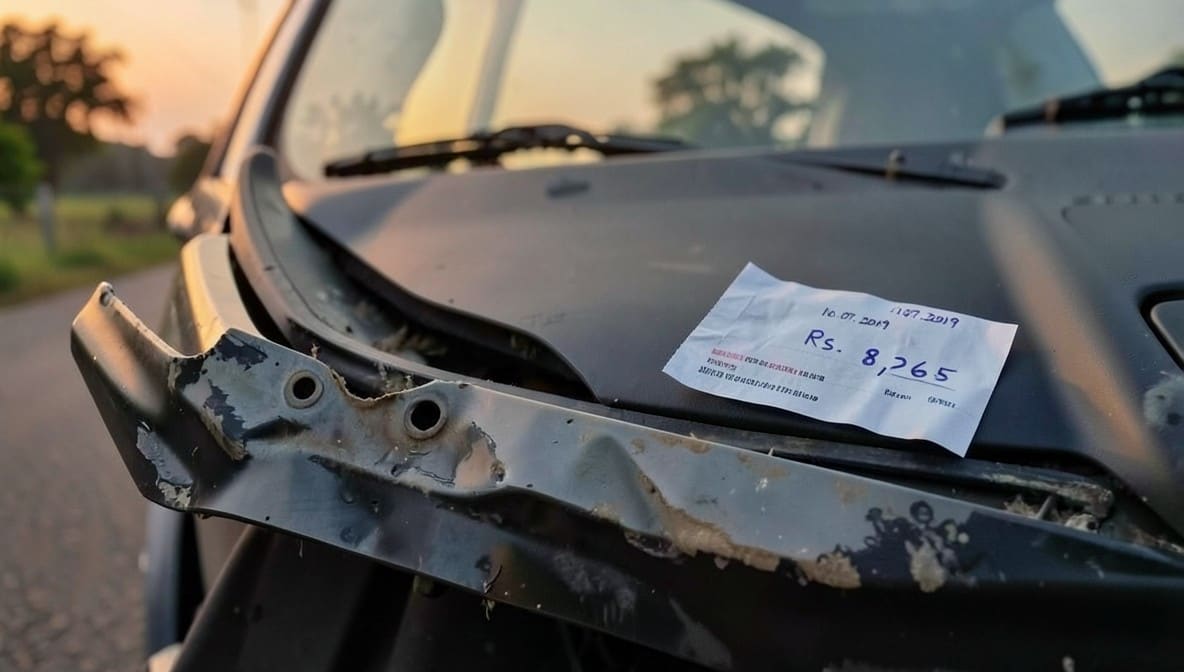
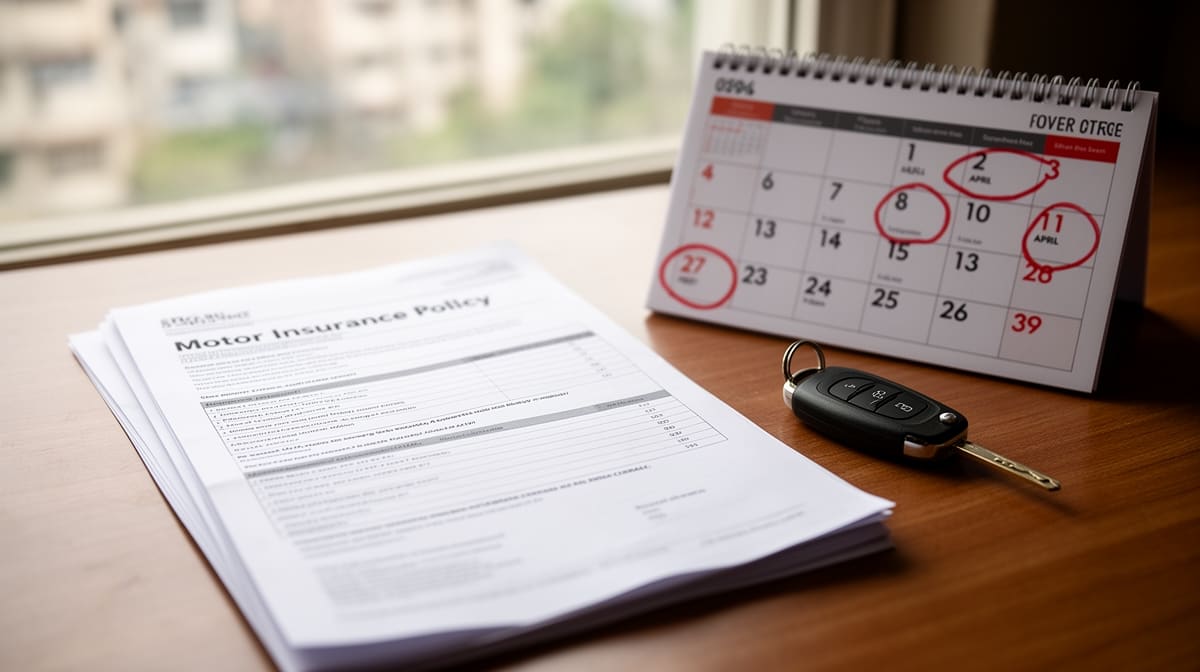
The present appeal challenges the award dated 05.02.2003 passed by the Motor Accident Claims Tribunal in M.A.C.P. No. 96 of 1995, which awarded Rs. 3,01,300 to the claimants - widow and three children of the deceased - on account of his death in a motor accident. The appellant, The Oriental Insurance Co. Ltd., contends that no valid insurance policy was in force at the time of the accident, as the policy was issued at 11:00 AM on 11.01.1995, while the accident occurred at approximately 07:30 AM on the same day.
Key Facts
- The deceased, a Constable in the police department, died on 11.01.1995 in a motor accident.
- He was 36 years old at the time of death and drawing a monthly salary of Rs. 2,503.
- The vehicle involved in the accident was insured under a policy that expired on 10.01.1995 (Paper No. 46C).
- On 10.01.1995, the policyholder submitted a renewal proposal and a cheque for premium payment to the insurer.
- The insurer accepted the cheque and processed the renewal, but issued the new policy on 11.01.1995 at 11:00 AM.
- The accident occurred at 07:30 AM on 11.01.1995, prior to the issuance of the new policy document.
- The claimants filed the claim before the Tribunal on 15.02.1995.
- The Tribunal held that there was continuity of insurance coverage due to the timely submission of the renewal proposal and cheque.
Procedural History
- 11.01.1995: Motor accident resulting in death of the deceased.
- 10.01.1995: Renewal proposal and cheque submitted to insurer.
- 11.01.1995 (07:30 AM): Accident occurs.
- 11.01.1995 (11:00 AM): New policy issued.
- 15.02.1995: Claim petition filed before Motor Accident Claims Tribunal.
- 05.02.2003: Tribunal awards Rs. 3,01,300, holding policy coverage continuous.
- 2003: Appellant files First Appeal From Order No. 1237 of 2003 before the High Court.
- 13.12.2023: High Court directs submission of explanation, which is accepted.
- 14.05.2026: Judgment delivered by Justice Pankaj Bhatia.
Relief Sought
The appellant sought dismissal of the Tribunal’s award on the ground of non-existence of insurance coverage at the time of accident. The respondents, while not filing a cross-appeal, contended that the compensation awarded was inadequate and sought enhancement under Supreme Court precedents.
The Legal Issue
The central questions were: (1) Whether the submission of a renewal proposal and cheque on 10.01.1995, prior to the accident on 11.01.1995, establishes continuity of insurance coverage despite the policy being issued the next day; and (2) Whether the compensation awarded by the Tribunal can be enhanced to include future prospects, loss of estate, funeral expenses, and loss of consortium in the absence of a cross-appeal.
Arguments Presented
For the Appellant
The appellant relied on National India Assurance Co. Ltd. v. Rakesh Talwar (2000) to argue that in the absence of a valid policy in force at the time of the accident, the insurer cannot be held liable. It contended that the policy was issued at 11:00 AM on 11.01.1995, and the accident occurred at 07:30 AM, making the vehicle uninsured at the critical moment. It further argued that the Tribunal erred in inferring continuity without documentary proof of policy issuance prior to the accident.
For the Respondent
The respondents argued that the insurer had accepted the renewal cheque on 10.01.1995, which was prior to the accident, and that the delay in issuance was purely clerical. They relied on the Tribunal’s factual finding that the policy was renewed in continuity and that the insurer had not disputed the receipt of the cheque. They further submitted that the compensation was inadequate and sought enhancement under National Insurance Company Limited v. Pranay Sethi, Smt. Sarla Verma v. Delhi Transport Corporation, and Magma General Insurance Co. Ltd. v. Nanu Ram.
The Court's Analysis
The Court examined the factual record and found that the insurer had admitted receiving the renewal cheque on 10.01.1995, a date prior to the accident. The Tribunal had correctly held that the lapse of one day in policy issuance, due to administrative delay, could not defeat the claim where the financial obligation to renew had been discharged before the accident. The Court distinguished National India Assurance Co. Ltd. v. Rakesh Talwar, noting that in that case, no evidence of renewal submission was led, whereas here, the acceptance of the cheque was not disputed.
"Once the acceptance of cheque is not denied by insurance company on a date prior to the date of the accident, contention of learned counsel for the appellant on that ground loses significance and cannot be accepted."
Regarding compensation, the Court noted that while no cross-appeal was filed, this Court had previously held in United India Insurance Co. Ltd. v. Smt. Sunita Devi that where the award is manifestly inadequate and contrary to settled principles of law, enhancement is permissible even without a cross-appeal. The Court applied the principles laid down in Pranay Sethi and Sarla Verma to include:
- 50% future prospects on the deceased’s monthly income of Rs. 2,503, resulting in Rs. 1,251 additional per month.
- Net yearly income of Rs. 45,048, reduced by 1/4 for personal expenses, yielding Rs. 33,786.
- Application of multiplier of 15, resulting in Rs. 5,06,790 for loss of dependency.
- Conventional heads: Rs. 18,500 for loss of estate, Rs. 18,500 for funeral expenses, and Rs. 48,500 per claimant for loss of consortium (total Rs. 1,45,500 for three claimants).
The total compensation was recalculated as Rs. 6,89,290.
The Verdict
The appeal was dismissed. The Tribunal’s award was modified: the compensation was enhanced to Rs. 6,89,290, to be paid within three months from the date of judgment, with interest at 7% per annum from the date of the claim until actual payment. The amount already paid (Rs. 3,01,300) shall be deducted from the total. Payment must be made via RTGS directly into a bank account held solely or jointly by the claimants or their family members, as mandated by Suo Motu Writ Petition (C) No. 7 of 2024 and Parminder Singh v. Honey Goyal. Any amount deposited with the Court shall be remitted to the Tribunal for disbursement.
What This Means For Similar Cases
Insurance Continuity Is Not Defeated by Administrative Delay
- Practitioners must argue that acceptance of a renewal cheque before the accident establishes continuity, even if the policy document is issued later.
- Insurers cannot exploit clerical delays to deny liability where the financial obligation was fulfilled prior to the incident.
- Evidence of cheque acceptance, bank records, or insurer’s internal acknowledgments are sufficient to prove continuity.
Compensation Must Reflect Full Legal Entitlement, Even Without Cross-Appeal
-
Courts may enhance compensation in motor accident cases if the award is demonstrably below statutory and judicial norms, even in the absence of a cross-appeal.
-
Future prospects (50% for salaried persons), loss of estate, funeral expenses, and loss of consortium are mandatory components under Pranay Sethi and Sarla Verma.
-
Failure to include these heads constitutes a legal error justifying appellate intervention.
-
Always calculate loss of dependency using net annual income after deducting 1/4 for personal expenses.
-
Apply multiplier of 15 for deceased aged 35 - 40 years, as per Sarla Verma.
-
Loss of consortium is Rs. 48,500 per dependent, as per Magma General Insurance.
-
Ensure payment is routed through RTGS to claimants’ family accounts only, per Supreme Court directives in 2025.