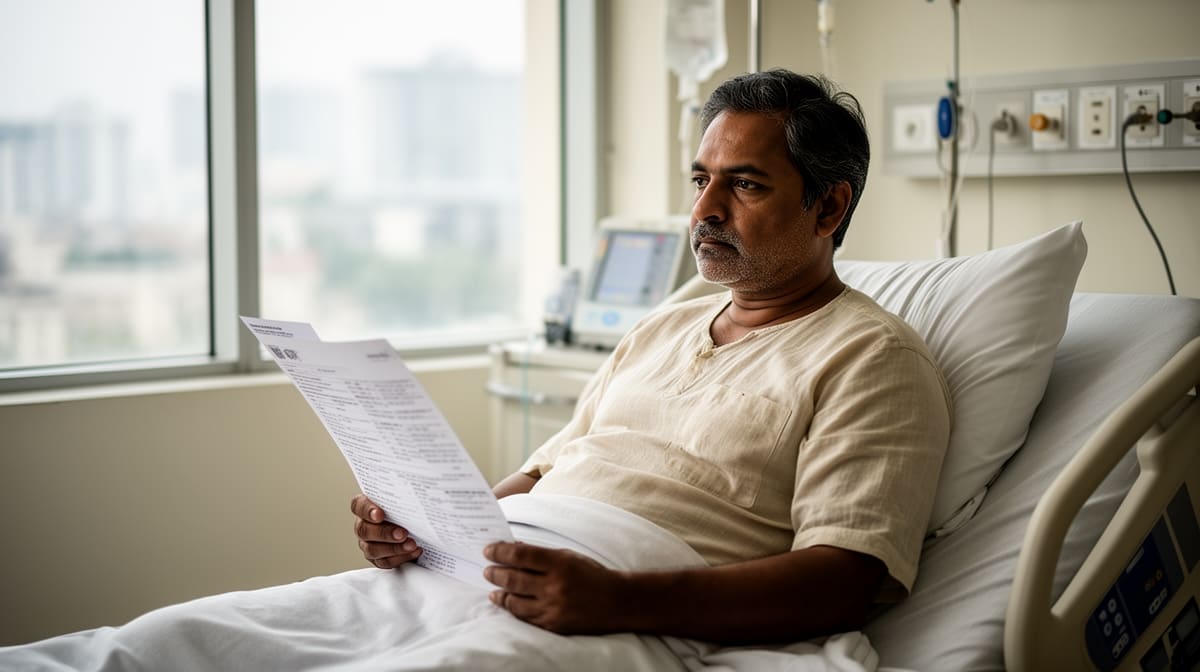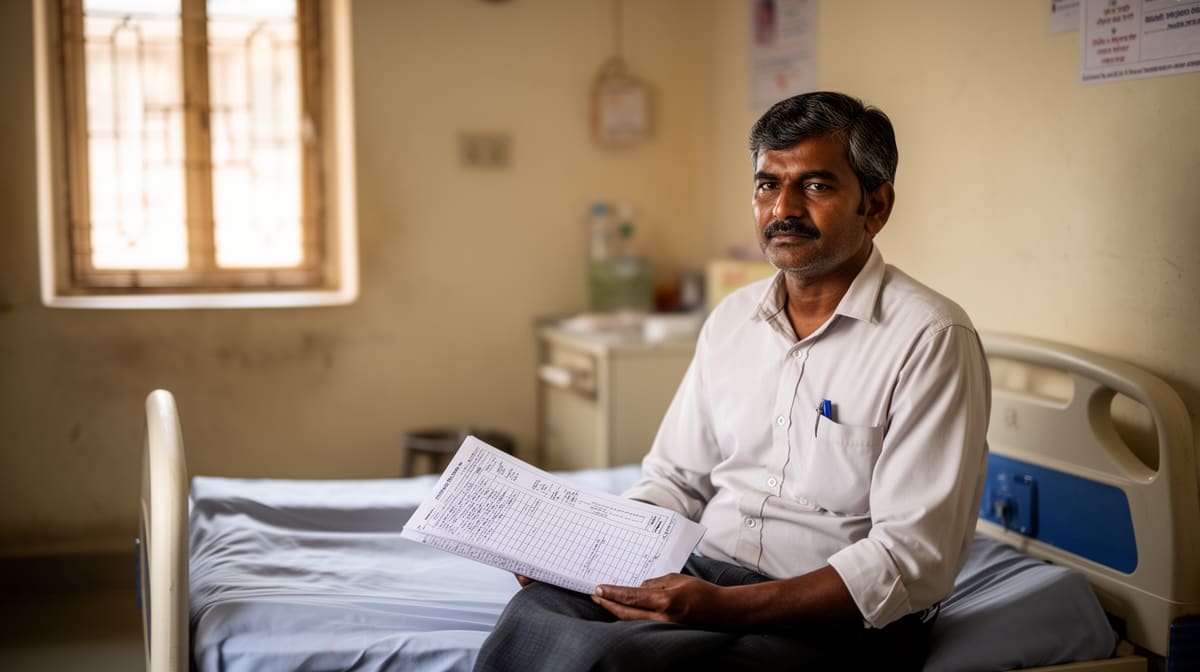
The Chhattisgarh High Court has clarified that compensation awarded in motor accident claims must adequately reflect the gravity of injuries, including non-monetary losses such as physical and mental agony. In this case, the Court found the Tribunal’s award insufficient under key heads and ordered a substantial enhancement with interest from the date of filing, reinforcing the principle that compensation must be restorative, not merely nominal.
Background & Facts
The Dispute
The appellant, Kamal Kishore Sahu, was involved in a motor vehicle accident on or about 20.01.2014, when a truck bearing registration number C.G. 07 CA-6986, driven by respondent No. 1 and owned by respondent No. 2, collided with the vehicle in which he was travelling. The accident resulted in grievous injuries requiring prolonged medical treatment and significant loss of income. The claimant filed a claim petition before the 2nd Additional Motor Accident Claims Tribunal, Raipur, on 20.01.2014, seeking compensation for medical expenses, loss of income, pain and suffering, and other related costs.
Key Facts
- The appellant was 28 years old at the time of the accident on 20.01.2014
- He sustained multiple fractures and soft tissue injuries requiring hospitalization and ongoing treatment
- Medical expenses incurred amounted to Rs. 7,21,878/- as documented and verified
- The appellant was employed in a private sector job prior to the accident and lost substantial income due to prolonged incapacity
- The truck was insured under respondent No. 3, The New India Insurance Co. Ltd.
- No dispute was raised regarding liability or the fact of accident
Procedural History
- 20.01.2014: Claim petition filed before the 2nd Additional Motor Accident Claims Tribunal, Raipur (Claim Case No. 56/2014)
- 16.11.2017: Tribunal awarded total compensation of Rs. 7,71,878/- comprising:
- Rs. 7,21,878/- for medical expenses
- Rs. 15,000/- for nutritional food and transportation
- Rs. 35,000/- for loss of income and physical and mental agony
- 17.11.2017: Award communicated to parties
- 15.12.2017: Appellant filed appeal under Section 173 of the Motor Vehicles Act, 1988 before the High Court
- 06.05.2026: Judgment delivered by the High Court
Relief Sought
The appellant sought enhancement of compensation, particularly under the heads of loss of income and pain and suffering, arguing that the Tribunal’s award of Rs. 35,000/- was grossly inadequate given the severity of injuries and prolonged recovery. He also sought interest on the enhanced amount from the date of filing of the claim petition.
The Legal Issue
The central question was whether the compensation awarded under the heads of loss of income and physical and mental agony was manifestly inadequate in light of the grievous nature of injuries sustained, and whether the Court has the power to enhance such compensation under Section 173 of the Motor Vehicles Act, 1988.
Arguments Presented
For the Appellant
Counsel for the appellant submitted that the Tribunal’s award of Rs. 35,000/- for loss of income and pain and suffering was disproportionately low given the appellant’s age, the severity of injuries, the extended hospitalization, and the permanent impact on his earning capacity. He relied on National Insurance Co. Ltd. v. Parvathamma and Kishan Singh v. State of Haryana to argue that compensation for non-pecuniary loss must be commensurate with the gravity of injury and not mechanically fixed. He further contended that the Tribunal failed to apply the multiplier method appropriately for loss of future earnings.
For the Respondent
Counsel for respondent No. 3, the insurer, supported the Tribunal’s award, arguing that the compensation was reasonable and in line with settled principles. He submitted that the Tribunal had adequately considered medical reports and the appellant’s income status, and that any enhancement would set a precedent for inflated claims. He contended that the award was within the bounds of judicial discretion and should not be disturbed.
The Court's Analysis
The Court undertook a detailed review of the medical records and the Tribunal’s reasoning. It noted that while the Tribunal had correctly quantified medical expenses, the awards under the heads of loss of income and pain and suffering were disproportionately low. The Court observed that the appellant, a young man of 28, suffered grievous injuries requiring multiple surgeries and months of rehabilitation, resulting in significant disruption to his professional and personal life.
"Looking to the injuries suffered by the appellant as well as considering the facts and circumstances of the case, the compensation awarded by the Claims Tribunal under the heads other than medical expenses appears to be on the lower side."
The Court rejected the notion that compensation for pain and suffering must be rigidly capped, emphasizing that the purpose of compensation under the Motor Vehicles Act is restorative and not punitive. It distinguished the present case from others where injuries were minor or temporary, noting that the appellant’s condition warranted a higher quantum. The Court also affirmed its power under Section 173 to enhance awards where the Tribunal has erred in appreciation of evidence or failed to apply the correct legal principles.
The Verdict
The appeal was allowed in part. The Court enhanced the compensation by Rs. 65,000/-, bringing the total compensation to Rs. 8,36,878/-. The additional amount of Rs. 65,000/- is to be paid by respondent No. 3, The New India Insurance Co. Ltd., within 30 days of receipt of the order. The enhanced amount shall carry interest at 9% per annum from 20.01.2014, the date of filing of the claim petition, until realization. The remainder of the Tribunal’s award, including the quantum for medical expenses, remains unchanged.
What This Means For Similar Cases
Compensation for Non-Pecuniary Loss Must Reflect Severity
- Practitioners must now argue for higher quantum under "pain and suffering" and "loss of income" where injuries are grievous, even if the claimant is young or employed informally
- Tribunals cannot rely on fixed benchmarks; each case must be assessed on its unique medical and factual matrix
- Medical reports, rehabilitation records, and expert testimony on long-term impact are critical to justify enhancement
Interest from Date of Filing Is Mandatory
- The Court reaffirmed that interest under Section 168 of the Motor Vehicles Act must run from the date of filing the claim petition, not from the date of award
- This principle applies uniformly across all claims, regardless of delay in adjudication
- Practitioners should explicitly pray for interest from the date of filing in all pleadings
Judicial Enhancement Is a Remedy, Not an Exception
- High Courts are empowered to enhance awards under Section 173 where the Tribunal’s reasoning is inadequate or arbitrary
- This judgment removes the misconception that appellate courts should defer excessively to Tribunal discretion
- A finding of "manifest inadequacy" is sufficient ground for enhancement, even without a formal error of law