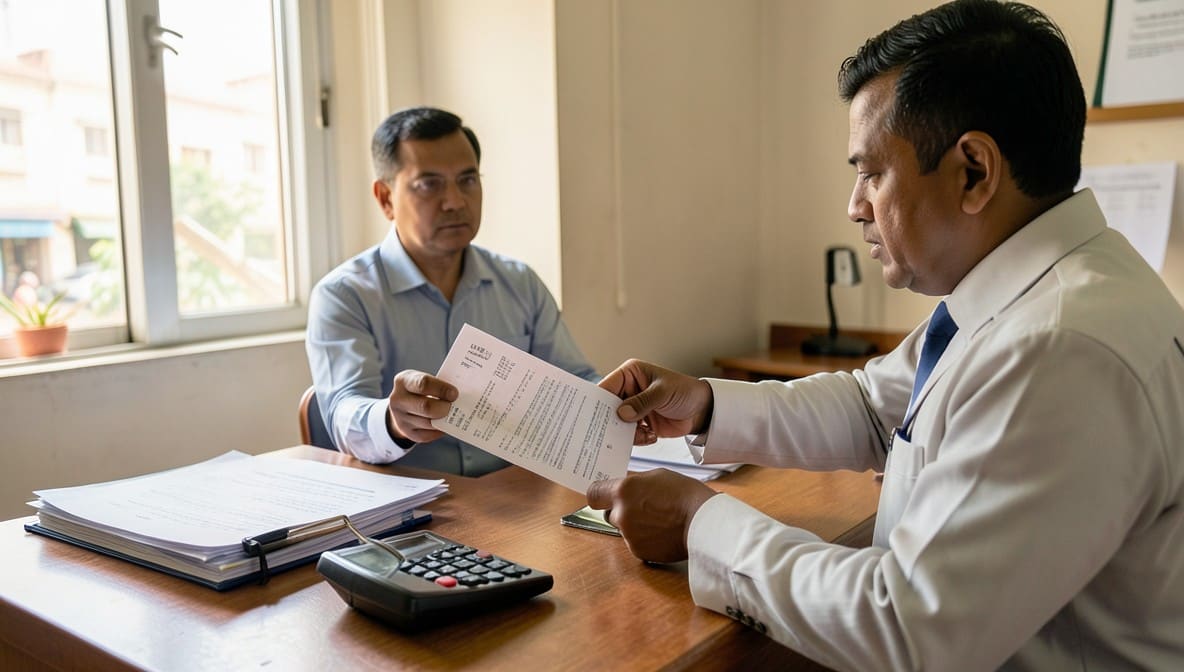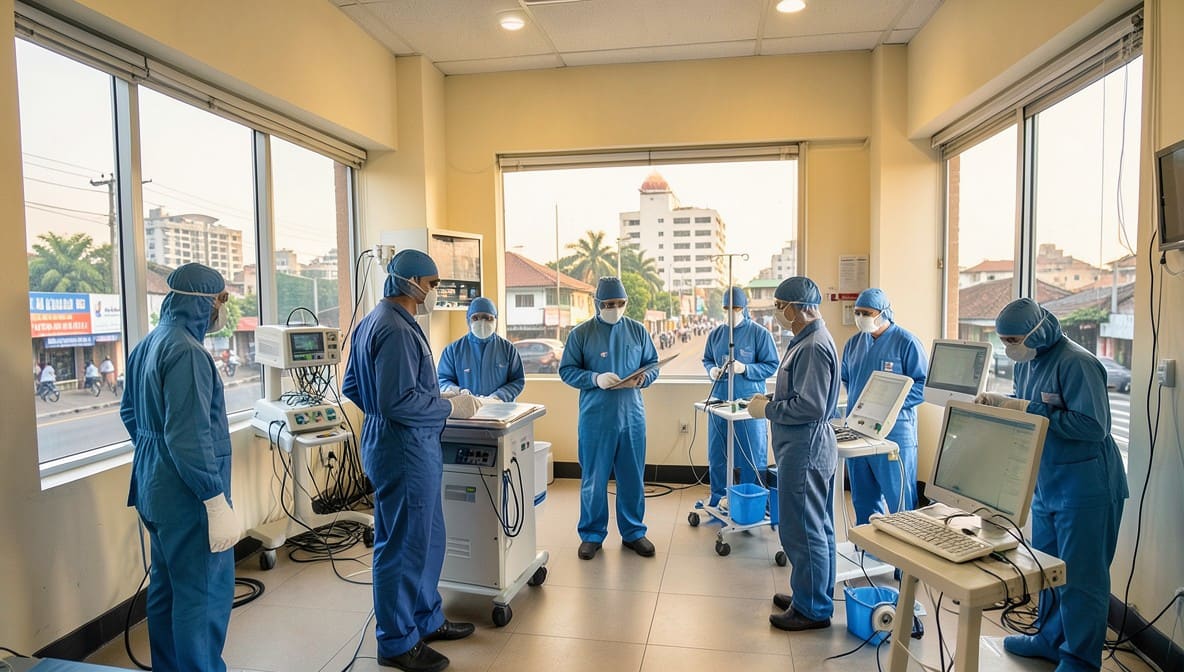
The Bombay High Court has ruled that the Mira-Bhayandar Municipal Corporation cannot evade payment for a COVID-19 treatment center erected by a contractor during the pandemic, despite technical defects in the agreement's execution. The Court emphasized that extraordinary circumstances demanded swift administrative action rather than procedural formalities.
Background & Facts
The Genesis
The petitioner, Mr. Satish Ramchandra Sangar, a 60-year-old businessman from Mumbai, entered into an agreement with the Mira-Bhayandar Municipal Corporation (MMC) on 07.05.2021 for erecting a COVID-19 treatment center at Swargiya Minatai Thackrey Hall in Mira-Bhayandar. The agreement covered the period from 01.11.2020 to 31.10.2021, with a fixed monthly reimbursement of Rs. 14,55,346.
Key Facts
- The petitioner erected the COVID-19 center and incurred expenses totaling Rs. 3,37,80,660.
- The Executive Engineer of MMC instructed the petitioner to continue operations via letter dated 29.11.2021, citing worsening COVID-19 conditions.
- MMC applied for a government grant of Rs. 2,66,80,129 for the period 01.11.2020 to 30.09.2021 through a letter dated 27.10.2021 signed by the Commissioner.
- The petitioner claimed Rs. 3,37,80,660, which MMC disputed on grounds of procedural defects in the agreement's execution.
- The Corporation argued that the agreement was not executed in compliance with the Maharashtra Municipal Corporation Act, 1949 (MMC Act, 1949).
Procedural History
- 14.09.2022: Division Bench of the Bombay High Court directed MMC to deposit Rs. 3,37,80,660, which was stayed by the Supreme Court.
- 23.07.2026: Present writ petition heard on merits.
The Parties' Positions
Petitioner's Case:
- The petitioner argued that MMC had accepted services and was obligated to reimburse the expenses despite procedural defects.
- The petitioner relied on the Corporation's own application for government grants, which acknowledged the liability.
Respondent's Case:
- MMC contended that the agreement was not executed in compliance with the MMC Act, 1949, and thus the petitioner should pursue remedies in a civil court.
- The State of Maharashtra argued that MMC alone was responsible for reimbursement and had failed to follow up with the government for grant disbursal.
Relief Sought
The petitioner sought a direction to MMC to pay Rs. 3,37,80,660 within 12 weeks, along with interest, and for the State Government to reimburse MMC if it paid the amount.
The Legal Issue
The central question was whether the Mira-Bhayandar Municipal Corporation could evade liability for reimbursing the petitioner's expenses for erecting a COVID-19 center despite procedural defects in the agreement's execution.
Arguments Presented
For the Petitioner
- The petitioner relied on the Corporation's own conduct, including its application for government grants and instructions to continue operations.
- The petitioner argued that the extraordinary circumstances of the pandemic justified waiving procedural formalities.
- The petitioner contended that the Corporation was estopped from denying liability after accepting the benefits of the services.
For the Respondent
- MMC argued that the agreement was not executed in compliance with the MMC Act, 1949, and thus the petitioner should pursue remedies in a civil court.
- The State of Maharashtra contended that MMC alone was responsible for reimbursement and had failed to follow up with the government for grant disbursal.
The Court's Analysis
The Court examined the extraordinary circumstances surrounding the COVID-19 pandemic and the primary responsibility of the government and local authorities to provide healthcare services. The Court observed that the Corporation had accepted the services provided by the petitioner and had even applied for government grants to cover the expenses. The Court held that the Corporation could not evade liability by raising technical pleas that did not weigh in the face of the public health crisis.
"It may be true that the learned Commissioner of the Corporation has not signed the Agreement but at the same time, it is true that it was signed by the Members of the Standing Committee. It is very well true that even the Corporation has demanded the grant from the Collector. While claiming the grant, the learned Commissioner was fully aware that there were certain defects/lacunae in the Agreement but still he has demanded the grant from the Government because he was fully conscious that the Corporation is bound to pay the amount towards the reimbursement of the services provided by the Petitioner."
The Court distinguished the case from ordinary contractual disputes, emphasizing that the pandemic situation required swift administrative action rather than procedural formalities. The Court held that the Corporation's liability was not contingent on the perfection of the agreement's execution.
The Verdict
The petition succeeded in full. The Court directed:
- MMC to pay Rs. 3,37,80,660 to the petitioner within 12 weeks.
- MMC to claim reimbursement from the State Government, which was directed to decide the claim within 8 weeks of receipt.
- The Corporation to submit a proposal to the State Government for reimbursement.
The Court made the rule absolute in these terms.
What This Means For Similar Cases
Extraordinary Circumstances Waive Procedural Formalities
- Public authorities cannot evade liability for essential services rendered during crises by raising technical pleas.
- Courts will prioritize substantive justice over procedural compliance in extraordinary situations.
Estoppel Against Public Authorities
- Public authorities are estopped from denying liability after accepting the benefits of services rendered, especially during public health emergencies.
- Contractual defects cannot be used to defeat substantive claims for essential services.
Government Reimbursement Mechanism
- Municipal corporations may seek reimbursement from the State Government for expenses incurred during public health emergencies.
- State Governments are obligated to process such claims expeditiously within statutory timelines.