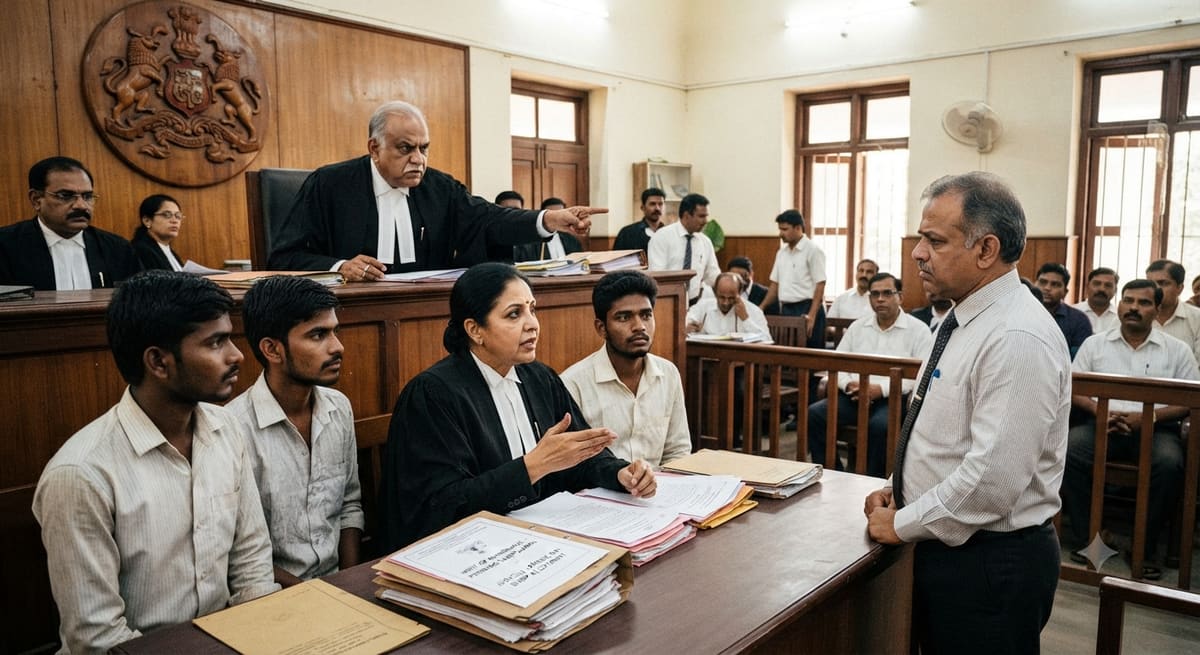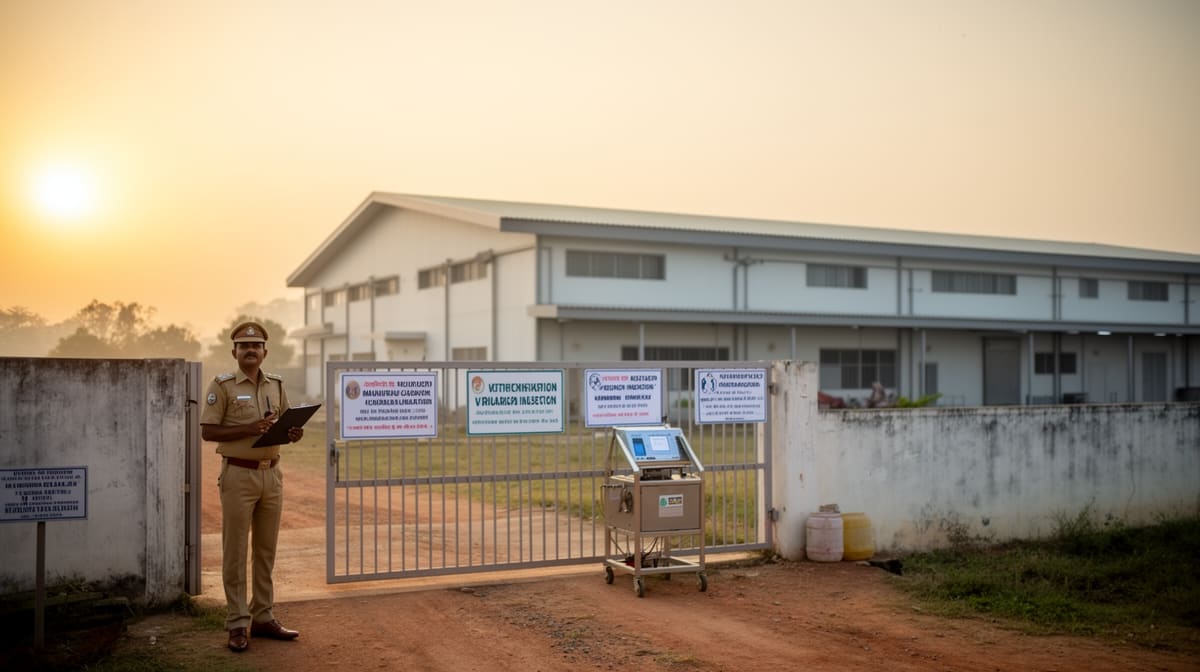
A landmark ruling by the Bombay High Court has clarified that municipal authorities cannot withhold statutory clearances on the mere ground of pending civil litigation, especially when no stay has been granted. The judgment reinforces the principle that administrative action must conform to binding judicial orders and cannot be used to circumvent court decrees.
Background & Facts
The Dispute
The petitioner, Tapi Valley Agro Food Products Company, operates a slaughterhouse in Dondaicha, Dhule, under a 30-year lease agreement executed in 2012 after winning a public auction. The facility obtained multiple regulatory approvals including pollution control consent, FSSAI license, GST registration, MSME/Udyam registration, and ISO/HACCP certification. The municipal council initially issued a No Objection Certificate (NOC) in 2012 to facilitate operations.
Procedural History
- 2011: Petitioner granted possession and executed 5-year lease, later extended to 30 years via municipal resolution.
- 2013: Collector stayed municipal resolution approving slaughterhouse; Divisional Commissioner set aside the stay, which was not challenged.
- 2017: Municipal General Body passed Resolution No.61 cancelling the lease and withdrawing all permissions. Petitioner filed Civil Suit No.3 of 2017 seeking permanent injunction.
- 2018: Bombay HC, in Writ Petition No.5580 of 2018, directed restoration of status quo ante as of 13.02.2017 and protected possession pending suit.
- 2022: Civil Suit was decreed in petitioner’s favour, granting perpetual injunction and affirming lawful possession.
- 2025: Municipal council refused to issue NOC for veterinary appointment, citing pendency of Civil Appeal No.82 of 2022 and alleged cancellation of permissions.
Relief Sought
The petitioner sought a writ directing the municipal council to issue the NOC for veterinary inspection and to reinstate or renew all prior permissions necessary for lawful slaughterhouse operations, in compliance with statutory and regulatory frameworks.
The Legal Issue
The central question was whether a municipal authority can lawfully refuse to issue a statutory NOC for veterinary oversight solely on the ground that a civil appeal is pending, without a stay order, when a decree affirming lawful possession has already been rendered.
Arguments Presented
For the Petitioner
The petitioner relied on Section 49(2) of the Maharashtra Municipal Councils, Nagar Panchayats and Industrial Townships Act, 1965, which imposes a statutory duty on municipal bodies to make reasonable provisions for slaughterhouses. It argued that the 2022 decree affirming lawful possession is binding and operative until stayed, and that administrative refusal based on pendency alone violates principles of natural justice and non-arbitrariness. It cited Harbanslal Sahnia v. Indian Oil Corporation Ltd. to establish that writ jurisdiction remains available despite alternate remedies when public duties are involved. The petitioner also invoked Andi Mukta Sadguru Shree Muktajee Vandas Swami Suvarna Jayanti Mahotsav Smarak Trust v. V.R. Rudani to assert that public duties may arise from custom, contract, or administrative conduct, not merely statute.
For the Respondent
The respondents contended that Resolution No.61 of 01.03.2017 cancelling the lease and permissions remains valid because it was not challenged under Section 308 of the 1965 Act, which provides a supervisory remedy. They argued that the decree only protects possession and does not confer a right to operate a slaughterhouse, especially since the 30-year lease was unregistered and allegedly violated Section 92 of the 1965 Act, requiring State sanction for long-term leases of municipal property. They further relied on public opposition and alleged pollution concerns to justify non-issuance of NOC.
The Court's Analysis
The Court undertook a rigorous analysis of five key legal dimensions. First, it affirmed the maintainability of the writ petition, rejecting the argument that an alternate remedy under Section 308 barred relief. Citing Whirlpool Corporation v. Registrar of Trade Marks and Harbanslal Sahnia, the Court held that writ jurisdiction is not ousted merely because a statutory remedy exists, particularly where public duties are involved and fundamental rights to livelihood are at stake.
"The rule of alternate remedy is a rule of discretion and not one of compulsion. In an appropriate case, in spite of availability of the alternative remedy, the High Court may still exercise its writ jurisdiction..."
Second, the Court emphasized that an appeal does not stay a decree unless expressly ordered under Order XLI Rule 5 of the CPC. Citing Atma Ram Properties v. Federal Motors, it held that the 2022 decree remains binding and enforceable. Municipal authorities cannot treat a decree as null and void merely because an appeal is pending.
Third, the Court addressed the validity of the 30-year lease. While acknowledging that unregistered leases cannot prove title under Section 92, it held that such documents may be considered for collateral purposes, including determining the nature of possession - a point reinforced by M/s Paul Rubber Industries v. Amit Chand Mitra. The trial court’s decree had already found lawful possession; the appellate court may decide the lease’s validity, but the municipality cannot unilaterally nullify it.
Fourth, the Court condemned the refusal letter dated 17.02.2025 for relying on irrelevant grounds - pendency of appeal and past cancellation - without any adjudication of statutory violations. Citing Mohinder Singh Gill v. Chief Election Commissioner, it held that administrative orders must stand on their stated reasons and cannot be supplemented later. Public opposition, without due process, cannot override statutory obligations.
Fifth, the Court invoked Tata Cellular v. Union of India to affirm that judicial review examines the legality, relevance, and arbitrariness of administrative decisions. The refusal was found to be an abuse of power, designed to frustrate regulatory compliance rather than enforce law.
Finally, the Court held that Section 49(2) imposes a continuing public duty to facilitate regulated slaughterhouse operations. The municipality cannot abandon its own infrastructure and then obstruct its reactivation. Mandamus lies to compel such duties.
The Verdict
The petitioner succeeded. The Bombay High Court quashed the impugned refusal and directed the municipal council to issue the NOC for veterinary appointment within two weeks. It further ordered reinstatement of all municipal permissions where statutory approvals from other regulators remain valid. The Court clarified that the judgment does not prejudge the pending civil appeal but upholds the supremacy of operative decrees over arbitrary administrative action.
What This Means For Similar Cases
Municipal Refusals Cannot Ride on Pending Appeals
- Practitioners must now argue that pending appeals without stay do not invalidate decrees - administrative bodies must act on the legal reality of operative judgments.
- Any refusal of permits, NOCs, or licenses based solely on pendency of litigation is prima facie illegal and subject to writ intervention.
Public Duties Extend Beyond Statutory Text
- Public duties under Article 226 may arise from long-standing administrative conduct, contractual arrangements, or civic obligations - not just explicit statutory mandates.
- Municipalities cannot disclaim responsibilities they voluntarily assumed, especially when public health and hygiene are involved.
Regulatory Compliance Trumps Political Pressure
- Administrative decisions must be grounded in statutory criteria, not public sentiment or political opposition.
- Where licenses from FSSAI, MPCB, or other regulators remain valid, municipal bodies cannot impose additional, unauthorized conditions.
- Practitioners should document all existing approvals and highlight their continued validity to counter blanket denials.