The Tripura High Court has clarified a critical principle in public employment: an OBC candidate who scores higher than unreserved category candidates cannot be denied appointment to unreserved posts merely because they availed reservation benefits. This judgment reinforces merit as the overriding criterion in competitive selection processes, regardless of category.
Background & Facts
The Dispute
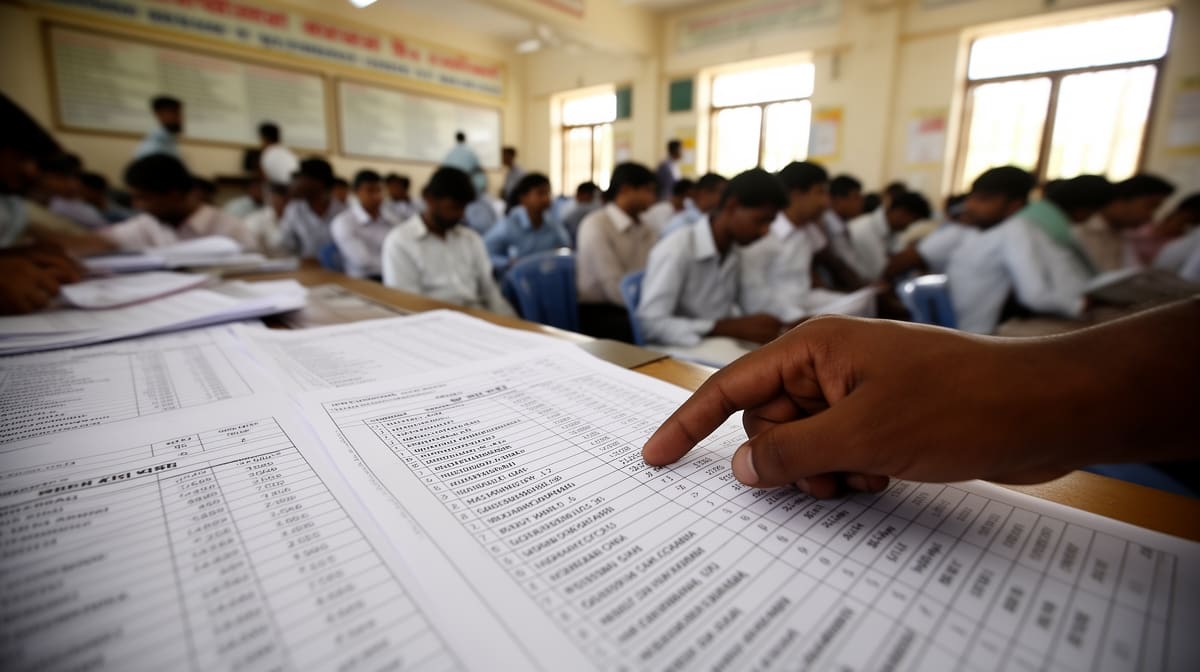
The respondent, Sri Jayanta Debnath, applied for the post of Constable (GD) in Central Armed Police Forces (CAPFs), National Investigation Agency (NIA), and Sashastra Seema Bal (SSF), as well as Rifleman (GD) in Assam Rifles, under Advertisement No. 01/2018 issued by the Staff Selection Commission (SSC). Belonging to the Other Backward Class (OBC) category, he claimed age relaxation under the reservation policy. He appeared in the written examination and secured 55.10 marks. Despite qualifying the Physical Standard Test, he was not called for the Medical Examination.
Key Facts
- The respondent applied under the OBC category and received age relaxation as permitted under government norms.
- He scored 55.10 marks in the written examination.
- A candidate named Sagar Debnath, who secured only 46.26 marks in the same examination, was appointed to a Constable (GD) position on 13.06.2023 pursuant to a court order dated 13.12.2022 in WP(C) 701 of 2022.
- The appellants did not disclose whether Sagar Debnath belonged to the OBC or Unreserved (UR) category.
- The appellants did not provide the cut-off marks for UR category candidates in their counter affidavit.
- The respondent filed his writ petition on 03.02.2024, challenging the selective appointment of Sagar Debnath despite lower marks.
Procedural History
- 21.07.2018: SSC issued advertisement for recruitment of Constable (GD) and Rifleman (GD).
- 2018-2021: Written examination, physical test, and result declaration completed.
- 13.12.2022: Tripura High Court directed consideration of petitioners in WP(C) 701 of 2022 for appointment against future vacancies without disturbing the merit list.
- 13.06.2023: Sagar Debnath was appointed to a Constable (GD) post.
- 03.02.2024: Respondent filed WP(C) 89 of 2024 before the Single Judge.
- 20.06.2025: Single Judge allowed the writ petition, directing appellants to consider the respondent for any available vacancy under the same advertisement.
- 10.03.2026: Writ Appeal heard by Division Bench.
- 07.04.2026: Judgment pronounced.
The Parties' Positions
For the Appellants (Union of India, SSC, CRPF):
- Argued that the respondent was ineligible for UR category posts because he availed OBC age relaxation.
- Claimed he did not meet the OBC cut-off for Tripura.
- Contended that Sagar Debnath’s appointment was pursuant to a court order and did not set a precedent.
- Raised a new plea on appeal that Sagar Debnath was not availing OBC-specific benefits and could be treated as UR.
For the Respondent (Sri Jayanta Debnath):
- Argued that he scored higher than Sagar Debnath and was denied appointment without justification.
- Contended that selective appointment based on arbitrary criteria violates Articles 14 and 16 of the Constitution.
- Stated that the appellants failed to disclose UR cut-off marks or Sagar Debnath’s category.
Relief Sought
The respondent sought direction to the appellants to consider his case for appointment against any available vacancy arising from the same advertisement, provided he is medically fit, without disturbing the merit list.
The Legal Issue
Can a candidate belonging to a reserved category, who scores higher than candidates in the unreserved category, be denied appointment to an unreserved post solely because they availed reservation benefits?
Arguments Presented
For the Appellant
The appellants contended that once a candidate avails reservation benefits such as age relaxation, they forfeit the right to be considered under the Unreserved (UR) category. They argued that Sagar Debnath’s appointment was a result of judicial intervention in a separate case and did not establish a binding precedent. They further claimed that the respondent failed to meet the OBC cut-off for Tripura and was therefore ineligible for any post under the same advertisement.
For the Respondent
The respondent argued that merit must prevail over category-based exclusion. He emphasized that the appellants had already appointed a candidate with lower marks (Sagar Debnath) without disclosing his category or the basis for his selection. He contended that the appellants’ failure to disclose UR cut-off marks rendered their denial arbitrary and violative of Article 14. He relied on the principle that a candidate with superior merit cannot be denied a position merely because they belong to a reserved category.
The Court's Analysis
The Division Bench examined the appellants’ conduct with strict scrutiny. It noted that the appellants had not disclosed in their counter affidavit whether Sagar Debnath belonged to the OBC or UR category, nor had they provided the cut-off marks for UR candidates. This omission was fatal to their case.
"If the appellants were only considering persons who had applied in a particular category (reserved or unreserved), they have to, while filling up the post, select the more meritorious person in that particular category and they cannot be permitted to choose the less meritorious candidate when both candidates belong to the same category (OBC in the instant case)."
The Court rejected the appellants’ new plea - that Sagar Debnath could be treated as UR because he did not avail OBC-specific benefits - as it was raised for the first time in appeal and was not pleaded before the Single Judge. The Court held that such a plea, if valid, should have been raised at the earliest opportunity.
The Court further affirmed that the legal position is settled: a candidate who qualifies under a reserved category but scores higher than UR candidates must be considered for UR posts on merit. The Court cited established jurisprudence that reservation is an affirmative tool, not a ceiling on merit.
"Experience shows that many times it happens that persons who claim reservation secure more marks than persons in UR category, which cut off is more than the cut off fixed for the UR category. Such persons would have to be appointed for the UR category posts on account of their superior merit. This is the settled legal position."
The Court also dismissed the plea of laches, noting that Sagar Debnath was appointed only in June 2023, and the writ petition was filed within eight months thereafter.
The Verdict
The Writ Appeal was dismissed. The Court upheld the Single Judge’s order dated 20.06.2025, directing the appellants to consider the respondent for appointment against any available vacancy arising from Advertisement No. 01/2018, provided he is found medically fit, without disturbing the merit list. No costs were awarded.
What This Means For Similar Cases
Merit Overrides Category in Unreserved Posts
- Practitioners must argue that any candidate scoring above the UR cut-off, regardless of category, is entitled to be considered for UR posts.
- Denial of such candidates on the ground of having availed reservation benefits is unconstitutional and contrary to State of Madras v. Champakam Dorairajan and Indra Sawhney v. Union of India.
Disclosure of Cut-Offs Is Mandatory
- Public authorities must disclose cut-off marks for all categories in counter affidavits.
- Failure to do so renders selection processes arbitrary and subject to judicial invalidation.
New Pleas in Appeal Are Not Permissible
- Arguments not raised before the lower court cannot be introduced in appellate proceedings unless they go to jurisdiction.
- Practitioners must ensure all legal grounds are pleaded at the earliest stage to avoid waiver.
Appointment Based on Judicial Orders Must Be Transparent
- Appointments made pursuant to court orders must not create arbitrary disparities.
- If one candidate is appointed under a court order, others with superior merit must be treated equally under the same advertisement.