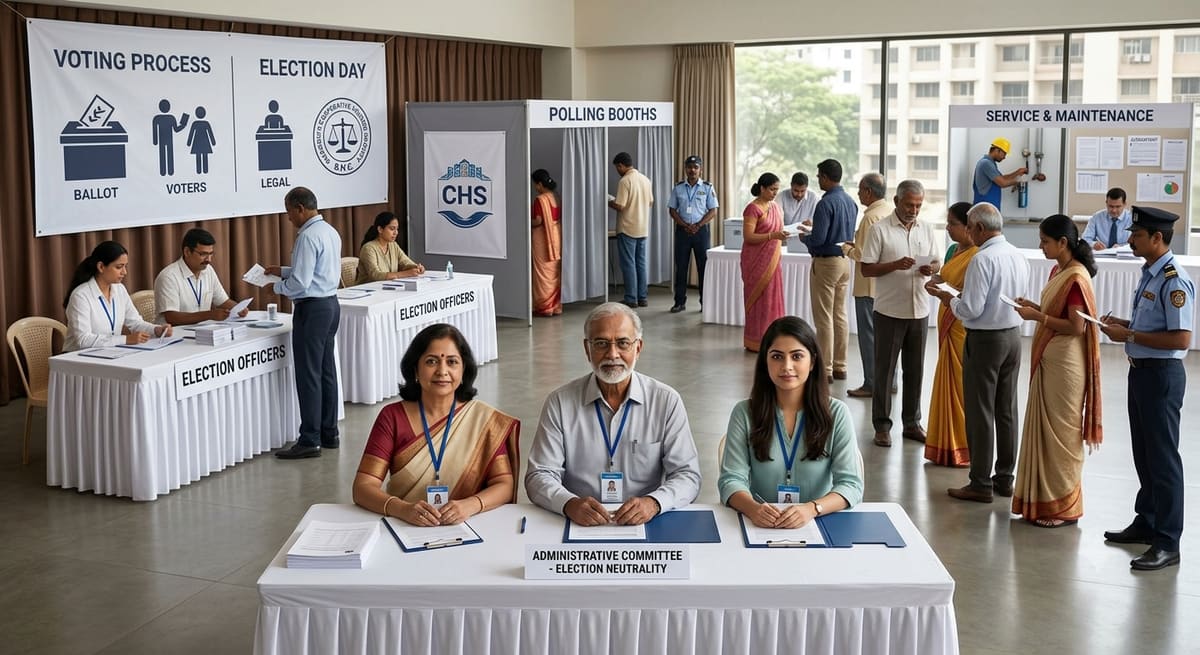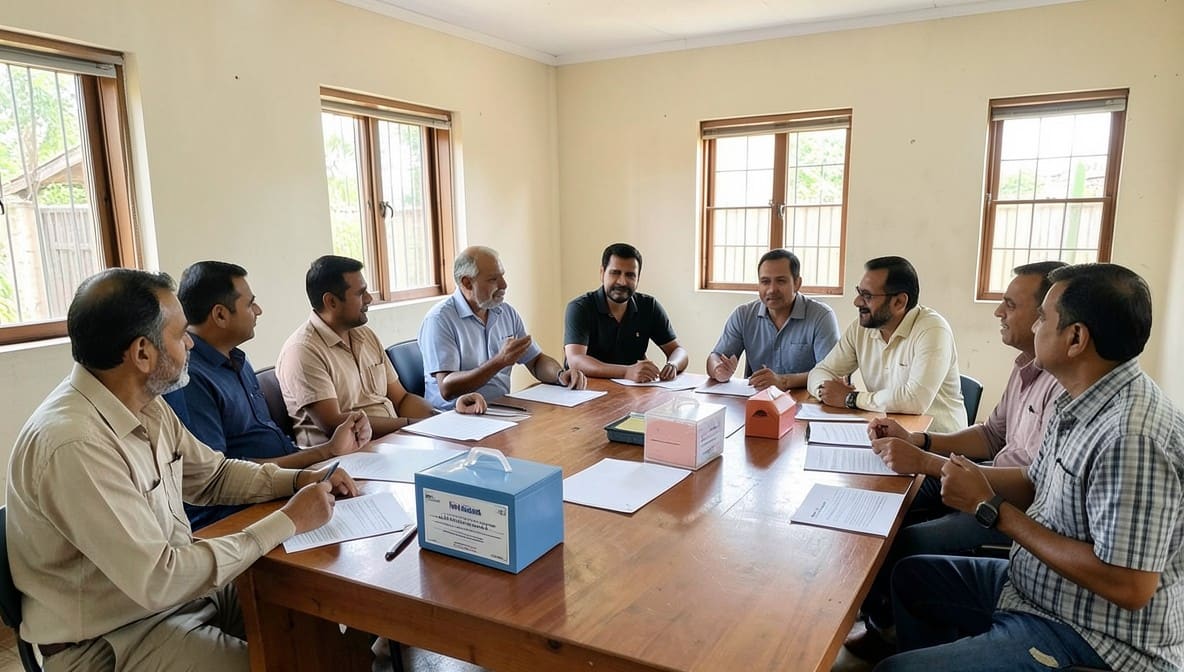
The Bombay High Court has intervened in a long-standing dispute between rival factions of a sugar factory society, directing the appointed Administrator to facilitate fund collection from members for conducting elections to the managing committee. The Court emphasized the necessity of holding elections expeditiously under the Maharashtra Co-operative Societies Act, 1960, despite the society's business being operated by a lessee. The judgment underscores the Court's role in ensuring democratic governance within co-operative societies amid financial and administrative constraints.
Background & Facts
The Dispute
The case arises from a deadlock in the Bhima Co-operative Sugar Factory Ltd., a society governed by the Maharashtra Co-operative Societies Act, 1960 (MCS Act). The society's managing committee tenure expired in 2020, and fresh elections have not been held due to competing claims over control of the factory. The factory's business was leased to Nirani Sugars Ltd. (Respondent No. 7) by a consortium of banks following the society's default on loan repayments. This lease arrangement transferred operational control to Respondent Nos. 6 and 7, but the society itself continued to exist, necessitating the formation of a managing committee.
Key Facts
- The Bhima Co-operative Sugar Factory Ltd. had raised loans from a consortium of banks led by the Maharashtra State Co-operative Bank Ltd., Mumbai.
- Upon default, the consortium took over the factory's business and executed a 25-year lease in favor of Nirani Sugars Ltd. (Respondent No. 7).
- The lease agreement stipulated that the outstanding loan would be repaid through the lessee's operations.
- The society's managing committee tenure expired in 2020, and no elections have been held since, primarily due to the ongoing lease arrangement.
- Two rival factions within the society are vying for control, exacerbating the deadlock.
- The Regional Joint Director (Sugar) appointed an administrative committee, but the Hon'ble Minister Co-operation set aside this order on 07.05.2026, directing the appointment of a board of administrators.
Procedural History
- 22.04.2026: Regional Joint Director (Sugar) appointed Petitioners as members of the administrative committee.
- 24.04.2026 and 29.04.2026: Hon'ble Minister Co-operation stayed the Regional Joint Director's order.
- 07.05.2026: Hon'ble Minister Co-operation set aside the Regional Joint Director's order and directed appointment of a board of administrators.
- 10.06.2026: Bombay High Court directed the Regional Joint Director (Sugar) to appoint an Administrator for holding elections by 12.06.2026, and mandated the lessee to deposit Rs. 40,11,475/- towards election funds by 17.06.2026.
- 22.06.2026: High Court suspended the direction for deposit of funds by Respondent No. 7 (Nirani Sugars Ltd.).
- 10.08.2026: Matter listed for further consideration.
Relief Sought
The petitioners sought directions for the expeditious conduct of elections to the managing committee of the Bhima Co-operative Sugar Factory Ltd., including the appointment of an Administrator and facilitation of fund collection for election expenses.
The Legal Issue
The central question was whether the Court could direct the factions of the society to collect funds from members for holding elections, and whether an Administrator could be appointed to oversee the process under the Maharashtra Co-operative Societies Act, 1960.
Arguments Presented
For the Petitioner
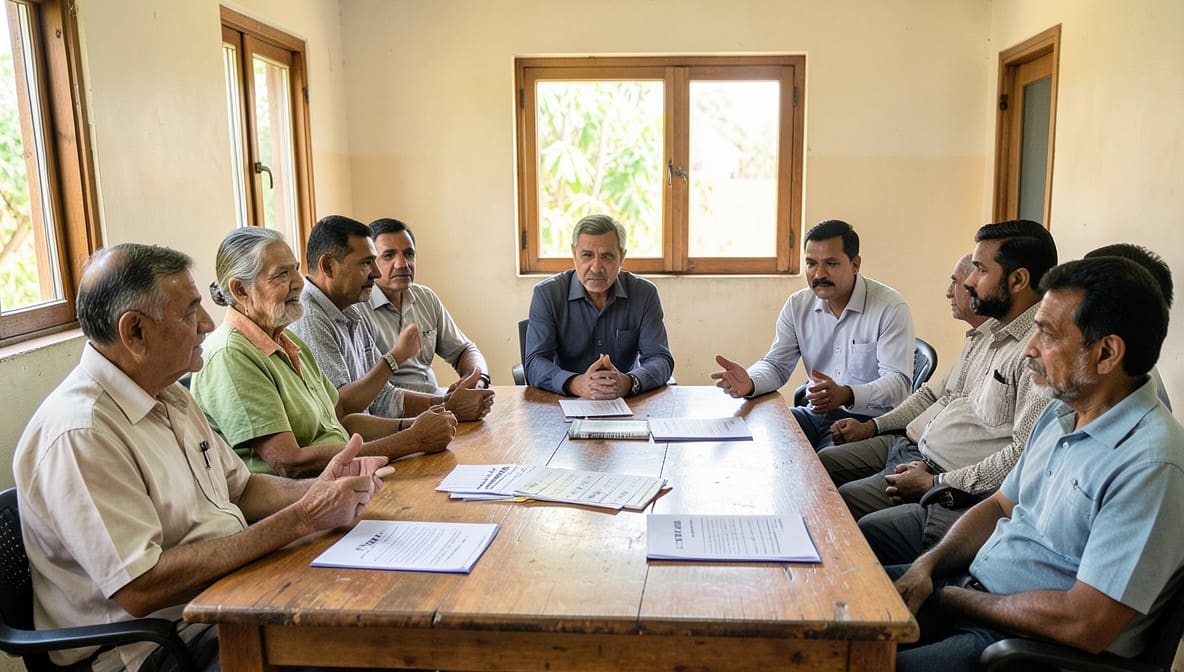
The petitioners, represented by Mr. Sanjeev P. Kadam, argued that the deadlock over the managing committee's composition could be resolved by including representatives from both factions in the administrative committee. They contended that this would enable the collection of funds from members for election expenses, thereby facilitating the election process. The petitioners emphasized the urgency of holding elections to restore democratic governance within the society.
For the Respondent
Respondent No. 5, represented by Mr. Surel Shah, opposed the inclusion of petitioners' representatives in the administrative committee, citing ongoing disputes between the factions. Respondent No. 7 (Nirani Sugars Ltd.) opposed the direction for deposit of funds, arguing that the lease arrangement did not obligate them to bear election expenses. Both respondents contended that the Court's intervention was necessary to break the deadlock and ensure the smooth conduct of elections.
The Court's Analysis
The Court acknowledged the unique conundrum arising from the lease arrangement, which transferred operational control of the factory to Respondent Nos. 6 and 7 while the society itself continued to exist. The Court noted that the society's managing committee had not been reconstituted since 2020, and the failure to hold elections was primarily due to the lack of funds and the ongoing dispute between factions.
The Court observed that the Maharashtra Co-operative Societies Act, 1960 mandates the formation of a managing committee for co-operative societies, and the failure to hold elections violated the democratic principles enshrined in the Act. The Court relied on the principles of natural justice and procedural fairness, emphasizing that the factions must cooperate to ensure the smooth conduct of elections.
"It is necessary that elections to the managing committee are held expeditiously. However, one of the hurdles noticed in holding the elections is non availability of funds in the accounts of the Sugar Factory."
The Court rejected the Administrator's unilateral revision of the election expenses to Rs. 1 crore, holding that the figure of Rs. 60,11,475/- was more appropriate, as determined by the State Co-operative Election Authority in its order dated 26.10.2023. The Court directed the factions to assist the Administrator in collecting contributions from members for the election fund, emphasizing that the factions must prioritize the society's interests over their disputes.
The Verdict
The Court directed the Administrator, Mr. Dwarkanath Narayanrao Pawar, to take necessary steps for collecting the required funds for election expenses. The Court ordered:
- Publication of notices in the factory premises, each village within the factory's jurisdiction, and local newspapers within one week, calling upon members to contribute funds.
- Both factions to assist the Administrator in collecting contributions from members.
- The Administrator to place the figure of collected contributions before the Court on the next date of hearing (10.08.2026).
The Court listed the petition for further consideration on 10.08.2026.
What This Means For Similar Cases
Democratic Governance in Co-operative Societies
- Co-operative societies must prioritize the timely conduct of elections to ensure democratic governance.
- Courts will intervene to break deadlocks and ensure compliance with the Maharashtra Co-operative Societies Act, 1960.
Role of Administrators in Dispute Resolution
- Administrators appointed by courts play a crucial role in facilitating elections and resolving disputes between factions.
- Administrators must act impartially and ensure that all factions cooperate in the election process.
Fund Collection and Financial Constraints
- Societies facing financial constraints can explore member contributions to fund elections.
- Courts will direct factions to assist in fund collection, emphasizing the society's interests over individual disputes.
Procedural Fairness in Co-operative Disputes
- Courts will ensure that procedural fairness and natural justice are upheld in co-operative society disputes.
- Unilateral revisions of election expenses by Administrators will not be countenanced if they lack statutory or authoritative basis.