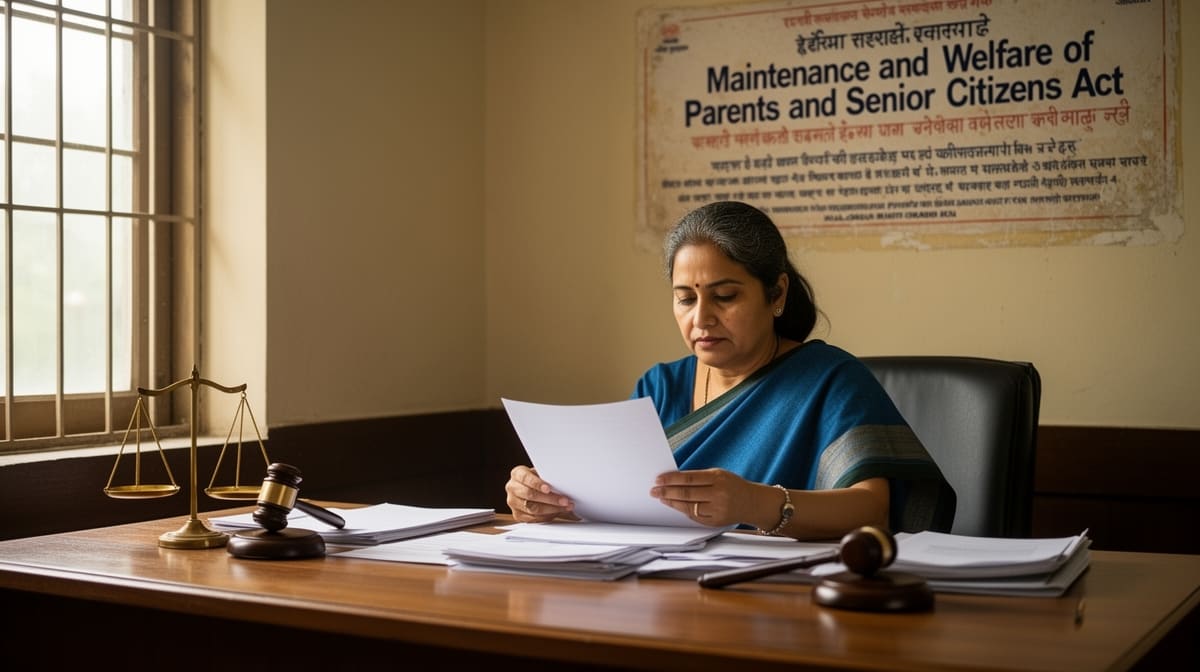
The Madhya Pradesh High Court has clarified a critical procedural limitation under the Maintenance and Welfare of Parents and Senior Citizens Act, 2003, holding that only senior citizens or parents may file appeals against orders passed under the Act. This ruling reinforces the statutory intent to protect the rights of elderly persons as primary beneficiaries, excluding descendants or other aggrieved parties from appellate standing.
Background & Facts
The Dispute
The petitioner, Smt. Kamlabai, challenged an order dated 09.05.2025 passed by the Additional Collector, District Indore, which had allowed an appeal filed by respondents 5 and 6 against an order dated 10.03.2025 issued by the Sub-Divisional Officer under the Maintenance and Welfare of Parents and Senior Citizens Act, 2003. The dispute arose from a maintenance proceeding initiated by a senior citizen against family members, including respondents 5 and 6, who were alleged to have failed in their obligation to provide maintenance.
Key Facts
- The original maintenance application was filed before the Sub-Divisional Officer under Section 5 of the Maintenance and Welfare of Parents and Senior Citizens Act, 2003
- The Sub-Divisional Officer passed an order on 10.03.2025 directing respondents 5 and 6 to pay monthly maintenance
- Respondents 5 and 6, who are not senior citizens or parents, filed an appeal before the Additional Collector on 20.04.2025
- The Additional Collector allowed the appeal on 09.05.2025, setting aside the order of the Sub-Divisional Officer
- The petitioner, Smt. Kamlabai, filed the present writ petition under Article 226 of the Constitution on 15.05.2025 challenging the Additional Collector’s order
Procedural History
- 10.03.2025: Sub-Divisional Officer passes maintenance order under the Act
- 20.04.2025: Respondents 5 and 6 file appeal before Additional Collector
- 09.05.2025: Additional Collector allows appeal and sets aside the maintenance order
- 15.05.2025: Petitioner files Writ Petition No. 19924 of 2025 before the High Court of Madhya Pradesh
- 29.10.2025: Division Bench of this Court in Shanti Bai Jarwal v. Smt. Manju Kunare and Others (W.P. No. 12/2025) holds that appeals under the Act are maintainable only by senior citizens or parents
The Parties' Positions
The petitioner contended that respondents 5 and 6, being descendants and not senior citizens or parents, had no statutory right to file an appeal under the Act. She argued that the Additional Collector’s order was void ab initio for lack of jurisdiction.
Respondents 5 and 6, through the State, argued that they were aggrieved by the maintenance order and therefore entitled to challenge it under the general principles of administrative law.
Relief Sought
The petitioner sought quashing of the Additional Collector’s order dated 09.05.2025 and restoration of the Sub-Divisional Officer’s order dated 10.03.2025. She also sought costs and a direction that no further appeal be entertained by any authority unless filed by a senior citizen or parent.
The Legal Issue
The central question was whether an appeal under the Maintenance and Welfare of Parents and Senior Citizens Act, 2003, can be filed by a person who is neither a senior citizen nor a parent, merely because they are aggrieved by the order.
Arguments Presented
For the Petitioner
The petitioner relied on the plain language of Section 22 of the Maintenance and Welfare of Parents and Senior Citizens Act, 2003, which provides that an appeal shall lie to the Additional Collector only "by any senior citizen or parent" aggrieved by the order of the Sub-Divisional Officer. She argued that the statutory language is explicit and leaves no room for interpretation. She further relied on the Division Bench judgment in Shanti Bai Jarwal v. Smt. Manju Kunare and Others dated 29.10.2025, which had already settled this issue.
For the Respondent/State
The State contended that respondents 5 and 6 were aggrieved persons within the meaning of general administrative law principles and that denying them appellate recourse would violate their right to fair hearing under Article 14 of the Constitution. They argued that the Act should be interpreted broadly to ensure justice to all parties affected.
The Court's Analysis
The Court examined the language of Section 22 of the Maintenance and Welfare of Parents and Senior Citizens Act, 2003, which states: "Any senior citizen or parent aggrieved by the order of the Sub-Divisional Officer may prefer an appeal to the Additional Collector." The Court emphasized that the statute does not use the phrase "any person aggrieved," but specifically limits appeal rights to "senior citizen or parent." This deliberate exclusion, the Court held, reflects a legislative intent to prioritize the rights of the elderly as the primary beneficiaries of the Act.
"The Act is a welfare legislation designed to protect the rights of senior citizens and parents. To allow descendants or other family members to appeal would dilute the very purpose of the statute and open the door to abuse by those who may seek to evade their statutory obligations."
The Court further noted that the Division Bench in Shanti Bai Jarwal had already addressed this precise issue and held that appeals under the Act are not open to all aggrieved persons, but only to those who qualify as senior citizens or parents under the Act. The Court declined to depart from this binding precedent.
The Court also rejected the argument that Article 14 was violated, noting that the classification under the Act is reasonable and based on intelligible differentia - the status of being a senior citizen or parent - which has a rational nexus with the object of the legislation.
The Verdict
The petition is allowed. The order dated 09.05.2025 passed by the Additional Collector is quashed as being without jurisdiction. Respondents 5 and 6 are not entitled to file an appeal under the Act as they are neither senior citizens nor parents. The order dated 10.03.2025 of the Sub-Divisional Officer is restored. Respondents 5 and 6 may, however, challenge the Sub-Divisional Officer’s order through any other available legal remedy, provided they do not invoke the appellate mechanism under Section 22 of the Act.
What This Means For Similar Cases
Appeal Rights Are Statutorily Restricted
- Practitioners must verify the status of the appellant before filing or opposing an appeal under the Maintenance and Welfare of Parents and Senior Citizens Act
- Appeals filed by children, spouses, or other relatives who are not senior citizens or parents are void ab initio
- Courts and tribunals must reject such appeals at the threshold without proceeding to merits
Statutory Language Trumps General Principles
- The doctrine of "aggrieved person" under general administrative law does not override specific statutory limitations
- Welfare statutes with explicit beneficiary definitions must be interpreted strictly according to their text
- Courts will not extend appellate rights by implication where the legislature has clearly confined them
Strategic Implications for Maintenance Proceedings
- Senior citizens should ensure that maintenance orders are enforced promptly, as descendants cannot delay enforcement through appeals
- Legal representatives of senior citizens should immediately challenge any appeal filed by non-qualifying parties on jurisdictional grounds
- Drafting of pleadings must explicitly cite Section 22 and the Shanti Bai Jarwal precedent to secure dismissal of unauthorized appeals