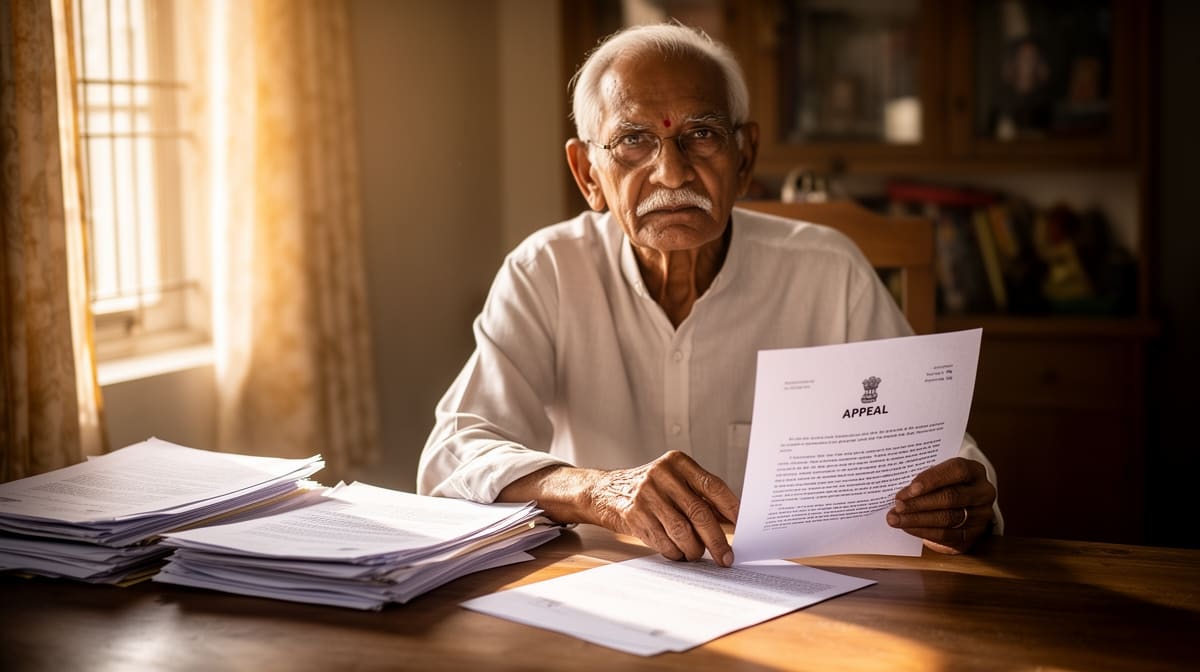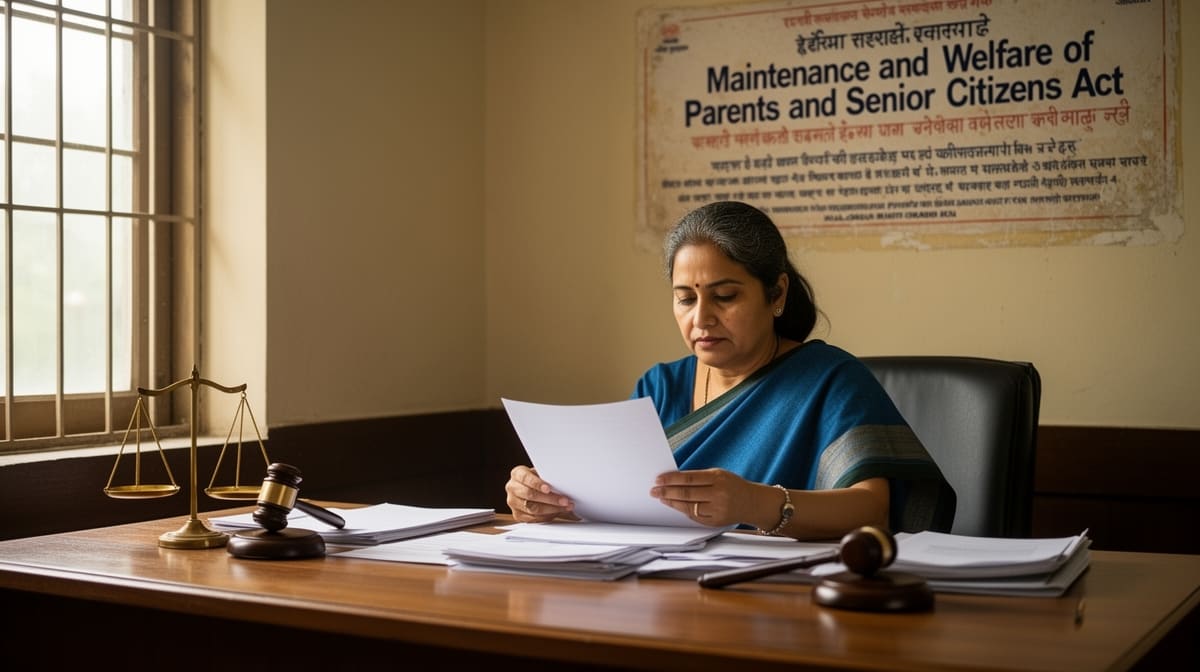
The Bombay High Court has clarified a long-standing ambiguity in the procedural rights of children under the Maintenance and Welfare of Parents and Senior Citizens Act, 2007. In a decisive ruling, the Court affirmed that appeals against orders passed by Sub Divisional Officers are not restricted to senior citizens alone, thereby expanding access to appellate remedies for family members seeking to challenge maintenance directives.
Background & Facts
The Dispute
The petitioner, Sushma Abhijit Gorane, challenged an order dated 28 January 2026 passed by the Sub Divisional Officer, Dhule, under Section 5 and Section 9 of the Maintenance and Welfare of Parents and Senior Citizens Act, 2007. The order directed the petitioner to pay monthly maintenance to her parent, a senior citizen. The petitioner sought to appeal this order but was denied filing rights by the District Collector on the ground that only the senior citizen, and not their children or relatives, could file an appeal under Section 16 of the Act.
Procedural History
- January 2025: Application for maintenance filed by senior citizen before Sub Divisional Officer
- 28 January 2026: Sub Divisional Officer passed maintenance order against petitioner
- February 2026: Petitioner attempted to file appeal with District Collector, which was rejected
- February 2026: Writ petition filed in Bombay High Court challenging the rejection
Relief Sought
The petitioner sought direction to the Appellate Authority to accept her appeal and grant interim stay on the execution of the maintenance order pending adjudication.
The Legal Issue
The central question was whether Section 16 of the Maintenance and Welfare of Parents and Senior Citizens Act, 2007 permits a child or relative to file an appeal against an order passed by a Sub Divisional Officer, or whether such right is exclusively reserved for the senior citizen.
Arguments Presented
For the Petitioner
The petitioner’s counsel relied on the binding precedent of the Division Bench in Jagdish Pitamber Pawar v. Pitamber Pundalik Pawar (Writ Petition No. 36 of 2023), which held that Section 16 does not limit the right to appeal to the senior citizen alone. It was argued that the Act’s purpose - to ensure welfare and dignity of senior citizens - necessarily includes the right of family members to seek appellate redressal where the order is legally flawed or procedurally defective. The petitioner contended that excluding children from the appellate process would render the remedy ineffective and violate principles of natural justice.
For the Respondent
The State, through the Additional Government Pleader, conceded the legal position laid down in the Division Bench judgment. No substantive counter-argument was advanced, acknowledging that the interpretation in Jagdish Pitamber Pawar was binding and consistent with the legislative intent of the Act.
The Court's Analysis
The Court examined the language of Section 16, which states that any person aggrieved by an order under the Act may file an appeal. It rejected a narrow reading that confined "aggrieved person" to the senior citizen alone. The Court emphasized that statutory interpretation must align with the Act’s object: to provide a swift, accessible, and humane mechanism for maintenance and welfare. A literal construction excluding children would defeat this purpose, particularly where the order imposes financial obligations on them.
"The term 'aggrieved person' in Section 16 cannot be read in isolation to mean only the senior citizen. The Act contemplates a family context where children are directly affected by the order and must have a legal avenue to challenge errors."
The Court further noted that the Division Bench’s earlier ruling in Jagdish Pitamber Pawar had already settled this issue, and there was no reason to revisit it. The Court held that the Appellate Authority’s refusal to accept the appeal was legally unsustainable and contrary to established precedent.
The Verdict
The petitioner succeeded. The Court held that Section 16 of the Maintenance and Welfare of Parents and Senior Citizens Act, 2007 permits children and relatives to file appeals against maintenance orders. The Appellate Authority was directed to accept the petitioner’s appeal if filed within one week, and to consider any application for interim relief.
What This Means For Similar Cases
Appeal Rights Extend to Children and Relatives
- Practitioners may now file appeals on behalf of senior citizens or against maintenance orders affecting their clients who are children
- Rejection of appeals by Appellate Authorities solely on the ground of non-citizen status is legally untenable
- The burden shifts to the Appellate Authority to entertain and adjudicate such appeals on merits
Interim Relief Is Presumptively Available
- Courts will grant interim stay on execution of maintenance orders pending appeal if filed within the stipulated time
- Delay in filing appeal does not automatically disqualify relief if the delay is explained and no prejudice is shown
- Practitioners should routinely seek interim stay in writ petitions challenging rejection of appeals
Procedural Compliance Is Mandatory
- Appellate Authorities must accept appeals filed by children without requiring additional documentation beyond the prescribed form
- Refusal to accept an appeal on jurisdictional grounds constitutes a violation of statutory rights
- Failure to comply may invite writ jurisdiction under Article 226 of the Constitution