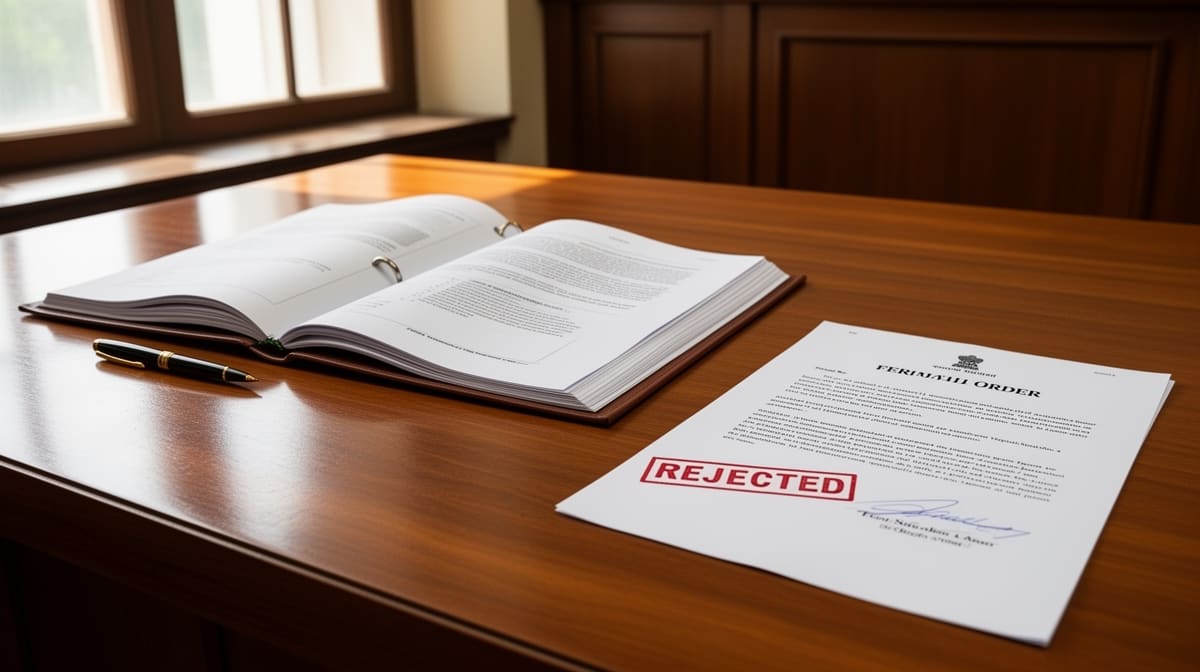
The Madhya Pradesh High Court has clarified that a Lok Adalat cannot dismiss a writ petition as infructuous merely on the basis of a misstated claim of settlement. This ruling reinforces the principle that judicial forums must not accept unsubstantiated assertions as factual grounds for disposal, especially when the underlying dispute remains unresolved.
Background & Facts
The Dispute
The petitioner, M/S S.S Communication, filed a writ petition challenging the rejection of its claim by the Dispute Settlement Committee constituted under the M.P. Municipal Corporation Act, 1956. The Committee had denied the petitioner’s request for relief, prompting the petitioner to approach the High Court under Article 226.
Procedural History
- 2023: Writ Petition No. 32024/2023 filed before the High Court seeking redressal of the rejected claim.
- 2025: The matter was referred to a Lok Adalat for amicable settlement.
- 13.12.2025: The Lok Adalat passed an order dismissing the writ petition as "rendered infructuous", claiming that the Dispute Settlement Committee had already settled the matter.
- The petitioner challenged this order, asserting that no settlement had occurred and that the Committee’s order was a rejection, not an agreement.
Relief Sought
The petitioner sought the setting aside of the Lok Adalat’s order and restoration of the writ petition for adjudication on its merits.
The Legal Issue
The central question was whether a Lok Adalat may lawfully dismiss a writ petition as infructuous based on a factual misrepresentation that a dispute has been settled, when the record clearly shows no such settlement was reached.
Arguments Presented
For the Petitioner
The petitioner relied on State of Punjab v. Jalour Singh (2008) 2 SCC 660, which holds that Lok Adalats function as conciliatory forums and cannot override judicial scrutiny by accepting unverified claims. The petitioner also cited Smt. Poonam Ruthiya v. Shakuntala Verma (M.P. No. 3784/2021), where this Court held that the existence of an adverse order by a statutory body does not equate to a settlement. The petitioner argued that the Lok Adalat’s order was based on a misreading of the Dispute Settlement Committee’s rejection order.
For the Respondent
The respondents contended that since the Dispute Settlement Committee had passed an order, the petitioner’s remedy lay under Section 387(4) of the M.P. Municipal Corporation Act, 1956, to challenge the order before the District Court. They argued that the Lok Adalat’s dismissal was procedural and did not prejudice the petitioner’s substantive rights.
The Court's Analysis
The Court examined the nature of Lok Adalats under the Legal Services Authorities Act, 1987, and emphasized that their jurisdiction is strictly limited to facilitating voluntary settlement. The Court observed that the Dispute Settlement Committee’s order was a rejection of the petitioner’s claim, not a mutual agreement. Therefore, the Lok Adalat’s assertion that the dispute was "settled" was factually incorrect and legally unsustainable.
"The observations made by the Lok Adalat that the dispute is already settled by the Dispute Settlement Committee is incorrect. The order passed by the Dispute Settlement Committee was to be considered in the writ petition because the claim raised by the petitioner has been rejected."
The Court further held that dismissing a writ petition on such a basis undermines the constitutional mandate of Article 226 and violates the principles of natural justice. The Lok Adalat, as a quasi-judicial forum, is bound to verify the factual basis of its conclusions before disposing of a matter. Its failure to do so rendered the order arbitrary and liable to be set aside.
The Verdict
The petitioner succeeded. The Court held that a Lok Adalat cannot dismiss a writ petition as infructuous on the basis of a false or unverified claim of settlement. The order dated 13.12.2025 was set aside, and the original writ petition was restored for adjudication on its merits.
What This Means For Similar Cases
Settlement Claims Must Be Verified
- Practitioners must challenge Lok Adalat orders that rely on uncorroborated assertions of settlement.
- Courts will not accept a statutory body’s rejection order as proof of mutual agreement.
- The burden lies on the Lok Adalat to record evidence of consent before recording a settlement.
Writ Petitions Cannot Be Disposed of on Procedural Pretexts
- A writ petition under Article 226 cannot be rendered infructuous merely because a lower forum has acted.
- The existence of an alternative remedy does not justify summary dismissal of constitutional remedies.
- Courts must ensure that procedural convenience does not override substantive justice.
Procedural Compliance Is Non-Negotiable
- Lok Adalat records must clearly reflect the terms of settlement, signed by both parties.
- Any order that misrepresents the nature of a prior decision invites judicial review.
- Advocates should flag such errors at the earliest stage to preserve the client’s right to full adjudication.