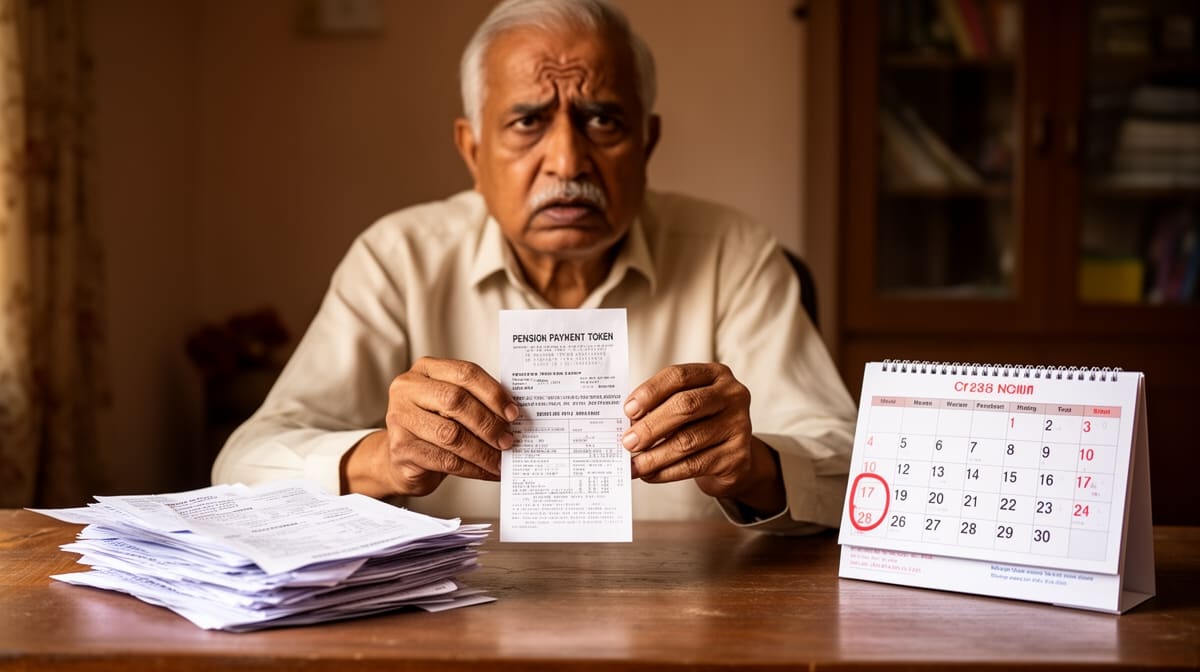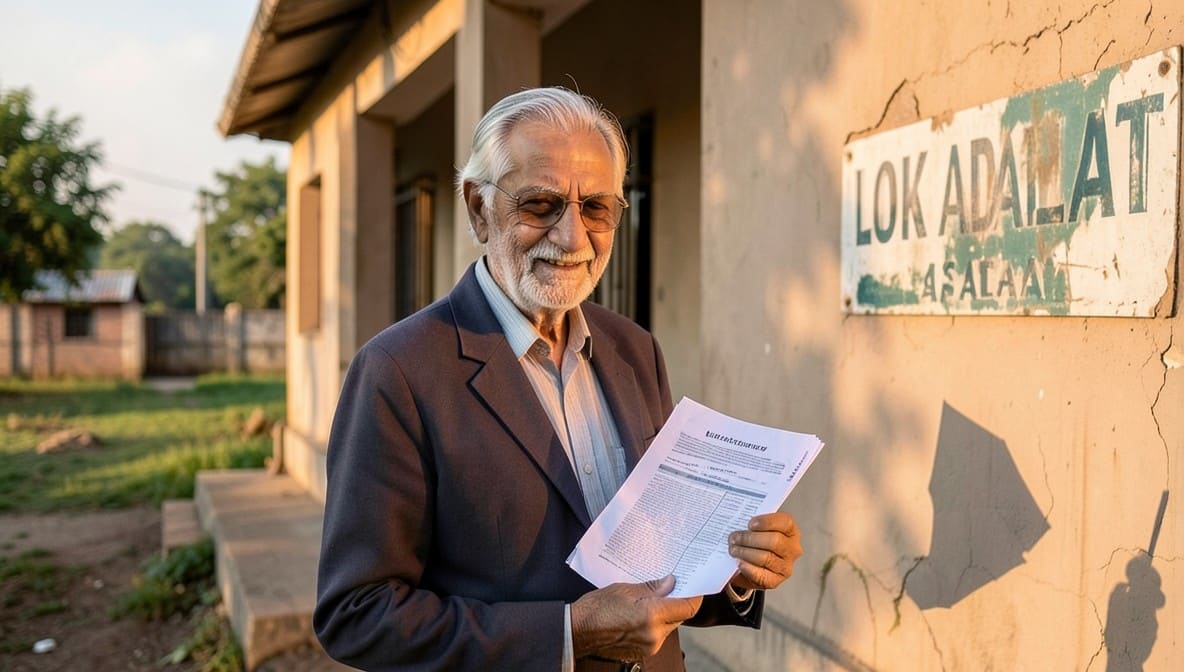
The Jharkhand High Court has affirmed that statutory settlements reached through National Lok Adalats are binding and enforceable as decrees, and state authorities cannot evade implementation through technical objections. This judgment clarifies the constitutional obligation of the state to honor such awards, particularly when elderly, low-income employees are deprived of rightful pensionary benefits.
Background & Facts
The Dispute
The appellants, 14 retired or soon-to-retire daily-rated employees of various government departments in Jharkhand, sought inclusion of their pre-regularization service periods in the calculation of pensionary benefits. They had been employed on temporary or daily-wage basis for years before being regularized, and their claims for counting such service towards pension were repeatedly denied by the state.
Key Facts
- The appellants were engaged as daily-rated employees between 1980 and 2010 across multiple districts including Garhwa, Khunti, Latehar, and Sahebganj
- Their regularization occurred between 2005 and 2015 pursuant to departmental orders
- Pensionary benefits were calculated only from the date of regularization, excluding prior service
- The appellants filed W.P.(S) No.1298 of 2023 before the High Court seeking inclusion of pre-regularization service
- The matter was referred to the National Lok Adalat held on 13.07.2024
- On that date, the Executive Engineer, Minor Irrigation Division, Garhwa, appeared and signed the award, undertaking to pay the difference in pensionary benefits as per entitlement
- The award directed respondents to count service from the date of initial appointment as daily-rated employees
- The appellants submitted copies of the award to the concerned departments between August 2024 and January 2025
- No action was taken by the state for over 14 months
Procedural History
- 13.07.2024: National Lok Adalat award passed in W.P.(S) No.1298 of 2023, signed by Executive Engineer and parties
- 08.08.2024: First representation made to Executive Engineer, Garhwa, requesting implementation
- 15.12.2024: Second representation sent to Chief Engineer, Minor Irrigation Department, Ranchi
- 22.01.2025: Third representation filed with Chief Secretary, Government of Jharkhand
- 15.03.2025: Contempt Case (Civil) No.182 of 2025 filed before the High Court for non-compliance
- 07.11.2025: Single Judge dismissed contempt petition, holding Lok Adalat awards not amenable to contempt jurisdiction
- 26.11.2025: W.P.(S) No.6739 of 2025 dismissed by Single Judge on grounds of res judicata
- 08.04.2026: Letters Patent Appeal heard and reserved
- 13.04.2026: Judgment pronounced
Relief Sought
The appellants sought enforcement of the National Lok Adalat award dated 13.07.2024, payment of the difference in pensionary benefits calculated from the date of initial employment, interest on delayed payment, and costs for litigation.
The Legal Issue
The central question was whether a subsequent writ petition seeking enforcement of a final and binding National Lok Adalat award is barred by the principle of res judicata, and whether the High Court under Article 226 can enforce such an award directly without requiring parties to approach a civil court for execution.
Arguments Presented
For the Appellant
The appellants contended that the Lok Adalat award dated 13.07.2024 was final and binding under Section 21 of the Legal Services Authorities Act, 1987, and equivalent to a civil court decree. Non-implementation violated their rights under Articles 14 and 21 of the Constitution. They argued that the earlier writ petition was disposed of by settlement, not adjudication, and therefore res judicata did not apply. The subsequent petition sought enforcement of a new obligation arising from non-compliance, constituting a fresh cause of action. They relied on State of Punjab v. Jalour Singh to assert that Lok Adalat awards are enforceable and that the High Court has inherent power to ensure compliance.
For the Respondent
The respondents argued that the writ petition was barred by res judicata since the same subject matter had been settled in W.P.(S) No.1298 of 2023. They contended that the proper remedy for enforcing a Lok Adalat award was to file an execution petition before a civil court, not to invoke writ jurisdiction. They maintained that the High Court cannot act as an executing court and that the appellants had misused the writ process to circumvent civil procedure.
The Court's Analysis
The Court examined the nature of Lok Adalat awards under the Legal Services Authorities Act, 1987, and reaffirmed the holding in State of Punjab v. Jalour Singh that such awards are final, binding, and executable as decrees of a civil court. The Court observed that the award dated 13.07.2024 was not merely a settlement but a statutory instrument with legal force, signed by a state official who undertook to implement it.
"The award made by the National Lok Adalat is not a mere compromise; it is a statutory order which acquires the status of a decree and cannot be ignored by the State authorities."
The Court rejected the argument that res judicata applied, noting that the earlier petition was disposed of by consent, not adjudication on merits. The subsequent petition was not a re-agitation of the same claim but a plea for enforcement of a new obligation - the implementation of the award. The Court emphasized that the state’s deliberate inaction for over 14 months amounted to a violation of constitutional rights.
The Court further held that while civil execution is a normal route, it is not the exclusive remedy when the state is the defaulting party and fundamental rights are at stake. The High Court’s writ jurisdiction under Article 226 includes the power to issue directions to ensure compliance with statutory obligations, especially when delay causes irreparable harm to vulnerable citizens.
The Court noted that the appellants were elderly, financially dependent, and had rendered long service. Their deprivation of pensionary benefits was not merely procedural but a denial of dignity and economic security.
The Verdict
The appellants succeeded. The Letters Patent Appeal was allowed. The Court directed the respondents to implement the National Lok Adalat award dated 13.07.2024 within four weeks from the date of this order. The respondents were further directed to pay interest at the rate of 6% per annum on the due pensionary amount, calculated from 13.07.2024 until full payment. All pending interlocutory applications were disposed of.
What This Means For Similar Cases
Lok Adalat Awards Are Enforceable by Writ
- Practitioners may now directly approach High Courts under Article 226 to enforce Lok Adalat awards against state authorities
- No need to first file civil execution proceedings if the state is in breach and fundamental rights are affected
- Delayed implementation constitutes a continuing violation, not a one-time default
Res Judicata Does Not Bar Enforcement Petitions
- A writ petition seeking implementation of a Lok Adalat award is not barred by res judicata if the prior petition was disposed of by settlement
- The cause of action arises anew upon non-compliance, creating a fresh legal right to enforcement
- Courts must distinguish between re-litigation and enforcement of settled statutory rights
State Must Honor Statutory Settlements
- State departments cannot evade Lok Adalat awards by raising procedural objections
- Officials who sign awards are personally bound by their undertakings
- Non-compliance invites judicial censure and interest liability
- This judgment reinforces the credibility of alternative dispute resolution mechanisms in public service disputes