The Madras High Court has clarified that the mere fact of a spouse residing separately from the deceased, or even allegations of cohabitation with another person, cannot extinguish legal heirship rights in the absence of a judicial decree of divorce. This ruling reinforces the principle that marital status under personal law remains intact until legally dissolved, with critical implications for succession and certificate issuance in Tamil Nadu.
Background & Facts
The Dispute
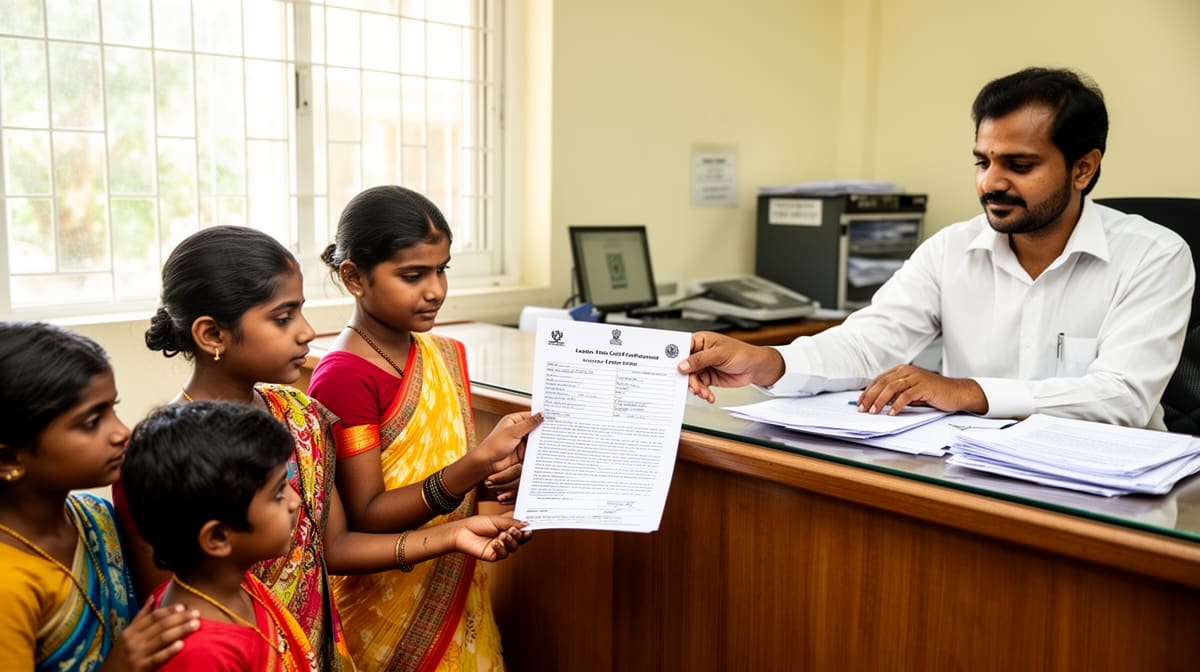
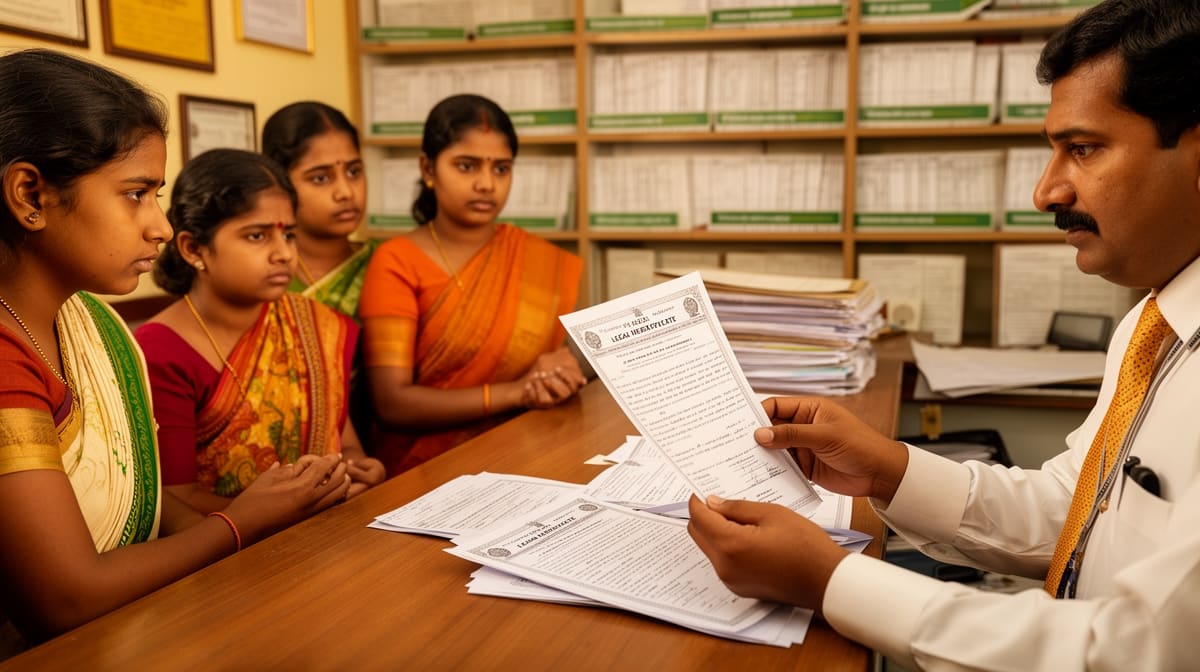
The petitioner, C. Selvam, is the legally wedded wife of the deceased Raja Singh, who passed away on 03.07.2022. She applied for a Legal Heirship Certificate on 29.08.2025 and again on 09.12.2025, seeking inclusion of her name along with her two daughters, Malin Pramila and Celin Diana, as legal heirs of the deceased. The Tahsildar, Palayamkottai Taluk, rejected both applications solely on the ground that she was residing separately from the deceased at the time of his death.
Key Facts
- The petitioner claims to have been married to Raja Singh under customary rites and has no record of divorce or judicial separation.
- The deceased died on 03.07.2022.
- The petitioner’s two daughters, born during the marriage, are also claimants to the estate.
- The respondents allege that the petitioner was cohabiting with another man, prompting one of the daughters to object to her inclusion as a legal heir.
- No divorce decree, annulment, or judicial order dissolving the marriage has been produced or recorded.
- The Government of Tamil Nadu issued G.O.(Ms) No.478 dated 29.09.2022 and G.O.(Ms) No.110 dated 13.03.2024, providing procedural guidelines for issuance of Legal Heirship Certificates.
Procedural History
- 29.08.2025: First application for Legal Heirship Certificate filed by petitioner before the Tahsildar, Palayamkottai Taluk.
- 09.12.2025: Second application filed after rejection of the first.
- 29.08.2025: Impugned order issued by the Tahsildar rejecting the application on grounds of separation.
- 09.12.2025: Second rejection order issued, reiterating the same ground.
- 17.03.2026: Writ Petition (W.P.(MD) No.7231 of 2026) filed before the Madras High Court, Madurai Bench.
The Parties' Positions
Petitioner’s Position: The petitioner asserts that she is the legally wedded wife of the deceased, with no divorce or legal dissolution of marriage. She contends that separation alone, without a court decree, does not terminate marital rights under Hindu personal law or the Legal Heirship Certificate framework. She relies on G.O.(Ms) No.478 dated 29.09.2022, which mandates that certificates be issued based on documentary proof of relationship, not subjective moral or social judgments.
Respondents’ Position: The State, through the Additional Government Pleader, argues that the petitioner’s alleged cohabitation with another person and prolonged separation render her ineligible as a legal heir. The objection raised by one of the daughters is cited as sufficient grounds for rejection, implying that familial discord overrides marital status.
Relief Sought
The petitioner seeks quashing of the impugned orders dated 29.08.2025 and 09.12.2025, and a direction to the Tahsildar to issue the Legal Heirship Certificate in her name and that of her daughters, in accordance with G.O.(Ms) No.478 and established legal principles.
The Legal Issue
The central question was whether residence separate from the deceased, or allegations of cohabitation with another person, without a decree of divorce, can legally disqualify a wife from being recognized as a legal heir for the purpose of issuing a Legal Heirship Certificate.
Arguments Presented
For the Petitioner
The petitioner’s counsel relied on the Full Bench decision in P. Venkatachalam v. The Tahsildar, Kumarapalayam Taluk and the Government Orders dated 29.09.2022 and 13.03.2024, which define a Legal Heirship Certificate as a certificate of relationship, not a determination of moral conduct or marital propriety. It was argued that under Hindu law, marriage continues until legally dissolved, and separation without divorce does not extinguish inheritance rights. The petitioner submitted marriage proof, birth certificates of daughters, and death certificate of the deceased as conclusive evidence of relationship.
For the Respondent
The State contended that the petitioner’s conduct - alleged cohabitation with another man - constitutes a moral and factual bar to recognition as a legal heir. It argued that the objection by the daughter, a direct blood heir, creates a disputed factual matrix that the Tahsildar is entitled to resolve without judicial intervention. The respondents did not dispute the existence of marriage but challenged the petitioner’s eligibility on grounds of conduct and familial opposition.
The Court's Analysis
The Court examined the nature and purpose of a Legal Heirship Certificate, noting that it is not a title-deed or a final adjudication of inheritance rights, but a procedural document establishing familial relationship for administrative purposes such as claiming pensions, bank balances, or property records. The Court emphasized that the certificate is not a substitute for a succession certificate under the Succession Act, nor does it determine proprietary rights.
"It is well settled that a Legal Heirship Certificate is essentially a certificate of relationship. In that view of the matter, if the petitioner is the legally wedded wife of the deceased Raja Singh, the mere fact that she was residing separately, or even the allegation that she was living with another person, would not, by itself, sever the marital relationship, unless there is a decree of divorce passed by a competent Court."
The Court held that the Tahsildar’s rejection on the basis of separation and unproven allegations of cohabitation was legally unsustainable. The burden to prove dissolution of marriage lies with the objecting party, not the petitioner. The Court further noted that while the daughter’s objection raises a factual dispute, it cannot be resolved by the Tahsildar unilaterally without affording due process to all parties.
The Court declined to issue a direct direction for issuance of the certificate, recognizing that the factual dispute involving the daughter’s objection required a fair, adversarial hearing. The Court clarified that its observation regarding the continued validity of the marriage was based solely on the petitioner’s submission, and that the Tahsildar must now conduct a limited inquiry into the competing claims.
The Verdict
The writ petition was allowed in part. The impugned orders dated 29.08.2025 and 09.12.2025 are set aside. The matter is remanded to the Tahsildar, Palayamkottai Taluk, who shall issue notice to the petitioner and both daughters of the deceased, hear their submissions, and pass a fresh order within twelve weeks from receipt of the web copy of this judgment. No costs are awarded. The Tahsildar must determine the petitioner’s status as a legal heir based solely on proof of marital relationship and not on allegations of conduct or familial opposition.
What This Means For Similar Cases
Separation Does Not Invalidate Marital Heirship
- Practitioners must now argue that separation without divorce cannot be grounds to deny a spouse’s claim to a Legal Heirship Certificate under Tamil Nadu’s administrative framework.
- Any rejection based on moral judgment, cohabitation allegations, or family objections - without a divorce decree - is legally invalid.
Administrative Authorities Must Follow Due Process
- Tahsildars and Revenue Officers must conduct a limited, fair inquiry when objections are raised by other heirs.
- They cannot act as adjudicators of moral conduct; their role is confined to verifying documentary proof of relationship.
- All claimants must be given notice and opportunity to be heard before a final order is passed.
G.O.(Ms) No.478 Governs the Process
- The 2022 Government Order mandates that Legal Heirship Certificates be issued based on objective evidence: marriage certificate, death certificate, and identity proof.
- Subjective factors such as living arrangements, social stigma, or familial discord are irrelevant to the issuance process.
- This judgment reinforces that administrative certificates are not a substitute for civil court adjudication of inheritance disputes.