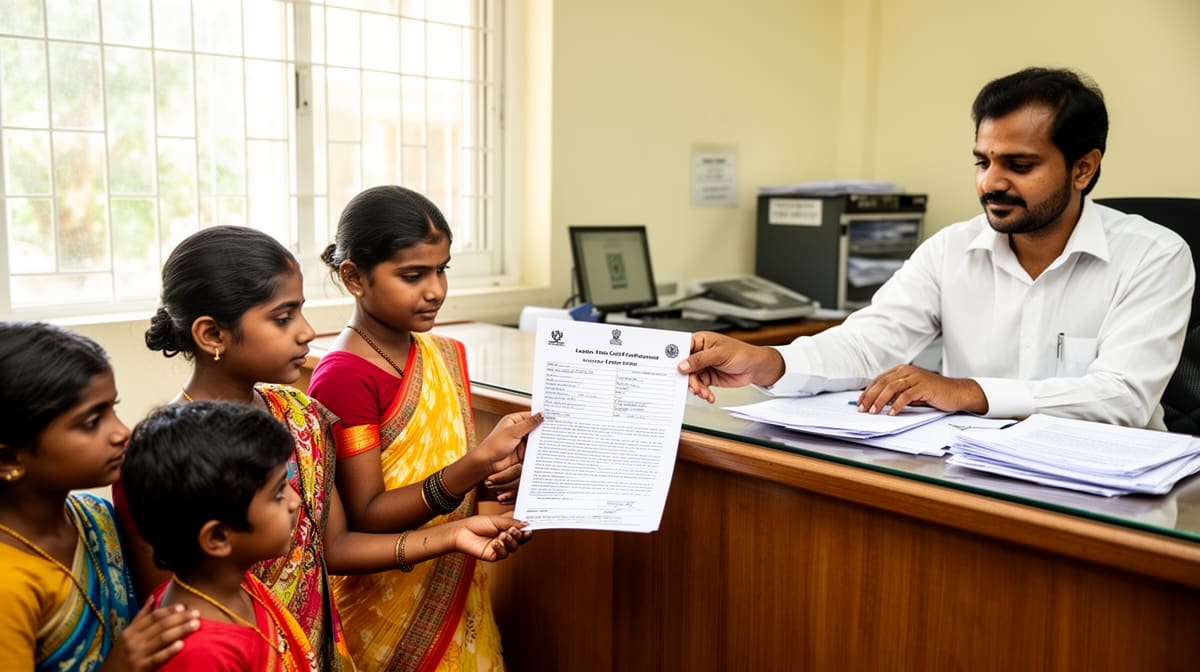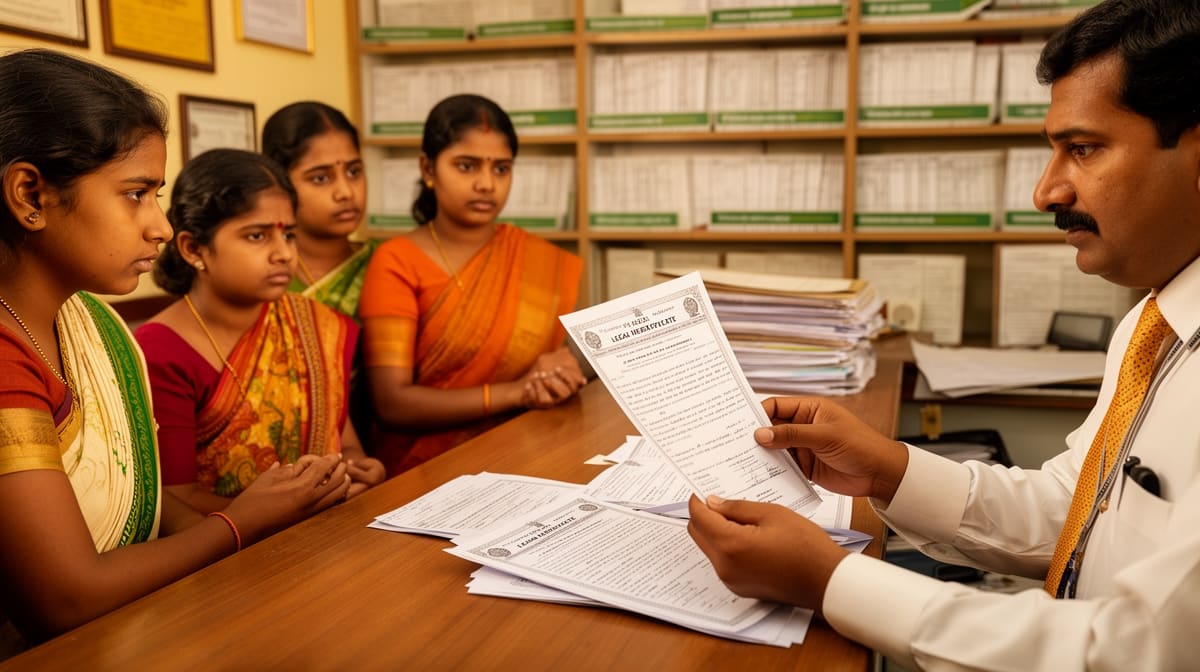
The Madras High Court has underscored the imperative of including all legal heirs in a legal heirs certificate, particularly when fraudulent exclusion is alleged. The judgment reinforces that administrative authorities must conduct thorough verification before issuing such certificates, ensuring no rightful heir is omitted through misrepresentation.
Background & Facts
The Dispute
The petitioner, Bakkiyameri, is the daughter of late Palanivel. Following Palanivel’s death in 2008, his son (the 4th respondent) obtained a legal heirs certificate listing himself as the sole heir, suppressing the existence of the petitioner and two other children from Palanivel’s second marriage. The petitioner, upon discovering the fraud, filed multiple representations before revenue authorities, which went unaddressed.
Procedural History
- 2024: The petitioner filed W.P. No. 7609 of 2024, seeking intervention from the Madras High Court.
- The Court directed the Revenue Divisional Officer (RDO) to conduct an enquiry, which culminated in the cancellation of the fraudulent certificate issued to the 4th respondent.
- Despite the cancellation, the Tahsildar (3rd respondent) failed to issue a fresh certificate including all legal heirs, prompting the present writ petition.
Relief Sought
The petitioner sought a writ of mandamus under Article 226 of the Constitution of India, directing the Tahsildar to issue a legal heirs certificate reflecting all rightful heirs of late Palanivel.
The Legal Issue
The central question was whether the Tahsildar is obligated to issue a legal heirs certificate inclusive of all rightful claimants, particularly when fraudulent exclusion by a co-heir has been established through judicial intervention.
Arguments Presented
For the Petitioner
The petitioner’s counsel contended that the 4th respondent exploited the fraudulent certificate to create false title documents over the deceased’s property. To safeguard her succession rights, the petitioner required a valid legal heirs certificate, which the Tahsildar had failed to issue despite the cancellation of the earlier fraudulent document.
For the Respondents
The Government Advocate, representing the revenue authorities, submitted that a fresh legal heirs certificate would be issued after due verification and compliance with legal formalities.
The Court's Analysis
The Court observed that while the RDO had already conducted an enquiry and cancelled the fraudulent certificate, the Tahsildar had not taken steps to issue a corrected certificate. The Court emphasized the administrative duty of revenue authorities to ensure that legal heirs certificates accurately reflect all rightful claimants, particularly when fraud has been established.
"Considering the fact that earlier the 2nd respondent conducted enquiry and cancelled the legal heir certificate in favour of the 4th respondent, however failed to issue the said certificate to the legal heirs of the said Palanivel, the 3rd respondent is directed to issue legal heir certificate in respect of late Palanivel by including the names of all this legal heirs."
The Court underscored that the issuance of a legal heirs certificate is not a mere formality but a legal obligation to uphold succession rights and prevent fraudulent dispossession.
The Verdict
The Court allowed the writ petition and directed the Tahsildar to issue a legal heirs certificate including all rightful heirs of late Palanivel, after due verification and compliance with legal formalities. The matter was posted for reporting compliance on 16.03.2026.
What This Means For Similar Cases
Fraudulent Exclusion of Heirs Is Justiciable
- Courts can intervene under Article 226 to rectify fraudulent exclusions in legal heirs certificates, even if the dispute arises from administrative inaction.
- Practitioners should emphasize judicial precedents where fraud has been established, such as State of Maharashtra v. Milind, which held that succession rights cannot be defeated by misrepresentation.
Revenue Authorities Must Act Promptly
- Once fraud is established, revenue authorities cannot delay issuing corrected certificates under the guise of due verification. The Court’s direction implies a time-bound obligation to act.
- Petitioners can cite this judgment to argue that administrative lethargy post-cancellation of a fraudulent certificate constitutes denial of justice.
Property Rights Are Protected
- The judgment reinforces that legal heirs certificates are not merely administrative documents but instruments of property rights. Fraudulent exclusion can lead to false title creation, which courts will rectify.
- Practitioners should advise clients to monitor certificate issuances and challenge exclusions promptly under Article 226 or Section 340 CrPC for perjury if fraud is suspected.