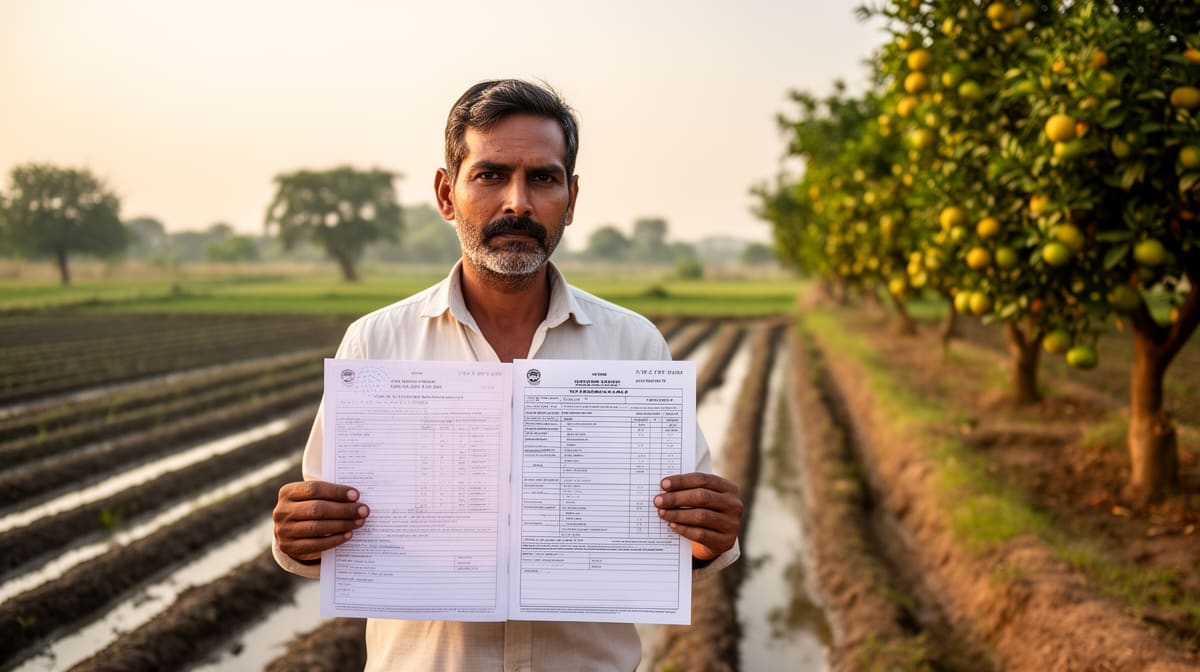
The Bombay High Court has clarified that landowners who voluntarily invoke judicial remedies under the Land Acquisition Act, 1894, cannot later claim enhanced benefits under a government resolution designed to avoid litigation. This ruling reinforces the principle that parties must choose one path to redress and cannot seek overlapping remedies.
Background & Facts
The Dispute
The petitioners, landowners whose property was acquired for the Lower Wardha Project, received an award under Section 11 of the Land Acquisition Act, 1894, on 8 January 2001. They filed a reference under Section 18 in the same year, seeking enhanced compensation. The reference court granted an enhanced award, which the petitioners accepted without further challenge.
Procedural History
- 2001: Award passed under Section 11; petitioners filed reference under Section 18
- 2001 - 2008: Compensation from reference court received; no appeal filed
- 2008: Petitioners applied for benefits under Government Resolution (G.R.) dated 15-12-1983, claiming higher compensation paid to others who did not approach courts
- 19 November 2008: Application rejected on grounds that petitioners had already availed judicial remedy
- 2010: Writ petition filed before Bombay High Court, Nagpur Bench
Relief Sought
The petitioners sought a declaration that the rejection of their G.R. claim violated Articles 14 and 19 of the Constitution, alleging discriminatory treatment between those who approached courts and those who did not.
The Legal Issue
The central question was whether a landowner who has accepted an enhanced compensation award under Section 18 of the Land Acquisition Act, 1894, remains eligible for additional benefits under a government resolution that explicitly requires a waiver of judicial recourse.
Arguments Presented
For the Petitioner
The petitioners contended that the denial of G.R. benefits amounted to arbitrary and discriminatory treatment under Article 14, as others who did not approach courts received higher compensation. They argued that the G.R. was a welfare measure and should be accessible to all affected persons regardless of prior litigation.
For the Respondent
The State countered that the G.R. dated 15-12-1983 was a voluntary scheme contingent on an undertaking not to seek judicial redress. The petitioners had knowingly opted out of this scheme by filing a reference under Section 18, thereby forfeiting eligibility. The State relied on the principle of election of remedies and the contractual nature of the undertaking required under the G.R.
The Court's Analysis
The Court examined the text and purpose of the G.R. dated 15-12-1983, noting that its objective was to expedite compensation and reduce litigation by offering a consent award in exchange for a binding undertaking not to approach any court. The Court emphasized that the scheme was not a statutory entitlement but a conditional administrative concession.
"The affected person, who wish to take benefit of G.R., is/was under obligation to submit undertaking to not approach the Court against the compensation of amount awarded."
The Court held that the petitioners’ decision to invoke Section 18 was a deliberate and informed choice to pursue judicial enhancement. Having done so, they could not later claim benefits under a scheme predicated on the renunciation of such rights. The Court rejected the Article 14 argument, observing that the distinction between those who chose litigation and those who did not was not arbitrary but rooted in the terms of the G.R. itself.
The Court further noted that the petitioners had not challenged the reference court’s award, indicating satisfaction with the outcome. To permit dual compensation would undermine the very purpose of the G.R. - to promote finality and reduce litigation.
The Verdict
The petitioners’ writ petition was dismissed. The Court held that once a landowner seeks and accepts enhanced compensation under Section 18 of the Land Acquisition Act, 1894, they are barred from claiming benefits under a government resolution that requires a waiver of judicial recourse.
What This Means For Similar Cases
Election of Remedies Is Binding
- Practitioners must advise clients that opting for judicial remedies under Section 18 forfeits eligibility for non-judicial compensation schemes
- Any application under administrative schemes must be made before initiating litigation
- Courts will not permit claimants to "cherry-pick" the most favorable remedy after the fact
Administrative Schemes Require Strict Compliance
- Government resolutions with conditions (e.g., undertakings) are enforceable as contractual obligations
- Non-compliance with conditions invalidates entitlement, even if the outcome appears unequal
- The absence of a statutory bar does not negate the binding nature of voluntary undertakings
Article 14 Does Not Override Express Conditions
- Discrimination claims under Article 14 fail where the classification is based on a legitimate, disclosed condition
- The G.R. created two distinct classes: those who waive litigation and those who do not
- The distinction is rational and directly tied to the scheme’s purpose of reducing litigation