The Supreme Court has clarified that landowners who have already received enhanced compensation under Section 28-A of the Land Acquisition Act, 1894, based on a Reference Court award, may still file a second application seeking parity with a subsequent higher award issued by the High Court. This ruling reinforces the statutory mandate of equal treatment for similarly situated landowners and overrules prior jurisprudence that restricted re-determination to the first judicial award.
Background & Facts
The Dispute
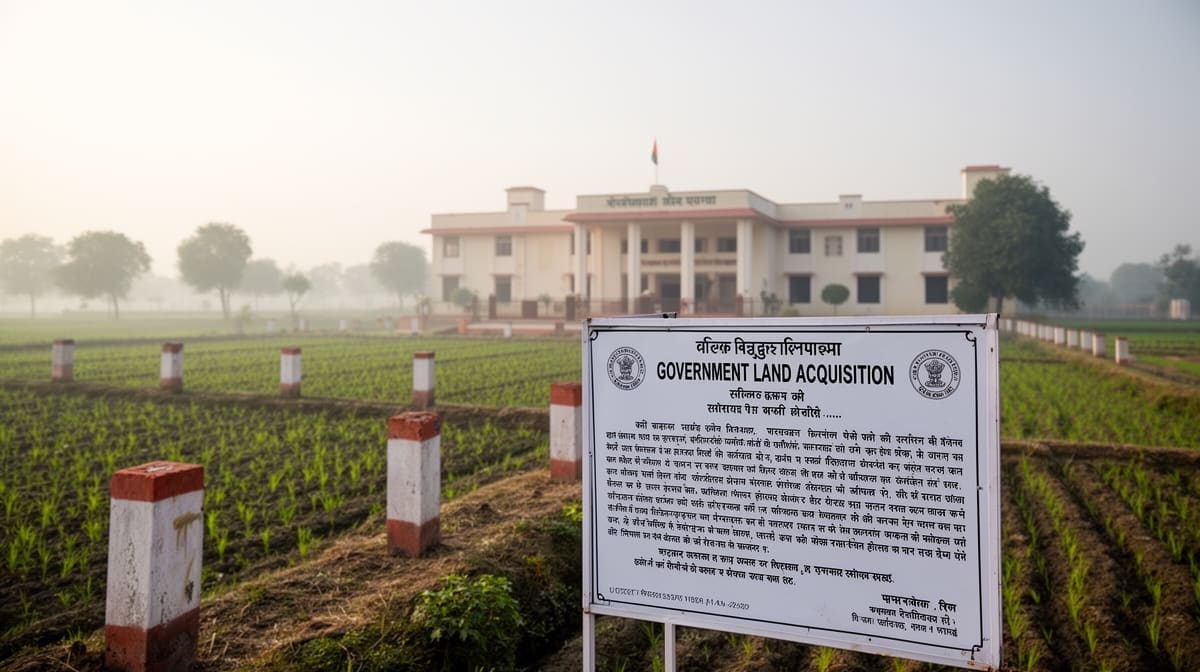
The appellants, landowners in Mavanoor Village, Hubballi Taluk, Karnataka, had their land acquired for the construction of the Hubballi-Ankola Broad Gauge Line. The acquisition proceedings were initiated under the Land Acquisition Act, 1894, with a preliminary notification issued on 18.04.2002. The Land Acquisition Officer (LAO) fixed compensation at Rs. 40,000 per acre by award dated 31.03.2003. Dissatisfied, some landowners filed references under Section 18 of the Act. The Reference Court enhanced the compensation to Rs. 2,00,000 per acre by award dated 17.11.2006.
Key Facts
- The appellants did not file a reference under Section 18 and received compensation at the LAO’s original rate of Rs. 40,000 per acre.
- On 01.02.2007, within the limitation period, the appellants filed their first application under Section 28-A seeking re-determination based on the Reference Court’s award of Rs. 2,00,000 per acre.
- Appeals were filed by both the LAO and other landowners challenging the Reference Court’s award before the High Court.
- On 02.04.2013, the LAO allowed the appellants’ first Section 28-A application and re-determined compensation at Rs. 2,00,000 per acre, based on the Reference Court’s award.
- On 22.07.2013, the High Court allowed appeals filed by other landowners and enhanced compensation further to Rs. 3,50,000 per acre in MFA Nos. 3289 and 3291 of 2007.
- On 25.11.2013, the appellants filed a second application under Section 28-A, seeking re-determination based on the High Court’s enhanced award of Rs. 3,50,000 per acre.
- The LAO rejected the second application on 30.11.2013, holding that the appellants had already accepted the earlier enhanced compensation and had not disclosed the pendency of appeals.
- The Single Judge of the Karnataka High Court quashed the rejection order and directed re-determination.
- The Division Bench reversed the Single Judge’s order, relying on Ramsingbhai Jerambhai v. State of Gujarat (2018), holding that Section 28-A applies only to awards of the Reference Court and not appellate judgments.
Procedural History
- 18.04.2002: Preliminary notification issued under Section 4(1) of the Land Acquisition Act, 1894
- 31.03.2003: LAO’s award of Rs. 40,000 per acre
- 17.11.2006: Reference Court award of Rs. 2,00,000 per acre
- 01.02.2007: First Section 28-A application filed by appellants
- 06.08.2012: High Court dismissed LAO’s appeals
- 02.04.2013: LAO allowed first Section 28-A application; compensation set at Rs. 2,00,000 per acre
- 22.07.2013: High Court enhanced compensation to Rs. 3,50,000 per acre in MFA Nos. 3289 and 3291 of 2007
- 25.11.2013: Second Section 28-A application filed by appellants
- 30.11.2013: LAO rejected second application
- 2013 - 2021: Writ petitions and appeals before Karnataka High Court
- 2023: Division Bench of Karnataka High Court dismissed appellants’ writ petition
- 25.03.2026: Supreme Court judgment
Relief Sought
The appellants sought: (1) setting aside of the Division Bench’s judgment dated 2023; (2) setting aside of the LAO’s rejection order dated 30.11.2013; (3) re-determination of compensation at Rs. 3,50,000 per acre; and (4) payment of the differential amount with interest.
The Legal Issue
The central question was whether Section 28-A of the Land Acquisition Act, 1894 permits a landowner to file a second application for re-determination of compensation based on an enhanced award passed by the High Court, after having already received compensation under a prior Section 28-A order based on the Reference Court’s award.
Arguments Presented
For the Appellants
The appellants’ counsel argued that Section 28-A is a beneficent provision designed to eliminate inequality among similarly placed landowners, as explicitly stated in the Statement of Objects and Reasons. They relied on Union of India v. Pradeep Kumari (1995), which held that the term “award” in Section 28-A includes any award passed by the Court under Part III, regardless of whether it is the first or subsequent one. They further contended that the doctrine of merger applies: once the High Court enhances compensation, the Reference Court’s award is subsumed, and the appellate award becomes the only operative decree. They also cited Banwari v. Haryana SIIDC (2024), which held Ramsingbhai Jerambhai per incuriam for failing to consider Pradeep Kumari. They emphasized that the Collector was aware of the pending appeals and that the appellants’ second application was filed within limitation.
For the Respondents
The respondents, represented by the Additional Solicitor General and senior counsel, relied on Ramsingbhai Jerambhai (2018), which held that Section 28-A applies only to awards of the Reference Court as defined under Section 3(d) - a principal Civil Court of original jurisdiction. They argued that appellate judgments under Section 54 are not “awards under Part III” and that allowing multiple applications would lead to endless litigation. They also contended that the appellants had already accepted the earlier enhanced compensation, thereby waiving any further claim, and that Pradeep Kumari only permitted one application per acquisition, not successive applications based on appellate awards.
The Court's Analysis
The Supreme Court undertook a comprehensive analysis of Section 28-A, Section 3(d), and Section 54 of the Land Acquisition Act, 1894, alongside binding precedents. The Court emphasized that the legislative intent behind Section 28-A is to ensure parity among landowners, particularly those who are inarticulate or economically disadvantaged and unable to pursue references under Section 18.
"The object of the Act is to remove inequality in the payment of compensation for same or similar quality of land arising on account of inarticulate and poor people not being able to take advantage of the right of reference to the civil court under Section 18 of the Act."
The Court held that the term “Court” in Section 28-A must be interpreted in light of the doctrine of merger, which holds that an appellate decree supersedes and merges the decree of the court below. Once the High Court enhances compensation under Section 54, the Reference Court’s award ceases to exist as a binding operative order. To deny re-determination on the basis of the appellate award would render Section 28-A ineffective and defeat its beneficent purpose.
The Court explicitly overruled Ramsingbhai Jerambhai (2018) as per incuriam, noting that it failed to consider Pradeep Kumari (1995) and the Statement of Objects and Reasons. The Court clarified that Pradeep Kumari’s restriction to one application applies only when multiple awards are issued by the Reference Court - not when a subsequent award is issued by the High Court. The Court further held that the mere receipt of compensation under a prior Section 28-A order does not constitute waiver or estoppel, as the statutory right to parity is not subject to personal acquiescence.
The Court also rejected the argument that appellate courts fall outside the ambit of “Court” under Section 28-A, noting that Section 54 explicitly refers to appeals from the “Court,” thereby recognizing appellate courts as part of the same adjudicatory hierarchy. The Court concluded that the statutory scheme contemplates a single, final, and highest award as the basis for re-determination.
The Verdict
The appellants succeeded. The Supreme Court set aside the judgment of the Division Bench of the Karnataka High Court and the LAO’s order dated 30.11.2013. The Court directed the respondents to re-determine the compensation payable to the appellants at Rs. 3,50,000 per acre, based on the High Court’s award dated 22.07.2013 in MFA Nos. 3289 and 3291 of 2007. The respondents were directed to complete this re-determination within eight weeks from the date of receipt of a copy of this judgment. The appeals were allowed with no order as to costs.
What This Means For Similar Cases
Re-Determination Is Not Limited to the First Award
- Practitioners must now argue that any enhanced award - whether from a Reference Court or an Appellate Court - triggers a fresh right to re-determination under Section 28-A, provided the application is filed within three months of the award.
- A prior Section 28-A application based on a lower award does not extinguish the right to seek parity with a subsequent higher appellate award.
- The doctrine of merger ensures that the appellate award is the only operative decree, and thus the only valid basis for re-determination.
Collector Must Await Final Appellate Decisions
- The Collector/LAO must stay re-determination proceedings if appeals against the Reference Court’s award are pending, as held in Babua Ram and Bharatsing.
- If the Collector proceeds prematurely and grants compensation based on a non-final award, the landowner retains the right to seek re-determination upon the final appellate judgment.
- This creates a two-stage compliance obligation: first, to await finality; second, to re-evaluate upon final award.
Per Incuriam Doctrine Now Applies to Section 28-A Jurisprudence
- Ramsingbhai Jerambhai (2018) is no longer binding precedent and must be disregarded in all future proceedings.
- Courts and tribunals must apply Pradeep Kumari (1995) and Banwari (2024) as the authoritative interpretation of Section 28-A.
- Advocates should cite Banwari to challenge any reliance on Ramsingbhai in pending or future Section 28-A applications.