The Karnataka High Court has reaffirmed that conviction under the Karnataka Excise Act requires rigorous proof of seizure, measurement, and independent corroboration. Where the prosecution fails to produce physical evidence, record quantities, or secure reliable witness testimony, acquittal is not only justified but mandated by the principles of reasonable doubt.
Background & Facts
The Dispute
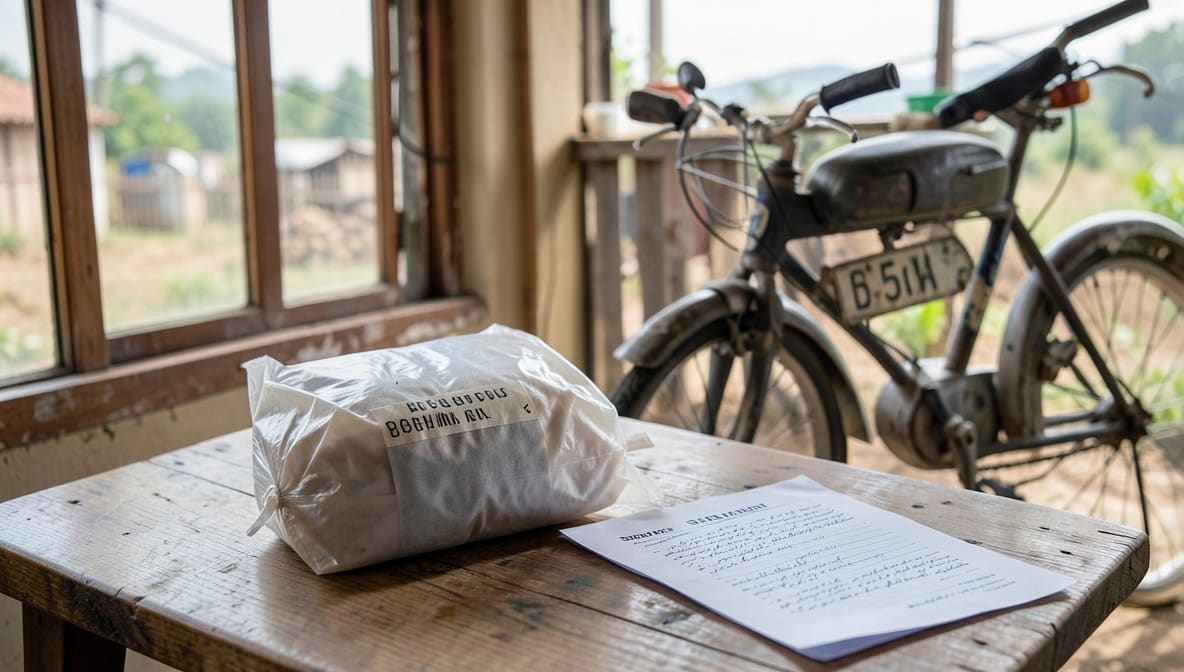
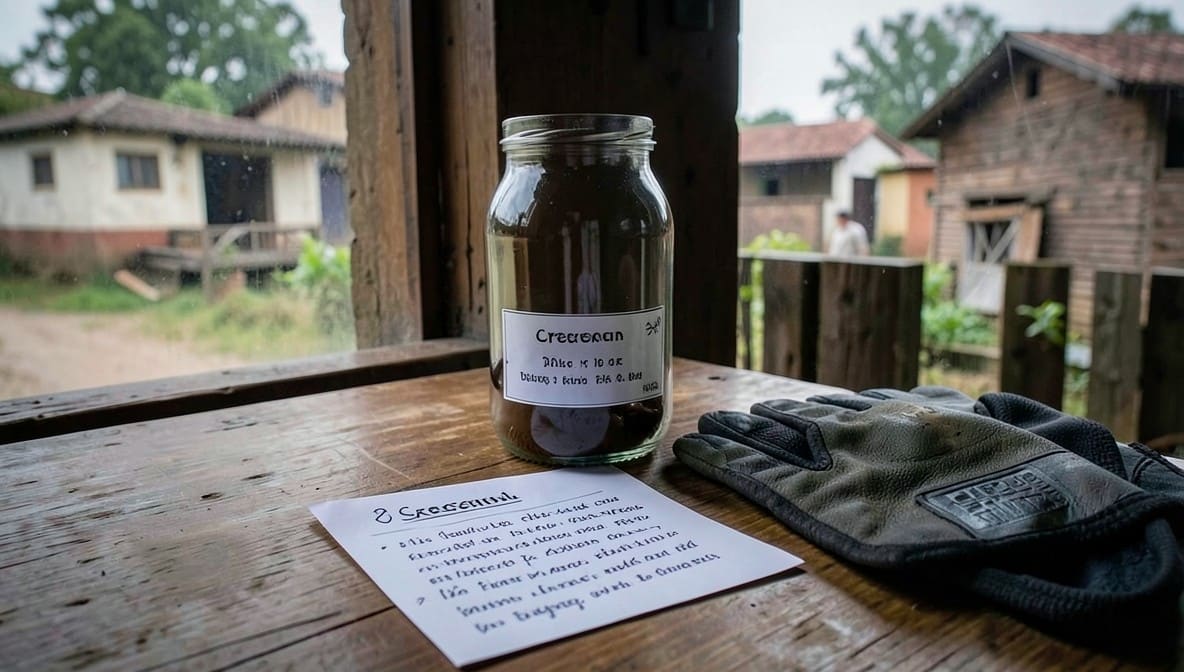
The case arose from the alleged illegal possession of illicit liquor and fermentation materials by K.M. Mohan Kumar @ Devaraju at a coffee land in Kyanahalli Village, Hassan District. The State alleged that on 22.02.2011, at approximately 12:30 noon, police raided the location and seized 30 litres of illicit liquor in an aluminium vessel and 25 litres of jaggery fermentation in 10 plastic pots, intended for the manufacture and sale of illicit liquor, posing a public health risk.
Key Facts
- The raid was conducted by P.W.1 (Sub-Inspector) and P.W.4 (Head Constable), who also registered the FIR and conducted the investigation.
- Two panch witnesses, P.W.2 and P.W.3, were present at the time of seizure but later turned hostile during trial.
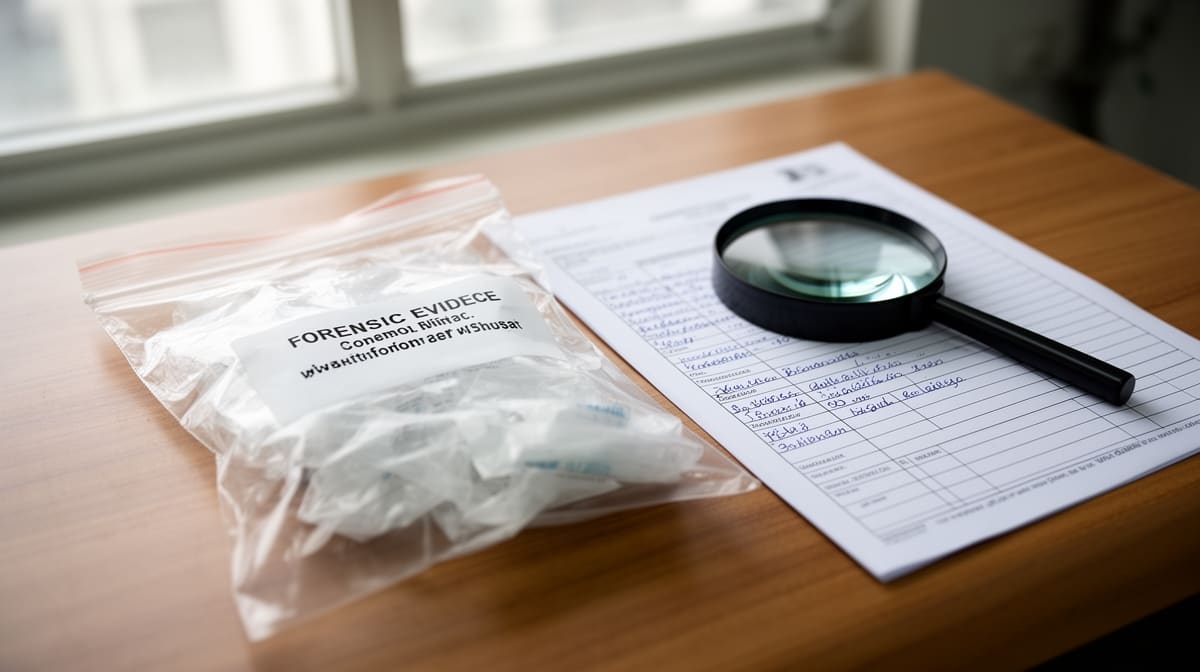
- The prosecution marked two sample bottles as M.O.1 and M.O.2, but both P.W.1 and P.W.4 admitted under cross-examination that:
- No measurement of the seized liquor or fermentation was conducted at the spot.
- The actual seized materials were not produced in court.
- The sample bottles contained no liquid and were identical to common commercial bottles available everywhere.
- The colour of the containers was not recorded in the mahazar.
- The accused did not lead any defence evidence but challenged the prosecution’s case on evidentiary grounds.
Procedural History
- 22.02.2011: Raid and seizure conducted at Kyanahalli Village.
- 23.02.2011: FIR registered by P.W.4 (Head Constable).
- 15.07.2011: Charge sheet filed in C.C. No. 628/2011.
- 01.02.2014: Trial Court (Civil Judge and JMFC, Sakaleshpura) convicted the accused under Section 13(1)(a)(f) read with Sections 32(1) and 38(A) of the Karnataka Excise Act and Sections 272 and 273 IPC, sentencing him to 2 years rigorous imprisonment.
- 01.02.2016: Appellate Court (III Additional District and Sessions Judge, Hassan) allowed the accused’s appeal (Crl.A. No. 102/2014) and acquitted him, while dismissing the State’s appeal (Crl.A. No. 129/2014) challenging the sentence as inadequate.
- 28.03.2017: State filed Criminal Revision Petition No. 332/2017 under Sections 397 and 401 CrPC.
- 28.03.2017: State filed Criminal Appeal No. 437/2017 under Section 378(1) and (3) CrPC seeking leave to appeal against acquittal.
- 09.06.2026: Final hearing before the Karnataka High Court.
Relief Sought
The State sought: (1) setting aside the acquittal order dated 01.02.2016; (2) restoration of the conviction and sentence; and (3) enhancement of punishment to the maximum permissible under the Karnataka Excise Act.
The Legal Issue
The central question was whether the prosecution’s failure to produce seized contraband, record measurements, secure independent corroboration, and resolve contradictions in the testimony of investigating officers rendered the conviction unsustainable under the standard of proof beyond reasonable doubt.
Arguments Presented
For the Appellant/Petitioner
The State, through the High Court Government Pleader, relied on Bhaskar Ramappa Madar v. State of Karnataka (2009) 11 SCC 690, arguing that there is no legal bar to a complainant also acting as the investigating officer. It contended that the Appellate Court erred in treating the dual role of P.W.4 as fatal to the prosecution case, and that the Appellate Court’s reliance on procedural lapses ignored the credibility of the core evidence. The State argued that the Trial Court’s conviction was based on a proper appreciation of P.W.1 and P.W.4’s testimony, and that the Appellate Court substituted its own view without legal basis.
For the Respondent/State
The accused’s counsel argued that the prosecution’s case was fundamentally defective: no physical evidence was produced, no measurements were recorded, and the only witnesses were the investigating officers themselves, whose testimonies were mutually contradictory on key facts (e.g., number of persons present at the raid: 8 vs. 5). The panch witnesses turned hostile and no independent corroboration existed. The sample bottles were empty and indistinguishable from common containers. The counsel emphasized that the Appellate Court correctly applied the principle that when the prosecution’s version is riddled with material contradictions and lacks physical proof, the benefit of doubt must go to the accused.
The Court's Analysis
The Court undertook a meticulous review of the evidence, focusing on the foundational requirements for proving possession of illicit liquor under the Karnataka Excise Act. It noted that while Bhaskar Ramappa Madar permits a complainant to conduct investigation, it does not absolve the prosecution of its burden to prove the case beyond reasonable doubt.
"The very seizure is not proved by examining the independent witnesses. This Court has to take note of that the very evidence of P.W.1 and P.W.4... not inspires the confidence of the Court to rely upon the same for conviction."
The Court highlighted the irreconcilable discrepancies between P.W.1 and P.W.4 regarding the number of persons present during the raid, the absence of any measurement of the seized materials, and the non-production of the actual contraband. The sample bottles (M.O.1 and M.O.2) were admitted to be empty and commercially available, rendering them useless as proof of quantity or content.
The Court further observed that the turning hostile of the panch witnesses, without any useful cross-examination to salvage their testimony, left the prosecution without independent corroboration. The Trial Court’s failure to critically assess the reliability of the investigating officers - whose dual role as complainant and investigator created an inherent conflict - was a critical oversight.
The Appellate Court’s re-appreciation of evidence was not a substitution of opinion but a lawful exercise of appellate jurisdiction to correct a manifest error in the Trial Court’s reasoning. The Court held that the prosecution’s case, as presented, was inherently unreliable and failed to meet the threshold of proof required for criminal conviction.
The Verdict
The Criminal Revision Petition No. 332/2017 and Criminal Appeal No. 437/2017 were dismissed. The acquittal of the accused, dated 01.02.2016, was upheld. The Court confirmed that the prosecution’s failure to produce seized materials, record measurements, or secure independent witness testimony rendered the conviction unsustainable. No sentence enhancement or retrial was ordered.
What This Means For Similar Cases
Seizure Without Measurement Is Not Enough
- Practitioners must ensure that in all excise cases, the mahazar records exact quantities, and the actual seized materials are produced in court.
- Sample bottles alone, especially if empty or unmarked, are insufficient to prove the nature or volume of contraband.
Investigating Officer as Complainant Requires Extra Scrutiny
- While not illegal, the dual role of the investigating officer as complainant demands heightened judicial scrutiny.
- Courts must examine whether the investigation is tainted by bias or procedural shortcuts, especially when independent witnesses are absent or hostile.
Hostile Panch Witnesses Cannot Be Ignored
- When panch witnesses turn hostile and no useful evidence is extracted, the prosecution’s case collapses unless corroborated by other independent evidence.
- Courts must not rely solely on the testimony of interested police officers in the absence of neutral corroboration.
Procedural Lapses Are Not Minor
- Failure to measure, record container colour, or preserve physical evidence are not technicalities - they go to the root of the prosecution’s ability to prove its case.
- Such lapses, when cumulative, create reasonable doubt sufficient for acquittal under Section 101 of the Evidence Act.