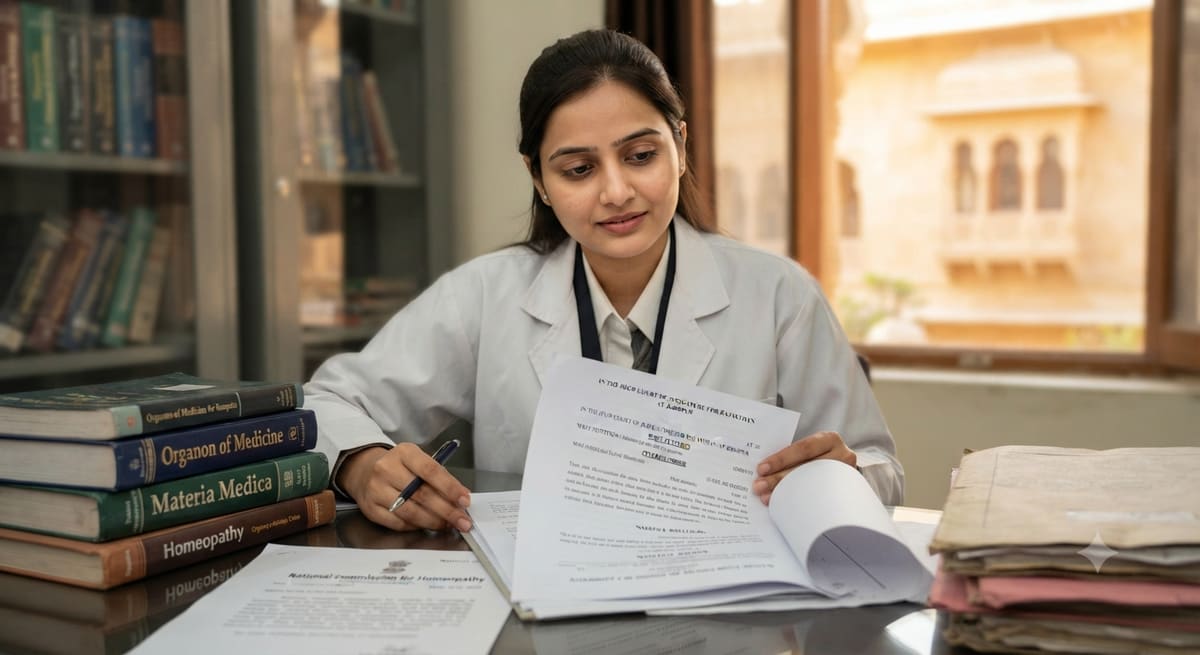
The Kerala High Court has reaffirmed a foundational principle of constitutional litigation: courts cannot grant the final relief sought in a writ petition through an interim order, even if the petitioner’s case appears compelling on its face. This judgment clarifies the limits of judicial intervention in administrative processes governed by statutory timelines and procedural rules.
Background & Facts
The Dispute
The petitioner, Malavika Suresh, a 19-year-old aspirant from Ernakulam, Kerala, failed to remit the examination fee for the National Eligibility cum Entrance Test (UG) 2026 [NEET(UG)-2026] within the stipulated deadline. The National Testing Agency (NTA), the conducting body, closed the payment portal on 20.03.2026. The petitioner sought to have the payment option reactivated specifically for her, to enable her to appear in the examination scheduled for 03.05.2026.
Key Facts
- NEET(UG)-2026 registration and fee payment window closed on 20.03.2026 as per Annexure R2(a) of the official prospectus
- The petitioner did not complete payment before the deadline
- No extension was granted to her or any other candidate beyond the published timeline
- The petitioner filed W.P.(C) No. 11517 of 2026 on 23.03.2026, invoking Article 226 of the Constitution
- The petition sought a writ of mandamus directing NTA, Union of India, and National Medical Commission to reactivate the payment portal for her alone
- The interim relief sought was immediate reactivation of the payment option pending final disposal
Procedural History
- 20.03.2026: NEET(UG)-2026 fee payment portal closed as per official schedule
- 23.03.2026: Writ petition filed before the Kerala High Court
- 24.03.2026: Single Judge directed NTA to file a counter statement with annexures
- 30.03.2026: NTA filed counter statement with Annexures R2(a) to R2(j), including the prospectus and payment guidelines
- 30.03.2026: Single Judge passed interim order directing NTA to reopen the payment portal for the petitioner alone on a date to be intimated to her
- 30.03.2026: Counter statement filed on the same day as the interim order
- 07.04.2026: Writ appeal filed by NTA challenging the interim order
The Parties' Positions
For the Petitioner
The petitioner contended that she had attempted payment before the deadline but encountered technical glitches on the NTA portal. She argued that denial of opportunity to appear in NEET(UG)-2026 would cause irreparable harm to her career prospects and violate her right to education under Article 21 of the Constitution.
For the Respondents (NTA, Union of India, NMC, State of Kerala)
The respondents argued that the NEET(UG)-2026 prospectus clearly stipulated a non-extendable deadline for payment. Allowing an exception for one candidate would violate the principle of equal treatment, disrupt the examination process, and set a precedent for arbitrary exceptions. They relied on Annexure R2(a), which explicitly stated that no requests for extension would be entertained.
Relief Sought
The petitioner sought:
- Reactivation of the payment portal for her alone
- Permission to remit the NEET(UG)-2026 examination fee
- Permission to appear in the examination scheduled for 03.05.2026
- Interim relief pending final disposal of the writ petition
The Legal Issue
Can a writ court grant the final relief sought in a petition - namely, permitting a candidate to pay a fee after the deadline and appear in a nationwide examination - through an interim order, without adjudicating the merits or considering the impact on other candidates and the integrity of the examination system?
Arguments Presented
For the Appellant/Petitioner
The appellant, NTA, argued that the interim order dated 30.03.2026 effectively granted the final relief sought in the writ petition. It directed the NTA to reopen the portal for the petitioner alone, thereby circumventing the statutory and procedural framework governing NEET(UG)-2026. The appellant relied on State of U.P. v. Ram Sukhi Devi and other Supreme Court precedents to argue that interim orders must not anticipate final outcomes. The NTA emphasized that the prospectus was binding on all candidates and that exceptions would undermine fairness and administrative discipline.
For the Respondent/Petitioner
The petitioner’s counsel reiterated that the petitioner had made a genuine attempt to pay before the deadline and faced technical difficulties. They argued that the right to pursue medical education under Article 21 outweighed procedural rigidity. They contended that the interim order was a proportionate remedy to prevent irreparable injury and that the court’s intervention was justified under the doctrine of equitable relief.
The Court's Analysis
The Division Bench of the Kerala High Court, comprising Justices Anil K. Narendran and Murali Krishna S., conducted a rigorous review of the interim order and its legal implications. The Court observed that the interim direction issued on 30.03.2026 was not a temporary measure to preserve the status quo, but a direct grant of the principal relief sought in the writ petition: permitting the petitioner to pay the fee and appear in NEET(UG)-2026.
"The position is worsened if the interim direction has been passed with stipulation that the applicable Government order has to be ignored. Time and again the Apex Court has deprecated the practice of granting interim orders, which practically give the principal relief sought in the petition, for no better reason than that of a prima facie case having been made out, without being concerned about the balance of convenience, the public interest and a host of other considerations."
The Court cited State of U.P. v. Ram Sukhi Devi and a series of Supreme Court judgments - including CCE v. Dunlop India Ltd., State of Rajasthan v. Swaika Properties, and Dr. Bharat Bhushan Sonaji Kshirsagar v. Abdul Khalik Mohd. Musa - to underscore that a prima facie case alone is insufficient to justify granting final relief at the interim stage. The Court emphasized that such orders must consider the balance of convenience, public interest, and the potential for irreparable harm to third parties.
The Bench further relied on its own recent decision in State of Kerala v. Pradeepkumar A.V., where it had set aside an interim order directing implementation of a pay scale recommendation before final adjudication. The Court held that the Single Judge had failed to articulate any basis for overriding the prospectus, nor had it considered the cascading consequences of granting an exception to one candidate among over 20 lakh applicants.
The Court noted that the counter statement had already been filed on the same day as the interim order, indicating that the matter was ripe for adjudication on merits. The failure to hear arguments on the substantive issues before granting the relief rendered the order legally unsustainable.
The Verdict
The writ appeal is allowed. The interim order dated 30.03.2026 passed by the Single Judge in W.P.(C) No. 11517 of 2026 is set aside. The petitioner is not permitted to pay the NEET(UG)-2026 fee or appear in the examination scheduled for 03.05.2026. The legal and factual contentions raised by both parties remain open for adjudication in the pending writ petition. The petitioner may seek expeditious hearing of the writ petition before the Single Judge, with the counter statement dated 30.03.2026 already on record.
What This Means For Similar Cases
Interim Relief Must Not Prejudice Final Outcome
- Practitioners must avoid seeking or arguing for final relief through interim applications in writ petitions
- Courts will not permit exceptions to statutory deadlines in high-stakes examinations unless the case demonstrates exceptional, documented hardship beyond mere technical failure
- Any interim order granting substantive relief without balancing public interest is liable to be vacated
Procedural Compliance Is Non-Negotiable in National Examinations
- Published prospectuses with clear deadlines are binding on all candidates
- Technical glitches alone, without corroborating evidence (e.g., screenshots, error logs, support tickets), are insufficient to justify deviation from timelines
- Administrative bodies are entitled to enforce uniform rules to ensure fairness and integrity in large-scale examinations
Judicial Restraint in Educational Admissions
- Courts must resist the temptation to act as administrative regulators in examination systems
- The principle of equal treatment under Article 14 demands uniform application of rules
- Remedies for missed deadlines must be sought through administrative channels or future cycles, not through judicial override