The Uttarakhand High Court has reaffirmed that administrative authorities cannot cancel critical educational approvals without affording a fair hearing, reinforcing the foundational principle of natural justice in regulatory actions affecting educational institutions. This ruling has immediate implications for nursing colleges, medical institutions, and other regulated entities facing sudden revocation of statutory permissions.
Background & Facts
The Dispute
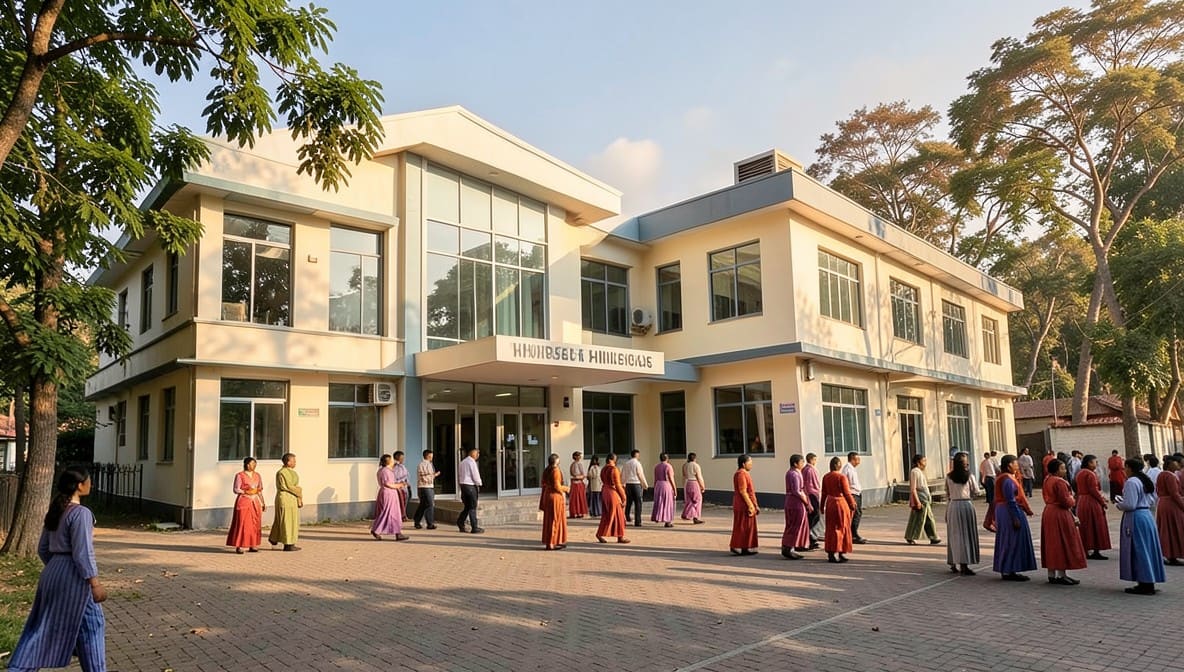
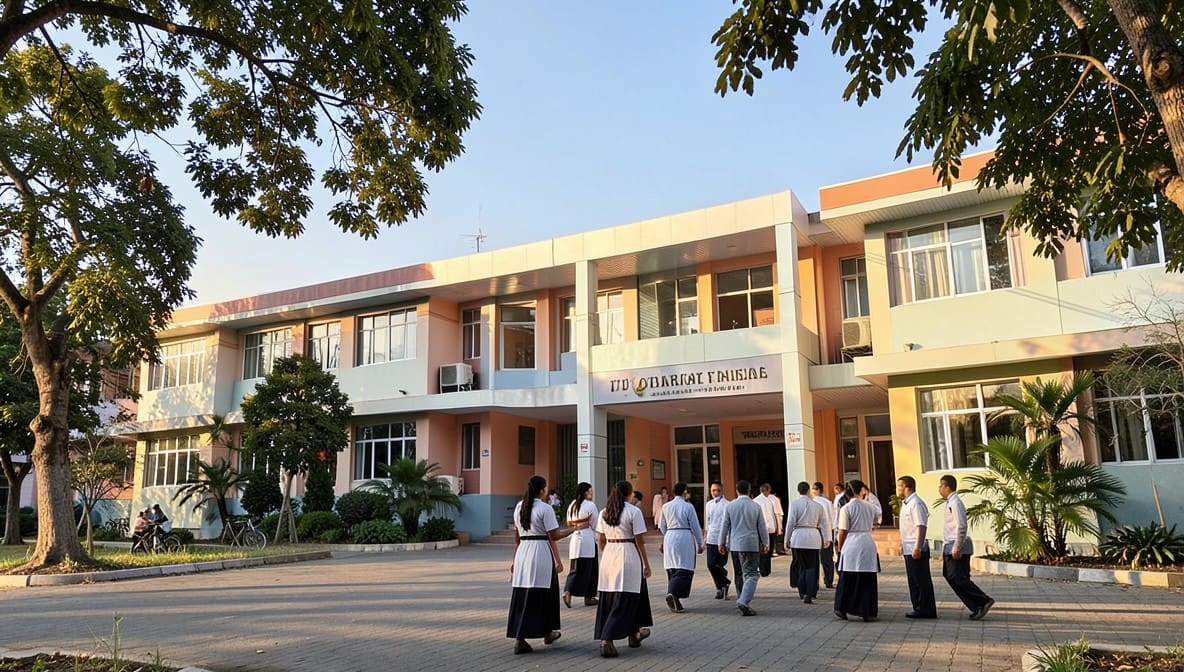
The petitioners, Prithviraj Chauhan College of Nursing, operate a private nursing college offering B.Sc. Nursing and General Nursing and Midwifery (GNM) courses. On 28.11.2025, Respondent No.1, the State of Uttarakhand, issued an Essentiality Certificate to the college, a mandatory prerequisite under the Indian Nursing Council Act, 1947, for establishing and running nursing programs. On the same date, Respondent No.2, H.N.B. Garhwal Medical Education University, granted affiliation to the college based on this certificate.
Key Facts
- The college admitted 45 students to the GNM course and 45 students to the B.Sc. Nursing course for the academic year 2025-26.
- A complaint was lodged by Mr. Mahesh Singh alleging that the college did not possess a permanent building at the location specified in the Essentiality Certificate application.
- An inspection was conducted by the State authorities on 22.12.2025.
- On 27.04.2026, Respondent No.1 issued an order (Annexure No.5) cancelling the Essentiality Certificate dated 28.11.2025.
- On 04.05.2026, Respondent No.2 issued a communication (Annexure No.7) refusing to open the university portal for the college’s students, effectively barring them from appearing in examinations.
- The petitioners were not provided with a copy of the complaint, nor were they given any opportunity to be heard before the cancellation order was passed.
- The college asserts it has a permanent building at Barkhera Rajput, Kashipur, District Udham Singh Nagar, where it has been functioning since inception.
Procedural History
- 28.11.2025: Essentiality Certificate issued by State of Uttarakhand (Respondent No.1)
- 28.11.2025: Affiliation granted by H.N.B. Garhwal Medical Education University (Respondent No.2)
- 22.12.2025: Inspection conducted by State authorities
- 27.04.2026: Essentiality Certificate cancelled by Respondent No.1 without notice or hearing
- 04.05.2026: University refused portal access to students of the college
- 08.05.2026: Writ Petition Misc. Single No. 1283 of 2026 filed before the Uttarakhand High Court
Relief Sought
The petitioners sought:
- Quashing of the order dated 27.04.2026 cancelling the Essentiality Certificate
- Quashing of the communication dated 04.05.2026 denying portal access
- Restoration of the Essentiality Certificate and all affiliations
- Permission to allow current students to appear in examinations
- Direction to Respondent No.4 (Indian Nursing Council) to provide user ID and password for GNM enrolments
The Legal Issue
The central question was whether an administrative authority may cancel an Essentiality Certificate, which directly affects students’ right to education and institutional viability, without providing a copy of the complaint or affording a reasonable opportunity of hearing.
Arguments Presented
For the Petitioner
Learned senior counsel for the petitioners argued that the cancellation of the Essentiality Certificate was a drastic administrative action with severe consequences, including the disruption of academic sessions and denial of examination rights to 90 students. He emphasized that the principles of audi alteram partem were violated because: (i) no show-cause notice was issued; (ii) no copy of the complaint was furnished; and (iii) no opportunity was given to present the college’s case or rebut the allegations. He cited State of U.P. v. Mohd. Noor and K. S. Puttaswamy v. Union of India to underscore that procedural fairness is integral to administrative action affecting rights.
For the Respondent
The learned D.A.G. for the State contended that the inspection revealed that the building at the declared location was under construction and that the college had previously represented a different location. He argued that the State had a duty to ensure compliance with infrastructure norms and that the cancellation was justified on substantive grounds. However, he did not dispute that no hearing was afforded, nor did he cite any statutory provision permitting ex parte cancellation.
The Court's Analysis
The Court conducted a meticulous review of the impugned orders and the record. It noted that the order dated 27.04.2026 contained no reference to any hearing, no mention of representations made by the petitioner, and no indication that the petitioner’s version of facts was considered. The Court observed that the Essentiality Certificate is not a mere administrative formality but a statutory gateway to legal operation of a nursing college under the Indian Nursing Council Act, 1947, and the U.P. Nursing Council Regulations.
"It is nowhere reflected that petitioners’ point of view and case have been considered by respondent No.1 while passing the order, as it nowhere stated that petitioner was heard and given any show-cause notice."
The Court held that the failure to provide notice and hearing rendered the order legally unsustainable. It emphasized that even if the allegations in the complaint were true, the principle of natural justice cannot be bypassed. The Court distinguished between substantive merits and procedural compliance, stating that the latter is non-negotiable. It further noted that the subsequent refusal by the University to open the portal was directly consequential to the unlawful cancellation and could not stand independently.
The Court rejected the State’s argument that the building was under construction as justification for ex parte action, holding that such issues must be addressed through a fair process, not unilateral revocation.
The Verdict
The writ petition was allowed. The impugned orders dated 27.04.2026 (cancelling the Essentiality Certificate) and 04.05.2026 (denying portal access) are quashed. The Essentiality Certificate dated 28.11.2025 is restored. Respondent No.1 is directed to conduct a fresh inspection and decide the complaint made by Mr. Mahesh Singh only after providing the petitioners with a copy of the complaint and a reasonable opportunity of hearing. Respondent No.2 is directed to immediately open the university portal for the petitioners’ students to appear in examinations. Respondent No.4 is directed to provide user ID and password for GNM enrolments within seven days. All students admitted in the academic year 2025-26 shall be permitted to complete their courses and appear in examinations without prejudice.
What This Means For Similar Cases
Procedural Compliance Is Non-Negotiable
- Practitioners must now insist on procedural compliance in all cases involving cancellation of licenses, certifications, or affiliations - especially in education, healthcare, and professional regulation.
- Any administrative order that extinguishes a right without notice and hearing is void ab initio, regardless of the substantive grounds.
Consequential Actions Are Invalid Without Root Cause
- Orders that follow an unlawful primary action (e.g., denial of portal access, suspension of accreditation) are automatically invalid if the primary action is quashed on procedural grounds.
- Institutions can challenge such consequential orders even if they are issued by separate authorities.
Educational Rights Trigger Higher Procedural Scrutiny
- Courts will apply heightened scrutiny to administrative actions affecting students’ right to education under Article 21A and Article 14 of the Constitution.
- Institutions must document all infrastructure compliance and maintain records to preempt allegations; however, the burden of fair procedure remains squarely on the authority.
Actionable Takeaways for Practitioners
- Always demand a copy of the complaint and a show-cause notice before any adverse order is passed.
- File writ petitions within 30 days of receiving such orders to avoid limitation issues.
- Seek interim relief to prevent disruption of academic sessions while the matter is pending.
- Cite State of U.P. v. Mohd. Noor and Maneka Gandhi v. Union of India to reinforce the mandatory nature of natural justice.