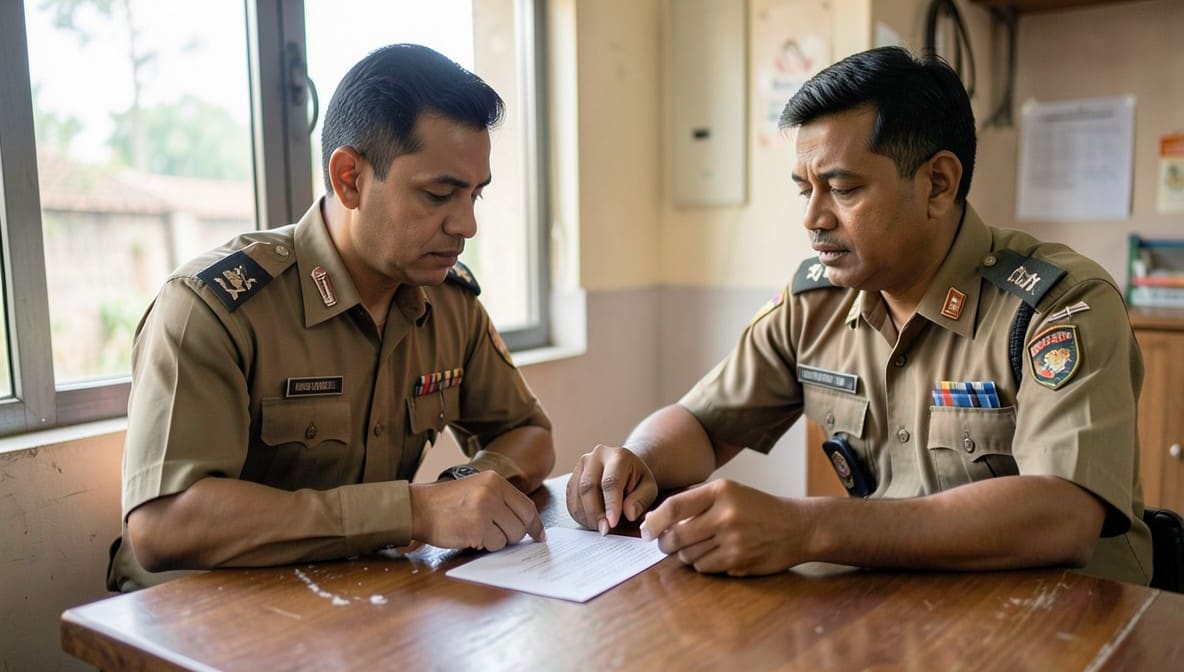
The Madhya Pradesh High Court has reaffirmed that the duty of police to conduct a fair and impartial investigation is not a formality but a constitutional imperative. When exculpatory evidence is submitted by an accused, its deliberate disregard amounts to a violation of the right to life and personal liberty under Article 21. This judgment clarifies that procedural compliance in criminal investigations is non-negotiable, especially where allegations arise from familial disputes.
Background & Facts
The Dispute
The petitioner, Yogendra Kumar Rai, was named in FIR No. 169/2025 registered at Police Station Damoh Dehat under Sections 74, 78, 115, 351(2), and 3(5) of the Bharatiya Nyaya Sanhita, 2023. The alleged offences stemmed from a civil family dispute. The petitioner consistently maintained that he was not present at the scene of the alleged incident and submitted documentary proof to substantiate his alibi.
Procedural History
- 04 March 2025: FIR registered against the petitioner without prior inquiry into his whereabouts.
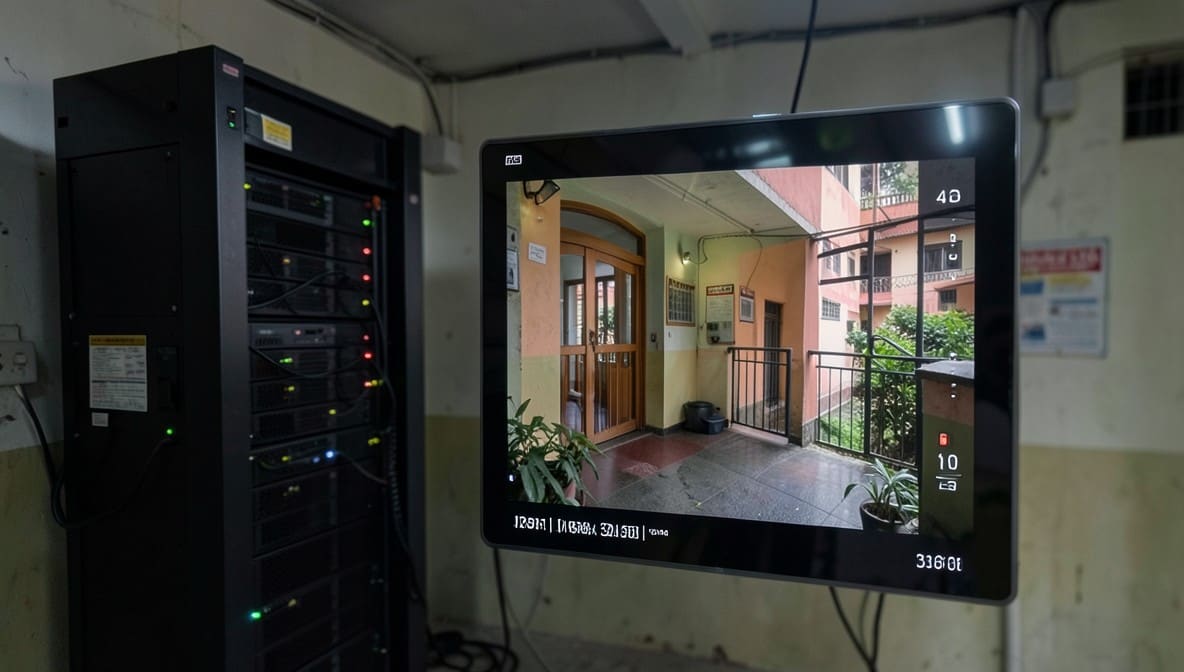
- 11 March 2025 to 17 November 2025: Petitioner submitted four written representations to police authorities, accompanied by a pen drive containing CCTV footage and other evidence establishing his absence.
- No action taken: Police failed to review, verify, or acknowledge the submitted material despite repeated requests.
- 17 December 2025: Writ petition filed under Article 226 seeking quashing of FIR or direction for fair investigation.
Relief Sought
The petitioner sought either quashing of the FIR or a mandamus directing police to conduct a fresh, impartial investigation that considers all exculpatory evidence, particularly the CCTV footage.
The Legal Issue
The central question was whether police authorities are constitutionally obligated to examine and consider exculpatory evidence submitted by an accused during the investigation stage, even before charges are framed, and whether failure to do so renders the investigation violative of Article 21.
Arguments Presented
For the Petitioner
The petitioner’s counsel relied on Arnesh Kumar v. State of Bihar and Siddharth v. State of U.P. to argue that registration of an FIR does not equate to automatic guilt. He emphasized that the submission of CCTV footage and multiple representations constituted prima facie evidence of innocence, which police are duty-bound to evaluate under Section 173(2) CrPC and the principles of natural justice. He contended that ignoring such evidence amounts to mala fide investigation and violates the right to a fair trial.
For the Respondent
The State did not contest the existence of the evidence but argued that the investigation was still in its preliminary stage and that the police were entitled to assess the credibility of the material at a later stage. No affidavit or detailed response was filed to refute the petitioner’s claims.
The Court's Analysis
The Court held that the right to a fair investigation is an integral component of Article 21. It observed that the police are not mere instruments of prosecution but guardians of justice. The Court rejected the notion that exculpatory evidence may be ignored until trial, stating that such an approach undermines the very foundation of criminal procedure.
"The duty to investigate fairly includes the obligation to consider all material, whether inculpatory or exculpatory. To disregard evidence that directly negates the allegations is to pervert the process of justice."
The Court distinguished this case from those where evidence is vague or unsubstantiated. Here, the CCTV footage was specific, time-stamped, and submitted promptly. The repeated representations demonstrated the petitioner’s good faith. The Court further noted that the Bharatiya Nyaya Sanhita, 2023, while replacing the IPC, retains the procedural safeguards under the CrPC, including the duty to record all evidence collected.
The Court emphasized that the police’s failure to act on the submitted material was not mere negligence but a systemic failure to discharge their constitutional obligation. The investigation, as conducted, was therefore tainted and could not be permitted to proceed without corrective intervention.
The Verdict
The petitioner succeeded. The Court directed the Superintendent of Police and the Station House Officer to conduct a fresh, fair, and impartial investigation, explicitly requiring them to consider the CCTV footage and all representations submitted by the petitioner. The existing FIR remains operative but must be investigated in accordance with this direction.
What This Means For Similar Cases
Exculpatory Evidence Cannot Be Ignored
- Practitioners must immediately flag any failure by police to consider alibi evidence, digital records, or written submissions in writing to the investigating officer.
- A written request for consideration of exculpatory material should be sent via registered post and retained as evidence for future writ petitions.
Fair Investigation Is a Justiciable Right
- Writ petitions under Article 226 are maintainable not only to quash FIRs but also to compel police to perform their statutory duty when they act in bad faith or with gross negligence.
- Courts will intervene where investigation is one-sided, even if the offence is non-bailable or serious.
Procedural Compliance Is Non-Negotiable
- The Bharatiya Nyaya Sanhita, 2023 does not dilute the procedural safeguards under CrPC. Police must still record all evidence collected, including defence material, under Section 173(2).
- Failure to do so may render the entire investigation inadmissible in court, regardless of the strength of the prosecution’s case.