The Madhya Pradesh High Court clarified that an insurer’s liability under a private-car comprehensive policy is confined to the statutory ceiling of Rs 1 lakh per passenger unless the policy expressly provides a higher cover, while also enhancing the claimants’ compensation to reflect true loss of dependency.
Background & Facts
The Dispute
The owner of the offending vehicle, M.P. State Mining Corporation Ltd., challenged the Motor Accident Claims Tribunal’s award that limited United India Insurance Co. Ltd.’s liability to Rs 1,00,000 per passenger. Simultaneously, the claimants - the wife, children and mother of the deceased Ravindra Shah - sought unlimited insurer liability and an enhanced compensation amount.
Key Facts
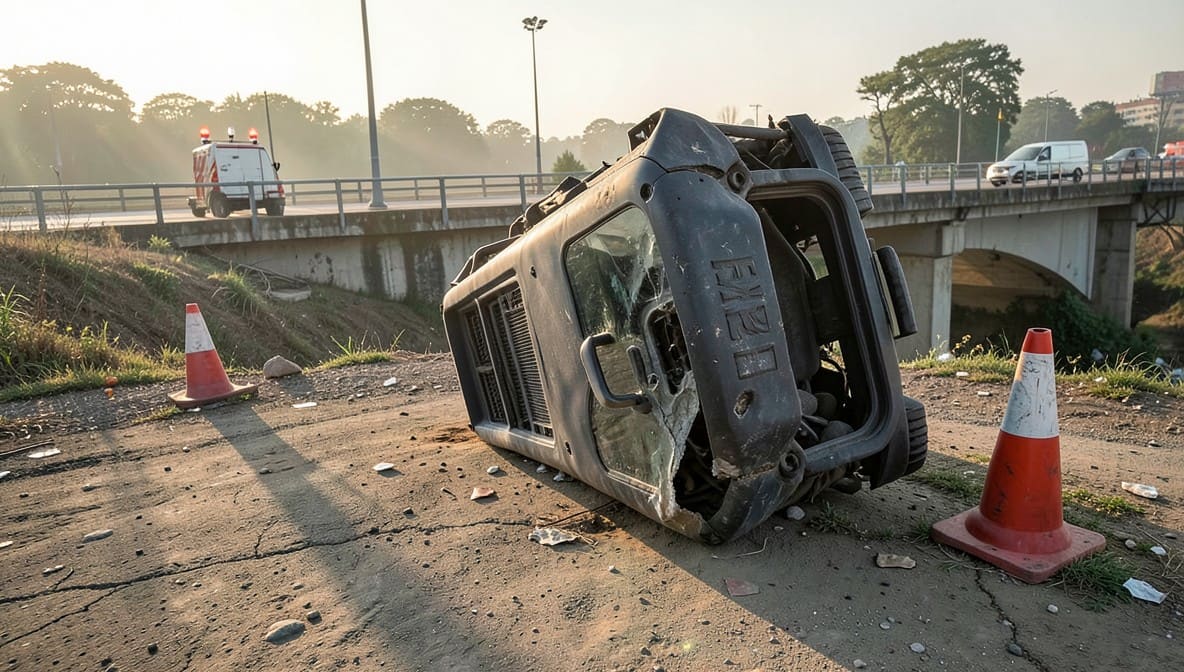
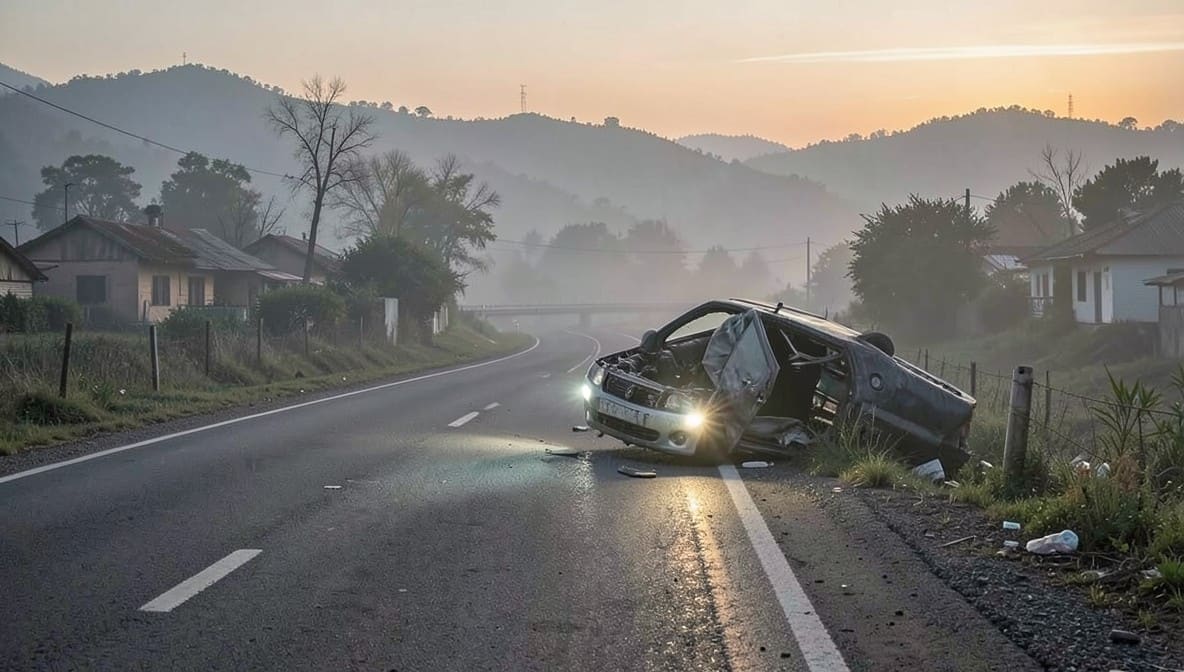
- 20/02/2012, 04:00 pm: Accident near Jatakheda Jod, Sehore; vehicle (MP-04-CF-7300) carrying Shri Govind Malu and passenger Ravindra Shah overturned; Ravindra Shah died on the spot, other passengers injured.
- FIR registered at Police Station Mandi, Sehore; charge sheet filed against driver Rishi S/o Bhabhuti (Crime No. 58/2012).
- Claim petition filed under Section 166 of the Motor Vehicles Act, 1988 by the deceased’s family seeking Rs 1,25,00,000 against driver, owner and insurer.
- 19/09/2014: Motor Accident Claims Tribunal (XIII Additional Member, Indore) awarded total compensation of Rs 28,86,616 and limited insurer liability to Rs 1,00,000 per passenger.
- Owner filed Misc. Appeal No. 2467/2014 alleging that the comprehensive policy and IRDA circulars obligate the insurer to indemnify the full liability.
- Claimants filed Misc. Appeal No. 151/2015 seeking unlimited insurer liability and enhancement of the compensation amount.
- The insurer’s policy schedule showed premium of Rs 200 covering liability of Rs 1,00,000 per passenger for four passengers.
- The Supreme Court decisions in New Indian Assurance Co. Ltd. v. C. M. Jaya (2002) and National Insurance Co. Ltd. v. Balakrishnan (2013) were cited by both sides.
- IRDA circulars dated 16/11/2009, 03/12/2009 and earlier tariff committee directives were relied upon to argue that a “comprehensive/package policy” covers occupants without limitation.
Procedural History
- 20/02/2012: Accident occurs.
- Date not specified: Claim petition filed under Section 166.
- 19/09/2014: Tribunal award passed.
- 2014: Misc. Appeal No. 2467/2014 filed by the owner.
- 2015: Misc. Appeal No. 151/2015 filed by the claimants.
- 12/08/2026: Appeals reserved.
- 19/08/2026: Judgment delivered.
Relief Sought
- Owner (appellant): Set aside the limitation of liability and hold the insurer liable for the full compensation.
- Claimants (appellants in 151/2015): Declare unlimited insurer liability and increase the compensation award to reflect actual loss of dependency, estate, funeral expenses and consortium.
The Legal Issue
The central question was whether the liability of United India Insurance Co. Ltd. is confined to the statutory ceiling of Rs 1 lakh per passenger under Section 147 of the Motor Vehicles Act and the policy schedule, or whether the insurer is obligated to pay the entire compensation because the vehicle was covered by a “comprehensive/package policy” as interpreted in the IRDA circulars and Supreme Court precedents.
Arguments Presented
For the Appellant (Owner)
- Asserted that the comprehensive policy purchased by the owner obliges the insurer to indemnify the full liability, relying on IRDA circular dated 16/11/2009 which mandates coverage of occupants under a private-car comprehensive policy.
- Cited New Indian Assurance Co. Ltd. v. C. M. Jaya and National Insurance Co. Ltd. v. Balakrishnan stating that higher premium leads to higher liability.
- Contended that the tribunal erred in treating the policy as an “Act Policy” and ignored the statutory direction that a comprehensive policy should cover unlimited risk.
For the Respondent (Insurer)
- Emphasised that the policy schedule expressly limited liability to Rs 1,00,000 per passenger, with a premium of Rs 200 paid only for that coverage.
- Relied on Section 95(2) of the Motor Vehicles Act and the statutory limit of Rs 1 lakh for third-party risk.
- Argued that IRDA circulars are not self-executing; they merely clarify that higher coverage is possible only if the policy terms reflect a higher premium, which was absent here.
- Submitted that the claimants had not proved payment of any additional premium to expand coverage.
The Court's Analysis
The Court began by affirming the principle that insurer liability is governed by the terms of the insurance contract and that statutory limits under Section 95 apply unless the policy expressly provides a higher cover. It observed that the policy in question was a “comprehensive/package policy” but only the schedule of premium disclosed a liability of Rs 1,00,000 per passenger, supported by a premium of Rs 200. The Court quoted:
"The liability of the insurer will depend upon the terms of the insurance policy and only by mentioning the policy as Comprehensive / Package Policy in itself will not cover the unlimited risk of the passenger in a vehicle." The Court distinguished the Supreme Court precedents, noting that those decisions hinged on the fact that a higher premium had been paid, thereby expanding the insurer’s exposure. Here, no such premium was evidenced. Consequently, the IRIRDA circulars, while persuasive, could not override the explicit contractual limitation. Regarding the claimants’ entitlement to enhanced compensation, the Court applied the standard dependency multiplier (11) to the deceased’s actual salary of Rs 31,382 per month, added a 15 % future prospects uplift, and incorporated loss of estate, funeral expenses and consortium as per Pranay Sethi guidelines. This yielded an enhancement of Rs 8,76,217, bringing the total award to Rs 37,62,833. The Court also upheld the tribunal’s interest rate of 6 % and ordered that the owner and driver bear the costs of the appeal.
The Verdict
The appeal filed by M.P. State Mining Corporation Ltd. (Misc. Appeal 2467/2014) is dismissed. The appeal filed by the claimants (Misc. Appeal 151/2015) is partly allowed: the compensation award is enhanced by Rs 8,76,217 to a total of Rs 37,62,833; the insurer’s liability remains capped at Rs 1,00,000 per passenger; interest at 6 % is to accrue from the date of the tribunal award; the owner and driver shall pay the costs of the appeal; all other terms of the tribunal award stand.
What This Means For Similar Cases
Policy Terms Govern Insurer Liability
- Practitioners must scrutinise the schedule of premium and any endorsements before asserting unlimited liability.
- An IRDA circular alone cannot expand coverage; the contract must expressly provide for higher limits.
IRDA Circulars Are Not Self-Executing
- Circulars clarify regulatory intent but do not amend existing policies.
- Counsel should obtain written confirmation of enhanced coverage and the corresponding premium payment.
Enhanced Compensation Calculations
-
Loss of dependency should be based on actual salary evidence; speculative earnings are disregarded.
-
Apply the Supreme Court-approved multiplier (typically 11) and add statutory percentages for future prospects.
-
Include loss of estate, funeral expenses and consortium as per Pranay Sethi.
-
Interest is fixed at 6 % unless the tribunal specifies otherwise.
-
Verify policy classification (Act vs Comprehensive) before filing appeals.
-
Document any higher premium paid to support unlimited liability claims.
-
Prepare detailed income proof to avoid reduction of dependency calculations.