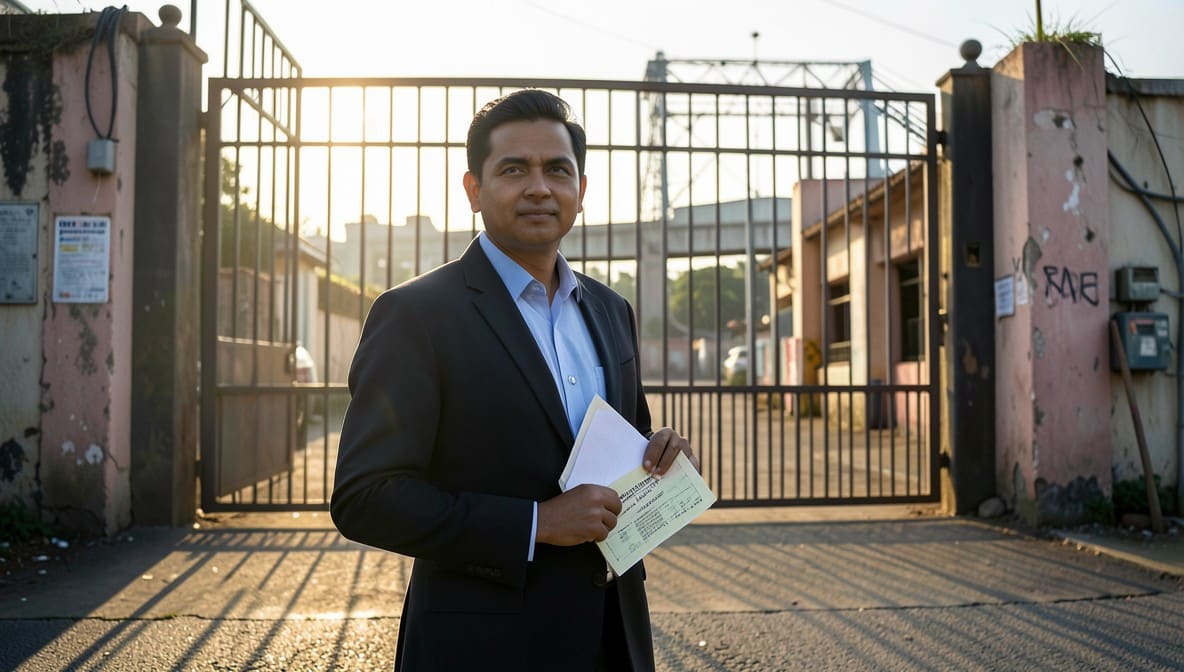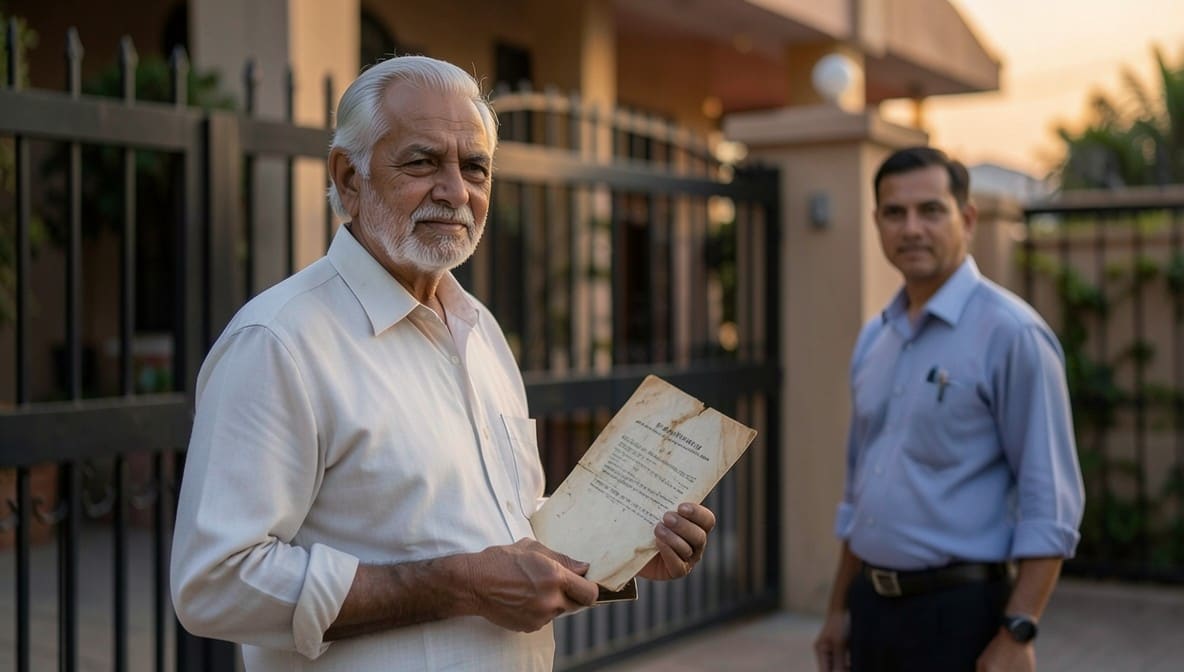
The Bombay High Court has reaffirmed that prolonged temporary employment, spanning over fifteen years, cannot be terminated on vague assertions of ineligibility without concrete proof of statutory or regulatory disqualification. In a significant ruling, the Court set aside a Labour Court award that had upheld the termination of a watchman whose continuous service was never challenged until after a decade and a half.
Background & Facts
The Dispute
The petitioner, Sanjay Manya Dongarkar, was engaged as a watchman at the Training Centre of the Gokhale Education Society at Kosbad Hill, Taluka Dahanu, District Palghar, with effect from 21 October 2003. He was paid a fixed honorarium of Rs. 2,050 per month. His engagement was initially described as temporary, but he continued in service without interruption for nearly fifteen years until his termination on 20 February 2018.
Key Facts
- The petitioner was appointed on 21 October 2003 without any written contract or formal order specifying the temporary nature of his role.
- He received no periodic extensions, no fixed-term contracts, and no written communication indicating the temporary or ad hoc status of his employment.
- On 25 July 2013, the petitioner withdrew a complaint of unfair labour practice (Complaint ULP No. 263 of 2013) based on an alleged assurance from the respondent that his son would be appointed in his place.
- In 2008, the respondent issued an advertisement for the post of watchman, prescribing an age limit of 31 to 35 years. The petitioner, aged 34 at the time of his initial appointment in 2003, was within this range.
- The respondent did not produce the original advertisement, any sanctioned vacancy chart, recruitment rules, or a roster showing the post was reserved for the open category.
- The petitioner made no claim for regularization during his service, nor did he receive any benefits such as provident fund, gratuity, or leave encashment.
- His services were terminated by a letter dated 20 February 2018, citing ineligibility due to age and category, without any prior notice, inquiry, or disciplinary proceedings.
- The petitioner has not secured alternate employment since termination.
Procedural History
- 21 October 2003: Petitioner appointed as watchman.
- 25 July 2013: Petitioner withdraws ULP complaint on assurance of son’s appointment.
- 20 February 2018: Termination letter issued by respondent.
- 2019: Petitioner approaches Deputy Commissioner of Labour, Thane.
- 2019: Industrial dispute referred as Reference (IDA) No. 164 of 2019.
- 27 March 2024: Fourth Labour Court, Thane, dismisses the reference, upholding termination.
- 4 July 2024: Petitioner obtains certified copy of Labour Court award.
- 2024: Writ Petition No. 11397 of 2024 filed before Bombay High Court.
The Parties' Positions
Petitioner: Argued that his continuous service for 15 years created a legitimate expectation of regularisation. The respondent failed to produce any rule, notification, or vacancy chart to justify termination. The silence of the employer on key facts warranted an adverse inference. Termination was arbitrary and constituted an unfair labour practice under Item 10 of the Fifth Schedule to the Industrial Disputes Act, 1947.
Respondent: Contended that the petitioner was a temporary, ad hoc appointee on fixed honorarium, ineligible for permanent service under Government rules governing grant-in-aid institutions. The post was reserved for the open category, and the petitioner had allegedly crossed the upper age limit as per the 2008 advertisement. The Labour Court was competent, and the petitioner’s remedy lay before administrative tribunals.
Relief Sought
The petitioner sought: (i) declaration that termination was illegal; (ii) reinstatement with continuity of service; (iii) full back wages from 20 February 2018; (iv) consequential benefits; and (v) costs.
The Legal Issue
The central question was whether an employer, having retained a worker for over fifteen years without formalizing his status or proving lawful grounds for non-regularisation, can terminate him on unproven allegations of age ineligibility and temporary status under the Industrial Disputes Act, 1947.
Arguments Presented
For the Petitioner
The petitioner’s counsel relied on the principle that long-term service creates a legitimate expectation of continuity. He cited State of Haryana v. Sardar Singh and Workmen of Mysore Sugar Co. v. Mysore Sugar Co. to argue that the label of "temporary" is not decisive; the reality of service matters. He emphasized that the respondent failed to produce the original advertisement, any sanctioning authority’s refusal, or any rule prohibiting his continuation. The absence of evidence invited an adverse inference under Section 114 of the Indian Evidence Act, 1872. The termination, he argued, was mala fide and constituted an unfair labour practice under Item 10 of the Fifth Schedule.
For the Respondent
The respondent’s counsel contended that as a grant-in-aid institution, the Society was bound by State Government service rules. The petitioner’s appointment was never approved by the competent authority, and the post was reserved for open category candidates within a specific age bracket. He argued that the Labour Court was the correct forum for an industrial dispute, but the petitioner’s claim was legally unsustainable because he was never a permanent employee. He further submitted that the petitioner’s remedy lay before the Maharashtra Administrative Tribunal or the School Tribunal, not the Labour Court.
The Court's Analysis
The Court rejected the respondent’s argument that the petitioner’s status as a temporary appointee justified termination. It held that the duration and nature of service must be examined holistically. "The reality of the engagement," the Court observed, "cannot be erased by a label." The petitioner had worked continuously for fifteen years without any written contract, periodic renewal, or notice of termination. The respondent never issued any order limiting his tenure or defining his role as ad hoc.
"If the employer keeps silence on matters specially within its knowledge, then the Court can draw adverse inference. In the present case such adverse inference is clearly available."
The Court noted that the respondent failed to produce the original advertisement, any sanctioned vacancy chart, or any communication from the Government refusing approval. The mere assertion that "approval was not granted" was insufficient. The burden lay on the employer to prove the legal basis for termination, particularly where livelihood was at stake.
The Court further held that the Labour Court was competent to adjudicate the dispute, as the petitioner raised an industrial dispute concerning unfair labour practice and illegal termination. The fact that the institution received grant-in-aid did not immunize it from the obligations under the Industrial Disputes Act.
The Court also rejected the argument that the petitioner’s withdrawal of the ULP complaint in 2013 negated his rights. The subsequent continuation of service for five more years demonstrated the respondent’s acceptance of his employment.
The Court emphasized that in service jurisprudence, assumptions cannot replace proof. "The Labour Court appears to have accepted the respondent’s version almost as a matter of assumption. In service jurisprudence, especially where termination affects livelihood, assumptions cannot replace proof."
The Verdict
The writ petition was allowed. The Labour Court’s award dated 27 March 2024 was quashed and set aside. The termination of the petitioner on 20 February 2018 was declared illegal and unsustainable in law. The respondent was directed to reinstate the petitioner in service on the post of watchman or an equivalent suitable post within eight weeks. The petitioner is entitled to continuity of service from the date of termination until reinstatement. Full back wages from 20 February 2018 until reinstatement, with all consequential benefits, shall be computed and paid within twelve weeks. If unpaid, the arrears shall carry interest at 6% per annum from the date they became due until realization. There shall be no order as to costs.
What This Means For Similar Cases
Long-Term Temporary Service Creates Legitimate Expectation
- Practitioners must argue that continuous service beyond ten years, without formal termination notices or contractual limits, creates a presumption of permanence.
- Employers cannot rely on vague assertions of "temporary" status to deny benefits after prolonged service.
Burden of Proof Lies with the Employer
- Employers must produce original recruitment documents, sanctioned vacancy charts, and government approval orders to justify termination.
- Failure to produce such evidence invites adverse inference under Section 114 of the Indian Evidence Act.
Labour Courts Are Competent for Grant-in-Aid Institutions
- Institutions receiving government aid are not exempt from the Industrial Disputes Act if they employ workers in industrial or commercial activities.
- Disputes concerning termination, unfair labour practices, or back wages fall squarely within the jurisdiction of Labour Courts.
Back Wages Are Presumptively Due
- Where termination is found illegal and the workman has not found alternate employment, back wages are the norm, not the exception.
- Courts will not deny back wages unless compelling reasons are shown - mere financial hardship of the employer is insufficient.
No Automatic Exclusion Based on Age or Category
- Age or category restrictions must be proven with contemporaneous documentation.
- If a worker was employed before such restrictions were introduced, those restrictions cannot be applied retrospectively without notice or opportunity to be heard.