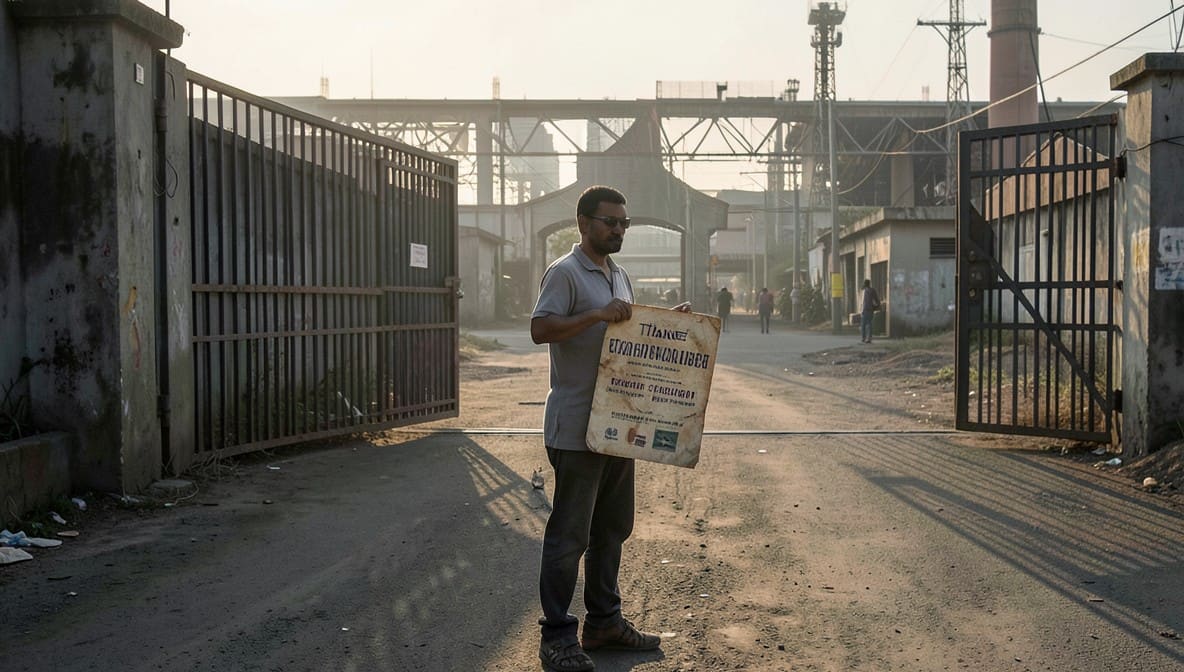
The Bombay High Court has clarified that when an employer terminates a workman without complying with the mandatory requirements of Section 25F of the Industrial Disputes Act, 1947, the termination is illegal - even if the workman has since superannuated. In such cases, reinstatement is no longer feasible, and monetary compensation becomes the appropriate remedy.
Background & Facts
The Dispute
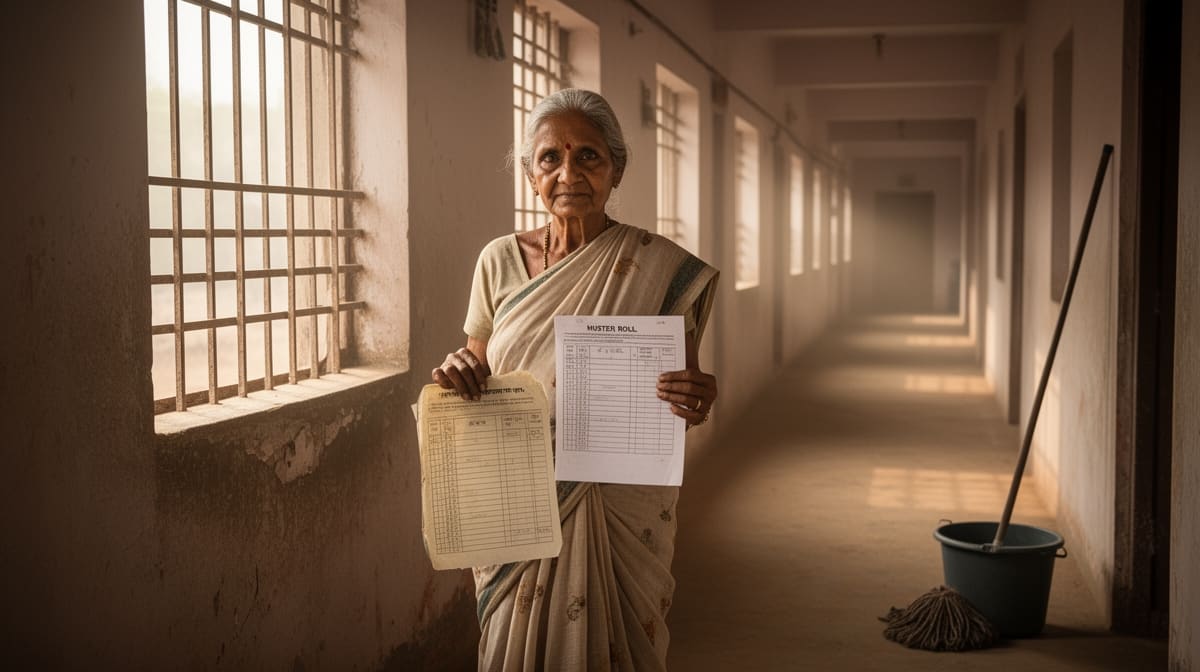
The writ petitions arose from the termination of five female workers, including Shobha Laxman Kamthe, who had served as sweepers in the Bharati Vidyapeeth Ladies Hostel for over a decade. The petitioners alleged they were dismissed without notice, retrenchment compensation, or a domestic enquiry after joining a labour union to demand minimum wages and statutory benefits. The central claim was that their termination violated Section 25F of the Industrial Disputes Act.
Procedural History
- 2002: Petitioners filed ULP complaints under MRTU & PULP Act; dismissed on jurisdictional grounds.
- 2003: Shobha Kamthe was orally terminated on 30 November 2003.
- 2004: Reference made under Section 10(1)(c) of the Industrial Disputes Act seeking reinstatement and back wages.
- 2011: First Labour Court, Pune rejected the claim, holding no employer-employee relationship existed.
- 2013 - 2015: Multiple writ petitions filed under Article 227 challenging the Labour Court’s award.
Relief Sought
The petitioners sought reinstatement with continuity of service and full back wages. After superannuation, the focus shifted to claiming monetary compensation in lieu of reinstatement.
The Legal Issue
The central question was whether Section 25F of the Industrial Disputes Act applies when a workman has completed 240 days of service in the preceding year, and if termination without compliance renders the dismissal illegal - even when reinstatement is no longer practicable due to superannuation.
Arguments Presented
For the Petitioner
The petitioners relied on Anil Mithra v. Sree Sankaracharya University of Sanskrit (2022) 17 SCC 505 to argue that continuous service under Section 25B was established through muster rolls, salary vouchers, and oral testimony. They contended that the respondent’s refusal to produce attendance and wage records warranted an adverse inference under R.M. Yellatti v. Assistant Executive Engineer. They further argued that Section 25F is mandatory, and non-compliance invalidates termination, entitling them to compensation even if reinstatement is impossible.
For the Respondent
The respondent denied any employer-employee relationship, asserting that cleaning staff were hired informally by students. It argued that the petitioners failed to prove 240 days of continuous service and that the secondary evidence (photocopies of muster rolls) lacked authenticity. It also relied on the earlier dismissal of ULP complaints as res judicata on the issue of employment.
The Court's Analysis
The Court examined the legal framework under Section 25B and Section 25F of the Industrial Disputes Act, affirming that continuous service is established if a workman has worked 240 days in the 12 months preceding termination. The Court held that even if strict continuity is broken by authorized absences, the law presumes continuous service upon meeting the 240-day threshold.
"The absence of such records on the side of the respondent assumes importance. When relevant records are expected to be in the possession of the employer and yet are not produced, the court is entitled to presume that the records, if produced, would not support the employer’s case."
The Court found that the petitioner’s photocopies of muster rolls, salary vouchers, and duty lists - corroborated by oral testimony - created a prima facie case of continuous service. The respondent’s failure to produce its own attendance or wage records justified an adverse inference under the doctrine of evidentiary burden. The earlier dismissal of ULP complaints was held not to be res judicata, as it was based on jurisdictional grounds, not merits.
The Court further held that while Section 25F violations render termination illegal, reinstatement is not automatic. Where superannuation renders reinstatement impracticable, courts may award monetary compensation as a just and equitable remedy. The Court emphasized that the purpose of Section 25F is to protect workers from arbitrary dismissal, and denying relief due to delay or superannuation would defeat this purpose.
The Verdict
The petitioners won. The Court held that the termination of Shobha Kamthe and others was illegal for non-compliance with Section 25F of the Industrial Disputes Act. Reinstatement was denied due to superannuation, but each petitioner was awarded a lump sum compensation of Rs. 2,00,000 as full and final settlement.
What This Means For Similar Cases
Monetary Compensation Is a Viable Alternative to Reinstatement
- Practitioners must now argue for compensation in cases where reinstatement is impossible due to superannuation, retirement, or prolonged litigation.
- Courts are empowered to award compensation even if the workman is no longer employable, provided the termination violated Section 25F.
- The quantum of compensation must reflect length of service, wages, and delay in adjudication.
Adverse Inference Applies When Employers Withhold Records
- Employers who deny employment and refuse to produce attendance or wage records invite adverse inference under R.M. Yellatti.
- Secondary evidence (photocopies, duty lists) supported by testimony can establish employment if uncontradicted.
- Practitioners should file applications for production of records early and seek permission for secondary evidence if originals are withheld.
Section 25F Violation Is Not Excused by Jurisdictional Dismissals
- A prior dismissal under MRTU & PULP Act on jurisdictional grounds does not bar a subsequent claim under the Industrial Disputes Act.
- Labour Courts and High Courts must examine the merits of employment relationships independently.
- Employers cannot rely on procedural dismissals to evade liability under Section 25F.