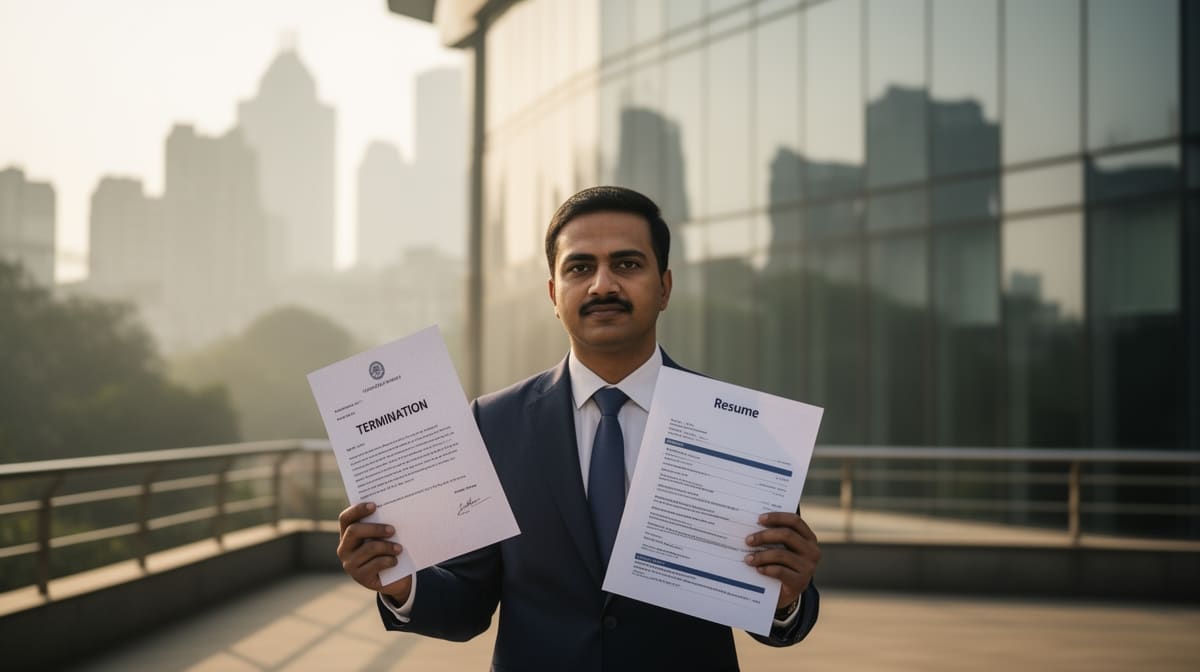
The Bombay High Court has clarified that an employer cannot mask termination as a transfer when the transfer order is unproved, uncommunicated, and lacks genuine intent to retain employment. The judgment reinforces the principle that substance prevails over form in service law, and employers bear the burden of proving procedural fairness.
Background & Facts
The Dispute
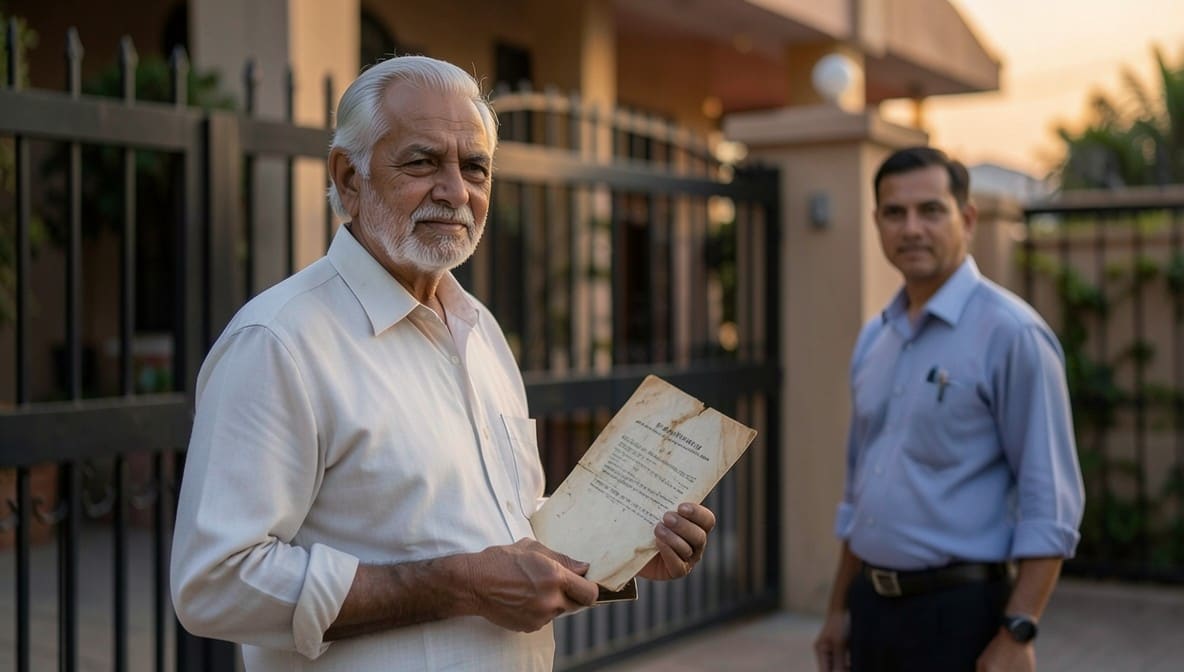
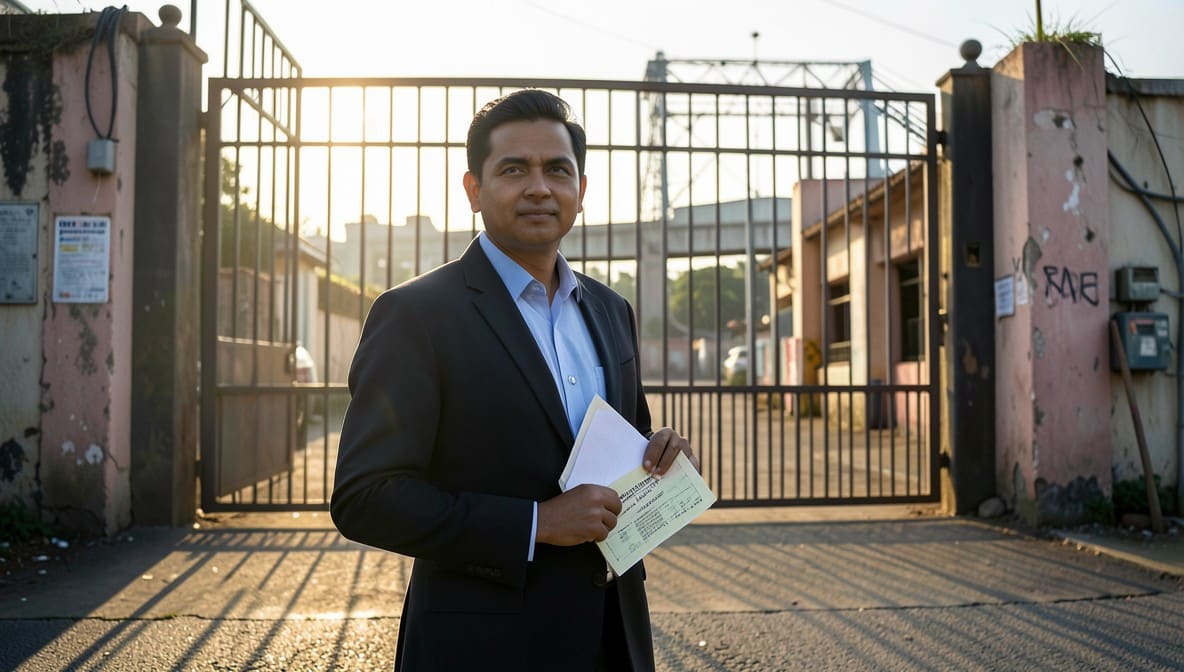
The petitioner, Ashok Laxman Ruptakke, was employed by Uttara Foods and Feeds Private Limited as a Premix Assistant in Grade IX, appointed on 18 April 2005 and confirmed on 21 October 2005. He served without any disciplinary issues until 2015. In late 2015, the respondent company faced financial distress, including a notice under Section 13(4) of the Securitisation and Reconstruction of Financial Assets and Enforcement of Security Interest Act, 2002, leading to widespread employee terminations. On 1 November 2015, the petitioner was allegedly served with a transfer order directing him to report at Ambad, Jalna - approximately 300 km from Pune - with a reduced salary of Rs. 9,000, down from his last drawn basic salary of Rs. 10,200. The petitioner claims he never received this order and was physically barred from entering the premises. He approached the Labour Commissioner on the same day, initiating conciliation proceedings which failed, leading to referral to the Labour Court.
Key Facts
- Petitioner joined service on 18 April 2005, confirmed on 21 October 2005
- Last drawn basic salary: Rs. 10,200 (as of October 2015)
- Alleged transfer order dated 1 November 2015, directing transfer to Ambad, Jalna
- Alleged salary under transfer order: Rs. 9,000 - lower than his previous salary and lower than new recruits
- Petitioner denied receiving the transfer order
- Endorsement on transfer order: "Refused to accept" - made unilaterally by management
- No proof of service via registered post, courier, or witness
- Respondent’s office premises seized under SARFAESI Act on 25 November 2015
- Multiple employees terminated around same period
- Petitioner worked as daily wage labourer and sold vegetables from November 2015 onwards
Procedural History
- 1 November 2015: Petitioner barred from premises; approached Labour Commissioner
- 1 November 2015: Labour Commissioner initiated conciliation
- 31 March 2018: Respondent filed written statement before Labour Court
- 13 December 2021: Labour Court No.3, Pune dismissed Reference (I.D.A.) No. 294 of 2016
- 26 March 2026: Writ Petition No. 5244 of 2022 decided by Bombay High Court
The Parties' Positions
Petitioner’s Position: The transfer order was never served, the refusal endorsement was fabricated, and the real intent was termination without cause. The salary reduction and location change were punitive and impracticable. The financial crisis of the company corroborated a pattern of mass terminations.
Respondent’s Position: The petitioner was not terminated but transferred. The transfer order was issued and allegedly refused by the petitioner. The respondent is willing to reinstate him at Ambad if he reports. The Labour Court correctly relied on the endorsement of refusal.
Relief Sought
The petitioner sought quashing of the Labour Court’s order, reinstatement with continuity of service, full back wages from 1 November 2015, and payment of dues including bonus and revised wages for 2014.
The Legal Issue
The central question was whether an employer’s unilateral transfer order, unproved and uncommunicated, coupled with denial of access to workplace and reduction in pay, constitutes illegal termination under service law, even if labelled as a transfer.
Arguments Presented
For the Petitioner
Learned counsel for the petitioner argued that the transfer order was not served in any recognized manner, and the endorsement of refusal was self-serving and unsupported by contemporaneous evidence. She cited State of U.P. v. Mohd. Noor and Workmen of Mysore Spinning & Manufacturing Co. v. Management to assert that the burden lies on the employer to prove fair procedure. She emphasized that the salary reduction and distant location were inconsistent with genuine transfer and indicated mala fide intent. The financial distress of the company and mass terminations further supported the claim of disguised termination.
For the Respondent
The respondent’s counsel contended that the transfer order was validly issued and that the petitioner’s refusal to join, as recorded on the document, absolved the employer of liability. He relied on the Labour Court’s findings and the petitioner’s cross-examination admission that he never reported to Ambad. He argued that the employer’s willingness to reinstate at the transferred location negated any claim of termination.
The Court's Analysis
The Court examined the nature of the employer’s action not by its label but by its substance. It held that a transfer must be bona fide, communicated properly, and accompanied by reasonable opportunity to comply. The Court observed that the mere notation of refusal on the document, without any corroborating evidence such as postal receipts, witness statements, or prior notices, is insufficient to establish service of the order.
"The employer, being in control of records and communication channels, must demonstrate genuine efforts to serve the transfer order. A unilateral endorsement of refusal, unsupported by independent proof, cannot be accepted as conclusive."
The Court further noted that the salary reduction from Rs. 10,200 to Rs. 9,000 - despite the petitioner’s long service and no prior performance issues - was inconsistent with a legitimate transfer. The timing of the order, coinciding with the SARFAESI notice and mass layoffs, raised a strong inference of mala fide intent.
The Court distinguished between a genuine transfer and a pretextual one. It held that when an employee is effectively excluded from the workplace under the guise of transfer, and no meaningful opportunity to resume duty is provided, the effect is termination in substance. The Labour Court erred in relying solely on the endorsement of refusal without probing its authenticity or the employer’s conduct.
The Court also rejected the respondent’s argument that the petitioner’s willingness to join at Ambad (expressed during cross-examination) validated the transfer. The Court held that willingness without a fair opportunity to act is legally meaningless.
The Verdict
The writ petition succeeded. The Bombay High Court quashed the Labour Court’s order dated 13 December 2021. The respondent’s discontinuation of the petitioner’s services from 1 November 2015 was held illegal. The petitioner is directed to be reinstated in his original post or an equivalent one, with continuity of service. He is entitled to 50% of back wages from 1 November 2015 until reinstatement. The respondent must comply within eight weeks. No costs awarded.
What This Means For Similar Cases
Transfer Must Be Proven, Not Assumed
- Employers must maintain verifiable records of service of transfer orders - registered post, courier receipts, or signed acknowledgments
- Self-serving endorsements like "refused to accept" are insufficient without independent proof
- Courts will scrutinize the timing, salary changes, and context of transfers during financial distress
Back Wages Are Not Automatic - But Partial Relief Is
- Where the employee has earned alternative income, full back wages are not warranted
- Courts may award partial back wages (e.g., 50%) to balance equity, especially where the employee was not idle
- The burden to prove loss of income lies with the employee, but partial relief is justified if the employer’s conduct was unlawful
Substance Over Form in Service Matters
- Labels like "transfer" cannot override the actual effect of the action
- If the result is exclusion from employment without due process, it amounts to termination
- Employers cannot use procedural technicalities to evade liability for illegal termination