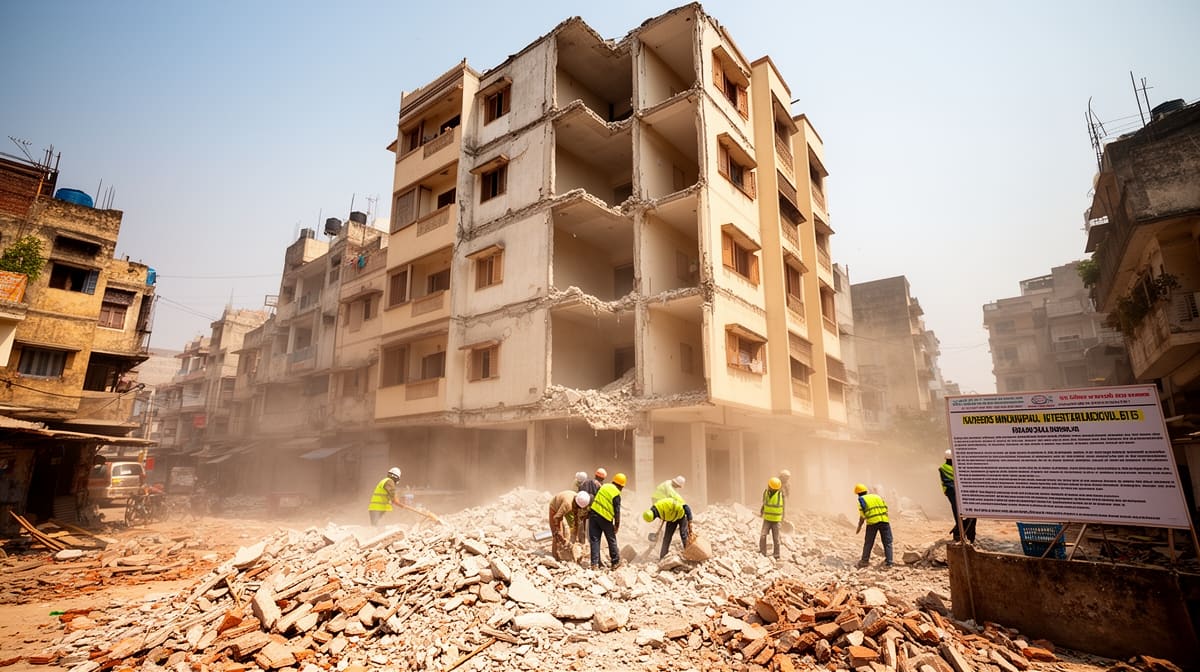
The Rajasthan High Court has clarified that even when violators voluntarily agree to demolish unauthorized construction, they cannot escape financial consequences. The judgment reinforces that deterrence, not mere compliance, is the cornerstone of enforcing urban development regulations.
Background & Facts
The Dispute
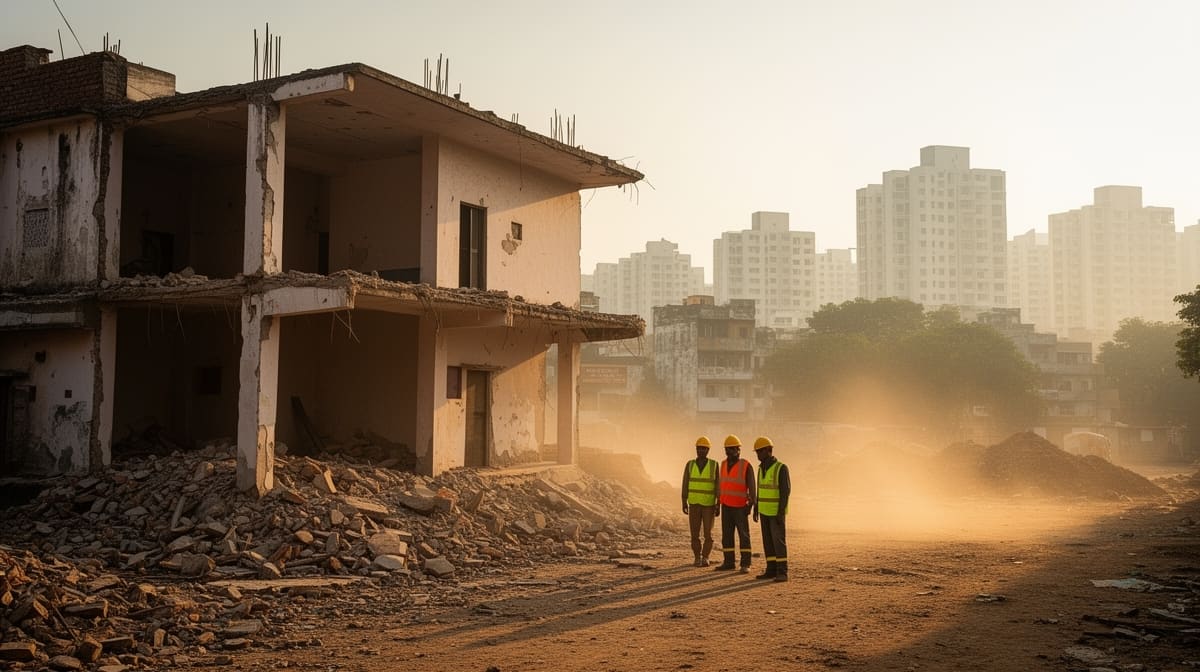
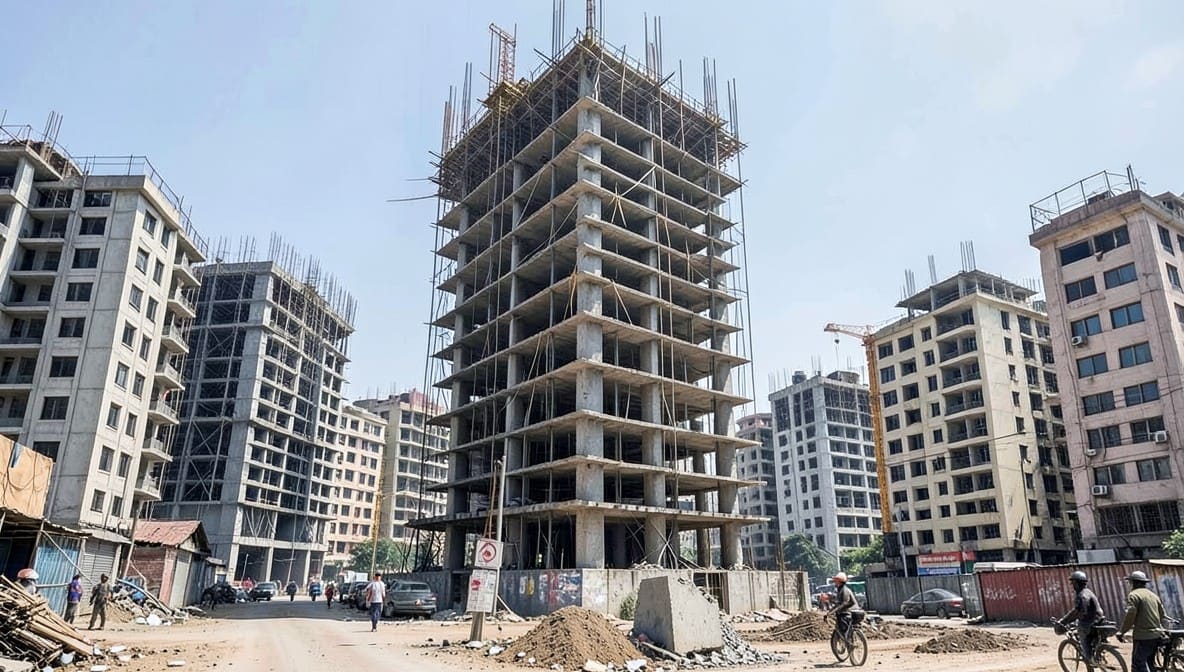
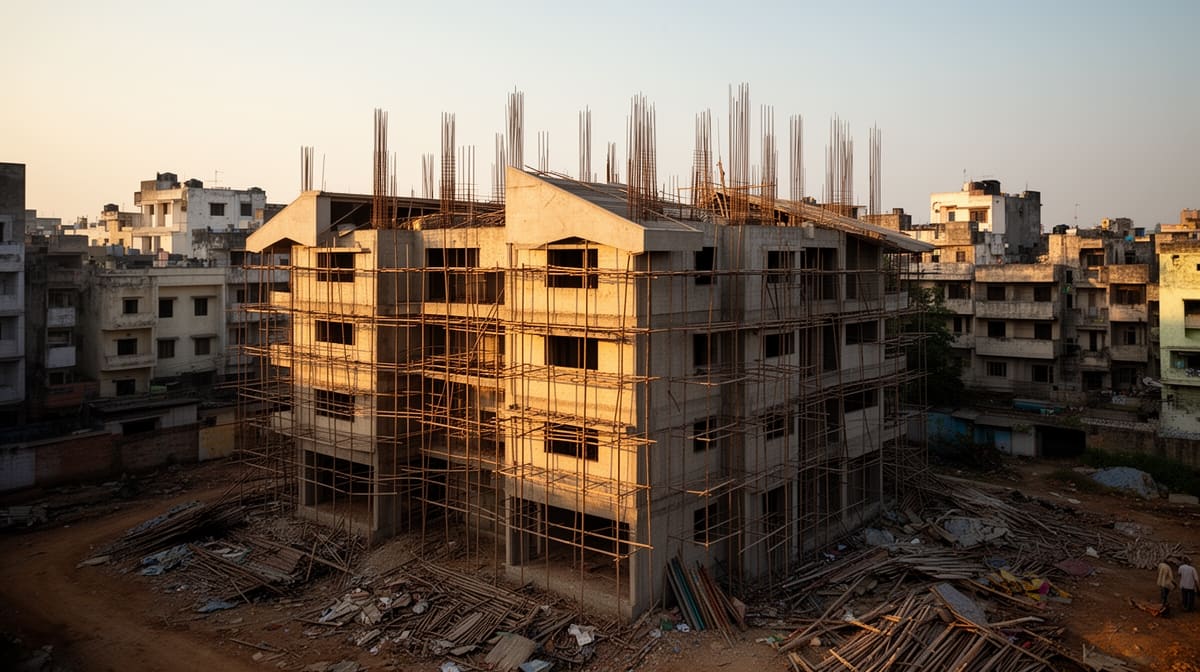
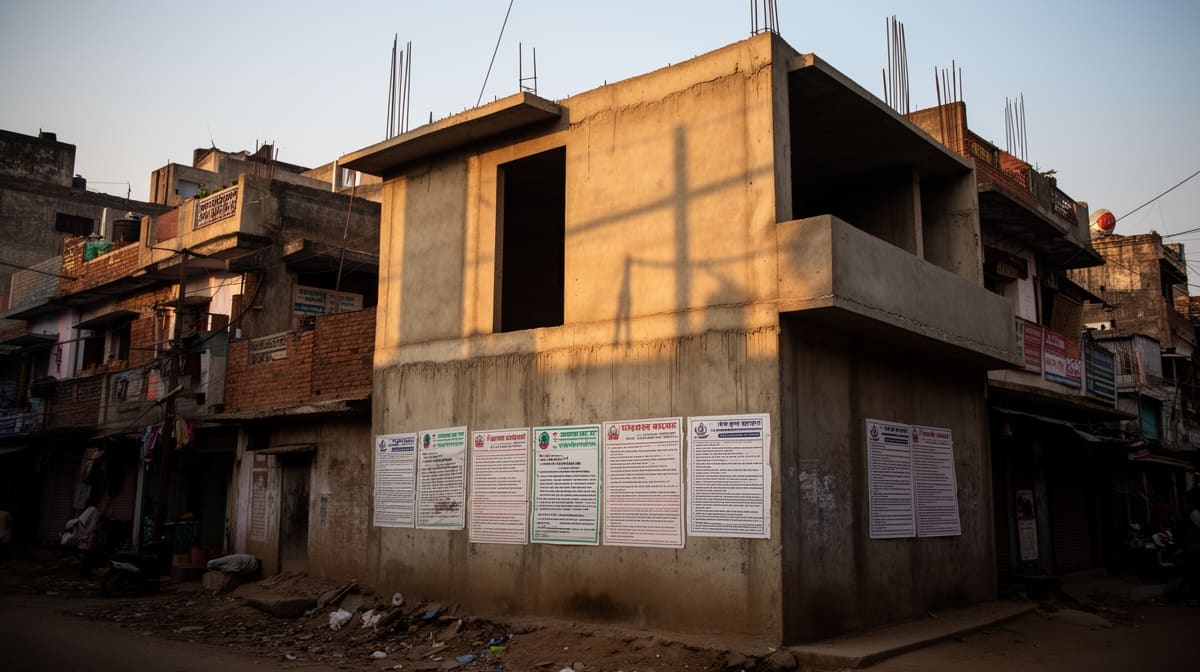
The petitioners challenged the illegal construction of a five-storied residential complex on Plot No. 409, 1st C Road, Sardarpura, Jodhpur, undertaken by respondents No. 6 to 10. The construction violated mandatory setbacks, exceeded permissible height, and deviated from the sanctioned plan approved by the Municipal Corporation, Jodhpur, in breach of the Rajasthan Municipal Act, 2009, and its associated building bye-laws.
Procedural History
- The petitioners filed a writ petition under Article 226 seeking immediate demolition of the structure.
- The respondents did not contest the illegality of the construction but offered to demolish it voluntarily.
- The Municipal Corporation had previously issued notices, but no enforcement action had been taken prior to the petition.
- The High Court conducted a prima facie review of sanctioned plans, site photographs, and municipal records, confirming clear violations.
Relief Sought
The petitioners sought: (i) immediate demolition of the illegal structure; (ii) cessation of further construction; (iii) cancellation of the unauthorized permission; and (iv) imposition of heavy costs to deter future violations.
The Legal Issue
The central question was whether voluntary willingness to demolish illegal construction absolves the violator from the imposition of costs, or whether deterrence remains a mandatory consideration under municipal law and public interest jurisprudence.
Arguments Presented
For the Petitioner
The petitioners argued that allowing violators to escape costs would undermine the deterrent effect of building regulations. They cited State of Rajasthan v. Rameshwar Lal to emphasize that public interest in urban planning outweighs private convenience. They contended that costs are not punitive but preventive, and their absence encourages repeated violations.
For the Respondent
The respondents contended that their willingness to demolish the structure at their own cost demonstrated good faith and should be rewarded with leniency. They relied on principles of equity and urged the Court to avoid penalizing cooperation. They argued that imposing costs would discourage voluntary compliance in future cases.
The Court's Analysis
The Court acknowledged the respondents’ willingness to demolish as a mitigating factor but rejected the notion that it negated the need for costs. It emphasized that municipal regulations are not advisory but mandatory, and their violation undermines the rule of law in urban governance.
"The law does not reward those who flout statutory norms and then, when caught, offer to undo their own illegality. Such conduct, however convenient, cannot be sanctified by judicial leniency."
The Court distinguished between remedial compliance and legal accountability. While demolition rectifies the physical violation, costs serve the distinct purpose of upholding institutional authority and discouraging others from similar conduct. The Court held that failure to impose costs would send a dangerous signal that violations can be corrected without consequence, thereby eroding regulatory integrity.
The Court also noted that the respondents had not sought prior approval for deviations, nor had they applied for regularization. Their conduct was deliberate, not inadvertent, and thus fell squarely within the ambit of conduct warranting deterrence.
The Verdict
The petitioners succeeded. The Court disposed of the writ petition with liberty to respondents to demolish the illegal construction at their own cost, but imposed costs of ₹2 lakh on them. The Court held that willingness to demolish does not negate the obligation to pay costs for willful violation of building regulations.
What This Means For Similar Cases
Costs Are Mandatory for Willful Violations
- Practitioners must now argue for costs in every writ petition involving unauthorized construction, even if demolition is offered.
- Courts will treat voluntary demolition as mitigation, not absolution.
- Failure to seek costs may be viewed as a missed opportunity to reinforce regulatory compliance.
Municipal Authorities Must Act Proactively
- Municipal bodies cannot rely on litigation to enforce compliance.
- This judgment implies that inaction by authorities prior to petition does not excuse violators.
- Authorities must initiate proceedings under Section 318 of the Rajasthan Municipal Act, 2009 before violations escalate.
Deterrence Over Rehabilitation in Urban Enforcement
- Judicial orders must prioritize systemic deterrence over individual rehabilitation.
- Future applications for regularization must be scrutinized with heightened scrutiny if prior violations exist.
- Petitioners should include a specific prayer for costs in all writs challenging illegal construction.