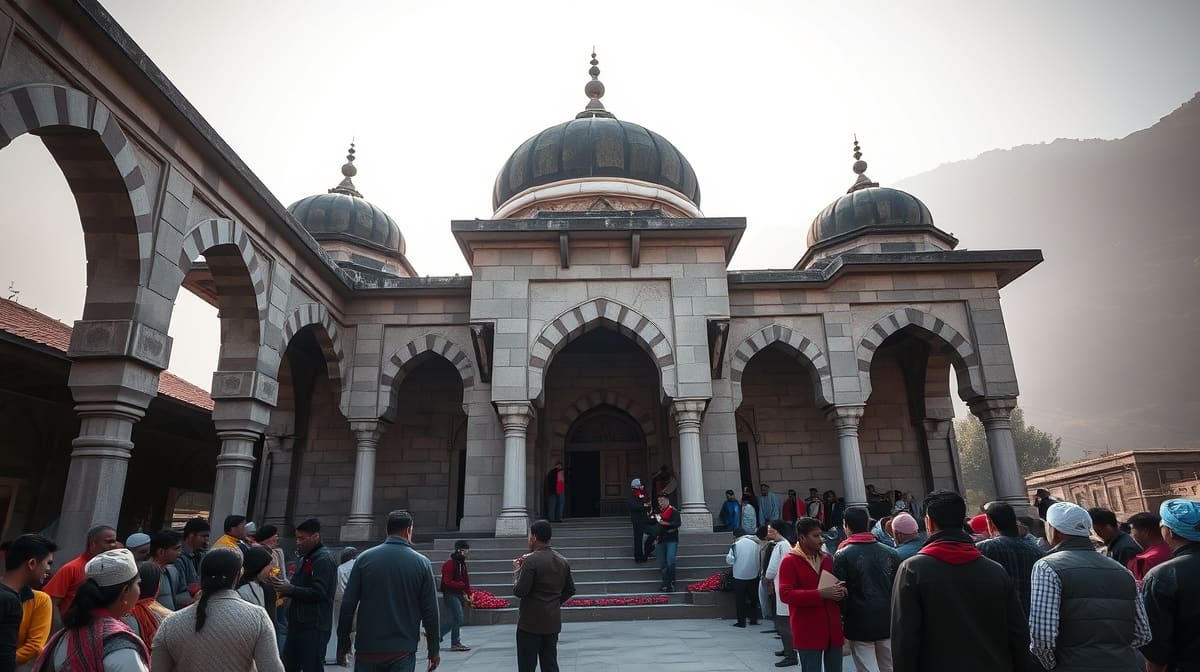
A century-long dispute over hereditary pujari rights to the Amogasidda temple in Karnataka has been resolved by the Supreme Court with a definitive affirmation of the primacy of conduct, documentary evidence, and concurrent factual findings over stale decrees. The judgment reinforces that judicial deference to lower courts on factual matters is not merely procedural but doctrinal, especially when the record reveals a pattern of consistent practice and admissions.
Background & Facts
The Dispute
The dispute centers on who holds the hereditary right to perform puja and conduct the annual Jatra at the 600-year-old Samadhi of Saint Amogasidda in Mamatti Gudda, Karnataka. The appellants claim descent from the plaintiff in O.S. No. 287/1901, which allegedly granted them pujari rights. The respondents assert their lineage from the original wahiwatdar pujaries, supported by continuous performance of rituals, revenue records, and temple trust registration.
Procedural History
The litigation spans over 80 years across multiple forums:
- 1901: Appellants’ ancestors obtained a decree in O.S. No. 287/1901 for pujari rights.
- 1944: Appellants’ predecessor filed O.S. No. 88/1944 seeking possession of the temple and pujari rights; dismissed by Trial Court.
- 1946: Appellants withdrew O.S. No. 88/1944 with liberty to file a fresh suit - never exercised for 36 years.
- 1967: Respondents filed O.S. No. 347/1967 for injunction; decree granted ex parte but dismissed for non-prosecution.
- 1982: Respondents filed O.S. No. 56/1982 seeking declaration of hereditary pujari rights.
- 1986: Trial Court declared both parties as co-pujaries; no injunction granted.
- 1990: First Appellate Court decreed in favor of respondents.
- 1992: High Court reversed, holding Section 80 of the Bombay Public Trust Act barred jurisdiction.
- 2003: Supreme Court set aside 1992 judgment, remanding for merits.
- 2012: High Court, on remand, restored respondents’ claim.
- 2026: Supreme Court dismisses appeals.
Relief Sought
The respondents sought a declaration that they are the hereditary wahiwatdar pujaries entitled to exclusive performance of puja and Jatra, along with a permanent injunction against interference by the appellants.
The Legal Issue
The central question was whether a century-old decree granting pujari rights can prevail over subsequent conduct, including the filing and withdrawal of a competing suit for possession, and whether concurrent findings of fact by two lower courts can be disturbed by the Supreme Court under Article 136.
Arguments Presented
For the Appellant/Petitioner
The appellants relied on the 1901 decree as conclusive proof of their hereditary rights. They argued that the withdrawal of O.S. No. 88/1944 with liberty did not extinguish their rights, and that the respondents’ claims were unsupported by valid title. They contended that revenue records were irrelevant to religious rights and that the High Court erred in disregarding the 1901 decree.
For the Respondent/State
The respondents argued that the 1901 decree was rendered ineffective by the appellants’ own predecessor’s conduct in filing O.S. No. 88/1944, which implied admission of non-possession. They emphasized continuous performance of rituals, revenue records naming their ancestors as temple service holders, and the appellants’ failure to plead or prove possession or obstruction during the 36-year gap. They cited State of U.P. v. Hari Ram to affirm that conduct speaks louder than stale documents.
The Court's Analysis
The Court reaffirmed the well-settled principle that concurrent findings of fact by two lower courts are binding unless manifestly perverse. It held that the appellants’ reliance on the 1901 decree was fatally undermined by their own predecessor’s actions.
"If the appellants/defendants had a decree of possession in their favour, the question arises as to how and when they lost possession of the subject premises."
The Court emphasized that a party in settled possession does not sue for possession. The institution of O.S. No. 88/1944 was not merely a legal step - it was a factual admission that the appellants’ ancestors were not in possession at that time. The subsequent withdrawal of that suit without filing a fresh one for 36 years was interpreted as acquiescence to the respondents’ de facto control.
The Court further held that revenue records (RTC), which named the respondents’ ancestors as beneficiaries of land grants for temple service, were not merely collateral but foundational evidence of hereditary entitlement. The admission by the appellants’ own witness, D.W.1, that the land grant pertained to the very temple in dispute, was decisive.
The Court also underscored the pleading-evidence hierarchy: a party cannot rely on oral testimony to fill gaps left by a deficient written statement. The appellants’ pleadings were silent on key facts - when they assumed possession, when obstruction began, or what steps they took to assert rights. Such omissions rendered their oral evidence inadmissible as a substitute.
The Verdict
The respondents won. The Supreme Court dismissed the appeals, upholding the High Court’s 2012 judgment that the respondents are the hereditary wahiwatdar pujaries entitled to perform puja and conduct Jatra. The Court held that concurrent factual findings, supported by documentary evidence and conduct, override a century-old decree rendered ineffective by subsequent admissions.
What This Means For Similar Cases
Concurrent Findings Are Nearly Impregnable
- Practitioners must treat concurrent findings by two lower courts as conclusive unless perversity is proven.
- Appeals under Article 136 should not be used to re-appreciate evidence unless there is a clear legal error or manifest injustice.
- In religious property disputes, factual continuity and conduct are often more probative than ancient decrees.
Documentary Evidence Trumps Oral Testimony
- Revenue records, trust registrations, and land grants tied to temple service carry substantial evidentiary weight.
- Oral evidence cannot compensate for failure to plead material facts in the written statement.
- Admissions by a party’s own witness are binding and cannot be ignored.
Pleading Deficiencies Are Fatal
- In hereditary rights cases, defendants must plead specific facts: when possession began, how rights were exercised, and when interference occurred.
- Bare denials coupled with reference to old decrees are insufficient.
- Courts will disregard oral evidence that attempts to retrofit a case not pleaded.