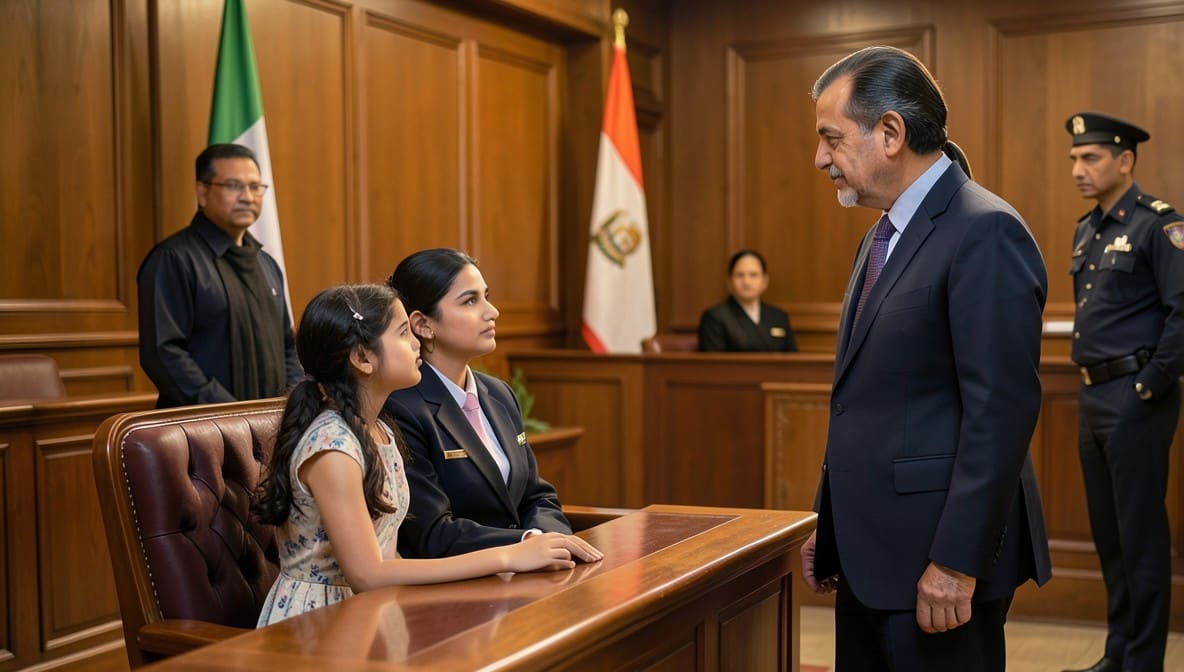
The Rajasthan High Court has affirmed that a minor’s voluntary and uncoerced expression of desire to live with a parent negates claims of illegal detention, even when the child was previously residing with another individual. This judgment establishes a critical precedent in habeas corpus proceedings involving minors, prioritizing the child’s autonomous will over formal custody arrangements.
Background & Facts
The Dispute
The petitioner, Baldev S/o Lalchand, filed a habeas corpus petition alleging that his 13-year-old daughter, Mst. 'P', was being illegally detained by respondent No. 5, Anil Nai. The petitioner claimed the child was taken away without consent and held against her will. The respondents denied any coercion, asserting the child had left voluntarily.
Procedural History
- The petition was filed under Article 226 of the Constitution seeking production of the minor and release from alleged unlawful custody.
- The Court directed the immediate production of the corpus before it, as mandated in all habeas corpus matters involving minors.
- Upon production, the Court conducted an in-camera interview with the child to ascertain her state of mind and意愿.
Relief Sought
The petitioner sought the immediate release of the corpus from respondent No. 5 and her custody to be handed over to him as her lawful father.
The Legal Issue
The central question was whether a minor’s voluntary and unpressured statement to live with a parent can override allegations of illegal detention under habeas corpus, even in the absence of a formal custody order.
Arguments Presented
For the Petitioner
The petitioner’s counsel argued that the child, being a minor, lacked legal capacity to consent to relocation and that her presence with respondent No. 5 constituted unlawful confinement under Section 361 of the Indian Penal Code, which criminalizes taking a minor away from lawful guardianship. Reliance was placed on Shabnam v. Union of India to assert that minors cannot be treated as having independent decision-making authority in custody matters.
For the Respondent
The respondents contended that the child had left of her own free will, without any inducement or threat, and had expressed a clear desire to remain with respondent No. 5. They emphasized that the child was not confined, nor was there any evidence of force or fraud. The State argued that the Court must respect the child’s autonomous expression, particularly when it aligns with her best interests.
The Court's Analysis
The Court examined the nature of habeas corpus as a remedy to secure liberty, not to adjudicate custody disputes per se. It noted that while parental rights are significant, they are not absolute when the child’s own will is clearly and consistently expressed.
"The corpus, though a minor, has demonstrated a clear, consistent and uncoerced desire to live with her parents. Her statement was made in the presence of the Court, without any external influence, and reflects her genuine inclination."
The Court distinguished Shabnam v. Union of India, observing that case involved a child abducted under false pretenses, whereas here, there was no evidence of inducement, deception, or restraint. The Court emphasized that the autonomy of the child, even at 13 years and 6 months, must be weighed as a primary factor in determining liberty. It held that a minor’s voluntary choice, when made without coercion, constitutes a valid basis for releasing custody - not because the child has legal rights to custody, but because the state’s duty under Article 21 includes protecting the child’s dignity and personal liberty.
The Court further noted that the child’s educational background and maturity level supported the reliability of her statement. No contrary evidence was presented to challenge her testimony.
The Verdict
The petitioner won. The Court held that a minor’s uncoerced and voluntary expression to live with a parent negates the claim of illegal detention under habeas corpus. The custody of the corpus was immediately handed over to the petitioner, the father, and the petition was disposed of.
What This Means For Similar Cases
Volitional Choice Is a Decisive Factor
- Practitioners must now prioritize eliciting and documenting the child’s own statement in all habeas corpus petitions involving minors.
- Courts will no longer presume illegal detention merely because a child is with someone other than a legal guardian.
- Evidence of coercion, inducement, or confinement remains essential to sustain a habeas corpus claim.
Parental Rights Are Not Absolute
- A parent’s claim to custody cannot override a child’s expressed will, even if the child is below the age of majority.
- The burden shifts to the petitioner to prove that the child’s choice was not voluntary - mere allegation is insufficient.
- Guardianship disputes must be resolved through civil proceedings; habeas corpus is not a substitute.
Judicial Interview Is Mandatory
- In all minor custody habeas corpus matters, an in-camera interview by the Court is now a procedural necessity.
- The child’s testimony, if clear and consistent, carries decisive weight.
- Courts must record the manner of questioning and ensure no third party is present during the interview.