The Gujarat High Court has reaffirmed the State’s statutory obligation to adjudicate claims under the Forest Rights Act, 2006, with urgency and procedural fairness. This judgment clarifies that administrative inaction, even in the face of documented historical occupation and Gram Sabha recommendations, cannot extinguish the rights of Forest Dwelling Scheduled Tribes and Other Traditional Forest Dwellers.
Background & Facts
The Dispute
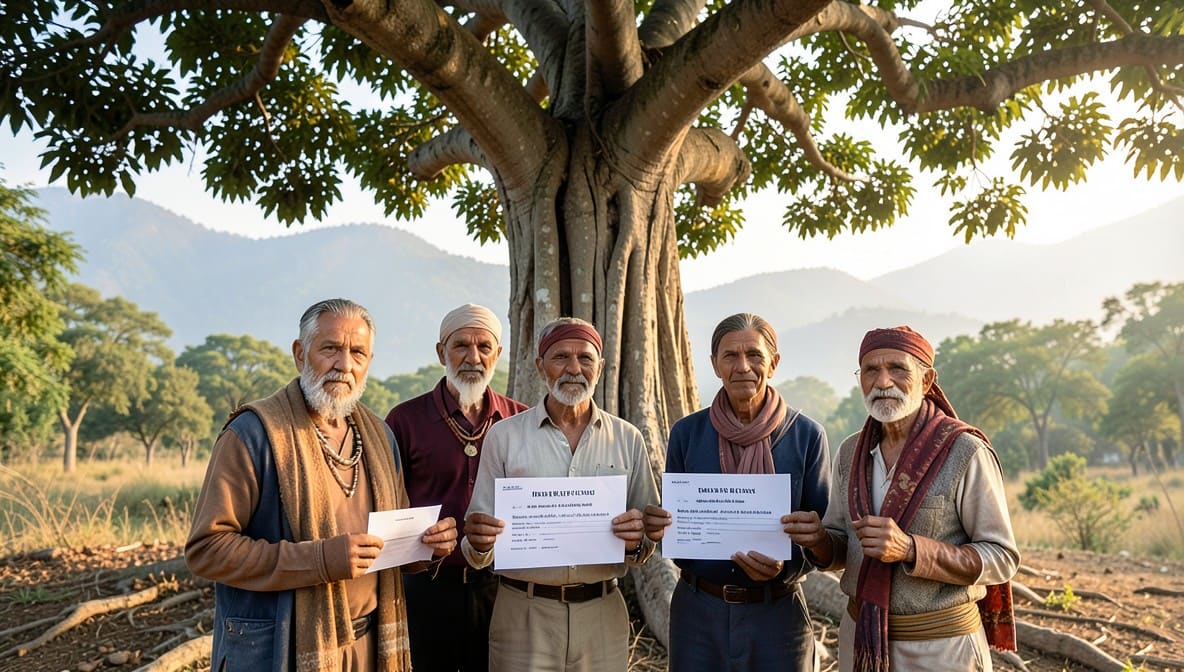
The petitioners, members of Forest Dwelling Scheduled Tribes, have been cultivating land bearing Survey No. 28 in Village Rampura, Taluka Dahod, District Dahod, since 1980. Their father began cultivation in 1980, and the petitioners continued it thereafter. They paid land revenue to the State authorities and were recorded as cultivators in the Panti Patrak. Despite this long-standing occupation, the State has not granted them formal recognition or possession under the Scheduled Tribes and Other Traditional Forest Dwellers (Recognition of Forest Rights) Act, 2006 (FRA, 2006).
Key Facts
- The petitioners have resided in Village Rampura for generations and depend solely on agriculture for livelihood.
- The disputed land is forest land under the control of the Forest Department.
- The petitioners submitted their claim (Dava) to the Rampura Gram Van Adhikar Samittee (Village Forest Rights Committee) on 14.10.2008, along with supporting documents: Revenue Receipts, Form 7/12, Caste Certificate, Ration Card, Aadhaar Card, Election Card, photographs of the land, and a Team Inspection Report.
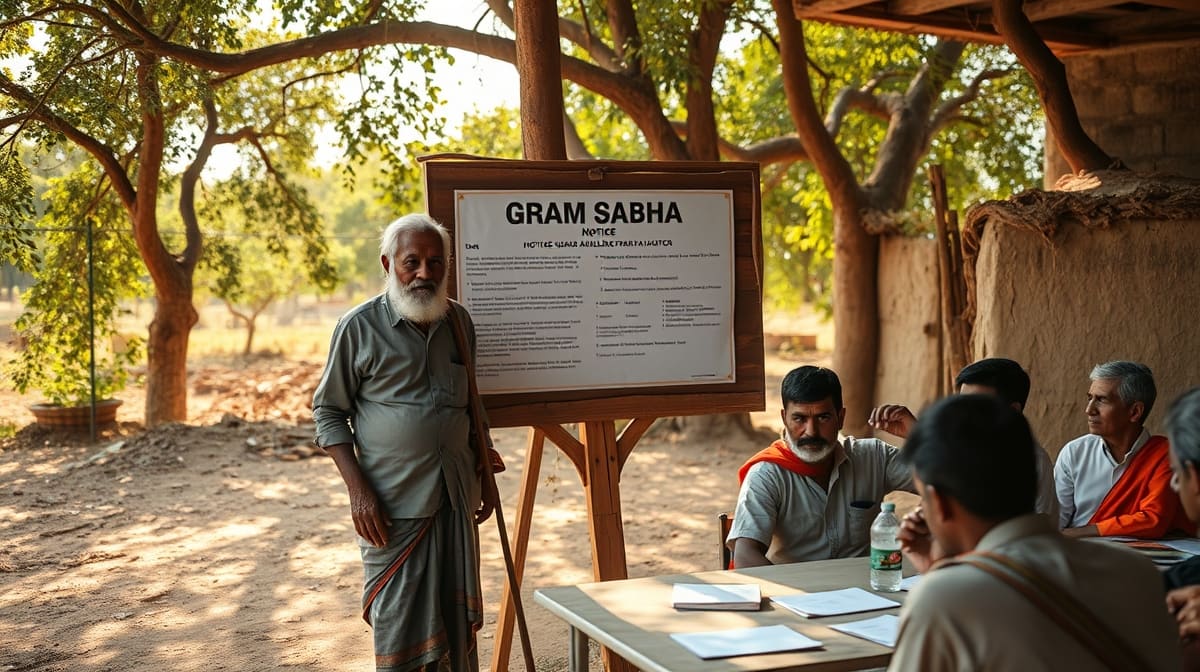
- The Gram Sabha of Rampura passed a resolution in favor of the petitioners’ claim in 2008, as required under Rule 3(1) of the Forest Rights Rules, 2007.
- Despite repeated representations and applications to the Forest Department and District Authorities between 2008 and 2025, no decision has been rendered.
- The petitioners were not granted Sanad (title deed) or physical possession of the land.
- A related Public Interest Litigation (PIL) No. 100 of 2011 was filed before the Supreme Court, which directed reconsideration of similar claims, but no action followed.
Procedural History
- 1980: Petitioners’ father begins cultivation of Survey No. 28.
- 2006: Forest Rights Act, 2006 enacted on 29.12.2006.
- 01.01.2008: Forest Rights Rules, 2007 notified by Ministry of Tribal Affairs.
- 2008: Gram Sabha of Rampura constituted; claim submitted by petitioners on 14.10.2008.
- 2008 - 2025: Repeated representations made to State authorities; no substantive response.
- 2025: Three Special Civil Applications filed before Gujarat High Court:
- SCA/1740/2025 (lead matter)
- SCA/2320/2025
- SCA/2910/2025
- 23.03.2026: Final hearing held; judgment delivered.
The Parties' Positions
Petitioners: Argued that they are eligible beneficiaries under Section 3(1)(a) of the FRA, 2006, as individuals who have been residing in forest land for generations and cultivating it as their primary livelihood. They emphasized that the Gram Sabha’s recommendation is a mandatory step under Rule 4 of the Forest Rights Rules, 2007, and that the State’s failure to act violates both statutory duty and fundamental rights under Articles 14 and 21.
Respondents (State Authorities): Did not file a detailed counter-affidavit. The Assistant Government Pleaders waived service of notice and offered no substantive opposition to the petitioners’ claims. The State’s position, as inferred, was one of passive non-action.
Relief Sought
The petitioners sought:
- A writ of mandamus directing the State to allot physical possession of Survey No. 28.
- A direction to the Forest Department not to disturb their possession.
- A direction to issue Sanad in their favor.
- Any other relief deemed just.
The Legal Issue
Whether the State Authorities are legally obligated to decide claims under the Forest Rights Act, 2006, within a reasonable time, even when the Gram Sabha has recommended the claim and the claimants have produced all requisite documents?
Arguments Presented
For the Petitioner
Learned counsel for the petitioners relied on Forest Rights Act, 2006, particularly Sections 3(1)(a) and 6, and Rules 3, 4, and 13 of the Forest Rights Rules, 2007. He argued that the Gram Sabha’s resolution constitutes prima facie evidence of entitlement and that the State’s failure to act for over 17 years amounts to a violation of the statutory mandate. He cited State of Madhya Pradesh v. Nandlal and Rajendra Singh v. State of Chhattisgarh to emphasize that delay in deciding FRA claims defeats the very purpose of the Act. He also referenced the Supreme Court’s direction in PIL No. 100 of 2011 as binding precedent for reconsideration.
For the Respondent
The State did not contest the factual assertions or the legal entitlements. The Assistant Government Pleaders waived service and offered no counter-submissions, effectively conceding the absence of a lawful basis to withhold decision.
The Court's Analysis
The Court observed that the Forest Rights Act, 2006, is a remedial statute designed to correct historical injustices against forest-dwelling communities. The Act mandates a structured, time-bound process for recognition of rights, beginning with the Gram Sabha, followed by verification by the Sub-Divisional and District Level Committees.
"The purpose of the Forest Rights Act is not merely to recognize rights on paper, but to ensure that those rights are translated into tangible possession and livelihood security."
The Court noted that the petitioners’ claim was submitted in 2008, accompanied by all required documents, and was endorsed by the Gram Sabha. The State’s failure to process the claim for over 17 years, despite repeated representations and a prior Supreme Court directive, constitutes a clear violation of the statutory timeline under Rule 5(2) of the Forest Rights Rules, 2007, which requires decisions to be made within three months of receipt of claim.
The Court emphasized that the State cannot remain passive in the face of a statutory duty. The absence of a formal rejection does not equate to approval, nor does it extinguish the claimant’s right to a decision. The Court held that the petitioners are entitled to a fair, reasoned, and timely adjudication.
The Verdict
The petitions are partly allowed. The State Authorities are directed to decide the claims of all petitioners within eight weeks from the date of this judgment. The decision must be made after providing a reasonable opportunity to produce documents and to be heard. The State shall record reasons for acceptance or rejection. Physical possession shall be granted upon approval. Costs of Rs. 25,000 are awarded to the petitioners.
What This Means For Similar Cases
Procedural Compliance Is Non-Negotiable
- Practitioners must insist on strict adherence to the FRA’s procedural timeline: Gram Sabha recommendation → Sub-Divisional Committee review → District Committee decision.
- Any delay beyond three months under Rule 5(2) without reason is actionable.
- Gram Sabha resolutions are not advisory - they are mandatory prerequisites for further processing.
Inaction Is Not a Decision
- The State cannot evade its duty by ignoring claims or failing to issue orders.
- Courts will treat prolonged inaction as a violation of statutory obligations under FRA, even in the absence of a formal refusal.
- Petitioners may now seek writs for mandamus to compel decision-making, not merely for possession.
Documentation Is Key, But Not Conclusive
- While documents like revenue receipts and caste certificates are critical, the absence of a Sanad does not invalidate a claim.
- The Court affirmed that cultivation since 1980, coupled with Gram Sabha recognition, satisfies the threshold under Section 3(1)(a) of FRA.
- Practitioners should file applications under Section 6 of FRA for community rights if multiple families are affected.