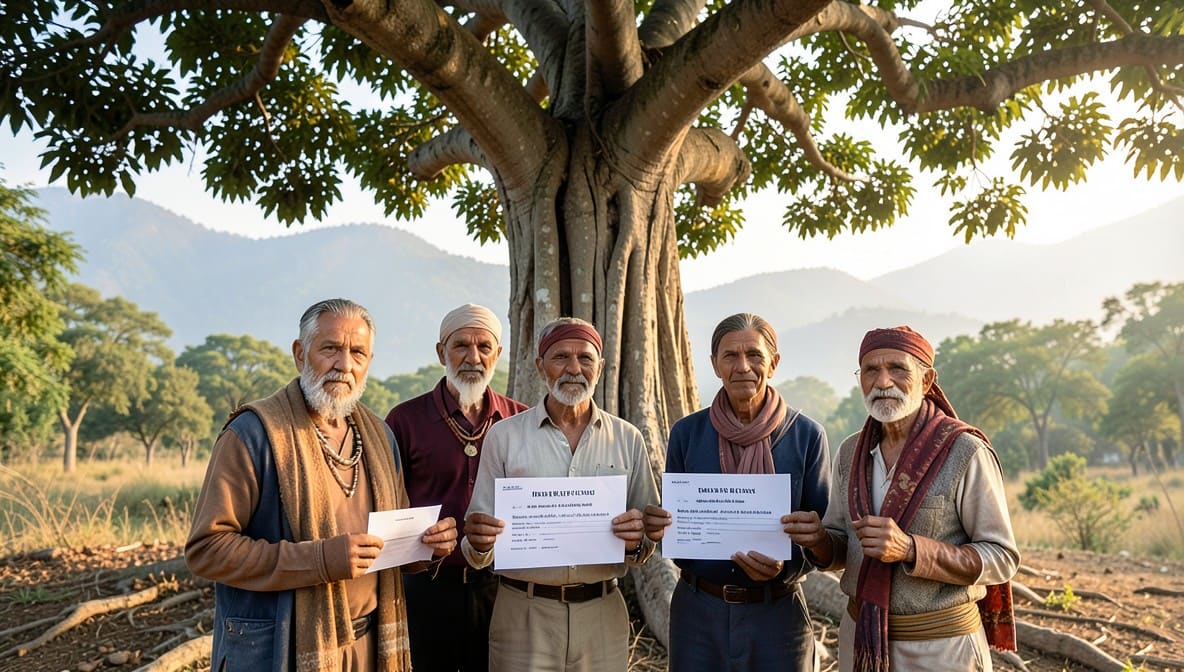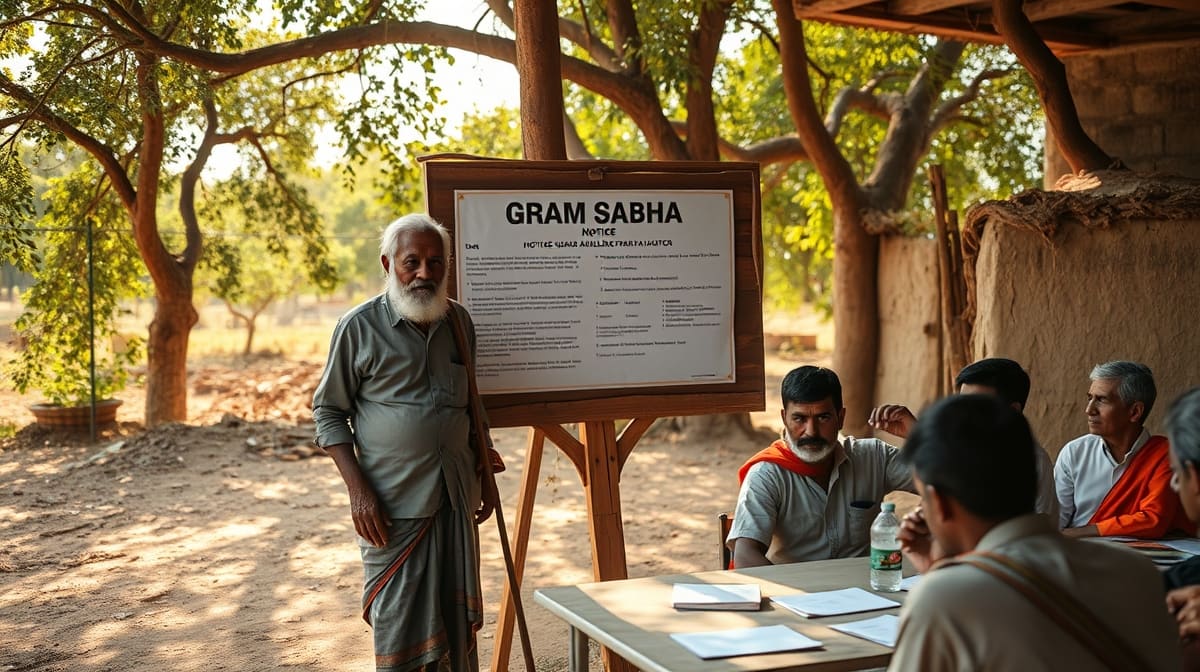
The Gujarat High Court has reaffirmed that petitioners claiming forest rights under the Scheduled Tribes and Other Traditional Forest Dwellers (Recognition of Forest Rights) Act, 2006 must first exhaust the statutory grievance redressal mechanism before seeking judicial intervention. The judgment underscores the legislative intent to empower local institutions and avoid premature litigation.
Background & Facts
The Dispute
The petitioners, Meda Dineshbhai Badiyabhai and others, are residents of Village Jarikhurd, Taluka Dahod, District Dahod, Gujarat. They claim traditional and customary rights over land bearing Survey No. 92 (Old Survey No. 21), Account No. 203, which is under the jurisdiction of the Forest Department. The petitioners allege that despite their longstanding occupation and dependence on the land for livelihood, the State has failed to recognize their rights or grant physical possession.
Key Facts
- The land in question is located in a forest area under the administrative control of the Forest Department
- The petitioners assert they are Scheduled Tribes entitled to recognition of forest rights under the FRA, 2006
- No formal application under the FRA, 2006 has been filed with the Gram Sabha as required by law
- The State has not issued any final order rejecting their claim; no resolution has been passed by the Gram Sabha or Forest Rights Committee
- The petitioners have not approached the Sub-divisional Level Committee or District Level Committee as provided under the Rules of 2007
Procedural History
- No prior application filed before the Gram Sabha under Rule 3 of the Rules of 2007
- No decision issued by the Forest Rights Committee under Rule 12
- No appeal filed before the Sub-divisional Level Committee under Rule 14
- No order issued by the District Level Committee
- 2024: Writ petition filed under Article 226 of the Constitution before the Gujarat High Court seeking mandamus for possession and non-disturbance
Relief Sought
The petitioners sought:
- A writ of mandamus directing the State to allot physical possession of Survey No. 92, Account No. 203
- Direction to the Forest Department not to disturb their possession
- Direction to the authorities to decide their claim within three months
- Any other relief deemed just and expedient
The Legal Issue
The central question was whether a petitioner under the Scheduled Tribes and Other Traditional Forest Dwellers (Recognition of Forest Rights) Act, 2006 can bypass the statutorily mandated three-tier institutional mechanism - Gram Sabha, Forest Rights Committee, Sub-divisional Committee, and District Committee - and directly approach the High Court under Article 226 for possession of forest land.
Arguments Presented
For the Petitioner
Learned counsel argued that the petitioners have been in continuous possession of the land and that the State’s inaction amounts to a violation of their fundamental rights under Article 21. They contended that the delay in implementing the FRA, 2006 justifies judicial intervention and that the writ petition is maintainable as a remedy of last resort.
For the Respondent
The Assistant Government Pleader submitted that the FRA, 2006 and the Rules of 2007 create a comprehensive, self-contained administrative framework for adjudicating forest rights claims. The process begins with submission to the Gram Sabha, followed by evaluation by the Forest Rights Committee, and provides for appeals to Sub-divisional and District Level Committees. The petitioners have not initiated any of these steps, making the writ petition premature and legally unsustainable.
The Court's Analysis
The Court examined the structure of the Scheduled Tribes and Other Traditional Forest Dwellers (Recognition of Forest Rights) Act, 2006 and the Rules of 2007, emphasizing that the legislature deliberately designed a decentralized, participatory process rooted in local governance. The Court noted that the Act is not merely declaratory but procedural, requiring sequential compliance with institutional checks.
"The Act provides an inbuilt mechanism for the recognition of forest rights, which must be exhausted before any recourse to judicial remedy is sought. The Gram Sabha is the primary forum for initiating claims, and its role is not ceremonial but substantive."
The Court held that the petitioners’ failure to file an application with the Gram Sabha renders their petition premature. The absence of any decision by the Forest Rights Committee or any appellate authority means there is no final order to challenge. The Court further observed that judicial intervention at this stage would undermine the legislative scheme and encroach upon the domain of administrative adjudication.
The Court also rejected the argument that delay by the State justifies bypassing the statutory process, noting that the remedy lies in compelling the authorities to act within the framework, not in circumventing it.
The Verdict
The petition was disposed of with liberty to the petitioners to file an application before the Gram Sabha under Rule 3 of the Rules of 2007. The Court directed the Gram Sabha and the Forest Rights Committee to decide the application within twelve months from the date of receipt. There shall be no order as to costs. The petitioners are not entitled to immediate possession or a writ of mandamus until the statutory process is completed.
What This Means For Similar Cases
Exhaustion of Statutory Remedies Is Mandatory
- Practitioners must confirm that applicants have filed claims with the Gram Sabha before filing any writ petition under Article 226
- Courts will dismiss petitions filed prematurely, regardless of the strength of the underlying claim
- Delay by authorities does not waive the requirement to follow the statutory process
Gram Sabha as Primary Adjudicatory Body
- The Gram Sabha is not a formality but the foundational institution under the FRA
- Legal challenges must first target decisions of the Forest Rights Committee, not the State or Forest Department directly
- Failure to engage with the Gram Sabha renders any subsequent appeal or writ petition non-maintainable
Timeline for Decision-Making Now Judicially Recognized
- The Court’s directive of a 12-month timeline for decision-making sets a precedent for enforcing administrative accountability
- Future petitions may cite this judgment to seek enforcement of timelines when Gram Sabhas delay proceedings
- Practitioners should now include requests for time-bound decisions in applications to Gram Sabhas