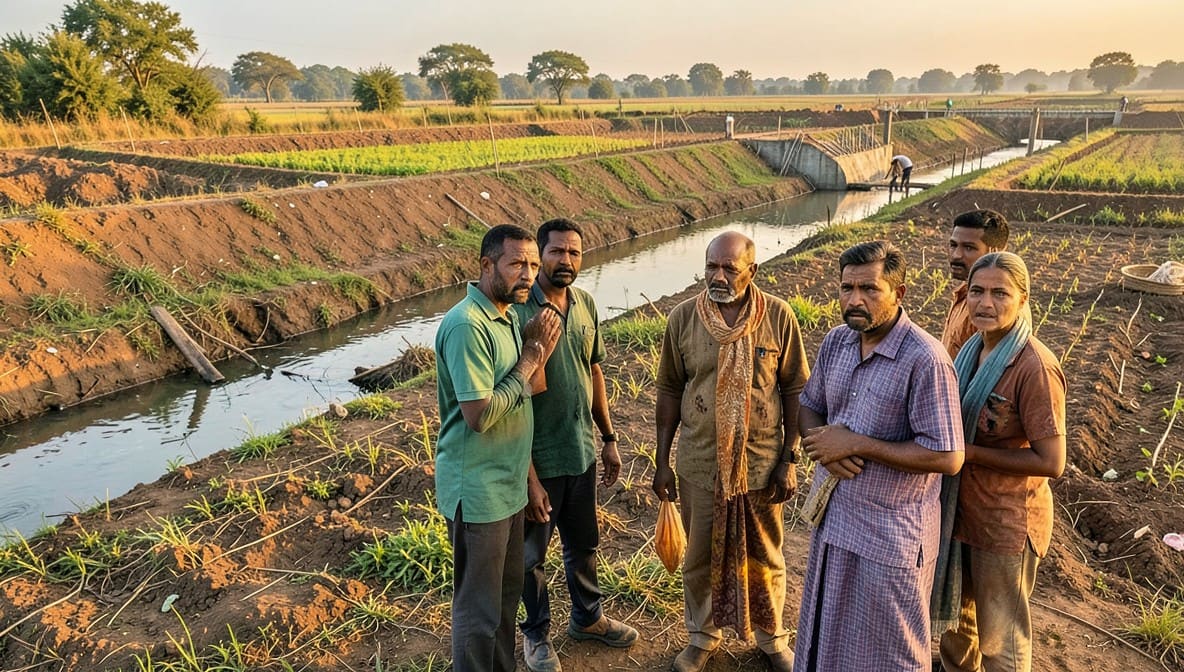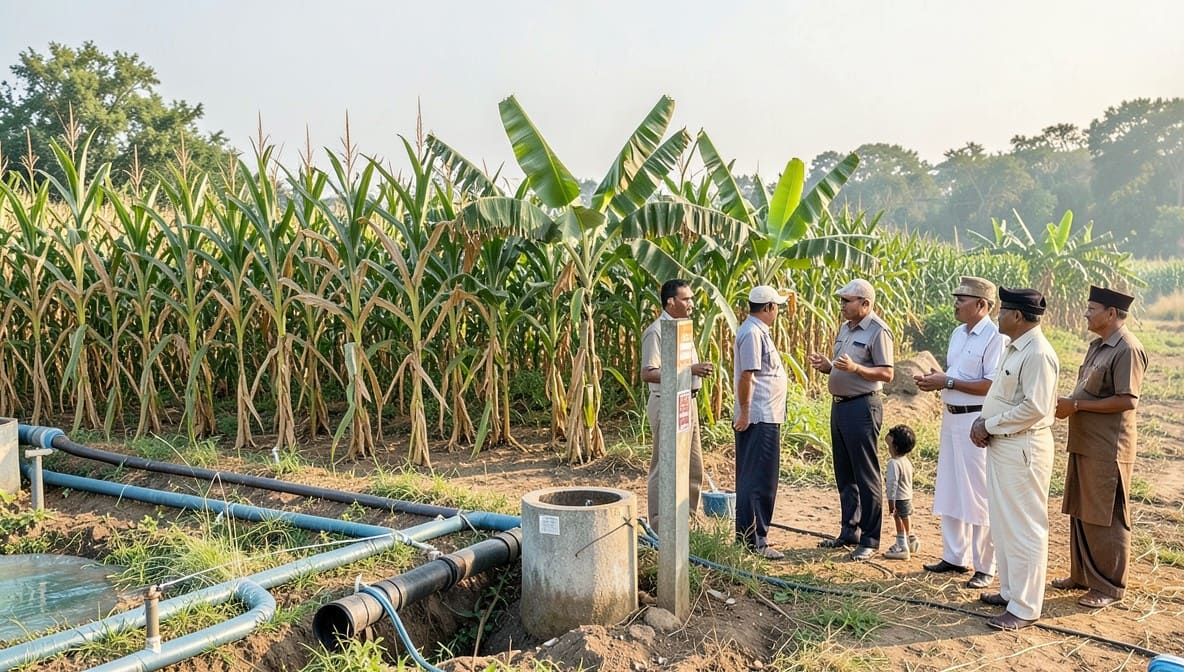
The Telangana High Court's Division Bench has delivered a critical judgment reinforcing the rights of landowners under the Right to Fair Compensation and Transparency in Land Acquisition, Rehabilitation and Resettlement Act, 2013 (RFCTLARR Act). The Court set aside a single judge's order that relegated landowners to post-acquisition remedies, instead directing authorities to consider claims for Rehabilitation and Resettlement (R&R) benefits and compensation for structures, borewells, pipelines, and standing crops before dispossession. This judgment underscores the mandatory compliance with statutory procedures and the protection of landowners' rights during acquisition proceedings.
Background & Facts
The Dispute
The appellants, residents of Oorugonda Village, Damera Mandal, Hanumakonda District, challenged the acquisition of their lands for the National Highway NH-163C project. The acquisition was initiated under the National Highways Act, 1956, with notifications issued under Sections 3A, 3D, and 3G of the Act. The appellants contended that the acquisition proceedings were illegal, unconstitutional, and violative of natural justice, as they were not afforded an opportunity to claim R&R benefits under the Second and Third Schedules of the RFCTLARR Act, 2013 or compensation for structures and standing crops.
Key Facts
- The appellants' lands were notified for acquisition under Section 3A vide S.O. No. 1102 dated 10.03.2021 and Section 3D vide Notification No. 1017 dated 08.03.2022.
- An award under Section 3G was passed on 16.01.2024 (Proceedings No. 8/85/2021-10-NH-163G), which the appellants challenged as invalid and incomplete.
- The appellants claimed entitlement to R&R benefits and compensation for borewells, pipelines, drip irrigation systems, and standing crops (maize and banana).
- A supplementary award was passed on 28.05.2025 (Proceedings No. B/85/2021-10-NH-163c-Structure) for structures/trees not included in the earlier award, but the appellants contended this was done without affording them an opportunity to claim compensation.
- The appellants obtained an interim stay on 09.09.2025 in W.P. No. 26406 of 2025, which was vacated by the single judge on 07.04.2026.
Procedural History
- 10.03.2021: Section 3A notification issued for land acquisition.
- 08.03.2022: Section 3D notification published without disposing of objections.
- 04.02.2023: Section 3G notice issued (No. B/85/2019).
- 16.01.2024: Award under Section 3G passed (Proceedings No. 8/85/2021-10-NH-163G).
- 28.05.2025: Supplementary award passed for structures/trees.
- 09.09.2025: Interim stay granted in W.P. No. 26406 of 2025.
- 07.04.2026: Single Judge disposed of the writ petition, vacating the interim stay and relegating the appellants to statutory remedies under Section 3G(5) of the NH Act, 1956 and Section 34 of the Arbitration and Conciliation Act, 1996.
- 30.04.2026: Present Writ Appeal No. 500 of 2026 filed before the Division Bench.
Relief Sought
The appellants sought:
- Quashing of the single judge's order dated 07.04.2026 in W.P. No. 26406 of 2025.
- Setting aside of notifications under Sections 3A, 3D, and 3G of the NH Act, 1956.
- Liberty to claim R&R benefits under the Second and Third Schedules of the RFCTLARR Act, 2013.
- Compensation for structures, borewells, pipelines, drip irrigation systems, and standing crops based on prevailing market value.
- Protection from dispossession until their claims were considered.
The Legal Issue
The central legal questions were:
- Whether landowners are entitled to R&R benefits and compensation for structures/crops under the RFCTLARR Act, 2013 before dispossession under the National Highways Act, 1956.
- Whether the supplementary award passed without affording an opportunity to claim compensation for structures violates principles of natural justice.
- Whether the single judge erred in vacating the interim stay and relegating the appellants to post-acquisition remedies.
Arguments Presented
For the Appellants
- The acquisition proceedings were illegal and violative of natural justice, as the appellants were not afforded an opportunity to claim R&R benefits or compensation for structures/crops.
- The supplementary award dated 28.05.2025 was passed without hearing the appellants, thereby violating principles of natural justice.
- The standing crops (maize and banana) and structures (borewells, pipelines, drip irrigation systems) would be destroyed if dispossession was allowed before considering their claims.
- Relied on the Division Bench judgment in W.A. No. 434 of 2026, which granted similar relief to similarly situated landowners.
For the Respondents
- The supplementary award dated 28.05.2025 already provided compensation for structures/trees not included in the earlier award.
- The appellants could avail statutory remedies under Section 3G(5) of the NH Act, 1956 and Section 34 of the Arbitration and Conciliation Act, 1996.
- Possession of the land had already been taken in some cases with the consent of the appellants, and clearing/grubbing activities were underway.
- The single judge's order was correct in relegating the appellants to post-acquisition remedies.
The Court's Analysis
The Division Bench critically examined the single judge's order and the procedural lapses in the acquisition proceedings. The Court observed:
-
Violation of Natural Justice: The supplementary award dated 28.05.2025 was passed without affording the appellants an opportunity to claim compensation for structures, borewells, pipelines, and standing crops. This violated the principles of natural justice, as the appellants were not heard before the award was passed.
-
Mandatory Compliance with RFCTLARR Act, 2013: The Court emphasized that the RFCTLARR Act, 2013 mandates consideration of R&R benefits and compensation for structures/crops before dispossession. The single judge erred in vacating the interim stay and relegating the appellants to post-acquisition remedies without ensuring compliance with these provisions.
-
Precedent Application: The Court relied on its earlier judgment in W.A. No. 434 of 2026, where it granted liberty to similarly situated landowners to approach the authorities for R&R benefits and compensation. The Court observed that the appellants in the present case were equally entitled to such relief.
-
Protection of Landowners' Rights: The Court noted that the appellants' lands contained standing crops (maize and banana) and structures (borewells, pipelines, drip irrigation systems), which would be destroyed if dispossession was allowed before considering their claims. Thus, protection from dispossession was necessary until their claims were adjudicated.
"In the light of the aforesaid consensus arrived among the parties, this writ appeal is disposed of. The impugned judgment dated 07.04.2026 passed in W.P.No.26406 of 2025 by the learned Single Judge is set aside. Liberty is granted to the appellants to approach respondent No.3 seeking benefits under R&R Scheme as provided under Second and Third Schedules of the Act, 2013. Liberty is also granted to the appellants to approach respondent No.2 seeking compensation in respect of structures, trees, Bore wells, Pipelines, Drips, standing crop including Banana and Maize, based on the prevailing market value and respondent No.2 shall consider the same and pass appropriate orders in accordance with law."
The Verdict
The Division Bench allowed the Writ Appeal No. 500 of 2026 and set aside the single judge's order dated 07.04.2026 in W.P. No. 26406 of 2025. The Court granted the following relief:
- Liberty to the appellants to approach respondent No. 3 (RDO cum Competent Authority for Land Acquisition) seeking R&R benefits under the Second and Third Schedules of the RFCTLARR Act, 2013.
- Liberty to the appellants to approach respondent No. 2 (District Collector) seeking compensation for structures, borewells, pipelines, drip irrigation systems, and standing crops (maize and banana) based on prevailing market value.
- Direction to respondent Nos. 2 and 3 to consider and dispose of the appellants' claims within four (04) weeks of receipt of the claims.
- Protection from dispossession: The respondents were directed not to dispossess the appellants or interfere with their possession of the subject property until their claims were adjudicated.
- Liberty to submit documents: The appellants were permitted to submit photographs, documents, and other evidence in support of their claims.
- No order as to costs.
What This Means For Similar Cases
Mandatory Consideration of R&R Benefits and Compensation Before Dispossession
- Statutory Compliance: Authorities must strictly comply with the RFCTLARR Act, 2013 and ensure that R&R benefits and compensation for structures/crops are considered before dispossession. Failure to do so renders the acquisition proceedings illegal and violative of natural justice.
- Practical Takeaway: Landowners facing acquisition must immediately file claims for R&R benefits and compensation for structures/crops. Courts are likely to protect possession until such claims are adjudicated.
Supplementary Awards Must Comply with Principles of Natural Justice
- Opportunity of Hearing: Supplementary awards or additional compensation cannot be passed without affording landowners an opportunity to be heard. Such awards are void ab initio and liable to be set aside.
- Practical Takeaway: Landowners should challenge supplementary awards passed without notice or hearing. Courts are inclined to set aside such awards and direct fresh consideration.
Protection of Possession Until Claims Are Adjudicated
- Interim Relief: Courts are likely to grant interim protection from dispossession where landowners have standing crops, structures, or other improvements on the land. Dispossession before adjudication of claims is unjust and illegal.
- Practical Takeaway: Landowners should seek interim stays in writ petitions to prevent dispossession until their claims for R&R benefits and compensation are considered.
Consensus-Based Disposal of Appeals
- Negotiated Outcomes: Where parties arrive at a consensus, courts may dispose of appeals by granting liberty to approach authorities with specific directions for timely adjudication.
- Practical Takeaway: Landowners and authorities should engage in negotiations to arrive at mutually acceptable solutions, which courts are likely to endorse and enforce.