The Bombay High Court has unequivocally held that excluding granddaughters from employment benefits under land acquisition rehabilitation policies, while including grandsons, amounts to unconstitutional gender discrimination. This ruling reinforces the principle that administrative policies must be interpreted inclusively and cannot be weaponized to perpetuate gender-based exclusions.
Background & Facts
The Dispute
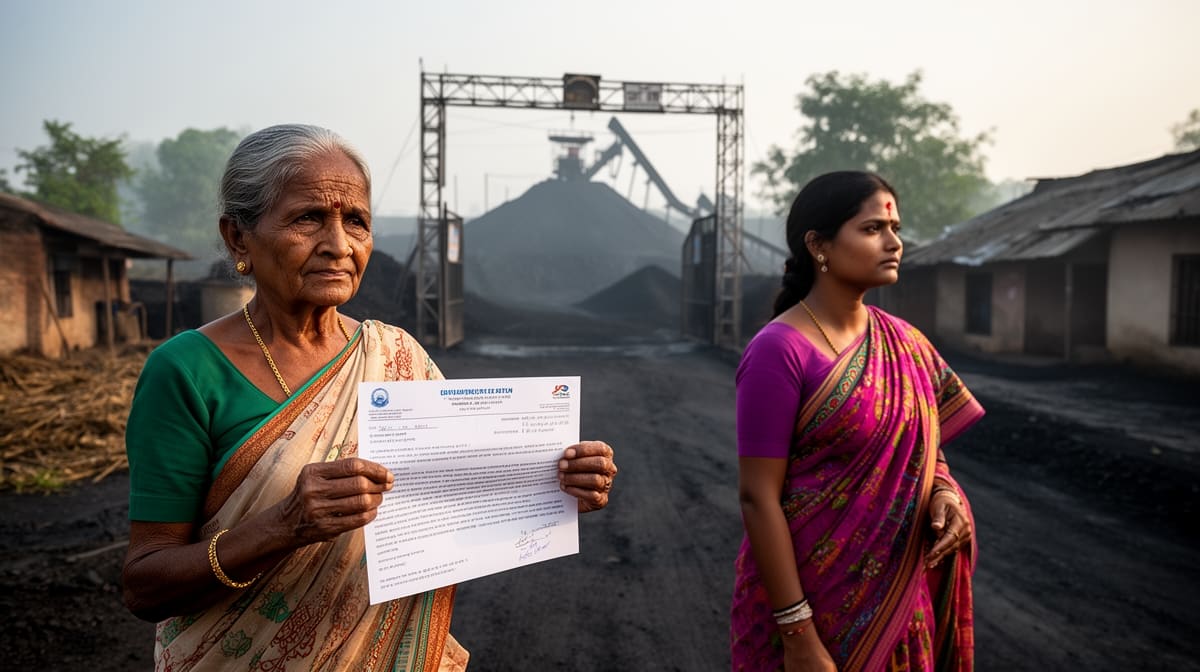
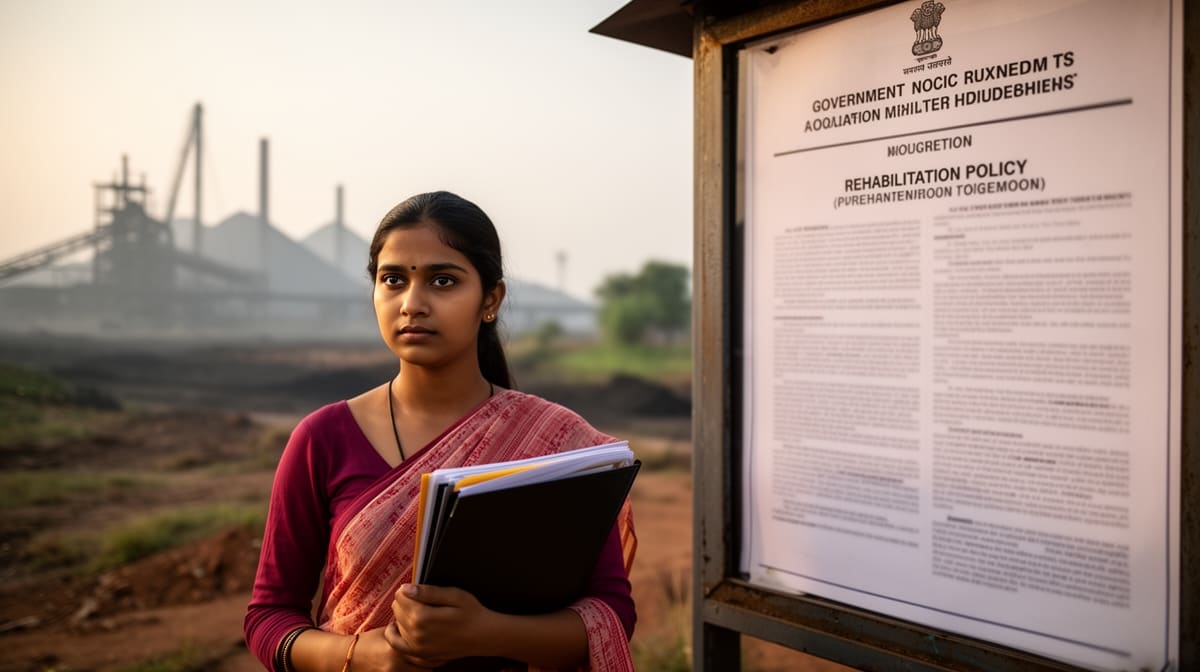
The petitioners, Tanebai Narayan Adwe and his granddaughter, challenged the rejection of the latter’s application for employment under Coal India Ltd.’s Rehabilitation and Resettlement (R&R) policy. The granddaughter, as nominee of the original landowner, was denied employment solely on the ground that she was the daughter of the landowner’s son, and therefore not classified as part of the defined "family" under the policy. The respondents argued that only male-line descendants qualified, effectively excluding female-line descendants.
Procedural History
- 2021: A coordinate bench of the Bombay High Court, in Namdeo S/o Gangaram Dhawas v. Western Coal Fields Ltd., held that granddaughters are eligible for employment under the 2012 R&R policy, as gender-based exclusion violates Article 14.
- 2024: The Supreme Court dismissed the SLP filed against the Namdeo judgment, affirming its validity.
- July 10, 2025: Respondents rejected the petitioner No.2’s claim using identical reasoning, despite the binding precedent.
Relief Sought
The petitioners sought quashing of the impugned order and direction to consider the granddaughter’s nomination for employment without gender-based discrimination.
The Legal Issue
The central question was whether excluding a granddaughter from employment benefits under a land acquisition rehabilitation policy, while including a grandson, constitutes unconstitutional gender discrimination under Article 14 of the Constitution, particularly when the policy’s definition of "family" is otherwise inclusive.
Arguments Presented
For the Petitioner
The petitioners relied on the binding precedent of Namdeo S/o Gangaram Dhawas v. Western Coal Fields Ltd., which held that gender-based exclusion of granddaughters is arbitrary and violative of equality. They emphasized that the policy’s 2023 circular explicitly included grandsons, making the exclusion of granddaughters irrational and discriminatory. They cited Mohinder Singh Gill v. Chief Election Commissioner to argue that reasons not stated in the impugned order cannot be invoked later to justify denial.
For the Respondent
The respondents contended that the granddaughter was not eligible because she was not dependent on the landowner during her father’s lifetime and that eligibility should be assessed as of the date of land vesting. However, they failed to point to any express provision in the policy supporting these conditions, and these grounds were not mentioned in the original rejection letter.
The Court's Analysis
The Court held that the impugned order was based solely on gender, as evidenced by the communication dated July 10, 2025, which explicitly stated that "grand-daughter (daughter of son)" was ineligible, while suggesting nomination of a "son’s son" as an alternative. This distinction was not grounded in any policy provision but in stereotypical assumptions about lineage.
"The respondents have conveyed that nominee being grand-daughter (daughter of son), she is not eligible, but instead, the owner may nominate his another eligible family member including son's son. The said communication clearly conveys that rejection was purely on gender basis."
The Court reaffirmed the Namdeo judgment, noting that the Supreme Court had dismissed the challenge to it, thereby making it binding. It further held that any new grounds raised in affidavit - such as dependency or vesting date - cannot supplement the reasons stated in the original order, per Mohinder Singh Gill. The absence of any express policy clause restricting eligibility to the date of vesting rendered that argument legally untenable.
The Court emphasized that administrative discretion must be exercised within the four corners of the policy, and gender-based exclusions cannot be justified under the guise of policy interpretation.
The Verdict
The petitioners won. The Court held that excluding granddaughters from employment benefits under land acquisition policies on gender grounds violates Article 14, and directed Coal India Ltd. to consider the granddaughter’s nomination for employment without reference to the rejected grounds.
What This Means For Similar Cases
Gender-Based Exclusions Are Per Se Arbitrary
- Practitioners must challenge any policy that treats male and female descendants differently under rehabilitation schemes, even if the policy uses neutral language.
- Any denial based on lineage gender must be met with immediate invocation of Namdeo and Mohinder Singh Gill.
- Administrative orders must state reasons explicitly; post-hoc justifications in affidavits are inadmissible.
Policy Interpretation Must Be Inclusive
- Where a policy includes "grandson" by circular, it cannot exclude "granddaughter" without rational basis.
- Courts will interpret ambiguous terms in favor of beneficiaries under welfare-oriented schemes.
- Practitioners should request full policy documents and circulars to identify inclusive amendments that override restrictive interpretations.
Vesting Date Cannot Be Used as a Hidden Barrier
- Absent an express provision, the date of land vesting cannot be used to disqualify nominees.
- If a beneficiary was a minor at vesting, the policy must explicitly state whether minors are excluded - otherwise, eligibility is preserved.
- This principle applies to all public sector land acquisition schemes, including those under Coal India, NTPC, and ONGC.