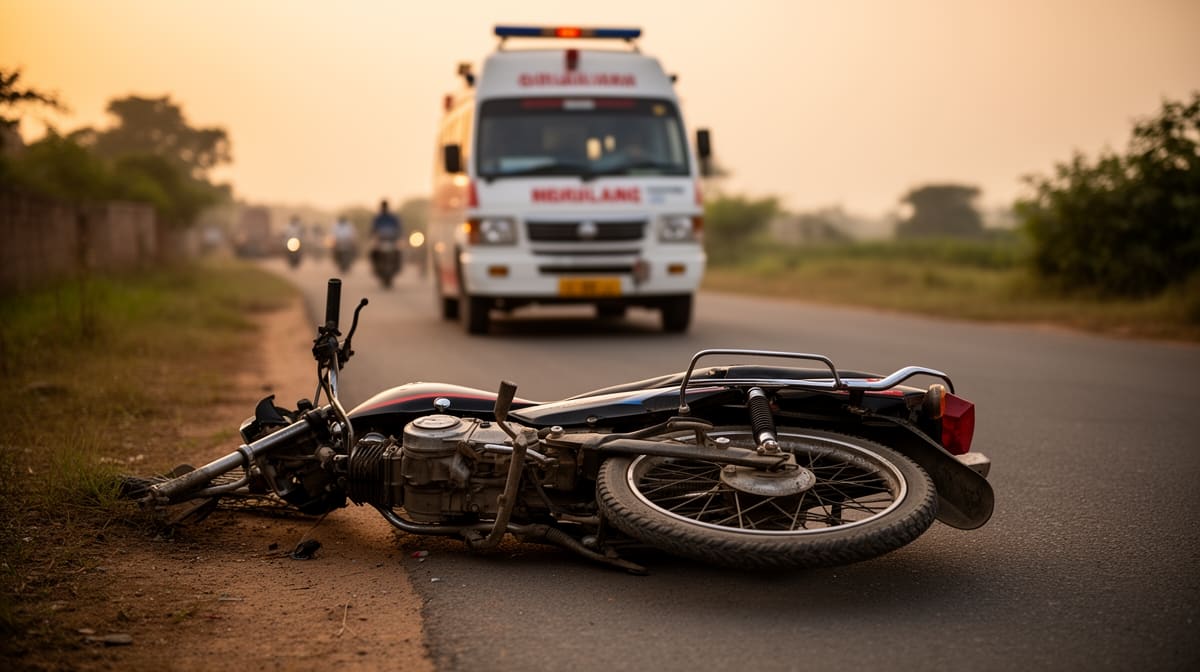
The Madhya Pradesh High Court has reaffirmed that a delay in filing an FIR or the absence of a police investigation does not automatically invalidate a claim for compensation under the Motor Vehicles Act, 1988. Where credible evidence establishes the involvement of the insured vehicle in the accident, the claimant’s right to compensation remains intact. This ruling reinforces the principle that substantive justice must prevail over procedural technicalities in motor accident cases.
Background & Facts
The Dispute
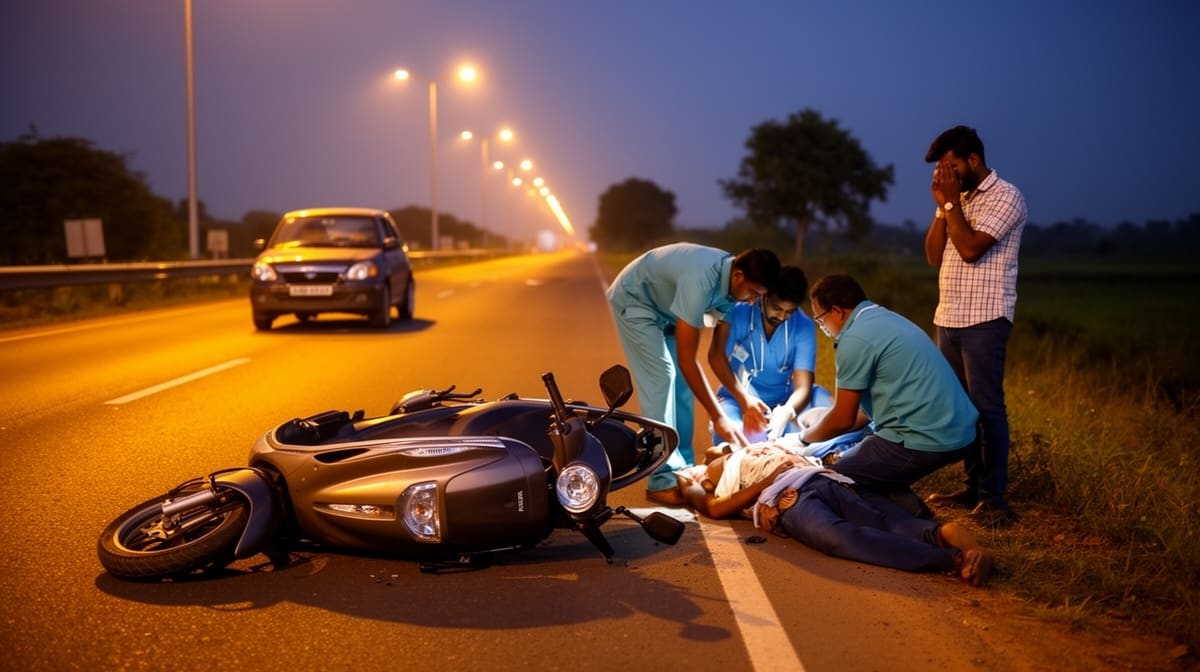
The dispute arose from a fatal road accident involving a moped and a motorcycle. On 10.12.2010 at approximately 07:30 P.M., the deceased, Mohan @ Mohanlal Nagi, was riding his moped (Registration No. MP-09-LE-2586) near the State Bank of India branch, G.P.O., Indore. He was struck by a motorcycle (Registration No. MP-09-MZ-0512) driven by respondent no. 5, resulting in severe injuries. Mohan was rushed to Suyash Hospital, where he succumbed to his injuries and died during treatment.
Key Facts
- The deceased was survived by his wife (respondent no. 1), son (respondent no. 2), and daughter (respondent no. 3), who filed the claim petition as legal representatives.
- The claim petition was filed under Section 166 of the Motor Vehicles Act, 1988 seeking compensation for wrongful death.
- The insured vehicle (MP-09-MZ-0512) was covered under a third-party insurance policy issued by the appellant, The National Insurance Co. Ltd.
- The accident occurred at night, and no immediate report was filed by any eyewitness or the driver of the motorcycle.
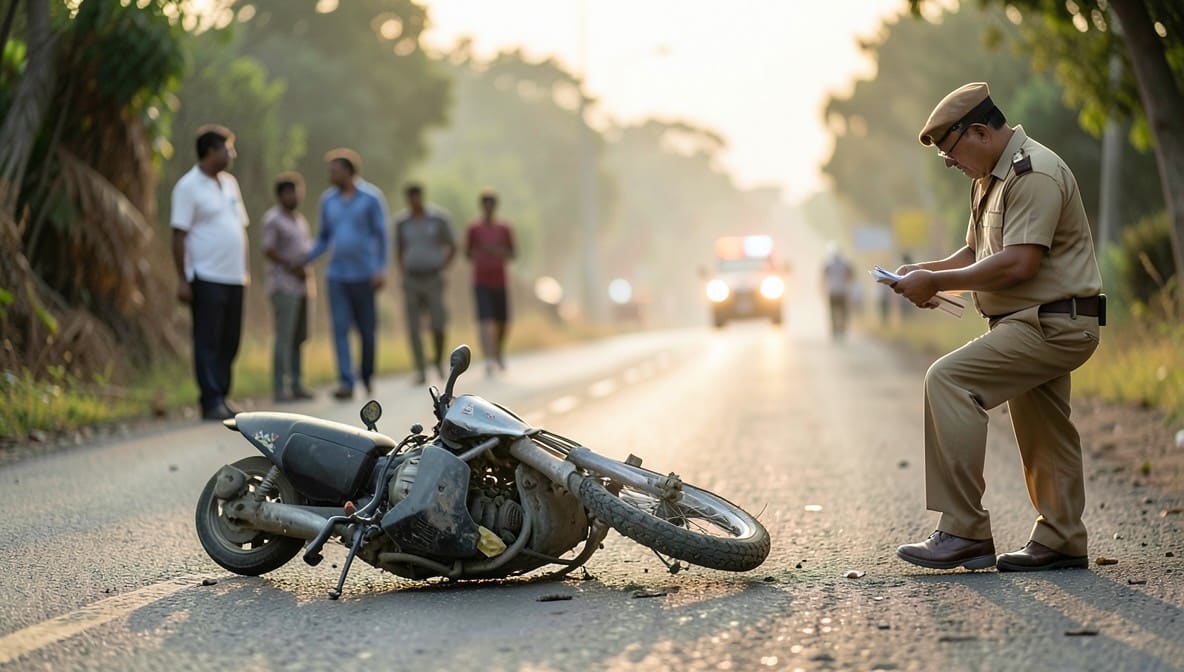
- The hospital sent an intimation to the police on 13.01.2011, and the FIR was registered on 14.01.2011 - over a month after the accident.
- The claimants examined three witnesses: Smt. Usha (PW-1), Romi (PW-2), and Sameer (PW-3), who testified to the occurrence of the collision.
- The insurance company examined DW-1, Narayan Sharma, the record keeper of Suyash Hospital, who produced the medical report (Ex.D/1) stating the deceased’s history as "fall from vehicle." However, this witness admitted in cross-examination that the entry was not made by him.
- The driver of the insured motorcycle did not appear as a witness.
- The Motor Accident Claims Tribunal (MACT) relied on the testimonies of the claimants’ witnesses and the medical evidence to conclude that the insured vehicle was responsible.
Procedural History
- 10.12.2010: Accident occurred at approximately 07:30 P.M.
- 13.01.2011: Hospital sent intimation to police regarding the death.
- 14.01.2011: FIR registered under Section 304A IPC.
- 2013: Claim petition (MACC No. 594/2013) filed before XI Member, MACT, Indore.
- 03.12.2016: MACT awarded compensation of Rs. 8,18,672/- to the claimants.
- 2017: Appeal filed by the National Insurance Co. Ltd. before the High Court under Section 173(1) of the Motor Vehicles Act, 1988.
- 16.03.2026: Judgment delivered by the High Court.
Relief Sought
The appellant sought to set aside the MACT award of Rs. 8,18,672/- on grounds of delayed FIR, absence of police investigation, and alleged inconsistencies in the claimants’ evidence. The respondents sought dismissal of the appeal and confirmation of the award.
The Legal Issue
The central question was whether the failure to lodge an immediate FIR or the absence of a police investigation can be grounds to reject a claim for compensation under Section 166 of the Motor Vehicles Act, 1988, when other credible evidence establishes the involvement of the insured vehicle.
Arguments Presented
For the Appellant
The appellant’s counsel contended that the claim petition should be dismissed because:
- No eyewitness or claimant reported the accident immediately.
- The FIR was filed over a month after the incident, raising suspicion of fabrication.
- The hospital record (Ex.D/1) recorded the cause of injury as "fall from vehicle," suggesting the deceased was not struck by another vehicle.
- The driver of the insured vehicle did not appear to testify.
- The claimants’ witnesses were unreliable, and their testimonies were inconsistent with the medical report.
- The absence of a police report or independent corroboration rendered the claim speculative.
Reliance was placed on the principle that claims must be supported by timely and credible evidence, and delay in reporting undermines the integrity of the case.
For the Respondent
The respondents’ counsel argued that:
- The MACT correctly appreciated the evidence, including the testimonies of three witnesses who attested to the collision.
- The medical report was not authenticated by the record keeper, who admitted he did not make the entry.
- The delay in FIR was explained by the fact that the deceased was admitted to hospital and died there, and the family was unaware of the need to report immediately.
- The Supreme Court and other High Courts have consistently held that FIR is not a condition precedent for awarding compensation.
- The burden of disproving liability lies with the insurer, which failed to adduce credible evidence to rebut the claimants’ case.
The Court's Analysis
The High Court undertook a detailed review of the evidence and the reasoning of the MACT. It emphasized that the primary objective of the Motor Vehicles Act is to provide swift and just compensation to victims of road accidents, and procedural lapses must not defeat substantive rights.
"The filing of an FIR or the conduct of a police investigation is not a sine qua non for the grant of compensation under Section 166 of the Motor Vehicles Act. The Claims Tribunal is entitled to rely on other credible evidence, including eyewitness testimony and medical records, to determine liability."
The Court cited Sunita & others v. Rajasthan State Road Transport Corporation (AIR 2019 SC 994) to affirm that delay in FIR cannot be a ground to reject a claim if the evidence on record supports the claimant’s version. It also relied on the Chhattisgarh High Court’s decision in Dhananjay Prasad Suryavanshi v. Rajendra Sharma (2006 ACJ 2829) and its own earlier rulings in Kamal Singh v. Hasan Khan and Dilip Singh v. Hasan Khan (decided on 12.02.2026), which held that the absence of an FIR does not invalidate a claim if the facts are otherwise established.
The Court noted that the hospital record (Ex.D/1) was not properly authenticated and could not be relied upon to contradict the testimonies of PW-1, PW-2, and PW-3. The admission by DW-1 that he did not make the entry rendered the document unreliable. The insurer failed to produce any independent evidence to disprove the claimants’ version.
The Court found no perversity or illegality in the MACT’s conclusion that the insured vehicle was responsible for the accident. The Tribunal had properly weighed the evidence and applied the correct legal principles.
The Verdict
The appeal was dismissed. The High Court upheld the MACT award of Rs. 8,18,672/- in favour of the claimants. The Court held that the delay in filing the FIR and the absence of a police investigation did not invalidate the claim, as the evidence on record, including eyewitness testimony, was sufficient to establish liability. No further directions were issued as the award was already final and payable.
What This Means For Similar Cases
Delay in FIR Is Not Fatal to a Claim
- Practitioners must argue that the absence or delay in FIR cannot be used to dismiss claims unless there is clear evidence of collusion or fabrication.
- Insurers cannot rely on procedural lapses alone to deny liability; they must produce credible rebuttal evidence.
- Tribunals and courts must focus on the substance of evidence, not technicalities.
Eyewitness Testimony Can Sustain a Claim
- The testimony of even three eyewitnesses, if consistent and credible, can outweigh unauthenticated medical records.
- The burden shifts to the insurer to disprove the claimant’s version, especially when the driver of the insured vehicle does not testify.
- Courts will not permit insurers to exploit gaps in police procedure to avoid compensation obligations.
Medical Records Require Authentication
- Unauthenticated hospital records cannot be used to contradict eyewitness accounts.
- The person who records medical history must testify or the entry becomes inadmissible as hearsay.
- Practitioners should always challenge the authenticity of medical documents in cross-examination.