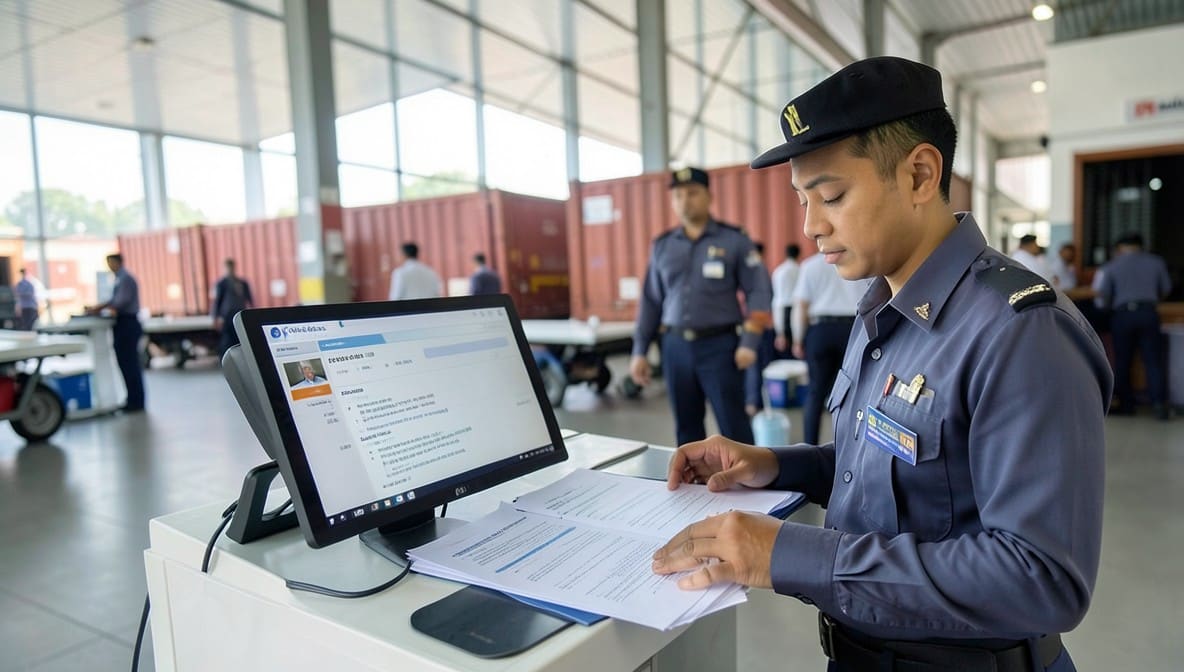
The Customs, Excise and Service Tax Appellate Tribunal (CESTAT), Hyderabad, has reaffirmed that customs duty exemptions are conditional privileges, not automatic rights. Where statutory conditions are unmet or imported goods fall outside the precise language of exemption notifications, authorities are fully entitled to recover foregone duties and confiscate goods. This judgment underscores the non-negotiable requirement of strict compliance and literal interpretation in customs exemption matters.
Background & Facts
The Dispute
The appellant, M/s Durgabai Deshmukh Hospital & Research Centre, imported various medical equipment between 1990 and 1993 under the claim of customs duty exemption under Notification No. 65/88-Cus. dated 01.03.1988. The exemption was granted subject to specific post-import obligations: providing free treatment to at least 40% of outdoor patients and reserving 10% of hospital beds for indoor patients from economically weaker sections with family income below a prescribed limit. The hospital obtained Customs Duty Exemption Certificates (CDECs) from the Director General of Health Services (DGHS) to avail this benefit.
Key Facts
- The appellant imported goods including: Component Part of Angioscope for Coronary Angiography (Mogalix X-Ray Tube) and Multi-Channel Cardioscope Monitors with Spares and Accessories
- Bills of Entry were cleared duty-free between 1990 and 1993 based on CDECs issued by DGHS
- On 02.02.2001, DGHS cancelled all CDECs issued to the appellant, citing failure to comply with the mandatory social conditions under Notification No. 65/88-Cus.
- Customs authorities initiated proceedings for recovery of duty foregone, confiscation of imported goods under Section 111(o) of the Customs Act, 1962, and imposition of penalties
- The appellant claimed alternative exemption under Notification No. 208/81-Cus. dated 22.09.1981 for the same goods
- The Adjudicating Authority found that the imported items were not covered under either notification and confirmed duty demand, confiscation, and penalty
Procedural History
- 1990 - 1993: Import of medical equipment under Notification No. 65/88-Cus. with CDECs
- 02.02.2001: DGHS cancels CDECs due to non-compliance with social obligations
- 2012 - 2013: Adjudication proceedings initiated by Customs
- 20.05.2013: Adjudicating Authority issues Order-in-De Novo No. 6/2013 confirming duty demand, confiscation, and penalty
- 27.06.2013: Appeal filed before CESTAT, Hyderabad (Appeal No. C/27266/2013)
- 24.02.2026: Hearing conducted before CESTAT
- 12.06.2026: Final Order passed dismissing the appeal
Relief Sought
The appellant sought: (1) Setting aside of the impugned order dated 20.05.2013; (2) Quashing of the duty demand of Rs. 1.25 crores (estimated); (3) Cancellation of confiscation order; (4) Withdrawal of penalty and redemption fine; and (5) Grant of exemption under Notification No. 208/81-Cus. for the imported components.
The Legal Issue
The central questions were: (1) Whether cancellation of CDECs by DGHS validly disentitles a hospital from claiming exemption under Notification No. 65/88-Cus., and (2) Whether component parts and accessories imported separately can claim exemption under an entry that does not explicitly include them, even if they are functionally essential.
Arguments Presented
For the Appellant
The appellant argued that: (1) The cancellation of CDECs by DGHS was not binding on Customs authorities, who should independently verify compliance; (2) Substantial compliance with the social conditions was established through hospital records and patient data; (3) The imported components (e.g., Mogalix X-Ray Tube) were integral parts of the Angioscope and should be covered under the exemption for "accessories and spare parts" under Notification No. 65/88-Cus.; (4) The Multi-Channel Cardioscope Monitors were not excluded under Notification No. 208/81-Cus. as they were not "cardiac monitors" per se; (5) Precedents like Dasappa Dharmaspatre and Imperial Surgical Co. supported a liberal interpretation in favor of the importer.
For the Respondent
The revenue contended that: (1) The exemption under Notification No. 65/88-Cus. was conditional and the cancellation of CDECs by DGHS, the designated authority, was conclusive proof of non-compliance; (2) The Adjudicating Authority had conducted a detailed examination of patient records and found no evidence of 40% free outdoor treatment or 10% reserved beds; (3) The imported items were not listed in the notification’s annexed table; (4) Notification No. 208/81-Cus. explicitly excluded "cardioscopes" and "cardiac monitors"; (5) Exemption notifications must be strictly construed, and any ambiguity must be resolved in favor of the revenue, as held in Mediwell Hospital and Micronic Devices.
The Court's Analysis
The Tribunal conducted a meticulous review of the exemption notifications and the factual record. It emphasized that Notification No. 65/88-Cus. was not an unconditional benefit but a policy instrument designed to ensure equitable healthcare access. The Court held that the exemption was intrinsically linked to the fulfillment of social obligations, and failure to meet them rendered the exemption void ab initio.
"The object of the Notification was to ensure that hospitals importing sophisticated medical equipment at concessional rates extend medical benefits to the economically weaker sections of society. Therefore, fulfillment of the conditions of the notification constituted the very basis for ground of exemption."
The Tribunal accepted the DGHS’s cancellation of CDECs as conclusive, noting that the Customs authorities were not required to re-examine compliance when the designated authority had already determined non-compliance. It relied on Mediwell Hospital and Healthcare Pvt Ltd. v. Union of India to affirm that compliance is a continuing obligation.
Regarding the second issue, the Tribunal applied the principle of strict construction to exemption notifications. It examined the exact wording of Notification No. 65/88-Cus., which listed "Angioscope for Coronary Angiography" under Sl. No. 104, but did not include its component parts when imported separately. The Adjudicating Authority’s finding - that the Mogalix X-Ray Tube was a component, not the complete equipment - was upheld. The Tribunal cited Dasappa Dharmaspatre to reinforce that exemptions cannot be extended by implication.
Similarly, for Notification No. 208/81-Cus., the Tribunal noted that the entry explicitly excluded "cardioscopes" and "cardiac monitors." The imported Multi-Channel Cardioscope Monitors fell squarely within this exclusion. The Court rejected the appellant’s argument that functional indispensability overrides textual exclusion, citing Micronic Devices and Electro Mexicals:
"Even when the TV monitor could be taken as an essential accessory to the angioscope, the benefit of exemption could not be extended to the TV monitor in the absence of the specific mention in the Entry No. 104... The exemption notification had to be construed strictly and the scope of the exemption is restricted to the goods specifically mentioned."
The Tribunal concluded that the burden of proving eligibility rested entirely on the appellant, which it failed to discharge. The precedents cited by the appellant were distinguished as factually inapposite.
The Verdict
The appeal was dismissed. The CESTAT upheld the impugned order dated 20.05.2013 in its entirety. The demand for customs duty foregone, confiscation of the imported goods under Section 111(o) of the Customs Act, 1962, the redemption fine, and the penalty were all confirmed as legally sustainable. No monetary relief was granted to the appellant. The order directed that the goods remain confiscated unless redeemed upon payment of the fine as stipulated in the original adjudication.
What This Means For Similar Cases
Exemption Notifications Are Not Open-Ended
- Practitioners must verify that imported goods exactly match the description in the notification’s annexed list
- "Accessories" or "spare parts" are only covered if explicitly named or clearly subsumed under the listed item
- Functional necessity or technical integration does not override textual exclusion
Compliance Must Be Documented and Continuous
- Hospitals claiming social welfare exemptions must maintain auditable records of free treatment and reserved beds
- Cancellation of eligibility certificates by designated authorities (e.g., DGHS) is binding on customs authorities
- Post-import compliance is not optional - it is the condition precedent to exemption
Strict Construction Is the Default Rule
-
In all customs exemption disputes, ambiguity is resolved in favor of the revenue
-
Courts and tribunals will not stretch language to extend benefits beyond clear statutory text
-
Claims based on implied coverage or equitable considerations are unlikely to succeed
-
Always cross-check exemption entries against the latest notification text and exclusion clauses
-
Never assume that a component is covered because the main equipment is
-
Maintain contemporaneous compliance records to avoid retrospective disqualification