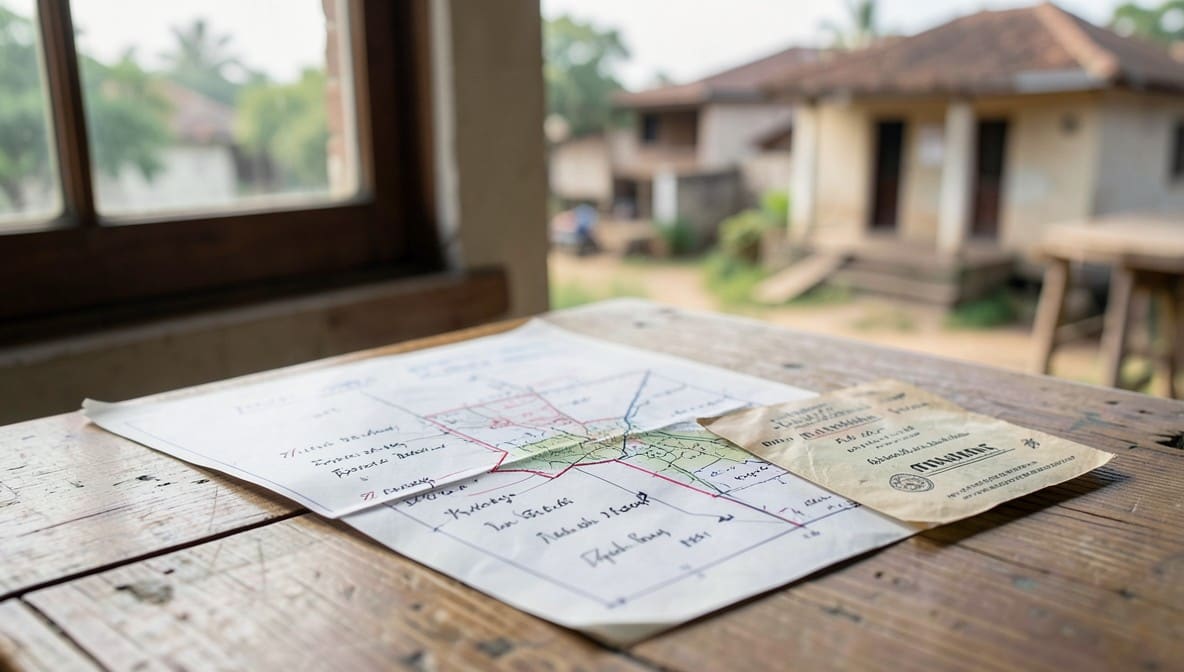
The Madhya Pradesh High Court has clarified that appellate courts may permit additional evidence under Order XLI Rule 27 of the Code of Civil Procedure when such evidence is essential to resolve material ambiguities affecting title and possession, particularly where revenue records are unclear or conflicting. This ruling reinforces the principle that substantial justice must override rigid adherence to procedural formalities.
Background & Facts
The Dispute
The dispute centers on ownership of agricultural land bearing Survey No.132 Min, admeasuring 0.345 hectare, situated at Village Tehlari, Pargana, Patwari Halka No.35, District Gwalior. The plaintiffs claim title through a registered sale deed dated 29.12.1980 (Ex. P/1) executed by Khaju Shah and Gulab Shah, the original owners. The defendants claim title through a registered Will dated 28.06.1983 executed by Gulab Shah, who died on 09.01.1994. The crux of the conflict lies in whether the land covered by the sale deed is the same as the land later mutated in the defendants’ name, given discrepancies in revenue record numbering.
Key Facts
- The plaintiffs’ father and co-purchasers acquired the land via registered sale deed dated 29.12.1980.
- The plaintiffs, being illiterate, handed the original sale deed to the Patwari for mutation and were assured that their names were recorded.
- No mutation entries in favor of the plaintiffs appeared in revenue records.
- Defendant no.1, niece of Gulab Shah, obtained mutation of her name in revenue records on the basis of the Will dated 28.06.1983, with the Tehsildar’s order dated 04.07.1993.
- Plaintiffs challenged the mutation order before the Sub-Divisional Officer, which was dismissed on 31.03.2006 on grounds of maintainability.
- On 27.06.2010, plaintiffs learned that third parties were attempting to purchase the land from defendant no.1, prompting them to file the suit.
- The suit was filed on 27.06.2010 seeking declaration of title and permanent injunction.
- The plaintiffs filed two applications before the Appellate Court: I.A. No.2813/2015 under Order VI Rule 17 CPC (for amendment of plaint) and I.A. No.2814/2015 under Order XLI Rule 27 CPC (for additional evidence).
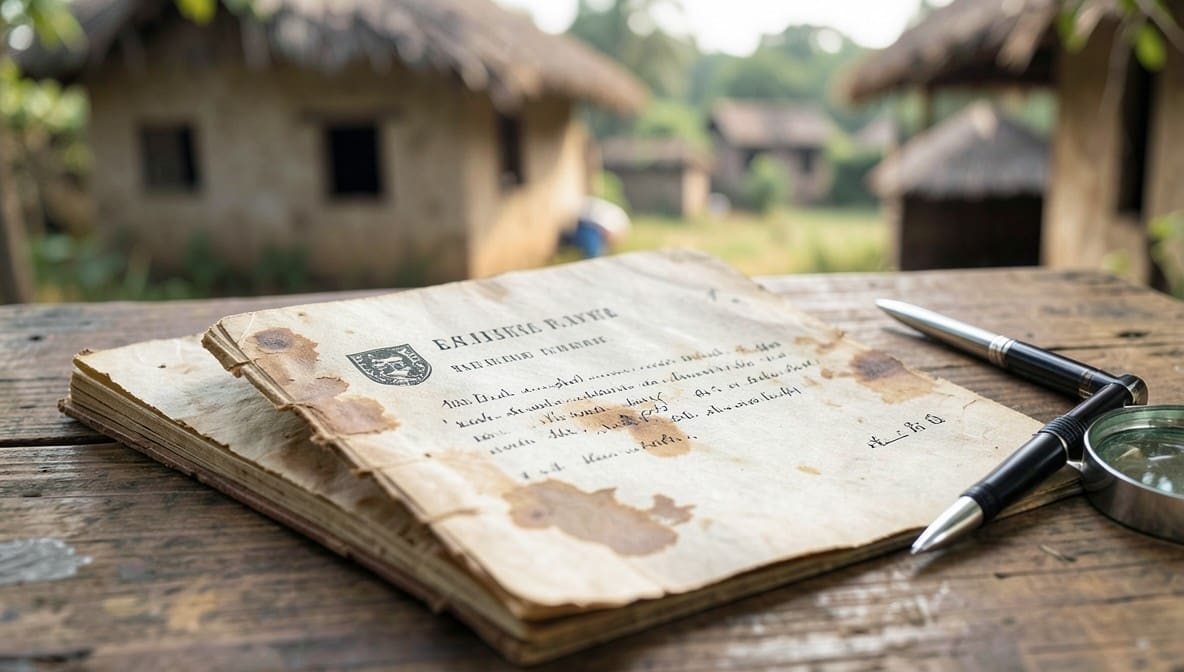
- The additional evidence filed was a certified copy of the renumbering list showing that Survey No.132 Min was renumbered as Khasra No.275.
Procedural History
- 29.12.1980: Registered sale deed executed in favor of plaintiffs’ predecessors.
- 28.06.1983: Registered Will executed by Gulab Shah in favor of defendant no.1.
- 09.01.1994: Death of Gulab Shah.
- 04.07.1993: Tehsildar’s order mutating defendant no.1’s name in revenue records.
- 31.03.2006: Sub-Divisional Officer dismissed plaintiffs’ appeal against mutation.
- 27.06.2010: Plaintiffs filed Civil Suit No.18-A of 2011 before the Fourth Additional Civil Judge, Class-II, Gwalior.
- 23.12.2011: Trial Court dismissed the suit, holding plaintiffs failed to prove title or possession.
- 08.07.2013: Fourth Additional District Judge, Gwalior, affirmed the trial court’s decree in Regular Civil Appeal No.8-A of 2012.
- 2015: Plaintiffs filed I.A. No.2813/2015 (amendment) and I.A. No.2814/2015 (additional evidence) before the High Court.
- 16.06.2026: Appeal reserved for order.
- 23.06.2026: Judgment delivered by Justice Ashish Shroti.
The Parties' Positions
Plaintiffs (Appellants): Argued that the sale deed dated 29.12.1980 predates the Will and establishes their title. They claimed continuous possession since 1980 and asserted that the confusion between Khasra No.132 and Khasra No.132 Min was due to administrative renumbering. They sought to introduce the renumbering list to prove that Khasra No.275 is the new number of Khasra No.132 Min.
Defendants (Respondents): Contended that the sale deed was forged, that Gulab Shah validly bequeathed the land via Will, and that the mutation in their favor was lawful. They argued that Khasra No.275 corresponds to Khasra No.132, not Khasra No.132 Min, and that the plaintiffs’ suit was barred by limitation.
Relief Sought
The appellants sought: (1) setting aside the impugned judgments, (2) admission of the renumbering list as additional evidence under Order XLI Rule 27 CPC, (3) amendment of the plaint to reflect the correct Khasra number, and (4) remand of the matter to the Trial Court for fresh adjudication on title, possession, and limitation.
The Legal Issue
The central question was whether the Appellate Court may permit additional evidence under Order XLI Rule 27 of the Code of Civil Procedure to resolve a material ambiguity in revenue records that directly affects the determination of title and possession, and whether the failure to record a finding on the defense of limitation warrants remand.
Arguments Presented
For the Appellant/Petitioner
The appellants relied on Sanjay Kumar Singh v. State of Jharkhand (2022) 7 SCC 247 to argue that Order XLI Rule 27 CPC permits additional evidence when it is necessary for the court to pronounce a just judgment. They emphasized that the renumbering list was not available during trial due to administrative oversight and that its exclusion created a grave injustice by allowing the defendants’ claim to prevail on a technicality. They further contended that the trial court’s failure to address the limitation defense was a procedural flaw requiring remand.
For the Respondent/State
The respondents argued that the appellants had ample opportunity to produce revenue records during trial and that the delay in filing the application was inordinate. They maintained that the renumbering list was not authentic and that the distinction between Khasra No.132 and Khasra No.132 Min was clear from the records. They also asserted that the limitation defense was implicit in the dismissal of the suit and did not require a separate finding.
The Court's Analysis
The Court examined the nature of the additional evidence and its relevance to the core dispute. It noted that both lower courts had dismissed the suit on the ground that the plaintiffs failed to prove that the land covered by the sale deed (Survey No.132 Min) corresponded to any entry in the revenue records. The defendants, in turn, claimed that Khasra No.275 was the renumbered version of Khasra No.132, not Khasra No.132 Min.
"The observations made by both the Courts in the impugned judgments also indicate that there was confusion regarding Khasra No.132 Min and Survey No.132. The document now filed along with the application under Order XLI Rule 27 CPC demonstrates that the land is Khasra No.132 Min (Tukda). For this reason also, the document filed along with the application deserves acceptance."
The Court held that the renumbering list was not merely cumulative or collateral but went to the root of the dispute: whether the plaintiffs’ title, if valid, pertained to the same land mutated in the defendants’ favor. The absence of this document created a material gap in the evidentiary record. The Court emphasized that the purpose of Order XLI Rule 27 CPC is to ensure justice, not to penalize litigants for procedural lapses when the evidence is decisive and was genuinely unavailable earlier.
The Court further observed that neither party had produced documentary proof conclusively establishing whether Khasra No.275 corresponded to Khasra No.132 or Khasra No.132 Min. This ambiguity rendered the findings of the lower courts speculative. Moreover, the Court noted that the defense of limitation had been raised but not adjudicated by either court, which constituted a failure to decide a material issue.
The Court concluded that allowing the additional evidence and permitting amendment of the plaint would not prejudice the defendants, as they would still have full opportunity to rebut the evidence on remand. The interests of justice, the Court held, demanded a fresh adjudication.
The Verdict
The appellants succeeded. The High Court allowed I.A. No.2814/2015 under Order XLI Rule 27 CPC and I.A. No.2813/2015 under Order VI Rule 17 CPC. The judgments and decrees dated 23.12.2011 and 08.07.2013 were set aside. The matter was remanded to the Trial Court for fresh adjudication. The Trial Court was directed to permit both parties to lead evidence on the renumbering list and to record a specific finding on the defense of limitation. The record was to be sent back forthwith, with certified copies of the additional documents transmitted to the Trial Court.
What This Means For Similar Cases
Additional Evidence Can Overcome Procedural Gaps
- Practitioners may now invoke Order XLI Rule 27 CPC to introduce critical documents not available during trial, provided they are material to the core issue and their exclusion would result in injustice.
- Courts must assess whether the evidence removes a "cloud of doubt" rather than merely supplementing the record.
- Delay in filing is not fatal if the evidence is indispensable and the opposing party is not prejudiced.
Revenue Record Ambiguities Require Evidentiary Clarity
- In title disputes involving land renumbering, courts cannot rely on superficial discrepancies in survey numbers without verifying administrative reclassification.
- A party cannot be denied title merely because revenue records are inconsistent or incomplete if other documentary evidence (e.g., sale deeds, renumbering lists) supports their claim.
- The burden shifts to the party asserting a conflicting revenue entry to prove its authenticity and correspondence to the disputed land.
Limitation Must Be Expressly Decided
- A defense of limitation, if pleaded, must be specifically addressed in the judgment. Failure to do so renders the decree vulnerable to remand.
- Appellate courts must not assume that dismissal of a suit implies rejection of the limitation plea.
- Practitioners should raise this omission as a ground for remand in second appeals under Section 100 CPC.