The Madhya Pradesh High Court at Gwalior has clarified that procedural delays in filing public documents under Order 8 Rules 1 and 3 of the CPC cannot justify their rejection, reinforcing the principle that courts must prioritize substantive justice over technicalities. This ruling provides critical guidance to litigants and practitioners in property disputes where historical land records are pivotal.
Background & Facts
The Dispute
The dispute centers on a claim of ownership over 3.95 hectares of agricultural land comprising Survey Nos. 479, 480, 901, 561, 835, 869, 901, 902, 928, 929, and 930, located in Village Sekra, Tehsil Khaniyadhana, District Shivpuri. The plaintiff, Kamal Singh Yadav, alleged that he holds a half-share in the property, but the defendants - Sobat @ Savitri and others - manipulated partition records to fraudulently mutate their names to a 3/4th share, reducing the plaintiff’s share to 1/4th.
The defendants countered that their father and the plaintiff’s father were among four brothers. Two brothers died issue-less and bequeathed their shares to the defendants out of love and affection. They claimed a mutual partition occurred with the plaintiff’s consent, allocating him a 1/4th share and themselves a 3/4th share. The partition deed was later challenged by the plaintiff as forged.
Key Facts
- The plaintiff filed a civil suit for declaration and permanent injunction on the suit land on 10.02.2022 (Civil Suit No. 35A of 2022)
- The defendants filed a joint written statement asserting the validity of the partition and the ancestral nature of the property
- The plaintiff filed a private complaint under Section 156(3) Cr.P.C. alleging forgery of signatures on the partition deed
- A Government handwriting expert appointed by the Court opined that the plaintiff’s signatures on the partition document were not authentic
- Based on this report, the High Court, in Writ Petition No. 11187 of 2023, remanded the partition proceedings to the Sub-Divisional Officer (SDO) for reconsideration
- The defendants sought to rebut the expert’s opinion by filing an application under Section 45 of the Indian Evidence Act for an independent handwriting examination
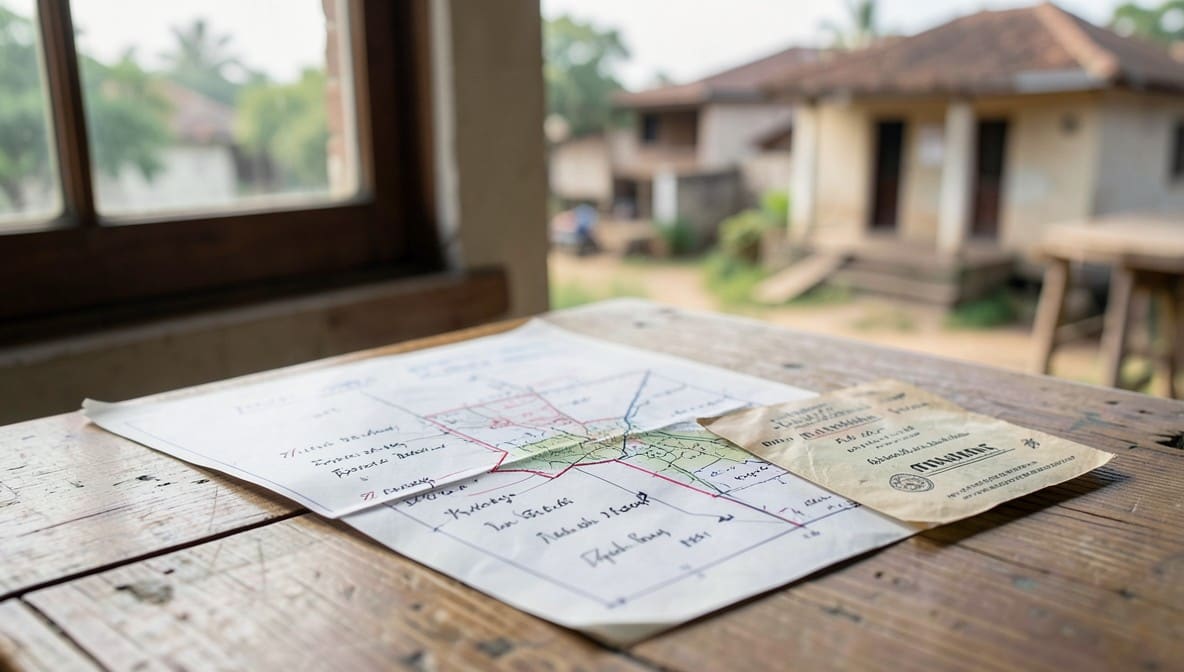
- The defendants also filed an application under Order 8 Rules 1 and 3 of the CPC to produce Khasra records for the year 1962-63 to establish the ancestral nature of the land and prior ownership
Procedural History
- 10.02.2022: Civil Suit No. 35A of 2022 filed by plaintiff Kamal Singh Yadav
- 15.07.2025: Trial Court dismissed both applications filed by defendants: (i) under Section 45 of the Indian Evidence Act, and (ii) under Order 8 Rules 1 and 3 CPC for Khasra records
- 24.03.2026: Miscellaneous Petition No. 3885 of 2025 filed under Article 227 of the Constitution before the High Court of Madhya Pradesh at Gwalior
Relief Sought
The petitioners sought setting aside of the Trial Court’s order dated 15.07.2025, permission to file the Khasra records of 1962-63, and leave to examine the signatures through an independent expert.
The Legal Issue
The central questions were: (1) Whether the Trial Court was justified in rejecting the application under Section 45 of the Indian Evidence Act for an independent handwriting examination, given the existence of a Government-appointed expert; and (2) Whether delay in filing Khasra records under Order 8 Rules 1 and 3 CPC can be a ground for outright rejection of public documents.
Arguments Presented
For the Petitioner
Learned counsel argued that the right to lead rebuttal evidence is integral to the fundamental right to a fair trial under Article 21. Denial of an independent handwriting examination deprived the defendants of an effective defense. The Khasra records from 1962-63 were essential public documents to establish the ancestral nature of the property and the legitimacy of the partition. Procedural applications must be construed liberally to assist the court in discovering the truth.
For the Respondent
Counsel for the plaintiff contended that the Government handwriting expert is a neutral officer appointed by the Court, and a second examination is redundant and prejudicial. The delay in filing Khasra records - nearly 60 years after the records were created - was unjustified and prejudiced the plaintiff’s case. The Trial Court correctly exercised its discretion to reject the application.
The Court's Analysis
The Court examined the nature of the evidence sought and the procedural safeguards under the CPC and the Indian Evidence Act. It noted that the Government handwriting expert was appointed under Section 45 of the Indian Evidence Act and is presumed to be impartial. The Court held that permitting a second expert examination would lead to unnecessary multiplicity of proceedings and could undermine the integrity of the judicial process.
"As the handwriting expert is a neutral person, there is no necessity for a further expert examination of signatures."
Regarding the Khasra records, the Court emphasized that Order 8 Rules 1 and 3 CPC permit the filing of documents relevant to the case, and such applications cannot be rejected solely on the ground of delay. The Court observed that Khasra records are public documents under Section 74 of the Indian Evidence Act, and their relevance to establishing title and ancestral ownership is undeniable. The Trial Court erred in treating delay as a conclusive bar.
"According to the provisions of Order 8 Rules 1 and 3 of CPC, such an application cannot be rejected solely on the ground of delay."
The Court reiterated that the primary objective of civil procedure is to ensure justice between parties, and technical objections must yield to the need for a complete record.
The Verdict
The petition was partly allowed. The impugned order dated 15.07.2025, to the extent it rejected the application under Order 8 Rules 1 and 3 CPC for filing Khasra records of 1962-63, was set aside. The petitioners are permitted to file the Khasra records. The Trial Court is directed to admit the documents upon filing and proceed with the suit in accordance with law. The application under Section 45 of the Indian Evidence Act was upheld as correctly rejected. No order as to costs.
What This Means For Similar Cases
Delay in Filing Public Documents Is Not Fatal
- Practitioners may now confidently file historical land records (Khasra, Jamabandi, Pattas) even if delayed, provided they are relevant to title or possession
- Courts must assess the probative value of such documents, not the timing of filing
- Rejection solely on delay violates the spirit of Order 8 Rules 1 and 3 CPC
Government Experts Are Presumed Neutral - Second Examinations Not Automatic
- Applications for independent expert examination under Section 45 IEA will be denied if a court-appointed expert already exists
- Parties must demonstrate bias, incompetence, or procedural irregularity in the court-appointed expert to justify a second opinion
- This prevents litigation by expert shopping and ensures judicial efficiency
Procedural Liberalism in Civil Trials
- Courts must adopt a purposive interpretation of CPC provisions to facilitate truth-finding
- Technical objections to document filing must be overruled where documents are material to the case
- This judgment reinforces the principle that substantive justice outweighs procedural technicalities