The Gauhati High Court has reaffirmed that strict compliance with the procedural safeguards under Order V Rule 17 of the Code of Civil Procedure is mandatory before resorting to substituted service by newspaper publication. This judgment clarifies that failure to affix summons at the defendant’s residence invalidates even otherwise proper publication, rendering ex-parte decrees liable to be set aside under Order IX Rule 13.
Background & Facts
The Dispute
The petitioners, Dibrugarh Hanumanbux Surajmal Kanoi Commerce College and its Principal, instituted a title suit in 2006 before the Court of the Munsiff No. 1, Dibrugarh, seeking eviction of the respondents from a portion of suit land and a perpetual injunction. The respondents, comprising 15 individuals residing in Banipur, Dibrugarh, were named as defendants. The petitioners claimed ownership and exclusive possession of the land, alleging unlawful encroachment.
Key Facts
- The suit was filed on 15.03.2006 as Title Suit No. 37/2006.
- Summons were issued to all defendants on multiple occasions between 2006 and 2008.
- Process servers reported inconsistent outcomes: some instances indicated refusal of service, others indicated the defendants were "out of station" or not found.
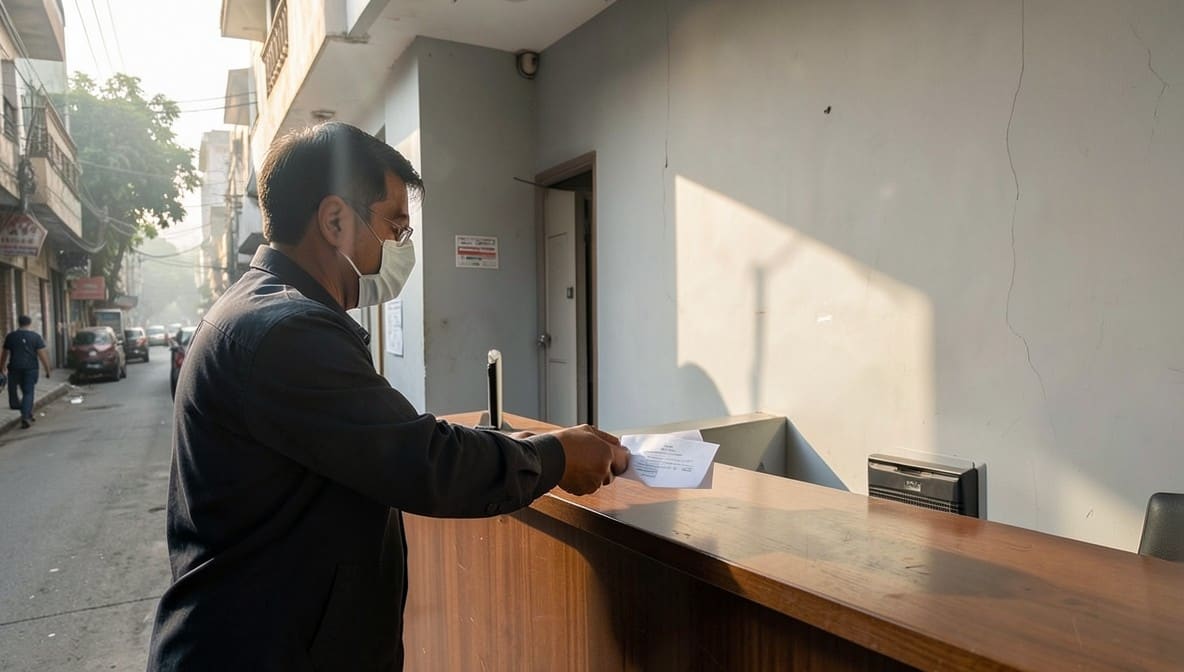
- No affixation of summons was done at any defendant’s residence as required under Order V Rule 17 CPC.
- On 19.02.2008, substituted service was effected through publication in the newspaper Asomiya Pratidin.
- No defendant appeared in the suit.
- The trial court passed an ex-parte decree on 02.07.2009, declaring the petitioners as owners and directing eviction.
- Respondent No. 1 filed an application under Order IX Rule 13 CPC on 10.03.2013, alleging lack of notice.
- The Munsiff No. 2, Dibrugarh, rejected the application on 30.09.2014, holding service valid.
- The Civil Judge, Dibrugarh, allowed the appeal on 06.09.2018, setting aside both the ex-parte decree and the rejection order.
- The petitioners filed the present civil revision petition under Section 115 CPC on 15.03.2018.
Procedural History
- 15.03.2006: Title Suit No. 37/2006 filed by petitioners.
- 2006 - 2008: Multiple attempts at personal service; reports inconsistent.
- 19.02.2008: Substituted service via newspaper publication in Asomiya Pratidin.
- 02.07.2009: Ex-parte decree passed by Munsiff No. 1.
- 10.03.2013: Application under Order IX Rule 13 filed by Respondent No. 1.
- 30.09.2014: Munsiff No. 2 dismissed application, holding service valid.
- 06.09.2018: Civil Judge allowed appeal, set aside ex-parte decree and rejection order.
- 15.03.2018: Civil Revision Petition No. 188 of 2018 filed before Gauhati High Court.
- 24.03.2026: Hearing concluded; judgment delivered.
The Parties' Positions
For the Petitioners
The petitioners contended that the appellate court erred in setting aside the ex-parte decree. They argued that:
- Service through newspaper publication under Order V Rule 20 CPC was valid.
- Non-compliance with affixation under Order V Rule 17 was at most an irregularity, not a jurisdictional defect.
- The defendants had constructive notice through publication.
- Reliance was placed on Basant Singh & Anr. v. Roman Catholic Mission (2002 All SCR 547) to support the view that procedural lapses do not vitiate decrees if notice is established.
For the Respondents
The respondents argued that:
- No personal service was properly attempted.
- No affixation of summons was done at any defendant’s residence.
- The service reports showed defendants were "out of station" - not refusing service - which triggered the mandatory requirement of affixation under Order V Rule 17.
- Newspaper publication without prior compliance with Order V Rule 17 is invalid.
- Reliance was placed on Shri K. Raja v. V. Prabhakar (2025 STPL 1616, Karnataka) to establish that affixation is mandatory, not directory.
Relief Sought
The petitioners sought to set aside the order dated 06.09.2018 of the Civil Judge and restore the ex-parte decree dated 02.07.2009, thereby upholding their title and right to possession.
The Legal Issue
The central question was whether Order V Rule 17 of the Code of Civil Procedure requires mandatory affixation of summons at the defendant’s residence before substituted service by newspaper publication can be validly invoked, and whether failure to comply with this step vitiates an ex-parte decree under Order IX Rule 13.
Arguments Presented
For the Petitioner
The petitioners contended that the provisions of Order V are procedural and directory, and that substantial compliance with notice - through newspaper publication - suffices to uphold an ex-parte decree. They relied on Basant Singh to argue that technical defects in service do not invalidate decrees if the defendant had actual or constructive notice. They asserted that the appellate court overstepped its jurisdiction by reappreciating evidence under Section 115 CPC.
For the Respondent
The respondents argued that Order V Rule 17 uses the word "shall," making affixation mandatory. They emphasized that the service reports indicated the defendants were "out of station," not refusing service - a scenario that triggers the mandatory requirement of affixation. They cited Shri K. Raja to show that courts must strictly enforce this requirement, and that publication without affixation is legally invalid. They further argued that the trial court’s failure to apply the correct legal standard amounted to a jurisdictional error.
The Court's Analysis
The Court undertook a detailed analysis of Order V Rules 17 and 20, and Order IX Rule 13 of the CPC. It observed that while Order V Rule 20 permits substituted service by publication, such recourse is only permissible after exhausting the requirements of Order V Rule 17. The Court emphasized that the word "shall" in Rule 17 is imperative, not directory.
"The provisions of Order V Rule 17 of C.P.C will have to be strictly construed... the very reasoning given by the trial Court that it is directory not mandatory is a wrong notion of the trial Court and had lost sight of the very proviso of Order V Rule 17 and committed an error."
The Court noted that the service reports did not establish refusal of service, but rather absence. In such cases, affixation is not optional - it is a statutory precondition. The Court rejected the petitioners’ reliance on Basant Singh, distinguishing it on facts: that case involved refusal of service, whereas here, the defendants were simply not present. The Karnataka High Court’s decision in Shri K. Raja was affirmed as binding precedent.
The Court further held that the appellate court’s finding that the trial court had committed a jurisdictional error by overlooking mandatory procedure was well-founded. The revisional jurisdiction under Section 115 CPC is not confined to patently illegal orders but extends to errors that affect the jurisdiction or result in a failure of justice. The failure to comply with Order V Rule 17 rendered the service invalid, and thus the ex-parte decree was inherently flawed.
The Verdict
The Civil Revision Petition was dismissed. The order dated 06.09.2018 of the Civil Judge, Dibrugarh, setting aside the ex-parte decree dated 02.07.2009, was upheld. The ex-parte decree stands vacated. No costs were awarded. The respondents are entitled to retain possession of the suit land pending further proceedings, if any, in accordance with law.
What This Means For Similar Cases
Affixation Is Non-Negotiable
- Practitioners must ensure that before filing an application for substituted service by newspaper publication, they have documented at least three attempts at personal service.
- If the defendant is absent but not refusing service, affixation at the outer door or conspicuous part of the residence is mandatory.
- Failure to affix renders publication invalid, regardless of circulation or publicity.
Ex-Parte Decrees Are Vulnerable Without Strict Compliance
- Applications under Order IX Rule 13 will succeed if the defendant proves non-compliance with Order V Rule 17, even if they had actual notice.
- Courts will not presume constructive notice from publication alone if foundational steps are skipped.
- Lawyers must maintain detailed, sworn affidavits from process servers, including photographs or witness statements of affixation.
Revisional Jurisdiction Upholds Procedural Integrity
- High Courts will interfere under Section 115 CPC where lower courts ignore mandatory procedural requirements.
- The doctrine of substantial compliance does not apply to statutory mandates using the word "shall."
- This judgment reinforces that procedural fairness in service is a jurisdictional safeguard, not a technicality.